K’Nex everywhere

Building animals and vechiles with K'Nex. A fantastic STEM toy for children

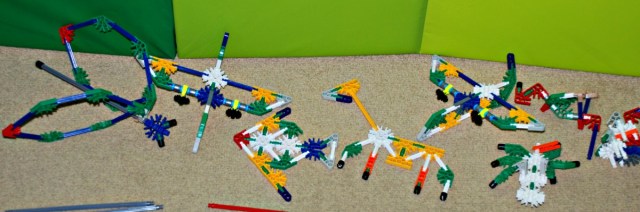
A few months ago we were sent two Educational K’Nex sets.  They are great sets but little did I realise that those two K’Nex sets were going to set off a chain reaction of K’Nex everywhere.  It appears like those two set have just multiplied (okay after seeing how much my kids loved the K’Nex I did buy some K’Nex boxes).  But honestly some days it feels like we are just living in a K’Nex world – possibly largely due to the fact that my lounge floor is now a K’Nex zone.
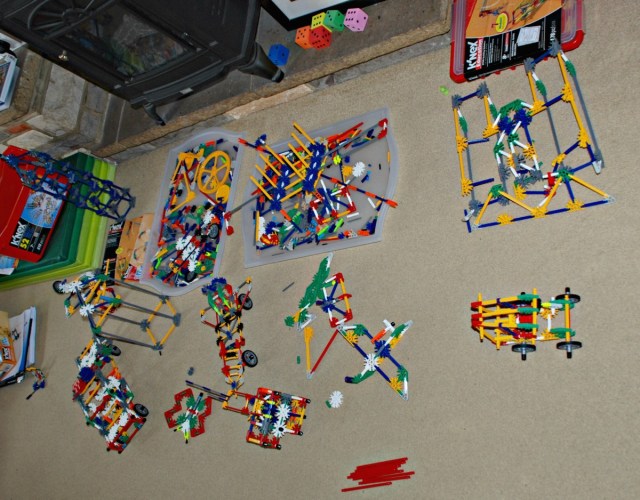
K'Nex has taken over our home

The builds can vary from easier ones like this fish
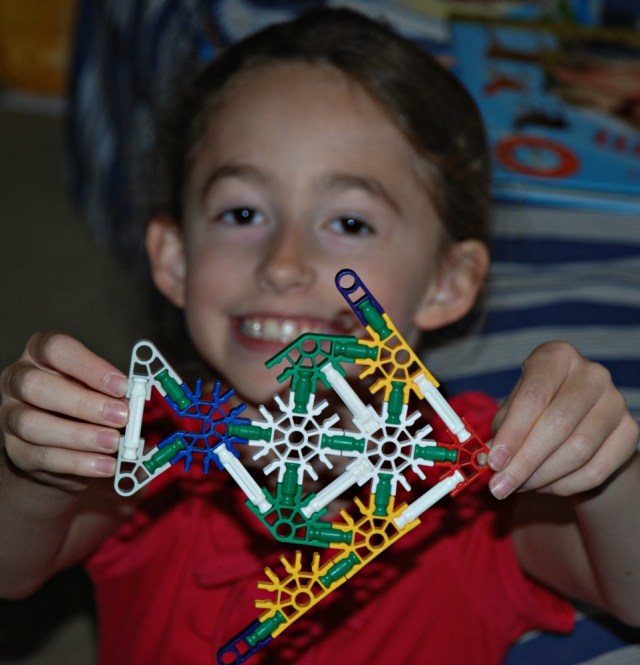
Building K'nex creation like this fish

too much harder ones like the helicopter.
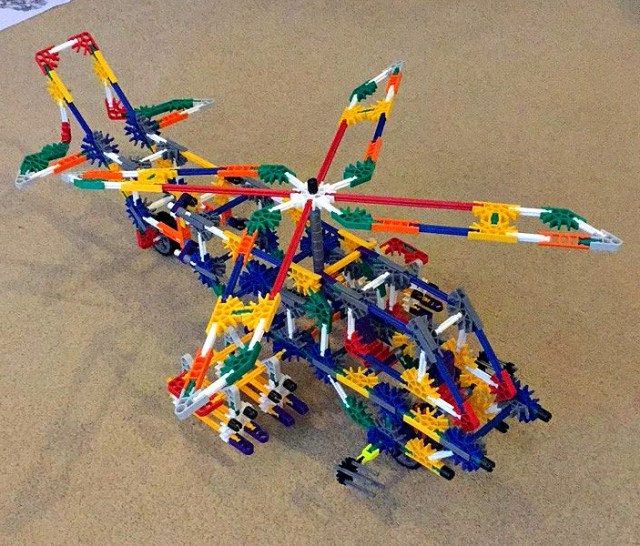
K'Nex helicopter. K'Nex is an amazing STEM resource for kids to play with

And there are so many instructions for the kids.  Each box comes with a booklet with instructions for lots of different builds and you can also log onto their website and input your box number and you will find LOTS more build instructions to download  – the link for the extra K’Nex instructions is here – K’Nex instructions.

My kids also love using their own imaginations to create their own variations of the builds.  I have been so impressed to see how after following build instructions the kids are able to start applying some of the ideas to their own creations – doors that swing open, figuring out how to balance a plane so that it stands on the wheels, creating a butterfly with extra wings all of which are able to flap, spinning wheels I could go on and on.  But really I have seen so much learning happening while they are playing with their K’nex sets.  They have figured out some concepts which have totally surprised me and it is because they are involved, using their hands, building, sometimes making mistakes and then having to take the build apart and redo it but all the time they are learning.
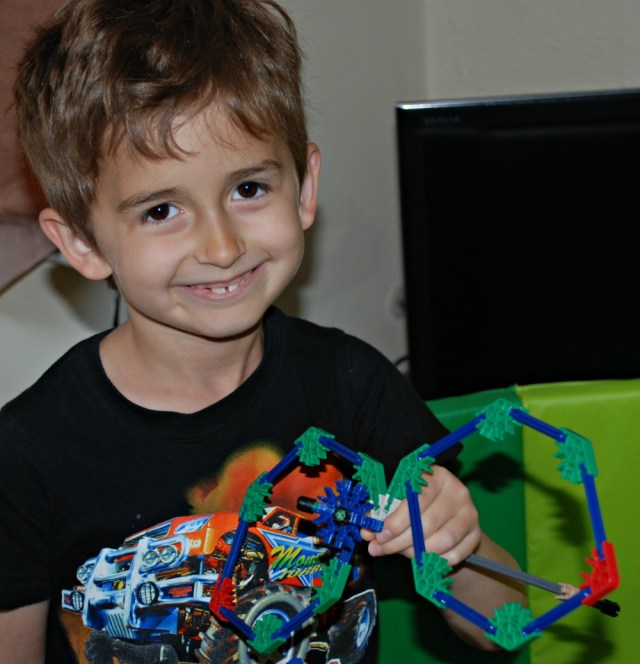
K'Nex the dragonfly with wings that move

I always knew that K’Nex was a good building activity for the kids but until we bought our own and watched the kids explore I never realized just how much they would learn by playing and having fun with K’Nex.

And honestly if my lounge stays a K’Nex area I am totally fine with it.

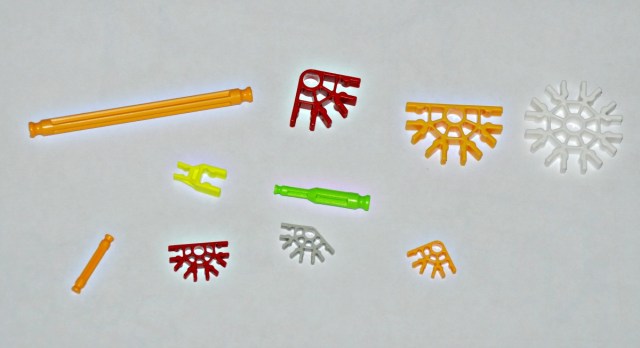
We are still relatively new to the whole K’Nex world but we have bought the kids the K’NEX Imagine 52 Model Building Set for Ages 7+, Engineering Education Toy, 618 Pieces – my kids love it as they can build lots of animals and vehicles with this set.  And I also bought them a different set – K’NEX Imagine 35 Model Building Set for Ages 7+, Construction Education Toy, 480 Pieces.  At the time of buying the second one I did not realise that the pieces were smaller (see pic below)

K'Nex pieces the different sizes

but it does come with little connector pieces which allow you to combine the smaller pieces with the bigger pieces and honestly my kids love BOTH.  But I would suggest if you have never tried K’Nex before to maybe try the normal size pieces first before moving onto the smaller ones.

This Jet was built by my six-year old using the smaller pieces from the second set I mentioned.
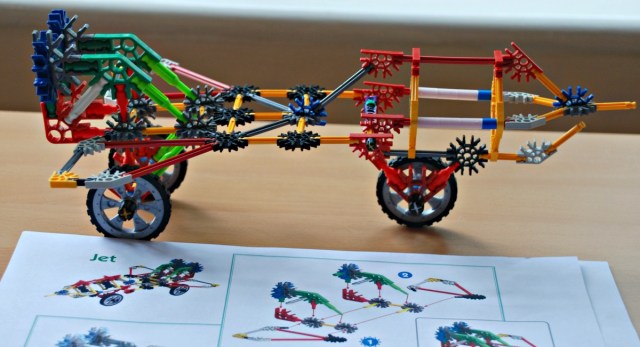
K'Nex Jet built with the K'Nex 35 model ultimate building set

Save

Save

Save

Save

Posted in Home education resources | Tagged , , , , , | 1 Comment

Understanding Science Series – Animals & Plants Workbook

My daughter recently asked for some Science workbooks so I contacted Schofield & Sims and asked if they would be interested in us reviewing their Understanding Science series (the series had been recommended to us by another Home Educating family).  They kindly sent us all 6 workbooks in the series – Our Bodies, Animals & Plants, Using Materials, Changing Materials, Forces & Electricity and Light, Sound & Space.

As both my kids have a natural interest in learning about animals and plants we have already covered quite a bit in the workbook in our less formal learning manner (reading lots of books, youtube clips, growing our own plants, nature walks and chats while we out exploring) so I thought it would be a good workbook to start with as it would ease us into the series.

Understanding Science Plants and Animals workbook by Schofield & Sims

The workbook is 43 pages long and does includes answers for all the questions at the end of the workbook as well as a glossary of terms used.  Following the typical Schofield & Sims workbook format they cover one idea over a double page, they stick to just black and green text which means the pages are not visually cluttered or overwhelming (this is one of the reasons why we use the Schofield & Sims workbooks so much as we have found other workbooks cram too much in on a page and go overboard with bright colours which does not suit us).

Understanding Science. Plants and Animal workbook includes animal habitats

The workbook covers

  • Plant parts
  • plant life cycle
  • investigating growing
  • flowers and fertilisation
  • seed dispersal
  • germination
  • asexual reproduction
  • water transport
  • more on growing
  • grouping living things
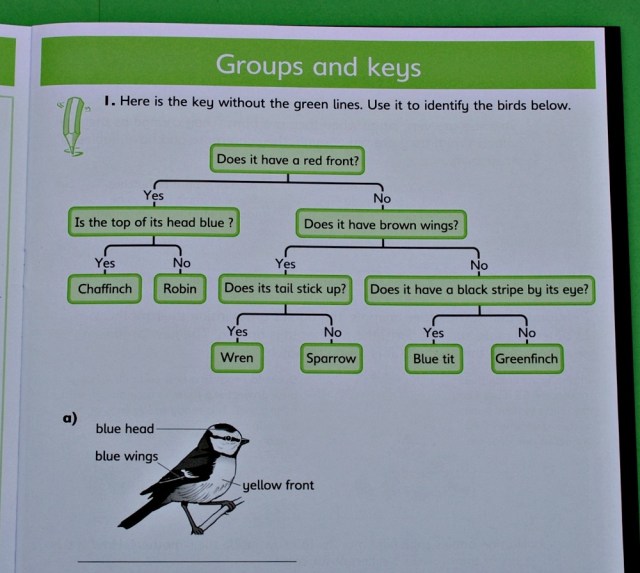
  • groups and keys
  • animal life cycles
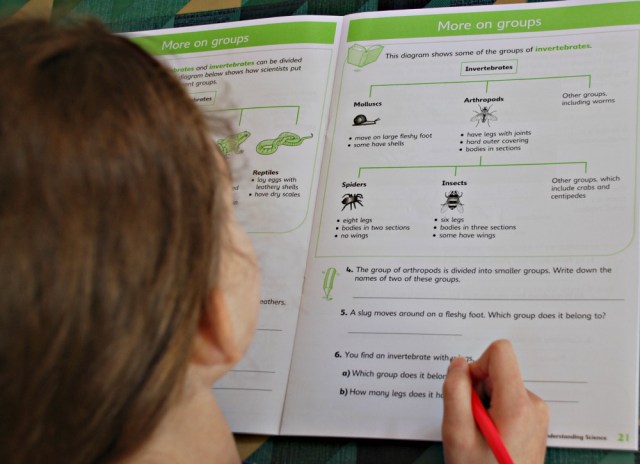
  • more on groups
  • habitats
  • investigating habitats
  • changing habitats
  • food chains
  • adaptations
  • fossils
  • fossils and changes
  • evolution and inheritance

The pages do have a combination of explanations and then questions for the kids to answers.  But we found the writing required was not excessive.  My youngest loves learning about animals so he actually asked to do some of the pages with me and we did them as a verbal discussion – we read the explanation together and then we discussed the answers.

Understanding Science series by Schofield & Sims. Plants and Animals workbook

We really liked the workbook.  I think it is well set-out.  I think if animals and plants are not a topic which you have naturally covered it is a very useful resource.  And I also think even if you have covered animals and plants in detail like we have it can be a great confidence boost for the kids.  My daughter loved the fact that she could answer all the questions without having any doubts about her answers.  She was beaming from ear to ear so it definitely gave her a massive confidence boost realizing she could do the workbook by herself and she is already talking about the other workbooks in the series.

Understanding Science by Shofield & Sims Working through the Animal & Plants workbook

If you are based in the UK you can buy these workbooks from local bookstores (price £4.95) or you can also get them from Amazon – Understanding Science: Animals & Plants

Save

Save

Save

Save

Save

Posted in Home education resources | Tagged , , , , , , | 1 Comment

Big Cat Reader – My Journey Across the Indian Ocean

I love finding good quality, interesting reading books for the kids and I especially love it when the books have a good positive message in them.  My Journey across the Indian Ocean: Band 17/Diamond (Collins Big Cat) is just that.  The book is well written with some new interesting words included (like bioluminescence) but it is also a positive story.
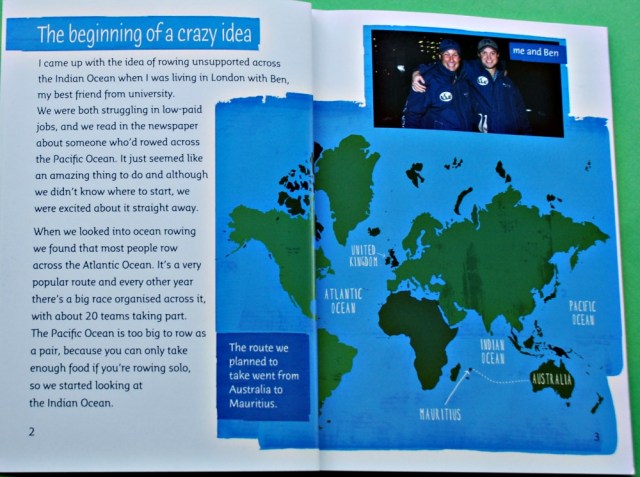
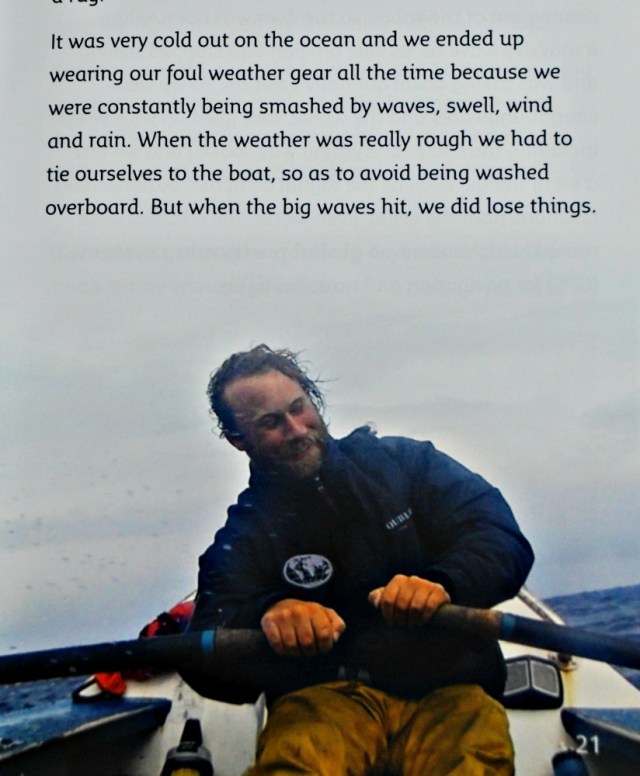
A story about how someone overcame a serious illness and went on to row across the Indian Ocean.  It is a story about perseverance.

My Journey Across the Indian Ocean. Starts with the beginning of a crazy idea

It starts with how they came up with the idea of rowing unsupported across the Indian Ocean and why the chose the Indian Ocean.  He also talks about his illness, he developed Guillain-Barré syndrome when he was 14 years old.  Both the kids and I found this fascinating that someone who at one stage was paralysed went on to row across the Indian Ocean.  What a positive, encouraging message for young children.

My Journey Across the Indian Ocean by James Adair. A brilliant reading book

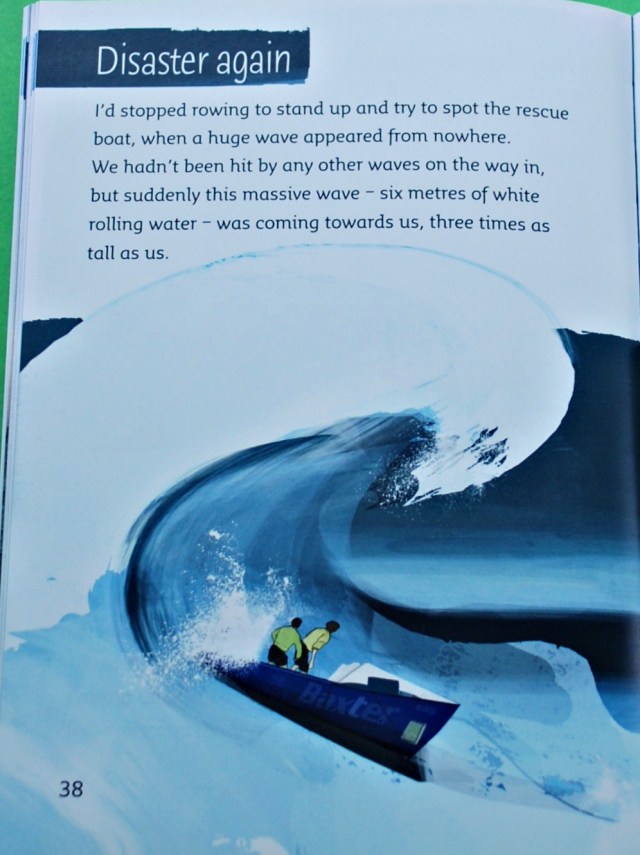
The journey itself is well set out.  The highlights and the hard moments.  As you can imagine there are not a lot of photographs in the book but they have included a number of illustrations which helped the kids to imagine how cramped and small the boat must have been.

My Journey Across the Indian Ocean includes lots of illustrations which show just how small their boat was

Towards the end of their journey they do capsize and lose everything but they get rescued by some fishermen and it all ends with them being reunited with their families in Mauritius.

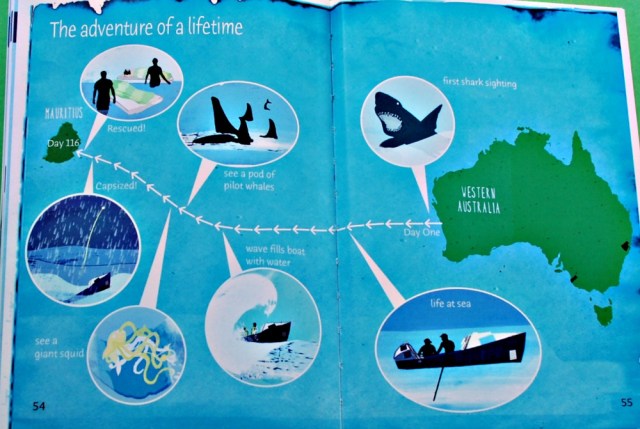
The book is 56 pages long and includes a glossary at the back as well as a map showing the journey and the significant events that occurred.

My Journey Across the Indian Ocean includes a map at the end which highlights the key events in the Adventure of a lifetime

I think this is one of my favourite young readers that we have come across.  It is part of a reading scheme, so the aim is for kids to practice reading and it does that.  But it is so much more than a reader.  It is a story that extends their vocabulary, they learnt about Guillain-Barré syndrome, some new ocean terminology, what life out on the ocean would be life and what it means to be not give up.  It is a reader fill of positive messages which for me is just the best kind of book for children.

My Journey Across the Indian Ocean is part of the Big Cat reading series (UK based series).

Save

Posted in Book Ideas | Tagged , , , , , | 1 Comment

Using Twinkl Editable Resources

One of the reasons that I use the Twinkl website as much as I do is because they have so many editable versions of their resources.  So maybe you are wondering   – what is so special about have editable versions of resources ? – Well the allow you to customise the resources to your exact needs. When you are helping your children learn another language, especially a language that might not be that widely spoken in the country that you live in it becomes very useful.  Both my kids speak Afrikaans (my husband’s home language) and living in the UK you can not just walk into a local bookstore and buy Afrikaans goodies.  So we have found the best way around that is to convert existing resources into Afrikaans.  I have created a few of my own resources for the kids but it honestly takes me AGES and I get frustrated with the formatting and frustrated with the time I am spending trying to find the images that I want.  So taking an existing English resource with the images already nicely set in the correct place and  the formatting completed is just much easier for me and really doing the translating is quick and then I am ready to print.

As both the kids are now happily speaking Afrikaans and can switch between the two languages without an issue we thought it was time to try and get them reading Afrikaans (both kids are already reading English).

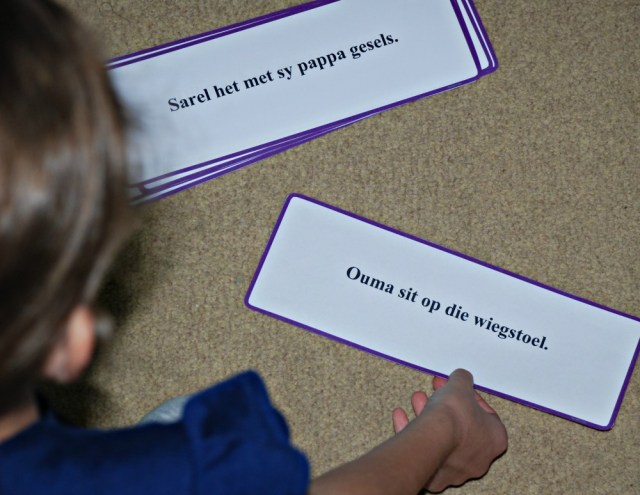
Twinkl Resources match the sentence to the picture cards are editable

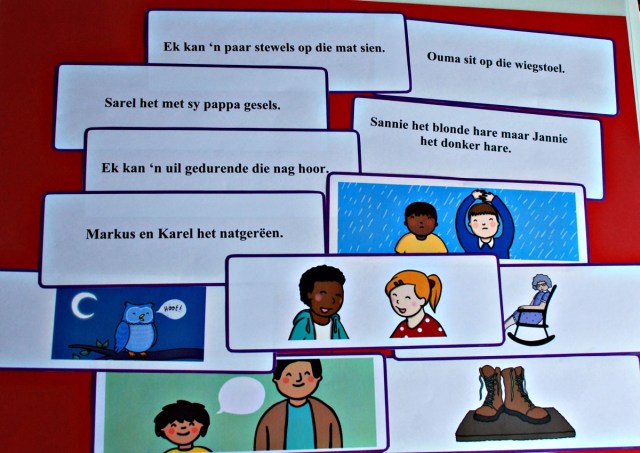
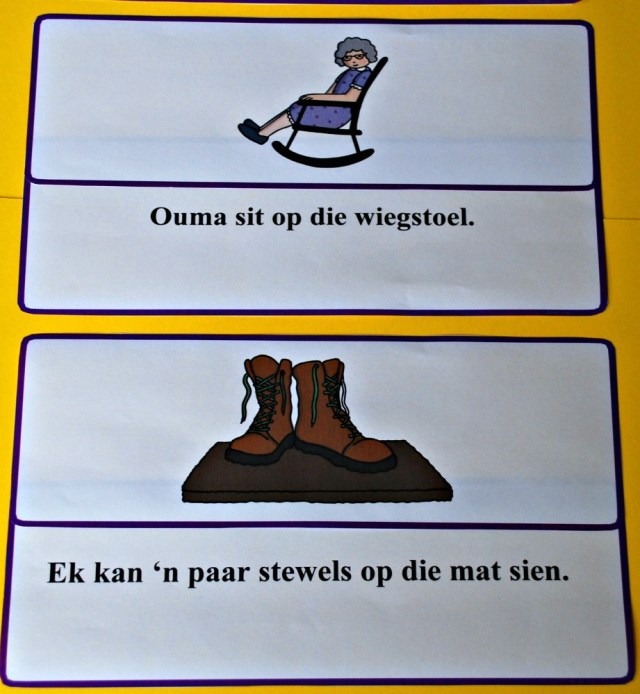
When my daughter was learning to read English I used the Twinkl match the sentences to the picture cards with her.  She liked this as it was a simple sentence on a piece of paper and she did not get distracted by everything else on a page.  So I thought it might be a good place to start with Afrikaans reading.  It was really easy to translate the sentences and then she was off.  (The sentences in the photos are from the Phase 3 Sentence and Picture Matching Activity).

Editable Match the sentence to the picture activity from Twinkl Resources

Afrikaans match the sentence to the picture activity from Twinkl. Editable REsources which you can translate into any language

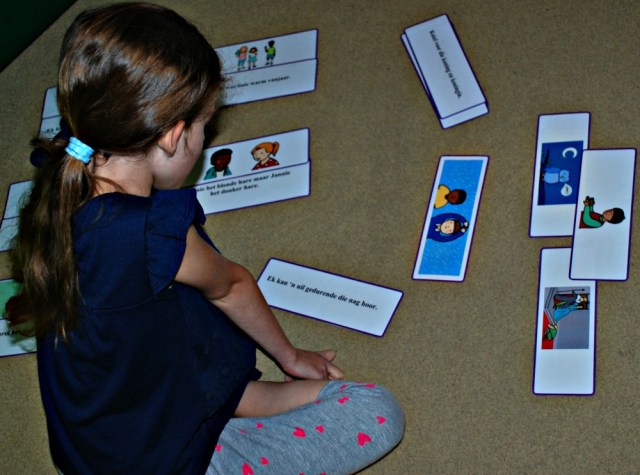
We were not sure how she would manage as we have not done any formal Afrikaans reading with her as such (just basic words).  But she sounded out the words and with a little help from her dad she read all of the sentences.  She was actually really surprised and very proud that she could read so many of the words and has asked if we can create more sentences for her.

match the sentences to the pictures editable resource from Twinkl

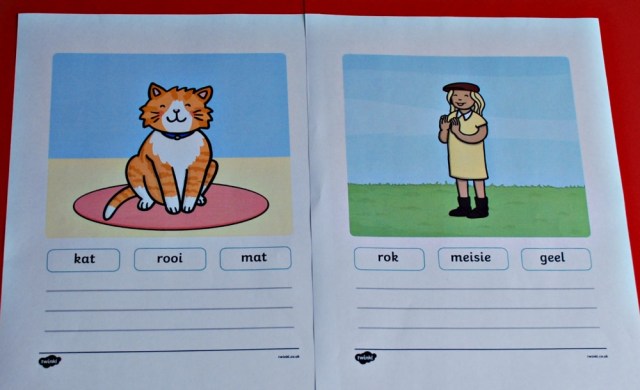
We also download and translated a very simple sentence writing activity where the kids are given a picture together with three words and then they try to create a sentence.

Afrikaans simple sentence writing activity from Twinkl. Editable resource that you can translate into any language

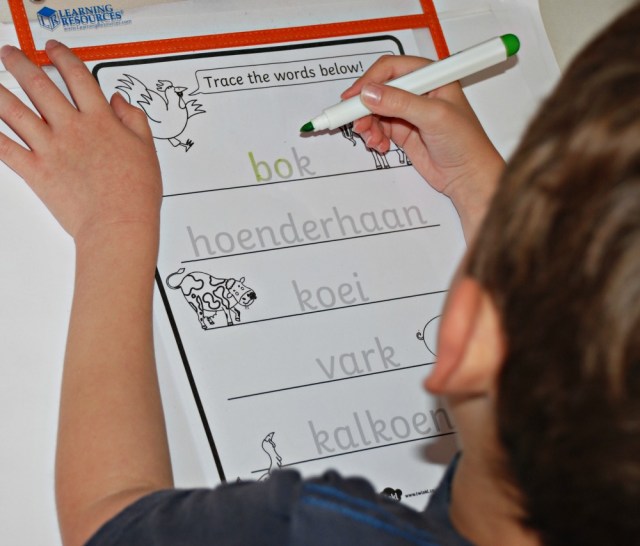
And because my animal-mad youngest also wanted some Afrikaans pages I translated a the Trace The Words Worksheet – the one in the picture is the Farmyard Hullabaloo

Twinkl Resources have a large selection of editable resources like this trace over words page which you can translate into any other language

But I must be admit I was amazed to see my youngest was also able to read some of the Afrikaans words in the sentences that we created for his sister and he has now asked for some Afrikaans sentence and picture cards.

For me those three activities would have taken ages to set up if I was creating them myself but by just translating an editable version of an existing document I saved lots of time and now I have that extra time to translate more for the kids.  I am a huge fan of the editable resources on Twinkl for that simple reason they save me time.

Using Twinkl Editable Resources for other languages. We translated ours into Afrikaans. Great for second language learning

Please note the 2nd langauge is an ongoing part of our family life, it is not something we are suddenly introducing – We have been following the one parent one language rule in our house since both kids were born and my husband does also read Afrikaans books to the kids.

Save

Save

Save

Save

Save

Save

Save

Save

Save

Save

Posted in Homeschooling | Tagged , , , , , , | Leave a comment

Spider Art

My youngest is the normally the more reluctant artist but then every so often we discover an art activity that he loves and he just can’t get enough.  For any art activity to be a hit with him it has to be based on a topic that he loves – so dinosaurs and animals are normally my “go to” art subject for him.

And he love spiders.  He actually gets angry with me if I try to remove a spider from the house, he tells me they are helping by killing the bugs.  So when he asked if he could try to paint watercolours over oil pastels (he had heard a friend talking about it last week) I thought a spider picture might be the perfect subject as he could do the web in oil pastels and then paint over the web with his watercolour paints.

We already had the Spider templates from Activity Village printed and cut out (he had wanted to use them to make some stick puppets) so we used those.

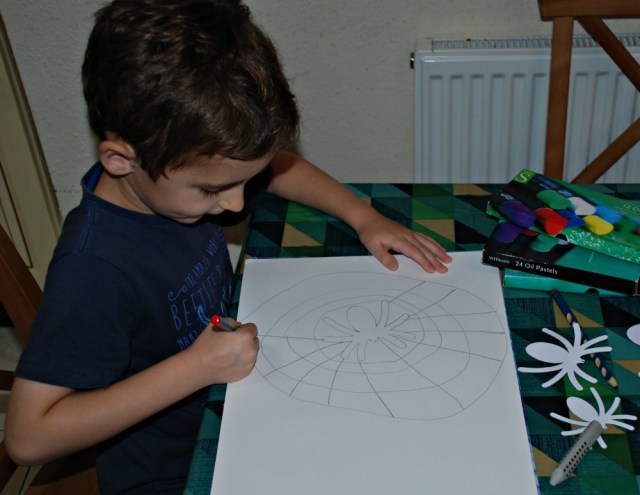
The kids traced around the spiders and then added the web around the spiders.

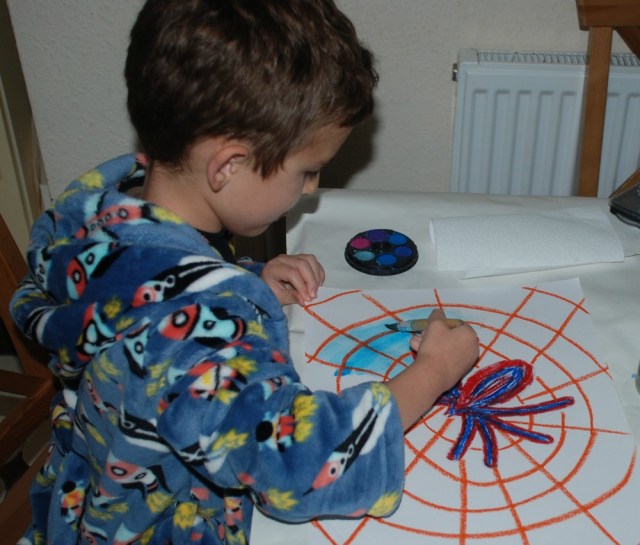
Drawing his spider picture using the spider templates from Activity Village

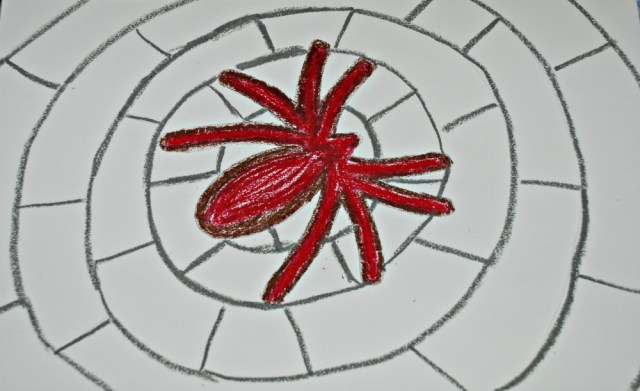
They coloured in the spiders with their oil pastels and traced over the web with the pastels.

Spider drawing using oil pastels

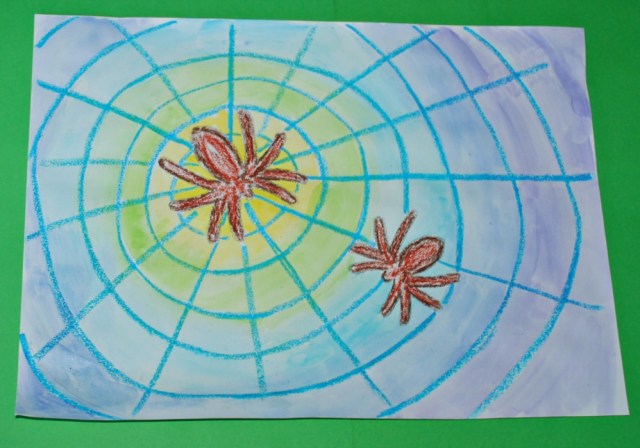
Then we painted over everything with our watercolours (when you paint over oil pastels with watercolours they do not mix so the oil pastel outline / picture stays there and the watercolours just become the background).

Spider picture. Painting over the oil pastels with watercolours. Fun kids art activity

One of the end results (you can see the oil pastels come “through” the watercolours)

Children's spider picture made using a spider template, oil pastels and watercolour paints

And you know he really enjoyed doing it as he sat down and did another one just before bedtime.

Spider picture activity for children. Draw the spider and its web with oil pastels and then paint over with watercolours

And if the older kids want to join in you can always encourage them to use multiple spiders or multiple colours.

Spider picture with oil pastels and watercolours using different coloured background

A very easy art idea but I really liked it as my youngest enjoyed making the pictures and the more they enjoy art the more they want to do art.  And while he was having fun he was tracing around pictures (using both hands together), practicing his pencil control, when he traced over the pencil outlines with his oil pastels and he painted.  So for me a fun art activity that had him doing three activities – tracing, colouring using oil pastels and painting.

Save

Save

Save

Posted in Art and Craft Ideas | Tagged , , , , , | 1 Comment