Wrapping Up Circuits

We have never really done “official” electric circuit learning as such, instead we have two different circuit sets and the kids have both just played with them and I must admit that by just simply playing around with the sets they have learnt a LOT. However as my daughter is moving up into secondary school from September  (we are still home educating her) I have been doing some quick checks to see if there have been any sections we have missed. And I realized that the kids have never tried to draw their own circuit (part of the National Curriculum), so last week we had a go.

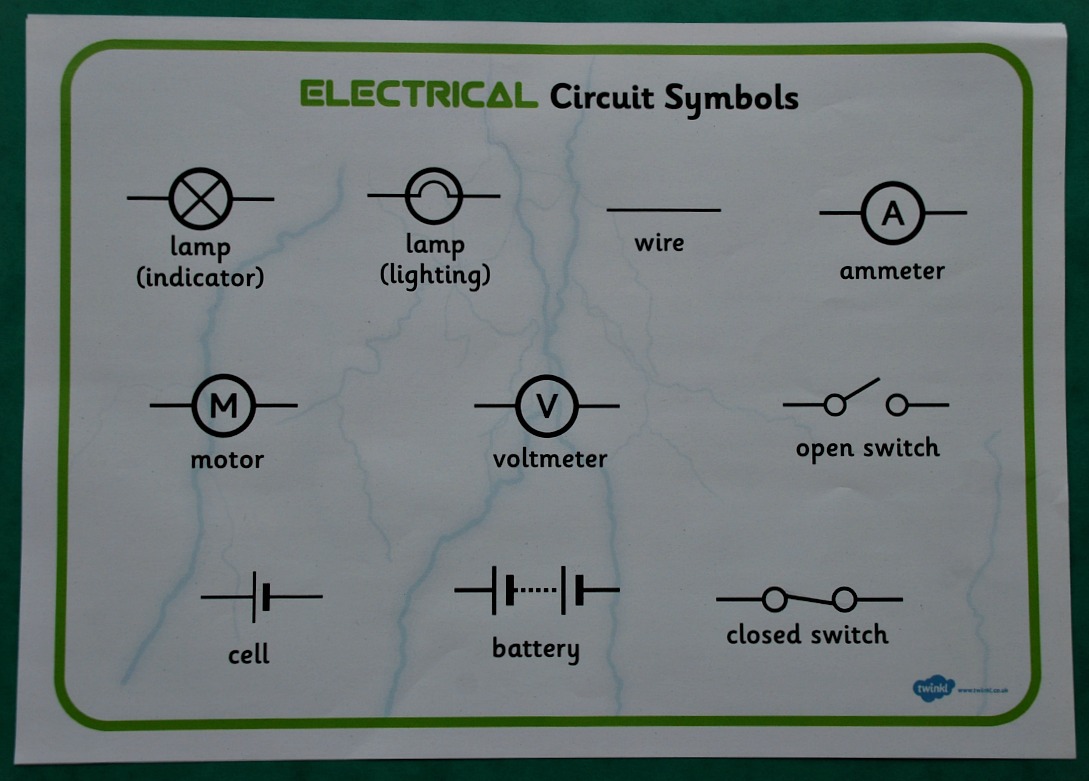
To start with I did print out two circuit sheets which showed the kids how they would depict certain items in an electric circuit (these are useful for the first few drawings but they quickly picked up the symbols and then no longer needed them). The one below is free to download from the Teachit Primary website – electric circuit mat.
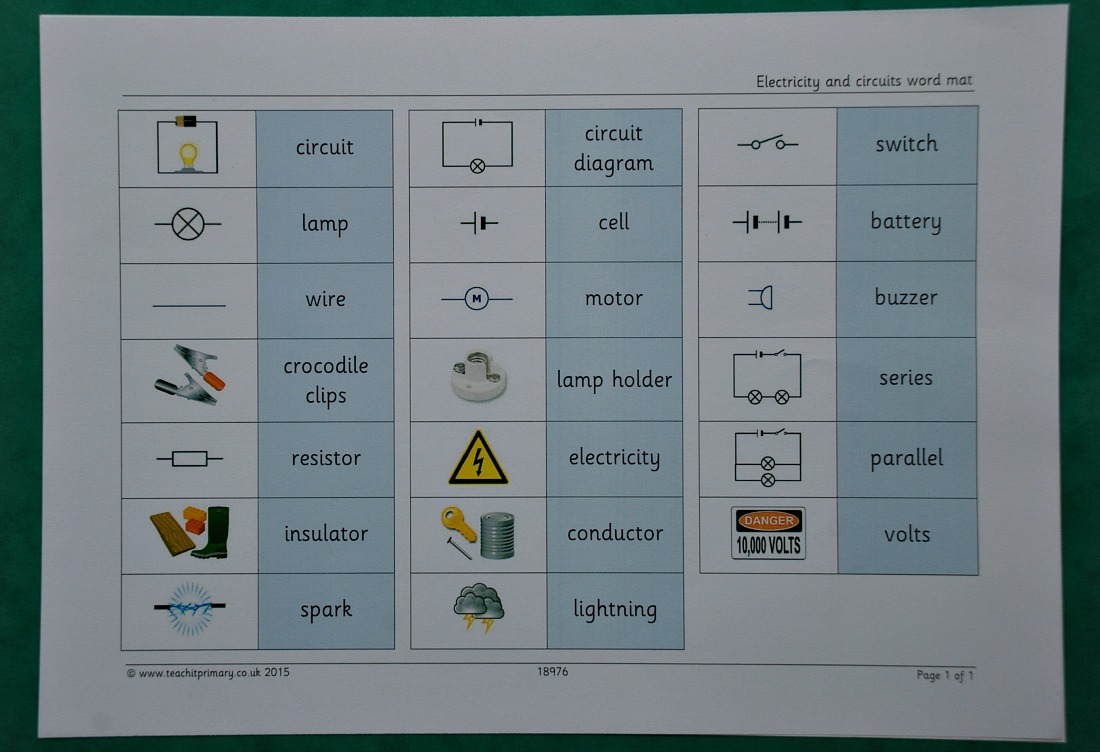
And this one can be downloaded from Twinkl Resources website (part of their paid for Classic sub) – Twinkl’s electric circuit mat
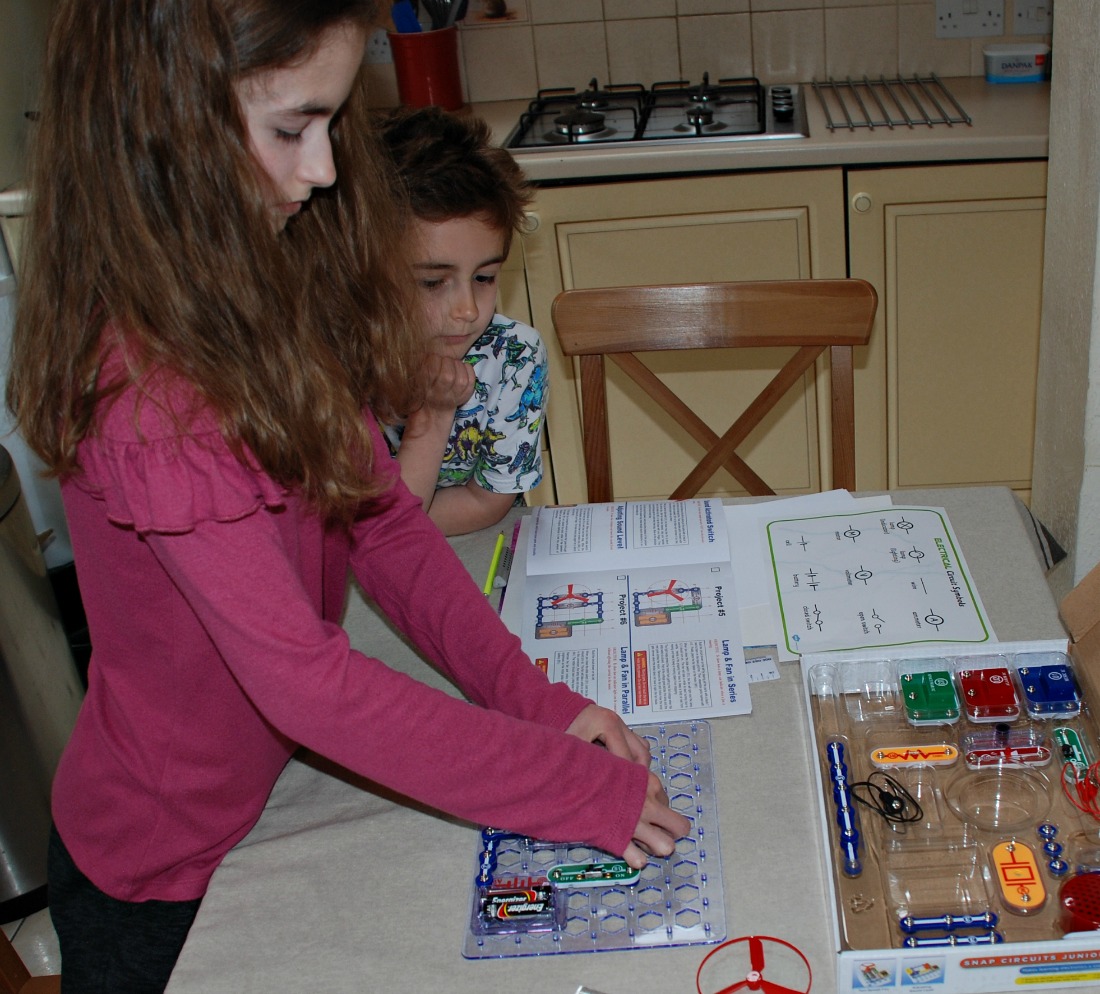
We first built a circuit with one of our sets.
And then the kids would draw that circuit.
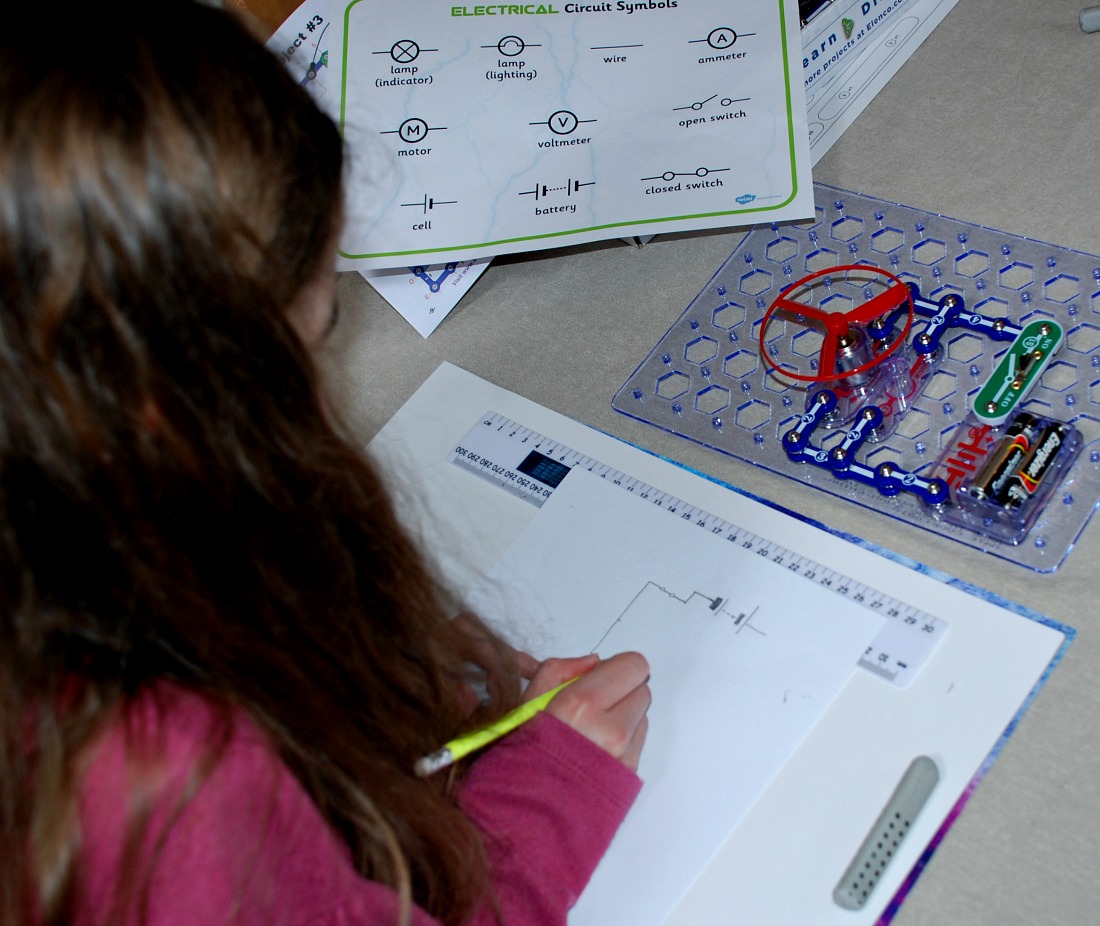
And where possible the kids would find ways to change the existing circuit that they had built and then draw the changes as well – so lots of series verses parallel circuits.
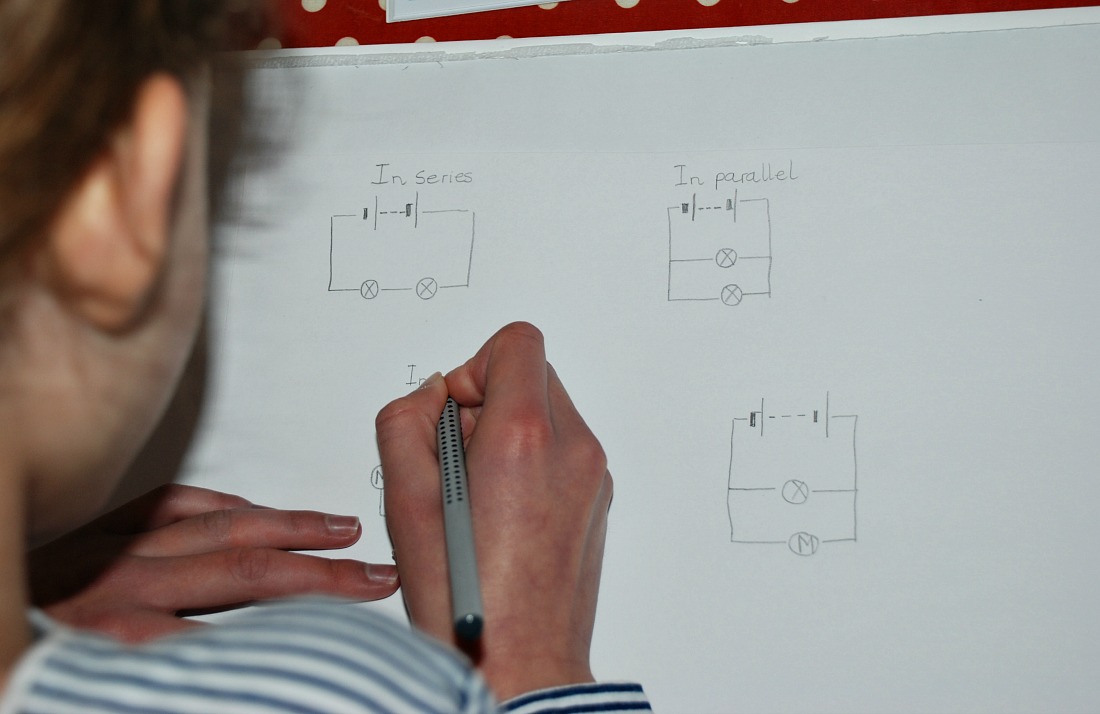
And we also tried a few circuits where we changed the lights – so added more lights or took some lights away resulting in a change in the brightness of the lights (also using a combination of lights and motors).
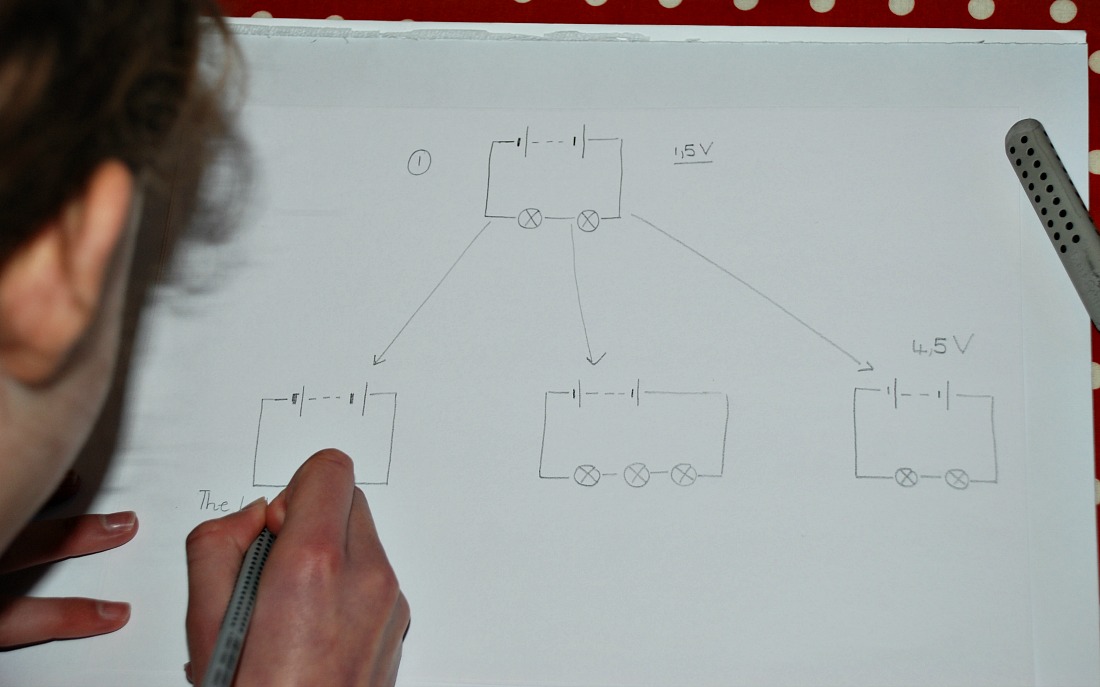
And I must admit I am really glad we did this because it showed me how much they really do understand about circuits and the way they work. It is nice to be able to put a mental tick against that topic and know they have covered everything expected and actually managed to already cover some of the Secondary side of circuits. It also reminded me that they are a few extra bits and bobs that I need to buy for some more advance circuit making for next year (I am slowly building up a list of resources that I want to buy for my daughter for next year).

For those who want to know the two electric circuit sets that we have are these ones – Snap Circuits and The Electro Dough Kit.
Posted in Homeschooling | Tagged , , , , , , | Leave a comment

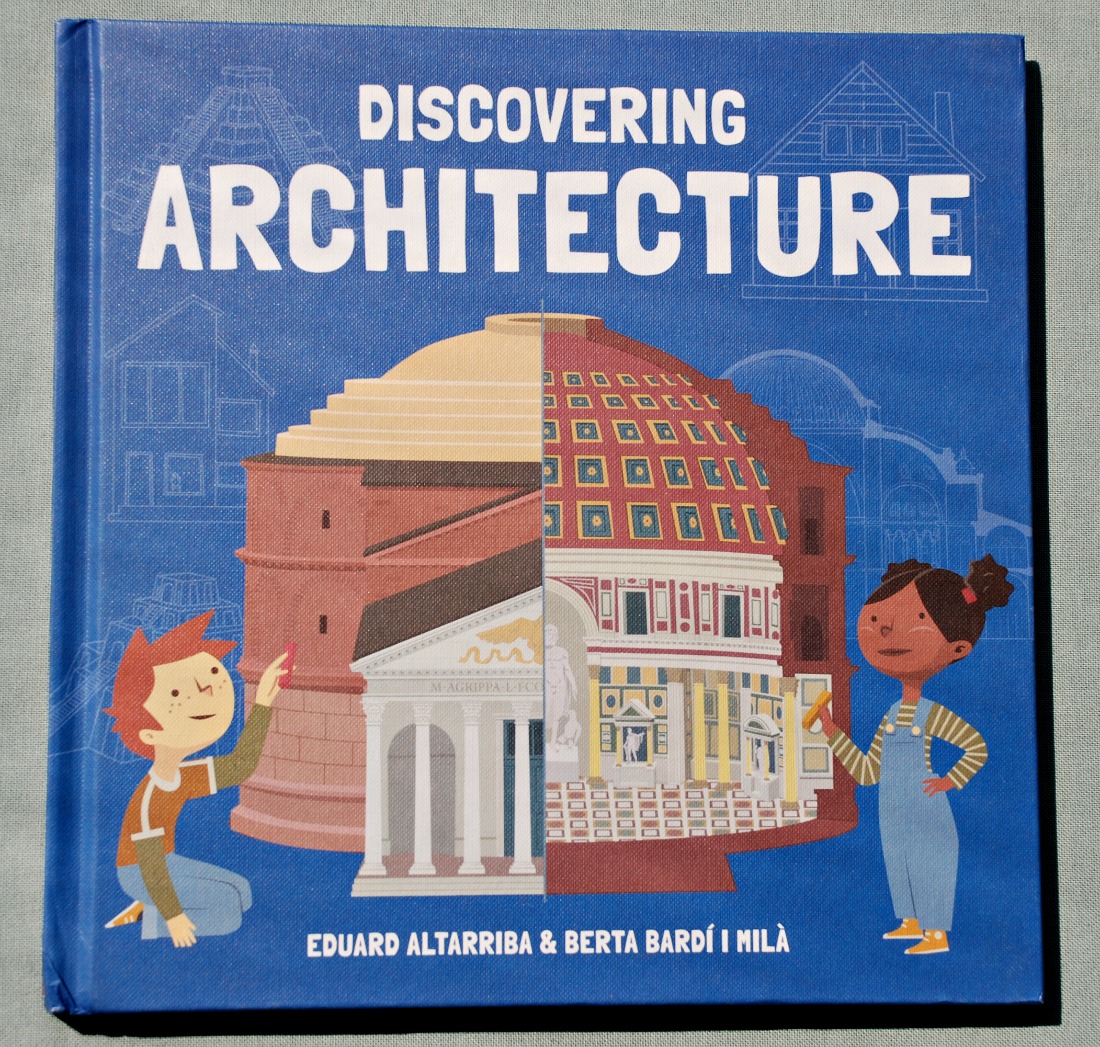
Discovering Architecture Book Review

A little unknown fact about myself is that I actually studied Architecture for about 18 months before I switched to commerce so when we received the Discovering Architecture book I was THRILLED.  It is not a topic we have ever covered before and as soon as I started paging through the book I was inspired to share it with the kids and hopefully create a few activities for us to do together.

Discovering Architecture book for kids. Great introduction to Architecture

The book starts with the Architecture of the Ancient times – the Pyramids, the Parthenon and Ancient Roman Towns. I think this is the perfect introduction as the buildings from way back are so amazing and still influence so much in today’s world. They talk about key Greek elements, like the different orders and significant parts of Greek buildings – the pediment and frieze – all good terms for kids to become familiar with.  And the Roman Towns – they way they were planned and structured and the brilliant set-up for a Roman house (the Egyptian, Geek and Roman buildings would actually be great pages to include in History activities).

This slideshow requires JavaScript.

And then onto Arches and Vaults with examples of how they have been used in famous historical buildings.

Discovering Architecture. Inside Hagia Sophia. explaining domes

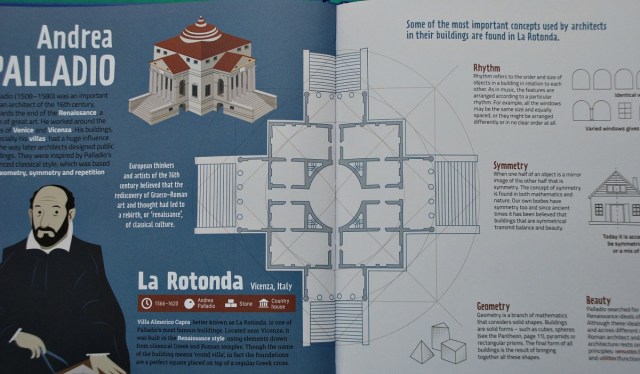
The book also includes some famous Architects – Andrea Palladio, Antoni Gaudi, Le Corbusier, Ludwig Mies van der Rohe and Zaha Hadid, explaining their building style and giving examples of famous buildings that they created.

Discovering Architecture Book for kids by Button Books

Throughout the book they highlight key words, terms and architectural elements which I think is great from a general vocabulary point of view.

Discovering Architecture book for kids. Elements of Architecture included in a house. Key words that are useful

I have really enjoyed reading this book and am planning on using it as a starting point for a few crafting / building sessions with the kids.

Admin Bit – we were given this copy of the book but all opinions expressed are mine

Also just to mention I have noticed if you search on Amazon for this book some links say it is only available 1 Sep – that is not correct it is already available – here is a link – Discovering Architecture

I do include Affiliate links. If you follow an affiliate link and go on to purchase that product, I will be paid a very small commission, however your cost will remain the same. I only include affiliate links for products that we use and love.

Posted in Homeschooling | Tagged , , , , , , | 1 Comment

What about Social Skills ?

One of the questions home educators often get asked is what about social skills? Surely keeping your child out of a class fill of kids their own age will mean they lack social skills?

My answer ………………..

Today after my son’s sports class his coach came up to me to tell me how proud she was of him. In the class a younger girl (someone he does not know) was struggling with the activities and a few of the other kids started laughing at her. But my son left what he was doing and went to help her. He showed her how to do the activity and then stayed with her and helped her throughout the rest of the class. No one asked me to do this, he just did it.  When I asked me about it he said to me – “she needed a friend”.  That was it.  Nothing more just she needed a friend.

So am I worried that my kids are not going to learn social skills – NO I AM NOT.

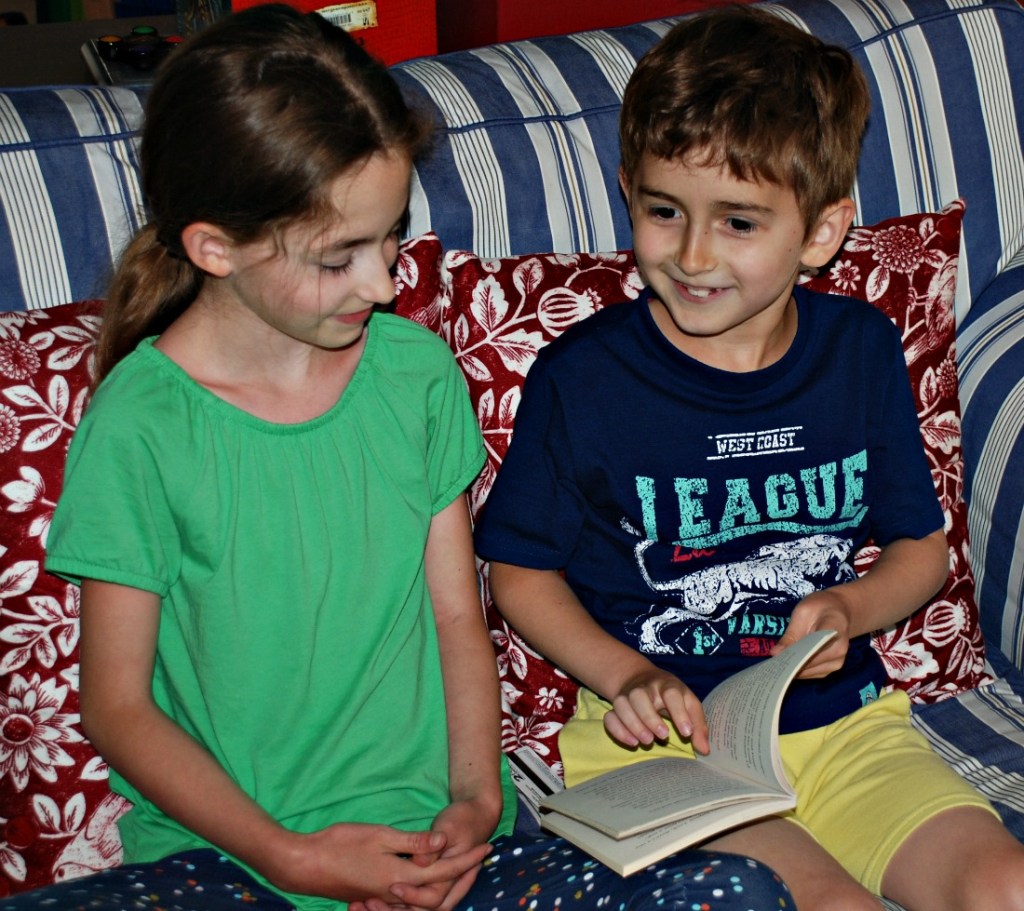
Siblings reading aloud together
 
Posted in Homeschooling | Tagged , , , , , | Leave a comment

Introducing Romeo and Juliet

I love watching how one area of interest always leads the kids onto other topics.  I honestly never know where we are going to end up.  My daughter’s interest in the Tudors meant she has been reading up on Queen Elizabeth I and a number of her Queen Elizabeth books have mentioned Shakespeare.  So she went back and dug out our Life and Time of William Shakespeare book and re-read it.  It really is a brilliant book and talks a lot about how  different events directed his play writing.  The book also includes short extracts from his plays one of which is Romeo and Juliet.  And this one immediately caught her attention and she remembered that we had a condensed version of Romeo and Juliet – Romeo and Juliet: Band 18/Pearl (Collins Big Cat) so she read it.

The Collins Key Stage 2 version of Romeo and Juliet. A great introduction to one of Shakespeares works

Now let me start by saying that my daughter is 10 years old and I am planning on covering Shakespeare in the future with her in its proper format and I do not think this book replaces that.  HOWEVER this is an introduction to the characters and events of the play.  It is written in a very accessible manner and I really do think be reading this now and getting a basic understanding it will make Shakespeare easier for her when we get around to it.

This version is geared towards Key Stage 2 readers and we found it a good version of the play.  It covers the basic plot, the key characters and the sequence of events.  It is simplified but then it was written as part of a reading series aimed at year 5/ year 6 kids.

This slideshow requires JavaScript.

Even though she read Romeo and Juliet just for fun and even though it was a condensed version I still thought it would be good to make sure she understood who all the characters were and the sequence of events.  I have been spending some time looking around the Secondary resources on the Twinkl website and I remembered seeing some Romeo and Juliet resources so I went back to see if there was anything we could use.  And I must admit they do have some interesting Shakespeare resources on the site, it is worth having a look if you are covering one of his plays.

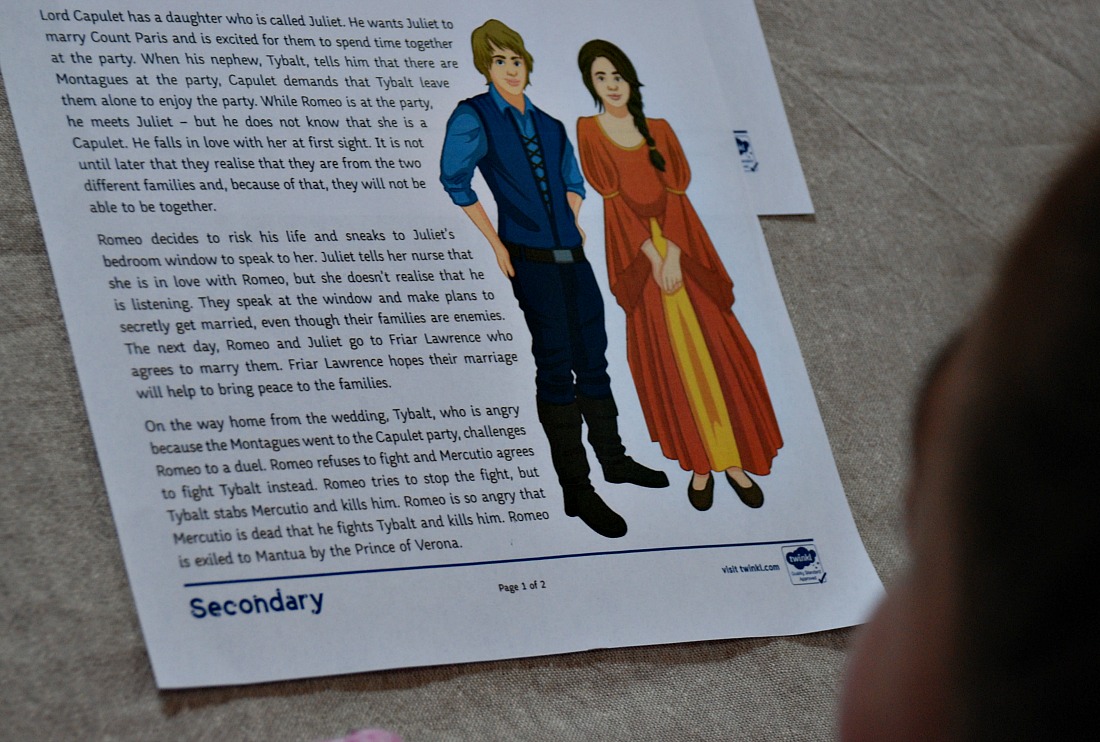
For our purposes I started with the Romeo and Juliet Plot Summary Page.

Twinkl. Reading the Romeo and Juliet Plot summary pages downloaded from Twinkl

And then we used the Character place cards (now I know these cards say lower ability but I have actually found that when younger kids are interested in a topic the lower ability cards are actually a great way of introducing them to the topic and then they can build on it. So please don’t be put off by items labelled as lower ability as we thought these cards are great.)

This slideshow requires JavaScript.

You also might like these Romeo and Juliet sorting cards

After the sorting cards my daughter had a go at a True and False worksheet and we also tried the Plot revision worksheet, although we did the plot revision page slightly differently.  We actually cut it into strips and then she had to place the strips in the correct order.

This slideshow requires JavaScript.

We kept our Romeo and Juliet activities quite brief as I know we will be coming back to cover the play in detail later on and for now I just wanted to make sure she got the key parts correct.

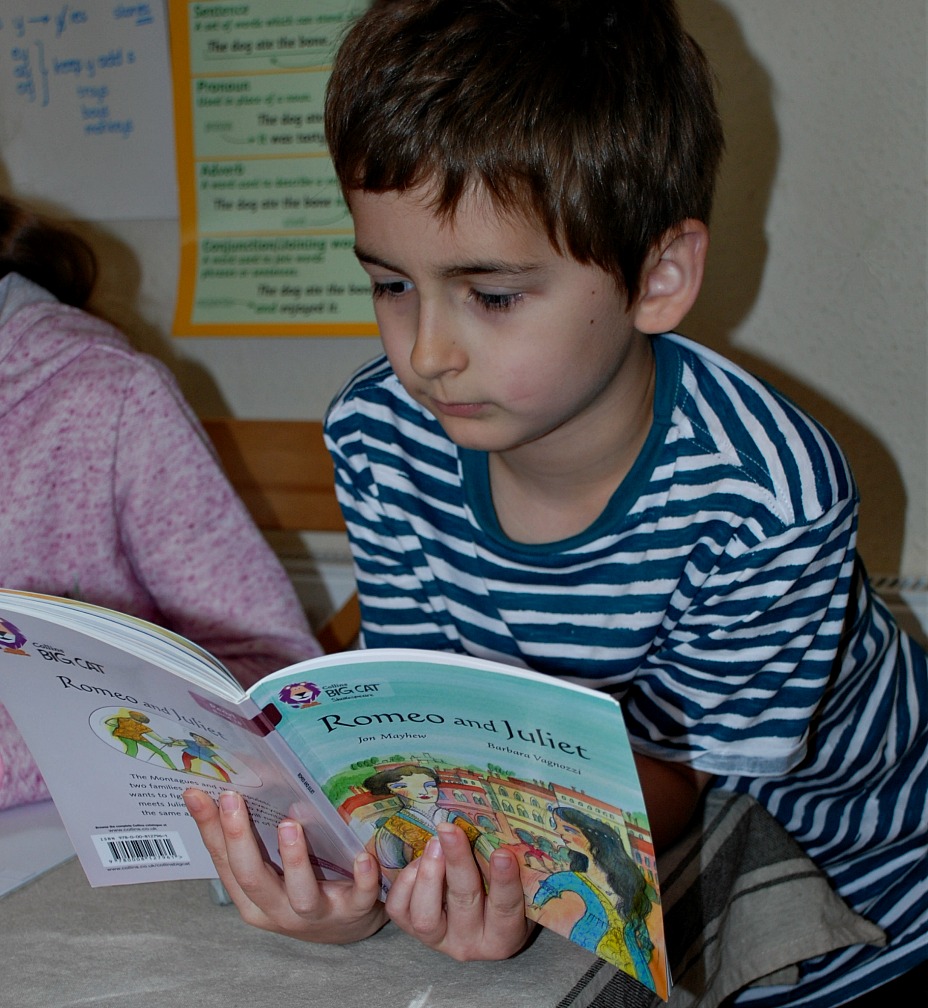
Oh and while she was working on her Romeo and Juliet activities her younger brother read the book – he thought it was good but felt that Romeo was a bit over-dramatic.

My 8 year old reading Romeo and Juliet by Collins

Disclosure: Twinkl Resources have given us free access to their website so we can use their resources and share our favourites with you.  All Links and References to the subscription packages are correct at the time of me writing this post

I do include Affiliate links. If you follow an affiliate link and go on to purchase that product, I will be paid a very small commission, however your cost will remain the same. I only include affiliate links for products that we use and love.

Collins BIG CAT reader Romeo and Juliet a great way to introduce Shakespeare


Posted in Homeschooling | Tagged , , , , , , , | 1 Comment

Animal Skeletons

My kids LOVE learning about animals, and one of the more unusual aspects that they both find fascinating are the skeletons of the animals, particularly which sections are common and which sections are unique to different animals.  We have looked at animal skeletons before and I know my kids wanted animal skeleton printouts that they could keep and use in their own little projects (they both like creating books filled with information about topics they find interesting) so as soon as I spotted these skeleton pages from Twinkl Resources I knew I had to print them out.

This slideshow requires JavaScript.

The set includes – a dog, cat, rabbit, chameleon, parrot and a badger.

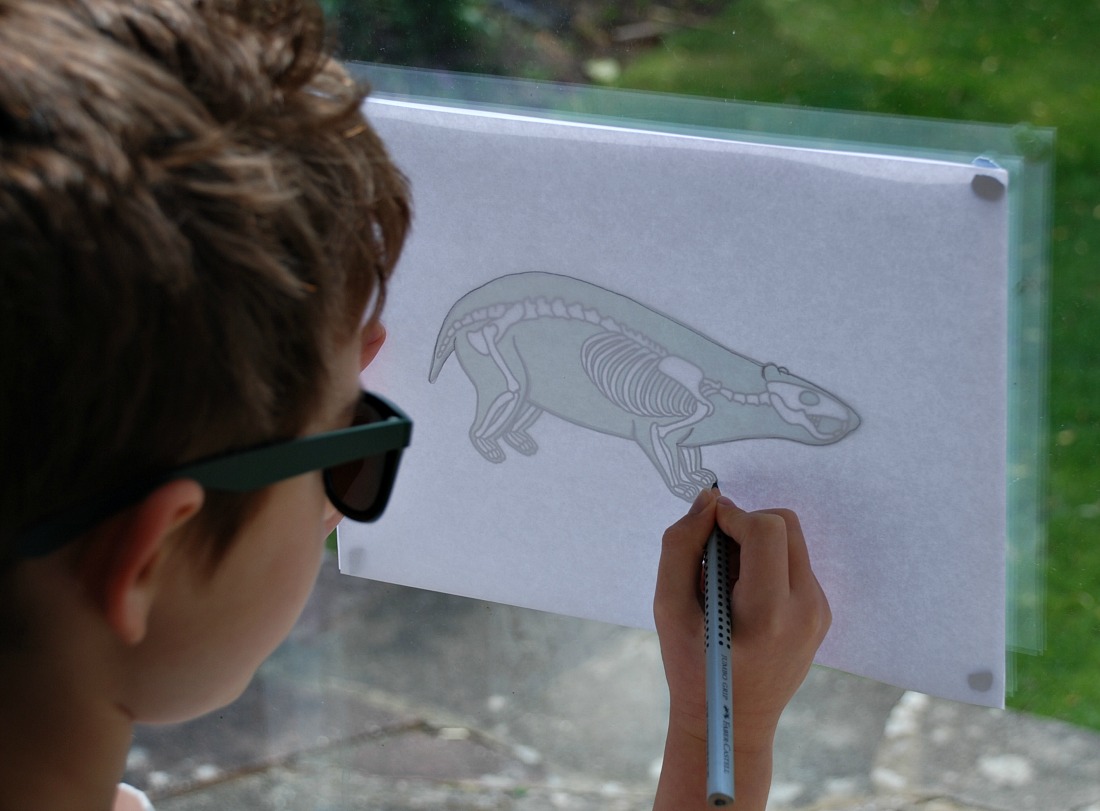
As soon as I gave them the set they started using them. My son likes creating his own animals and part of that is he wants to be able to draw skeletons for his hybrids so to help him with his hybrids I suggested we practice drawing animal skeletons (always easier to adapt something if you know what the real version looks like).  To start with he traced the outline of the animal.

Skeletons - Tracing the outline of the animal first

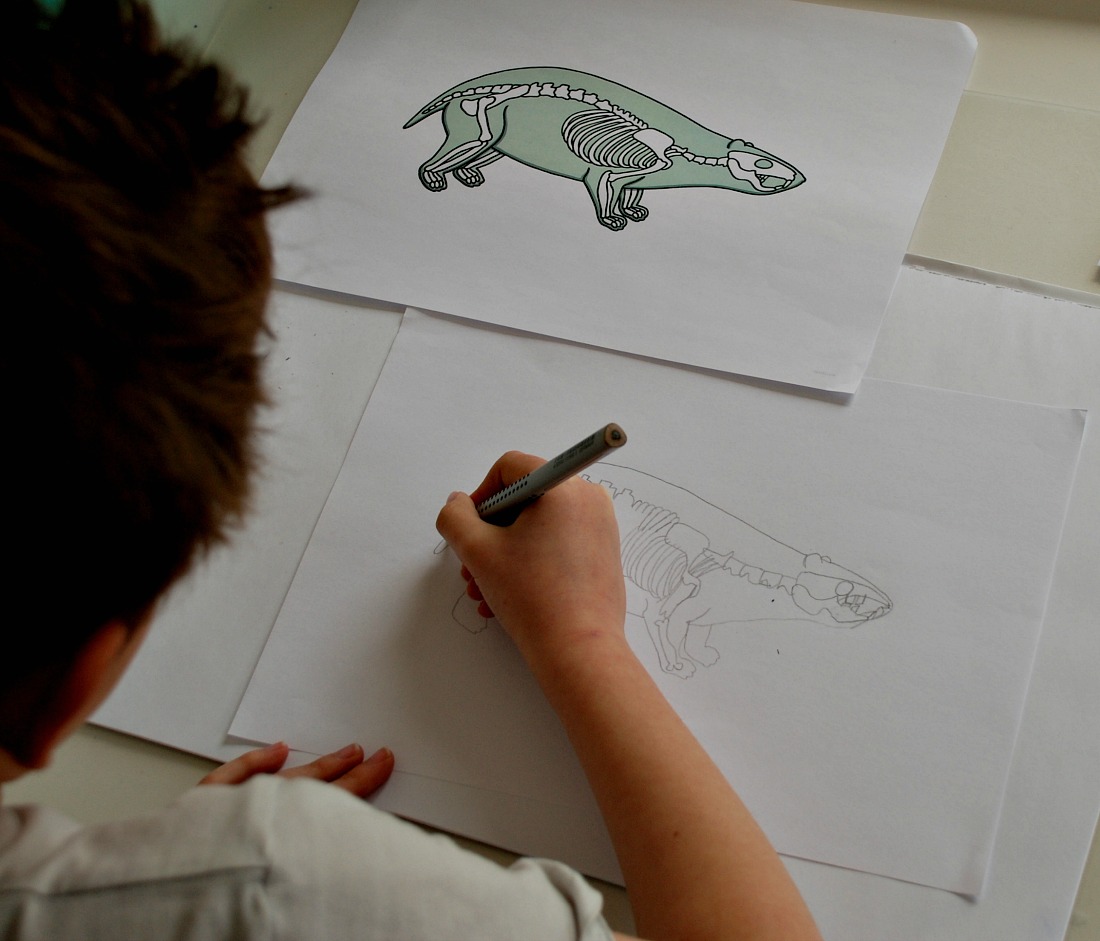
Once he had the outline as his starting point he started practicing how he would slot the skeleton inside.

drawing a badger skeleton from the badger x-ray page on Twinkl Resources website

I really think it helped him.  As he drew, he thought about what bones went where and even discussed how one of his hybrids would differ.

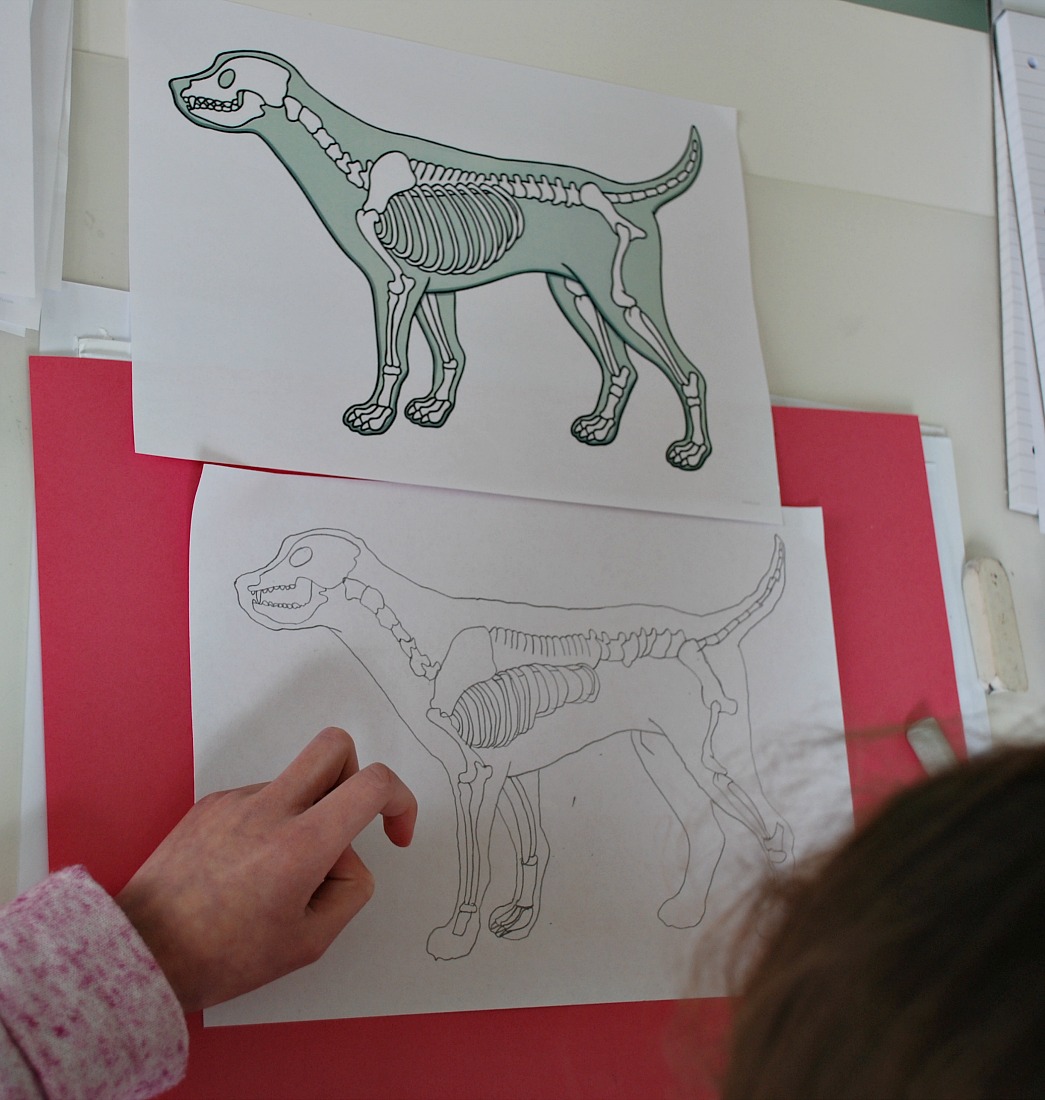
His sister thought this was a great idea.  She tried the dog skeleton. To begin with she did struggle with some of the proportions.

Twinkl Resources- drawing a dog's skeleton

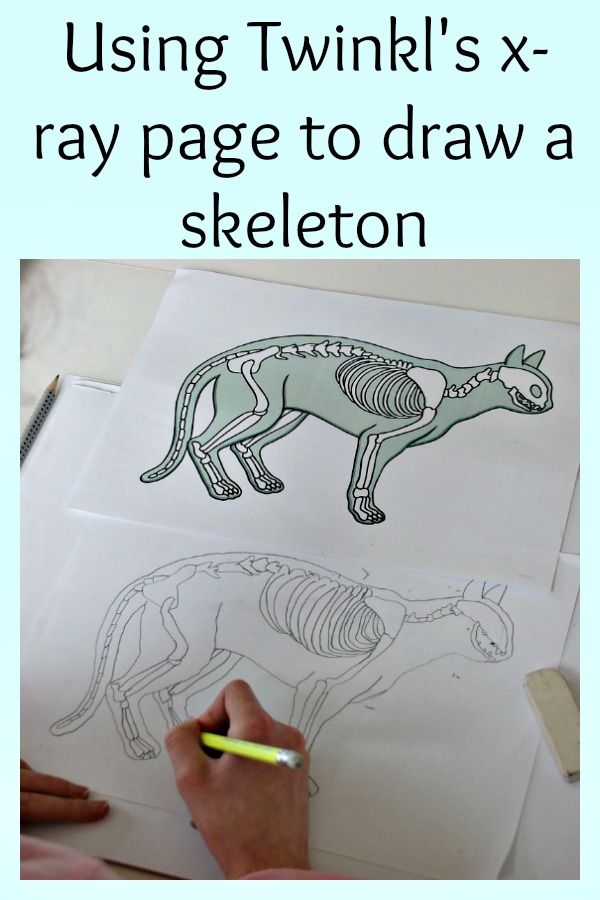
But she stuck with it and moved onto the cat.

drawing her own cat skeleton using the vet x-ray pages from Twinkl Resources

We love this little set of animal x-rays.  They are so useful for kids wanting to learn about animal skeletons.

Disclosure: Twinkl Resources have given us free access to their website so we can use their resources and share our favourites with you.  All Links and References to the subscription packages are correct at the time of me writing this post.

Using the x-ray pages from downloaded from Twinkl resources to practice drawing animal skeletons

Posted in Science Ideas | Tagged , , , , , , | Leave a comment