Warrior Cats

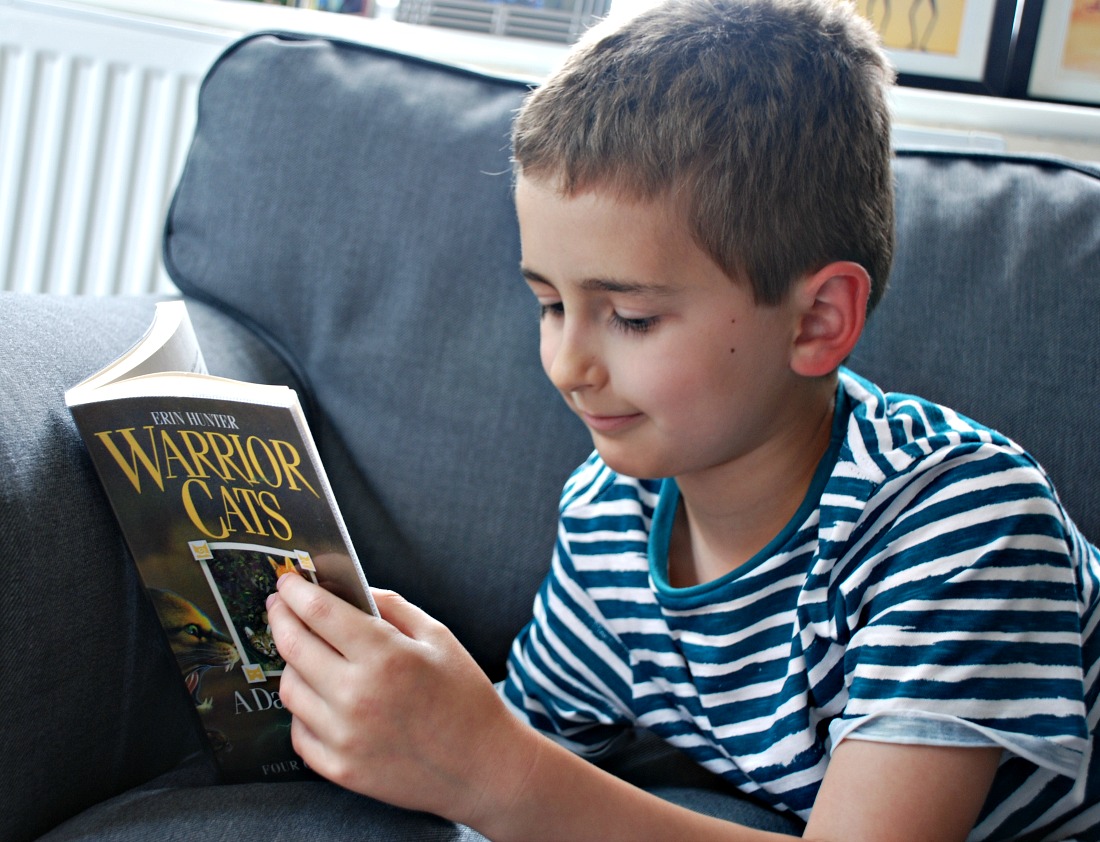
Earlier this year (I think it was sometime in April) I borrowed the first Warrior Cats book for our local library thinking it might appeal to my daughter (she was ten at the time) but before she even had a chance to try it her younger brother started reading it and did not want to put it down. I think he read the first one in two days and then was begging for the second. He convinced her she needed to read and that was the start of our Warrior Cat obsession.

Both of mine love these books and used to stash them in my bag whenever we were going somewhere (because you never know when you might have 5 minutes while you wait for your mom to finish her coffee).
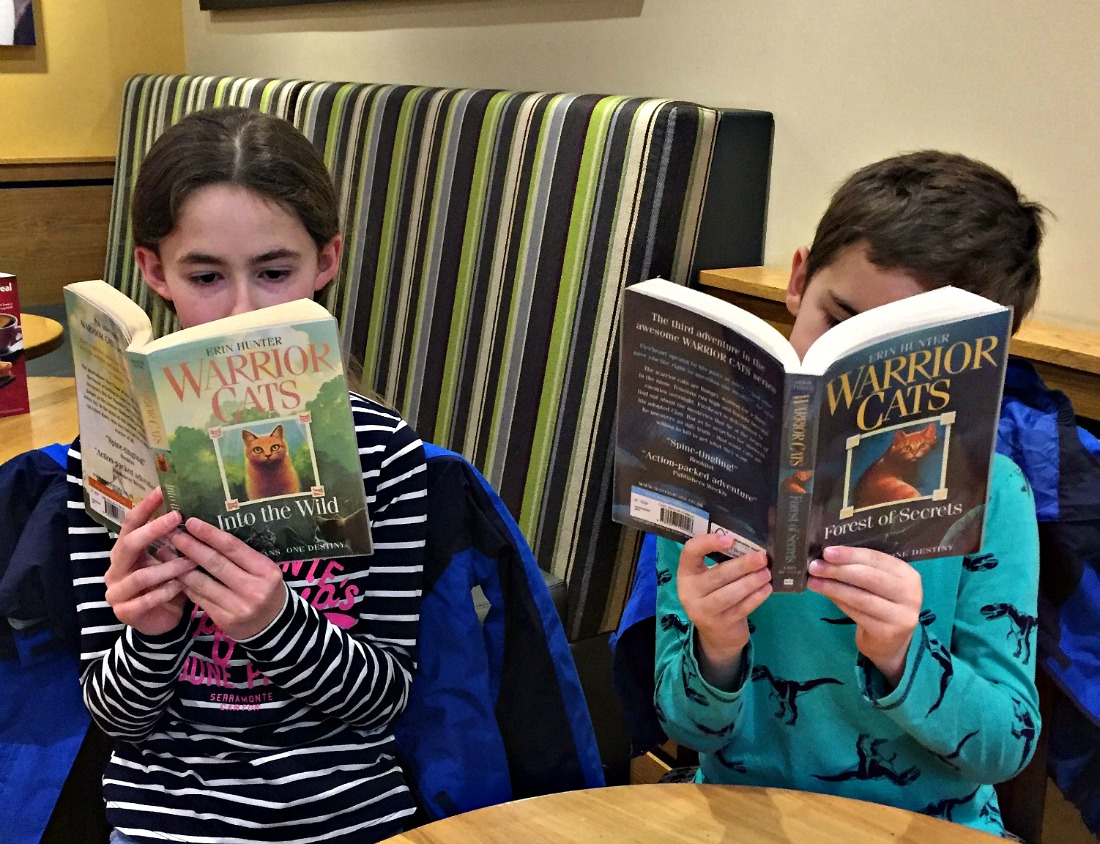
reading Warrior Cats in a local coffee shop

They have read them cover to cover.

reading Warrior Cat a dangerous path

The story is about a pet cat who goes into the wild and discovers a whole new world of wild cats, where entire clans exist and the kits train up to become warriors.  There are multiple clans with lots of different cats in each clan – I must admit I find the who’s who of each clan a bit confusing but my kids totally get it and have long involved discussions about the different goings on in the clans.

The storyline has totally gripped my two kids and has captivated their imagination.

One of my son’s favourite bits is that the cats call humans “2 legs” – and yes he does from time to time refer to us as “2 legs”.

Both of them have started creating their own clans – with written descriptions and drawings of the different characters and they have even mapped out which of their new clans are friends and who their ancestors are (apparently there is a link between their made up clans and the ones from the books).
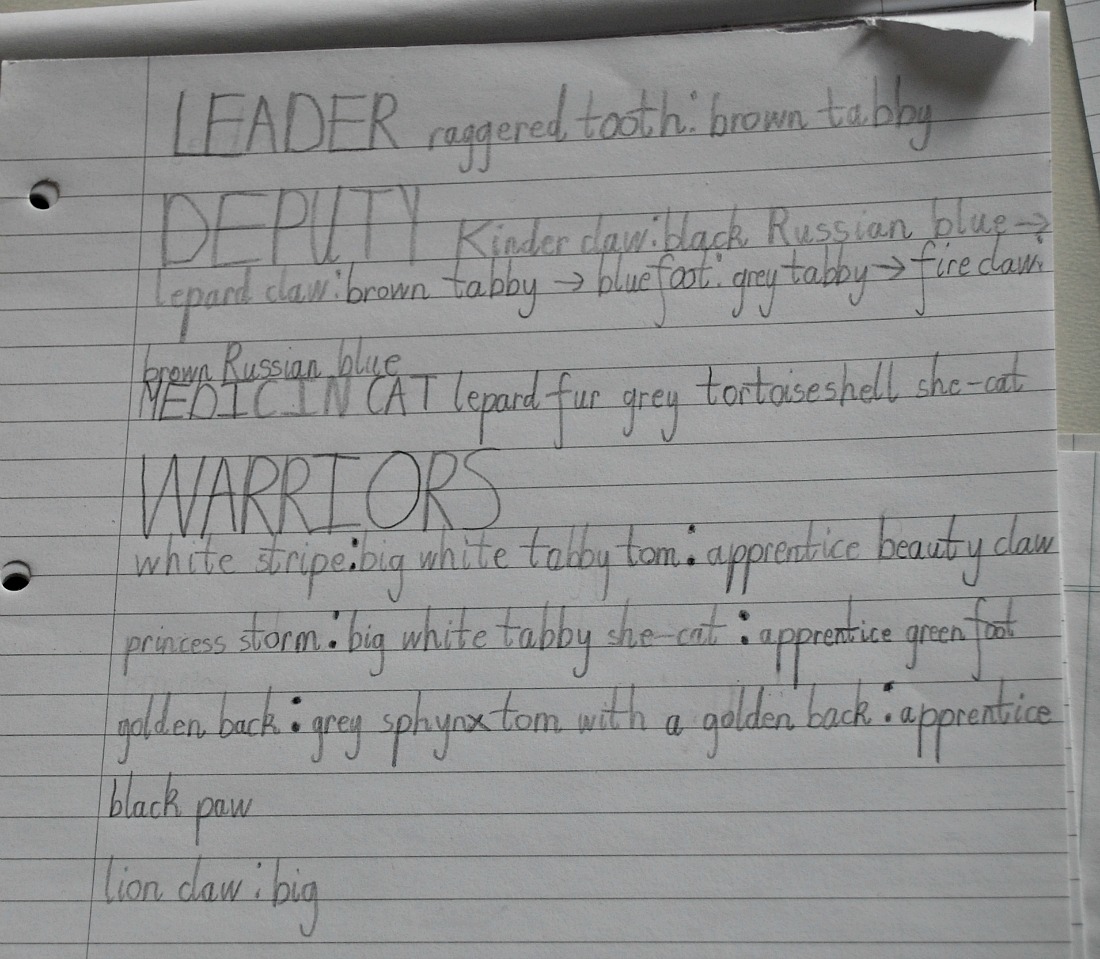
writing inspired by reading Warrior Cats

I have been blown away by how captivating this series has been. (For sensitive kids the cats do get into fight – nothing too gory and some do die).  I think the big attraction has been how these everyday cats created their own world, and the way this world works where everything is based around the clans, where allegiances are made and broken – it fascinates the kids.  And the way the cats see themselves – really not as pet cats but as fighters (I think the book cover below sums it up nicely with the cat and lion image). 
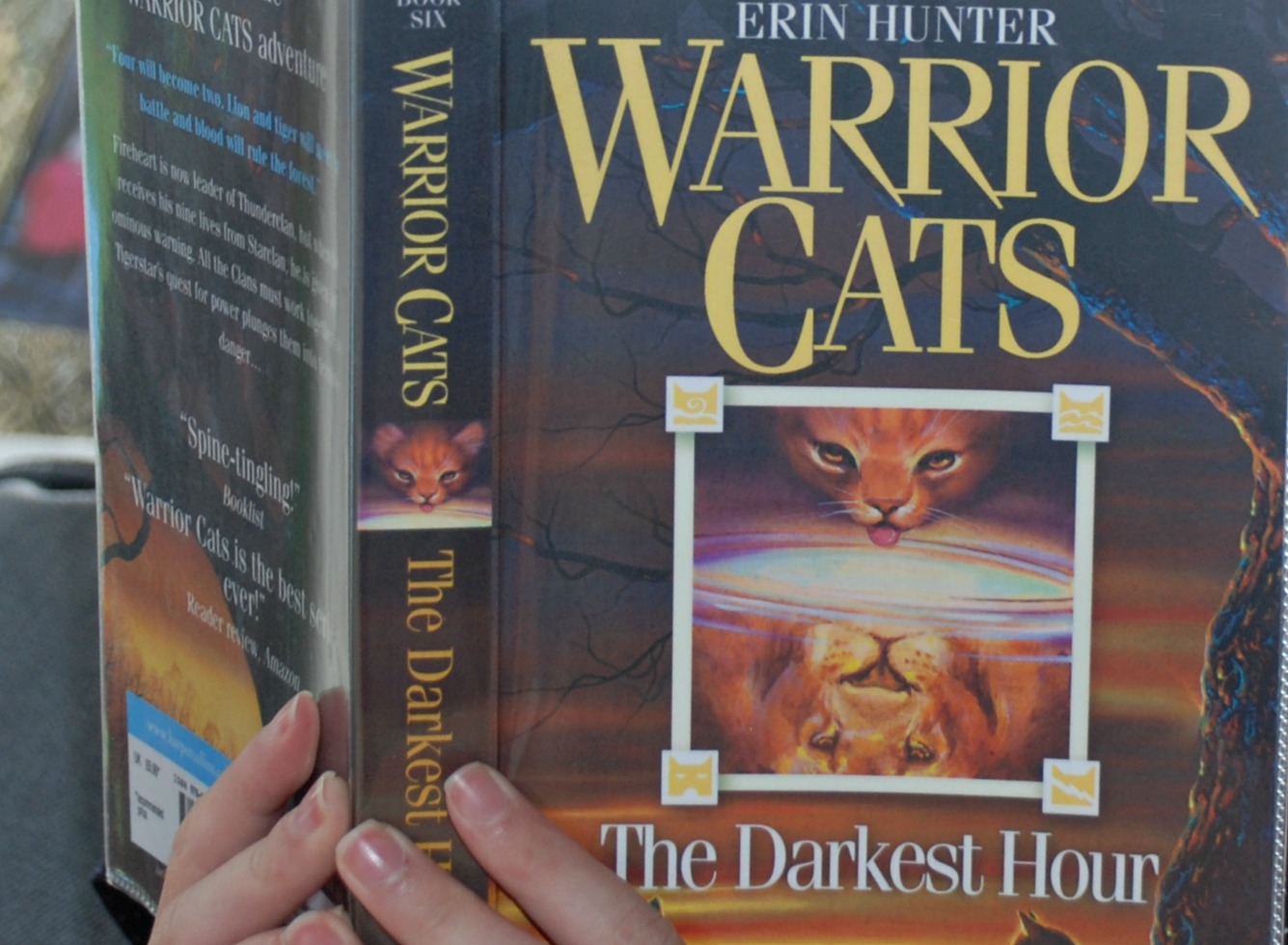
Warrior Cats the darkest hour

The way the cat characters are written is brilliant – they really came to life and you feel like you get to know the individual cats.

Just one warning – if your kids start this series they may not want to put the books down. Also we managed to borrow a few from our local library but the waiting time can be quite long and I did end up ordering some from Amazon just because my kids could not wait 3 weeks for the next book to be available.

And we do strongly recommend that you read the books in order because the events and characters do build on what has happened in the earlier books.
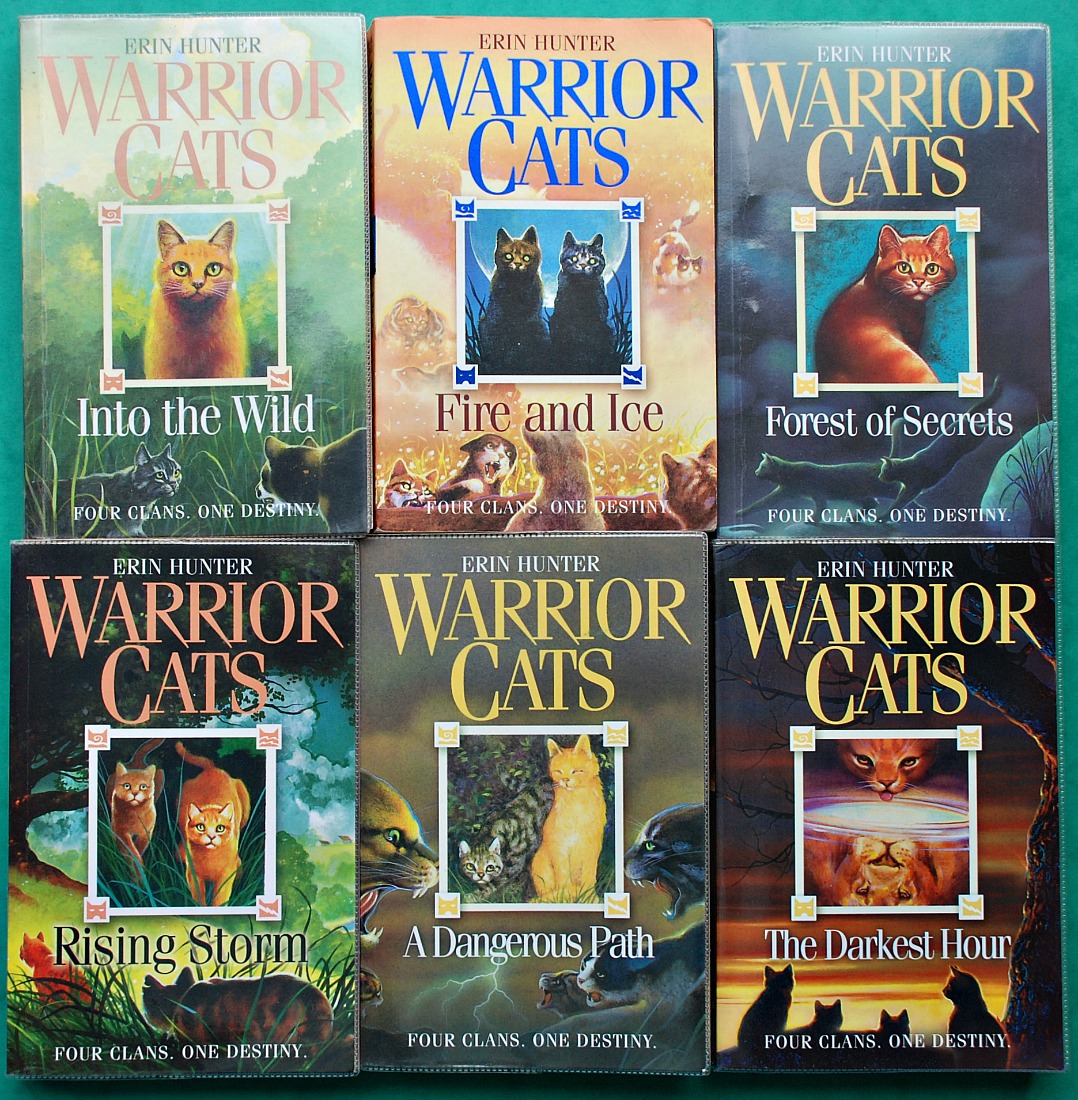
Warrior Cats series 1 books

Series 1 goes in this order.

Warrior Cats (1) Into the Wild

Fire and Ice (Warrior Cats)

Forest of Secrets (Warrior Cats)

Rising Storm (Warrior Cats)

Dangerous Path (Warrior Cats)

The Darkest Hour (Warrior Cats)

Both my kids highly recommend these books. And from a mom point of view these are gems.
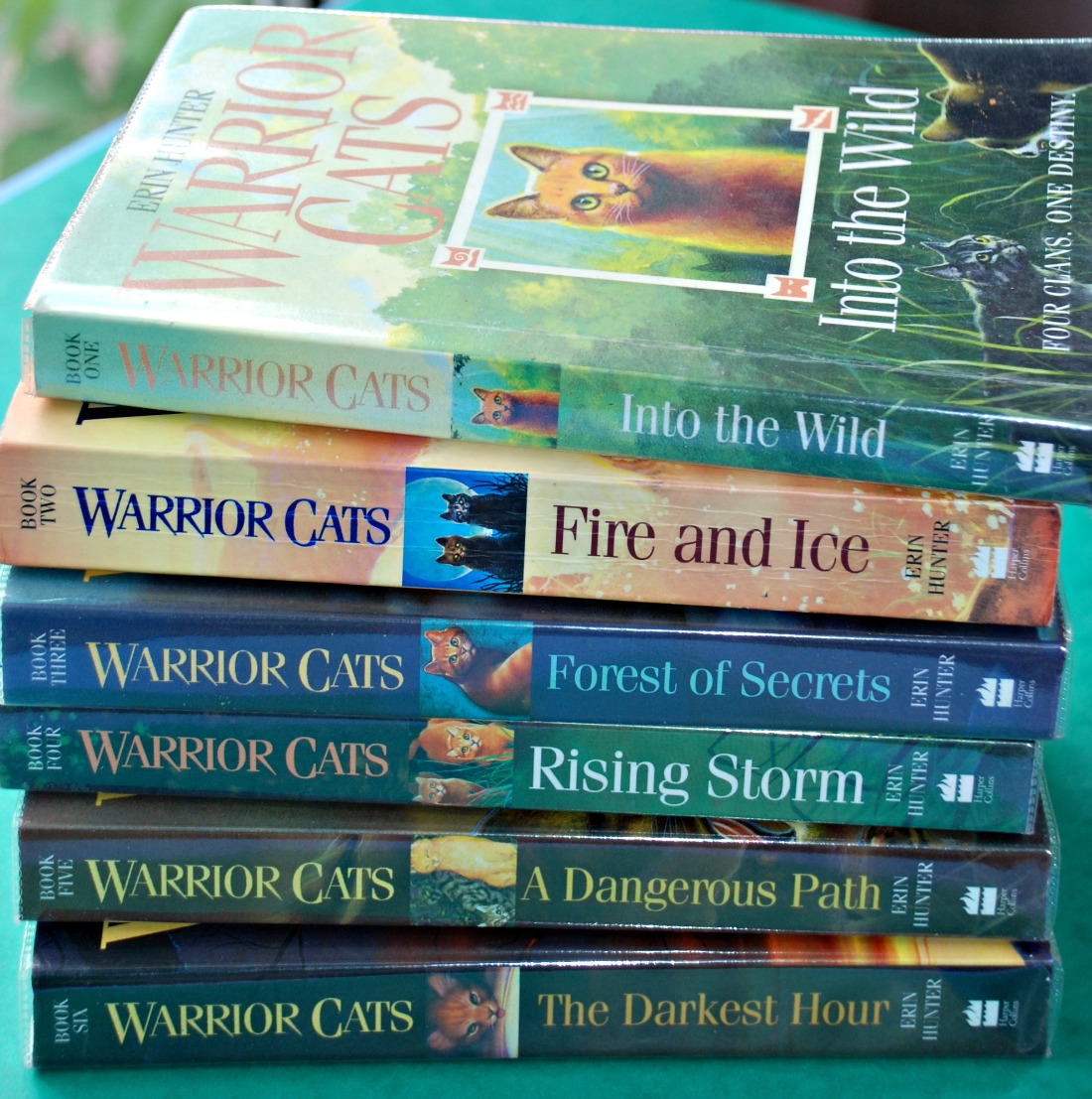
The warrior cat series 1 written by Erin Hunter

I do include Affiliate links. If you follow an affiliate link and go on to purchase that product, I will be paid a very small commission, however your cost will remain the same. I only include affiliate links for products that we use and love.


Posted in Homeschooling | Tagged , , , , , , | Leave a comment

Creating four Quadrant Coordinate Pictures

I was recently searching for some new coordinate pictures to use with the kids and although I could find a number with just one quadrant I could not find that many using all four quadrants so I decided to have try and create my own.

I set up our own four quadrant page using the 1cm grid paper from Activity Village.

I started by just drawing very stylized images – trying to keep the line straight and then plotted the coordinates for them. Stylized, simplified images were definitely much easier to work with (well for me they were)

four quadrant coordinate flower picture

But then I remembered the new templates on Activity Village specifically the shark ones and since my son is fascinated my sharks I thought I would see if using a template would also work. I choose this Shark template and cut out a few different sizes. Then to start with I simply traced around the image.

using a shark template from Activity Village to get the starting point for a coordinate image

But then you need to start adjusting the image  – some points need to get stretched and others shrunk a bit so they fit into the grid a bit better. There is some trail and error involved.

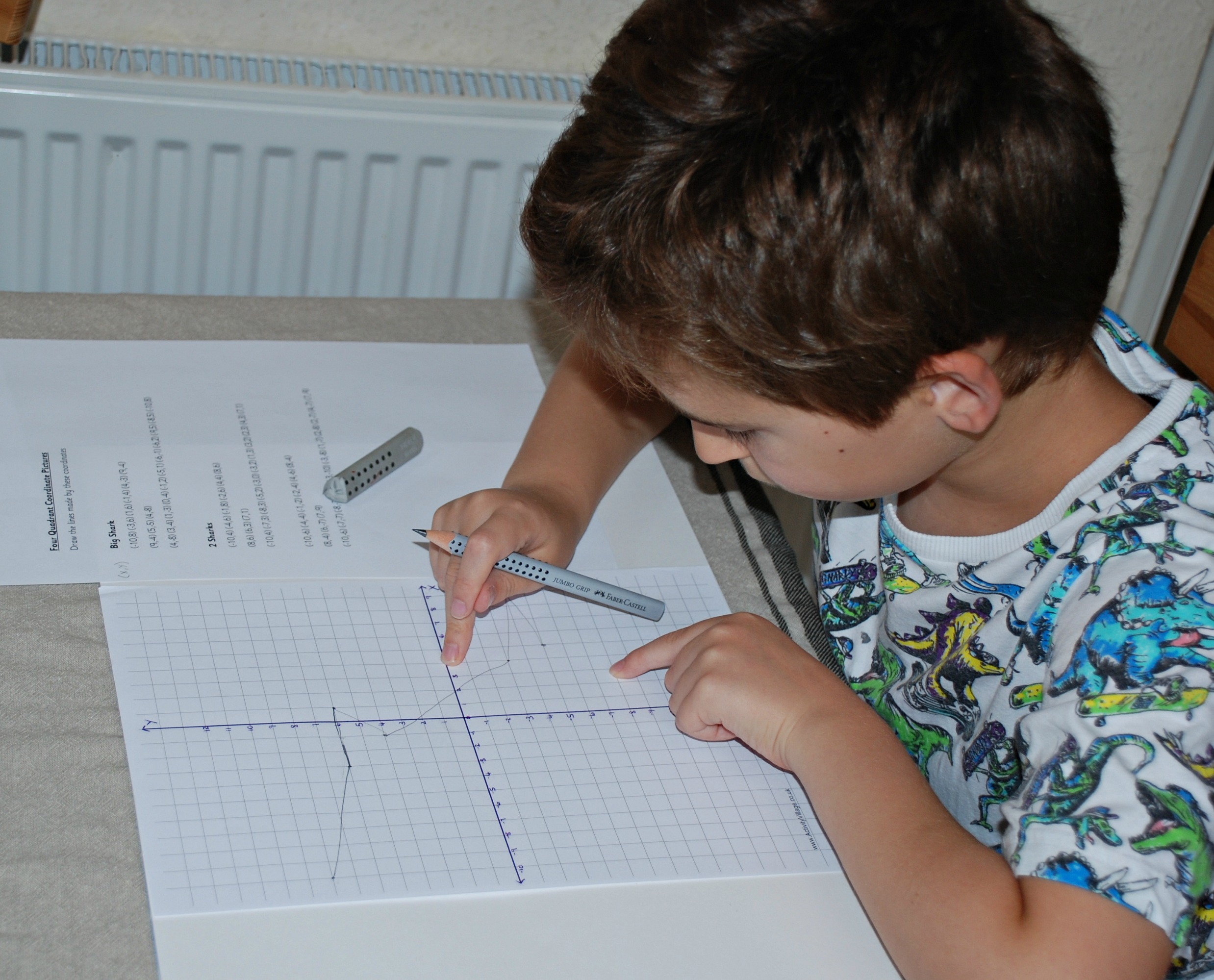
I also added in an extra fin (my son asked me to do this) and we had something that we could work with, so my son tested out the Big shark image.

plotting his shark coordinate picture

And once he was finished he even added some of his own details (eye, teeth, gills etc and coloured it in).

four quadrant shark picture created with free to download coordinates

I also created a second shark coordinate image for him

In the end I ended up with 4 different coordinate images – a Big Shark, 2 sharks together, 3 fish and a flower.

This slideshow requires JavaScript.

I have typed up the coordinates and you can download them on the link below.

Coordinates by ofamily learning together

I must admit I quite enjoyed the challenge of creating the pictures so I am thinking I might try and create a map version.

This slideshow requires JavaScript.


Posted in Homeschooling | Tagged , , , , , , , | Leave a comment

Arithmetic Workbooks – extra Maths practice examples we have been using

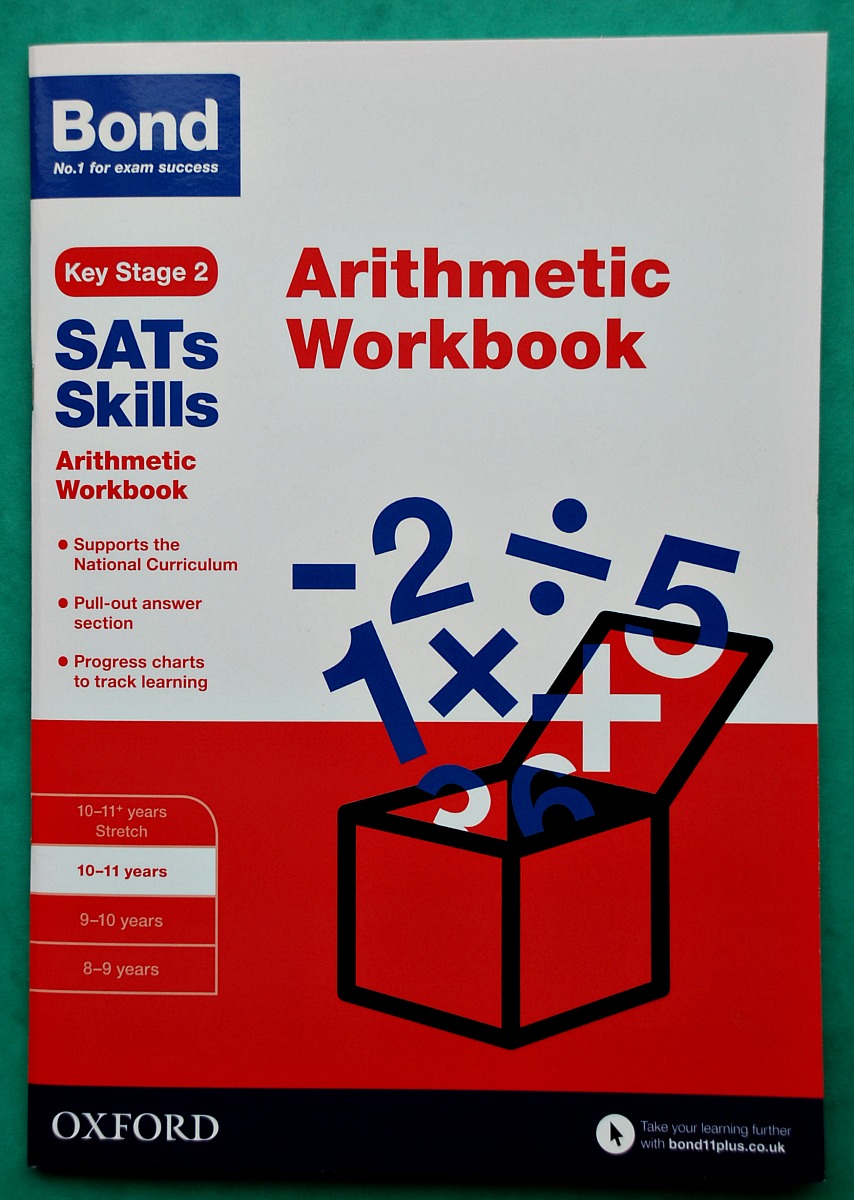
Earlier this year I was looking for some extra Maths practice examples. I already had books that we were using for explaining the different maths concepts and I am totally happy at creating a few of my own maths pages but sometimes my brain just can’t think of a new sum and I end up sitting at the computer wondering what sums I could create. So I went to a local bookstore and started paging though the different workbooks they had to see if I could find something that would really give us extra maths sums that we could use for practice. I spotted the Bond SATs Skills: Arithmetic Workbook: 10-11 years and it was exactly what I was looking for so I bought the book and we started using it.

Oxford University Press Bond Key Stage 2 Arithmetic Worbook for ages 10 -11. Year 6 practice book

As I mentioned this for us is really a workbook which gives us extra maths practice for concepts that the kids already know (so not what I call an explaining book). But as a maths practice workbook I have found this really useful, REALLY useful. I really just flip to whatever section I want and then circle a few sums and the kids then do the sums in their own maths books. Okay so let me clarify the Bond workbooks do include space for working out the sums but I have chosen to NOT write in these books so that if I want to I can mix up examples, redo examples and use it for both kids. So it is just my preference that the kids do the sums in their own exercise books and not write in these workbooks – totally my personal preference so we can get the most out of these books.

I was actually so happy with the book that I had bought that I contacted a Press contact at Oxford University Press and asked if we could get the 8-9 years and 9-10 years book for review purposes because I wanted to compare the content in all three books. They kindly agreed and sent me the other two.

Firstly general setup of all the workbooks is the same – each workbook is divided in 10 Units (roughly 46 pages of exercises), they include the answers in the middle of the workbook – which means if you want to remove them it is easy to do so, they also include a page explaining key words at the back and there is a progress chart if you want to use it. At the top of the pages they do include short Helpful Hints of how to tackle the sums and at the end of each Unit they is one story sum page (really like that they have included the story sum page so often – you get 10 story sums pages in each workbook).

So what is included in each individual book?

Bond SATs Skills: Arithmetic Workbook: 8-9 years.

  1. Place Value – up to hundred thousands and includes rounding practice.
  2. Addition – straight forward addition practice.
  3. Subtraction – practice including numbers in ten thousands and needing to borrow.
  4. Addition and Subtraction – mixed up examples.
  5. Multiplication – need to know times tables for this section.
  6. Division – including the bus stop method.
  7. Multiplication and Division – mixed up examples including some bigger numbers.
  8. Fractions – adding and subtracting fractions with the same denominator, including some mixed numbers.
  9. Decimals – multiplying and dividing a decimal number by 10 and 100.
  10. Test Your Skills – mixed examples covering all sections in the book.

This slideshow requires JavaScript.

Bond SATs Skills: Arithmetic Workbook: 9-10 years

  1. Place Value – up to a million, includes rounding and finding common factors.
  2. Addition – practice including adding numbers in the ten thousands.
  3. Subtraction -practice including sums with numbers in hundred thousands.
  4. Multiplying and Dividing by 10, 100 and 1000.
  5. Multiplication – includes square and cube numbers and long multiplication examples.
  6. Division – bus stop method with remainders and showing remainders as fractions.
  7. Multiplication and Division – mixed examples.
  8. Fractions – equivalent Fractions, simplifying fractions and converting improper fractions into mixed numbers.
  9. Decimals – adding and subtracting decimals.
  10. Test yours Skills – mixed examples covering all sections in the book.

This slideshow requires JavaScript.

Bond SATs Skills: Arithmetic Workbook: 10-11 years

  1. Place Value – up to ten millions, rounding and negative numbers.
  2. Addition and Subtraction – mixed examples.
  3. Multiplication – including squared and cubed numbers and long multiplication.
  4. Division – with remainders and long division.
  5. Multiplication and Division – mixed examples.
  6. Fractions – adding and subtracting mixed fraction where denominators are different, multiplying and dividing with fractions.
  7. Multiplying with decimals.
  8. Dividing with decimals.
  9. Percentages – writing a percentage as a fraction and as a decimal and calculating the percentage of a number.
  10. Test your Skills – mixed examples covering all sections in the book.

This slideshow requires JavaScript.

If you are looking for books with extra Maths practice examples we think this set is very useful.

UPDATE – I know have the 10-11+ Stretch workbook so I am going to add what is included in this one.

Bond SATs Skills: Arithmetic Workbook: 10-11+ years Stretch

  1. Number – negative numbers, squared and cubed numbers, converting metric measurements.
  2. Multi-Step Questions – including BODMAS
  3. Estimating and Rounding – including numbers with millions and up to three decimal places.
  4. Decimals, Fractions and Percentages – converting, multiplying and dividing
  5. Factors and Multiples
  6. Mixed Operations – All 4 operations using fractions and mixed numbers.
  7. Algebra – basic solving equations.
  8. Sequences – complete mix of different sequences.
  9. Ratio and Proportion.
  10. Test Your Skills – example of everything covered in the first 9 units.

This slideshow requires JavaScript.

I have found the 10-11+ workbook contains examples which are just that step up from the others and we have been using them as some starting activities/ practice examples over the past few weeks. (We have found the Bodmas and algebra examples very useful.)

As I mentioned I bought the year 10- 11 book and then I asked for review copies of the 8-9 and 9-10 books so that I could include the detail of what they cover.

I do include Affiliate links. If you follow an affiliate link and go on to purchase that product, I will be paid a very small commission, however your cost will remain the same. I only include affiliate links for products that we use and love.
Oxford University Press Bond Key Stage 2 Maths Workbooks. Arithmetic Practice

Posted in Homeschooling | Tagged , , , , , | 1 Comment

Time Hunters. Fun adventure stories with a bit of History

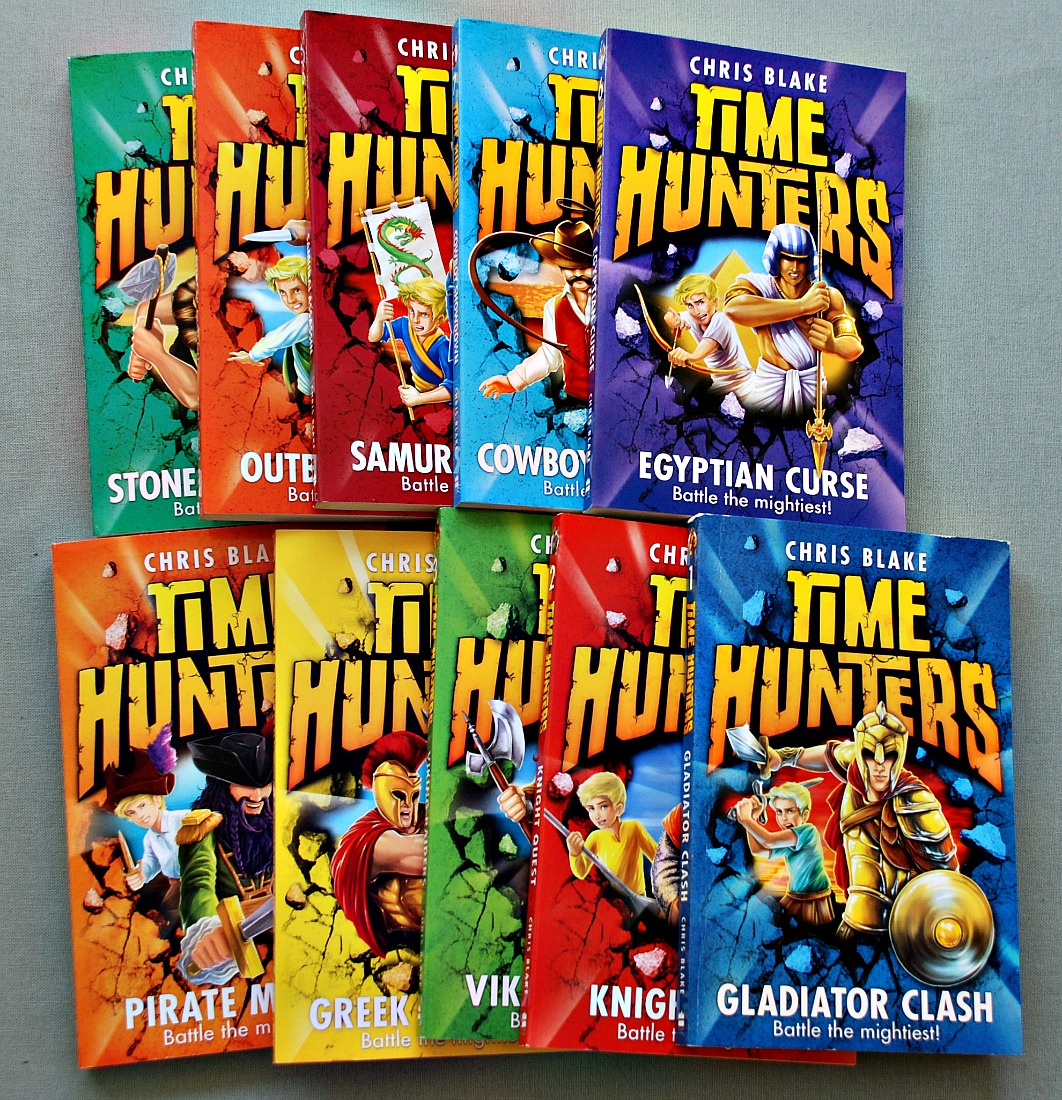
I have mentioned a few times that my youngest is NOT as big a history fan as his older sister but he does like reading and I discovered with the How to Train Your Dragon books – if I find a good story with some adventure and just a bit of history thrown in he will devour the books. So I bought the Time Hunters series. He LOVES them, really LOVES them. He loves the whole adventure angle and without even realizing he is absorbing a bit of History.

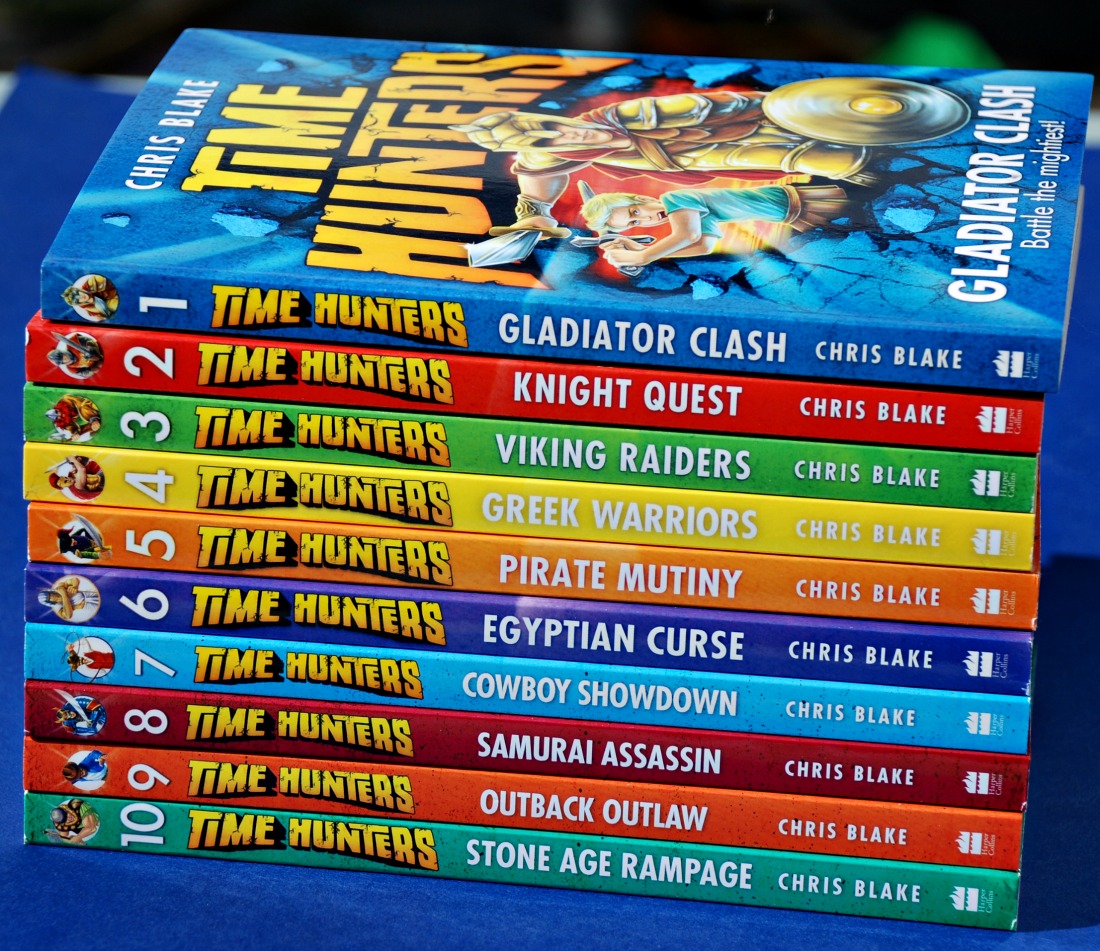
The first 10 of the Time Hunters series. written by Chris Blake

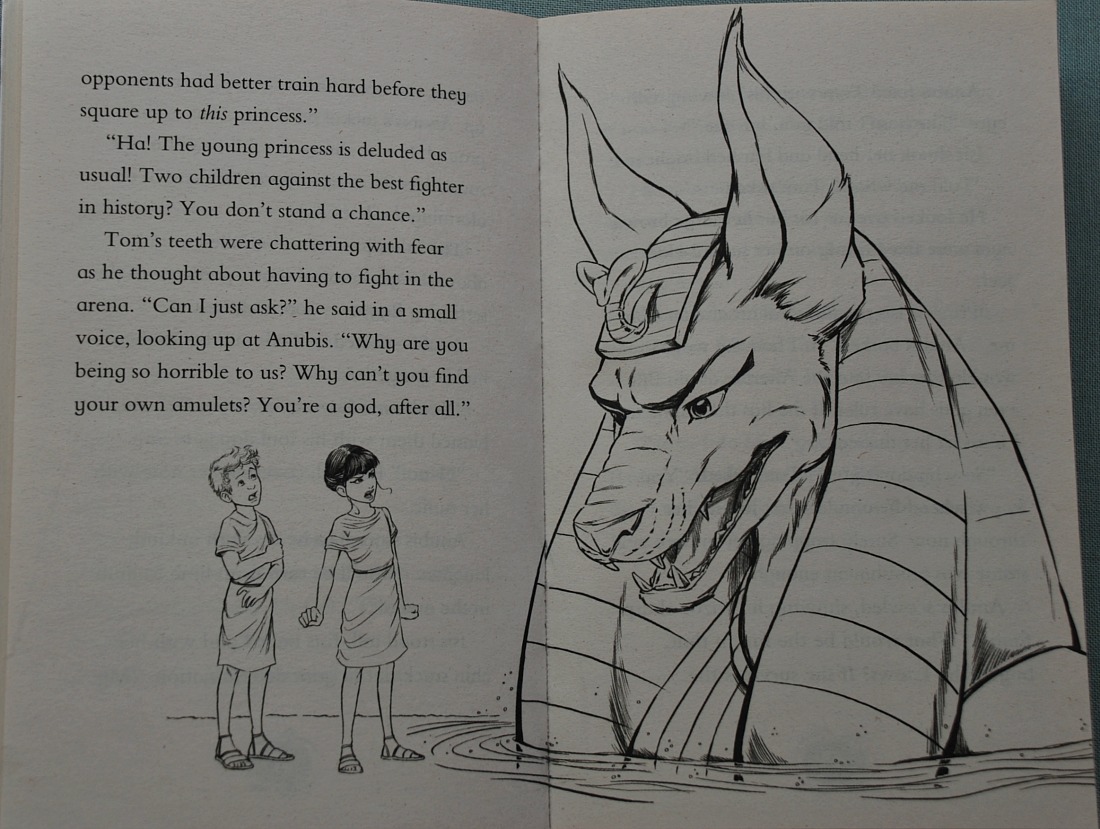
The stories follow Tom (a normal boy whose father works in a museum) and Isis (she is an Egyptian princess who was trapped in a statue after she failed to pass one of the tests on her journey to the Afterlife). They have to travel back in time to find some missing amulets so that Isis and her Chloe, pet cat can succeed on their trip to the Afterlife. And that is one of the reasons I like these books – straight away in the beginning of the very first book he was reading about Ancient Egyptian beliefs. And what he has been reading really sticks. We were watching something on the Vikings the other day and he chirped up – in the book Anubis said…………….. about the Vikings and they did …………………..” So yes it is all going in.

an inside page from one of the Time Hunters book by Chris Blake

When Tom, Isis and Chloe travel back in time they end up in the thick of some historical event, which normally has a few twists in it but nothing very scary. And the adventures all include  historical items – like clothing that they would be wearing, weapons, possibly food they eat, where they sleep – all expertly woven into the adventure, so much so that the kids don’t even realize how much they are learning.

And at the back of the books they include some Historical fact pages – pages about the characters mentioned, the timeline of that period and even the whole timeline of the entire series. My son, without me even explaining any of this is now totally confident in the order that these events occurred.

This slideshow requires JavaScript.

He loves these stories (and I must admit I can see why they appeal to him).

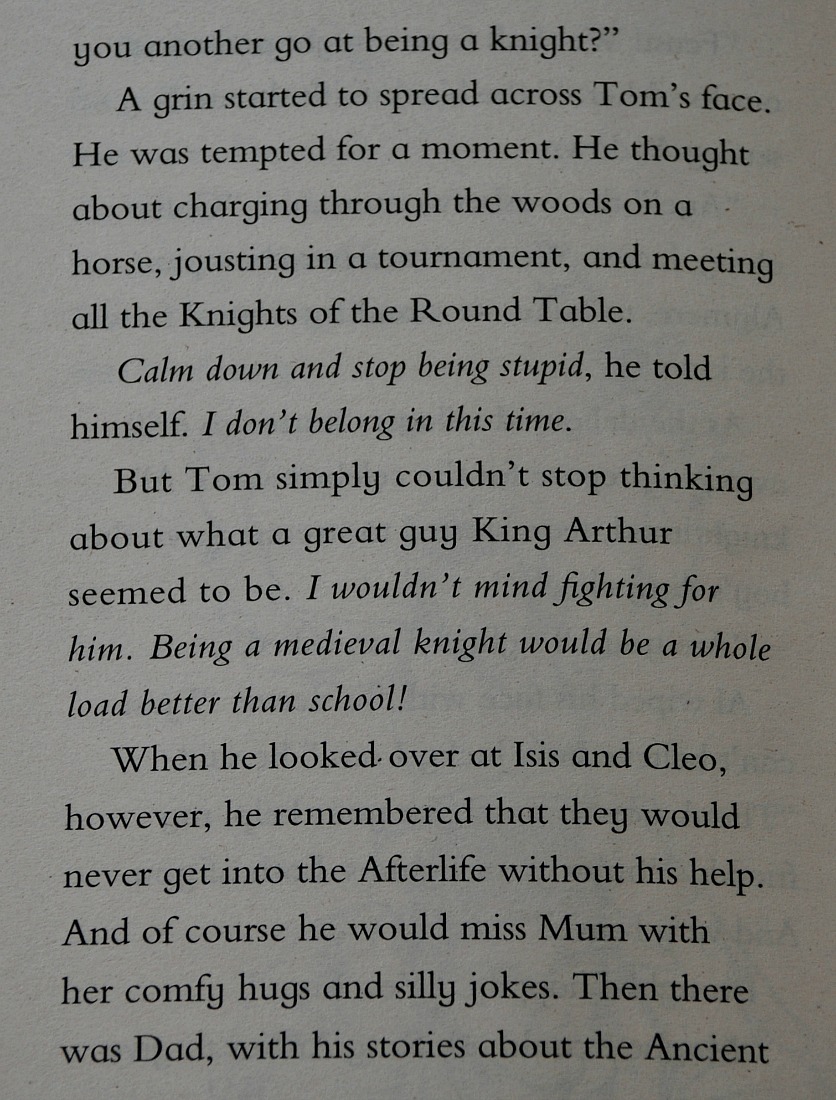
an extract from Time Hunters Knight Quest book written by Chris Blake

And I am thrilled that he has found another series which encourages him to read and also manages to teach him a bit along the way. (In case anyone is wondering my son is currently 8 – I would say these books are for reading ages 7 and over).

Both my son and I highly recommend these books.

Harper Collins Time Hunter Series. Fun reading with historical references

I bought the first 10 of these books in a set from the Bookpeople – which have now shut down but you can buy them directly from Amazon Gladiator Clash (Time Hunters, Book 1)

I do include Affiliate links. If you follow an affiliate link and go on to purchase that product, I will be paid a very small commission, however your cost will remain the same.  I only include affiliate links for products that we use and love.


Posted in Book Ideas | Tagged , , , , , , | 1 Comment

Secondary History Book – Medieval Britain

In the beginning of June we were out shopping and I happened to stop at a book store to browse through some educational books for the kids. While I was paging through a few books my daughter spotted two of the Collins Key Stage 3 History Books – Medieval Britain and Early Modern Britain and immediately asked if we could buy them. Now I must admit I normally like to read reviews about the educational books before I buy them, I don’t normally just grab some off the shelf. But my daughter had found these and thought they would they were interesting so we bought them.

This slideshow requires JavaScript.

As soon as we got home she was reading them – she immediately skipped ahead to the section about the Tudors (in the Early Modern Britain book) and then went back to the Medieval Britain one and started reading that one in order. She has actually now read it cover to cover (she loves History books). And she has already been using the Medieval Britain book to help when she creates her timelines.

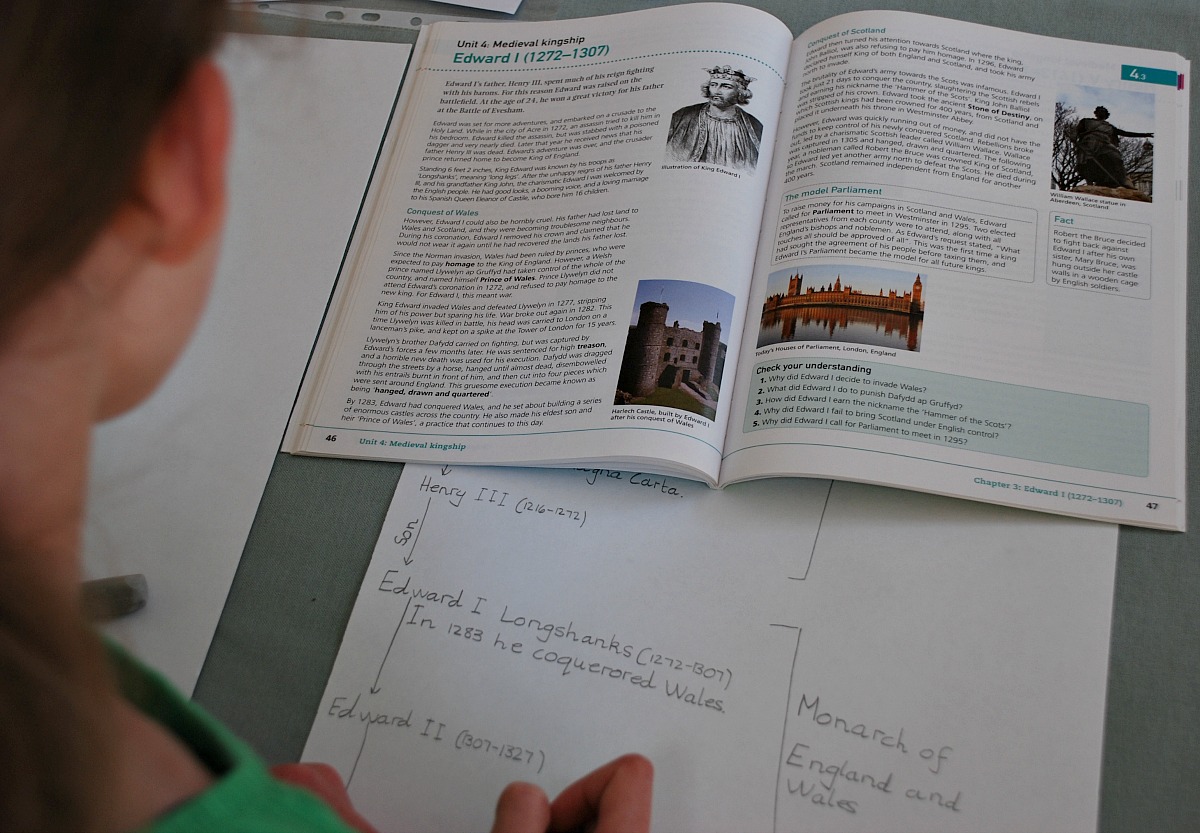
Using her Collins Medieval Britain book to help her create a timeline showing all the medieval rulers of England

I have read parts of the Medieval Britain book – I have been using it to find information for History projects but as off yet I have not really looked at the Early Modern one. However both books follow the same format so I will give a breakdown of the set-up and what is included.

The Medieval Britain book starts with the Anglo-Saxons and goes up until the Battle of Bosworth. It divides this period into 6 units and each unit is further split into 5 double pages each of which covers a new concept relating to the unit. Each unit is roughly 12 pages long and ends with a Knowledge organiser page – which is a brief summary. I am guessing for most this would be a good year 7 history resource – for my daughter because she loves History so much and wants the detail we will need to get her additional History resources and she will cover a lot more than just this book in 1 year.  But for someone like my son this would probably be enough.

Each double page starts with a brief summary at the top and then gives the detail below along with some photographs or pictures of what is being discussed. At the bottom of the double page they have a Check Your Understanding Section – which is roughly 4 or 5 questions based on the text you have just written. (FYI – Tthey do include sample answers for these questions in their teacher guide which is free to download from the Collins website but we have never had to use it for the answers – the answers really are in the text).

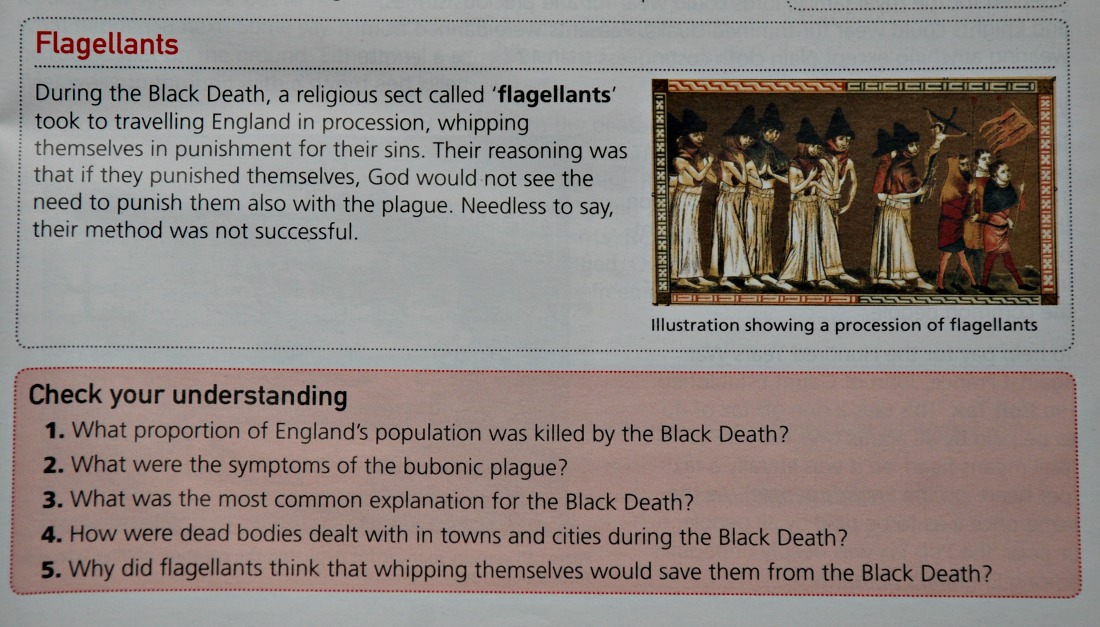
Key Stage 3 Medieval History stident book by Collins.  An example of the questions at the end of each double page

Everything is set out in chronological order. So the events unfold in a logical manner and the kids get an idea of how some things build up over time.

I also really like the inclusion of their knowledge organisers at the end of each unit. This includes a timeline of that unit, along with key vocabulary and key people mentioned.

This slideshow requires JavaScript.

So what is included in the Units for the Medieval Britain Book?

  1. Anglo-Saxon England – background, their rule, Vikings, Alfred the Great and the Anglo-Saxon golden age
  2. Norman England – Starts with explaining the main characters in 1066, The Battle of Hastings, Norman Conquest, the feudal system  and the Norman Monarchs
  3. Medieval Life – The medieval village, the medieval castle, the medieval knight, medieval church and crime and punishment.
  4. Medieval Kingship – Henry II, King John, Edward I, Henry V and Medieval Queens.
  5. The Crusades – The Islamic World, The First Crusade, Crusader states, Life as a crusader knight and the end of the crusades.
  6. Late Medieval England– The Black Death, the Peasants Revolt, the War of the Roses, Yorkist Rule, The Battle of Bosworth

This slideshow requires JavaScript.

Like I mentioned above I have not looked at the Early Modern Britain book yet but it written in the same format so I thought I would just include what it covers in case any readers are looking for something specific.

  1. Henry VIII and the Reformation – The young Henry VIII, the Reformation, Henry’s Great Matter, The English Reformation, Henry VIII and Edward VI.
  2. The Age of Encounters – The Italian Renaissance, Printing press, Gunpowder and Astronomy, Global Exploration, Christopher Columbus and The New World
  3. The Later Tudors (this is the section my daughter has read) -Mary I’s Counter-reformation, Elizabeth I, The Elizabethan Golden Age, The Spanish Armada, Rich and Poor in Tudor England.
  4. The English Civil War – James I and the Gunpowder Plot, Charles I and Parliament, The outbreak of war, Fighting and the English Civil War, Trial and execution.
  5. Commonwealth and Restoration – Cromwell’s commonwealth, The Restoration, Restoration England, The Great Fire of London, The Glorious Revolution.
  6. Georgian Britain – Creation of Great Britain, Parliamentary Government, Jacobite Uprisings, Georgian Aristocracy, Poverty, Violence and Crime.

We bought both of our books at a local bookstore but they are also available on Amazon – KS3 History Medieval Britain (410-1509) (Knowing History), KS3 History Early Modern Britain (1509-1760) (Knowing History)

I do include Affiliate links. If you follow an affiliate link and go on to purchase that product, I will be paid a very small commission, however your cost will remain the same. I only include affiliate links for products that we use and love

Younger kids you want to read about Anglo-Saxon England might find this book useful – Anglo-Saxon Kings of England


Posted in Homeschooling | Tagged , , , , , , | 1 Comment