Summer Holiday Break?

One of the big questions everyone seems to be asking at the moment is do you break for Summer Holidays?  If so when do you start and for how long?

I don’t like answering No we don’t or Yes we do because everyone I know home educates in a slightly different way, so there is no one-answer that applies to all.  Every family is unique so what works for one family might not work for another and also what works one year might not work the next.  For me that is the beauty of home education you can mould it to what suits your family.

Bearing all that mind – for us that means home-education is non-stop, it’s a lifestyle.  So no we don’t stop for the traditional school holidays and no we don’t stick to traditional school hours or even a traditional school week.  But our home education  does have a seasonal rhythm to it.  Over the warmer months the kids are outside a LOT which means our learning style has a very different feeling to it when compared to the winter months.  We tend to make the most of the longer days and the sunny weather and enjoy all the little creatures visiting our garden. But even with the different seasonal rhythm to our days both of mine like a bit of structure so we do keep a little of it but we bend it to the summer days.

And I must also admit once the schools break for holidays I tend to steer clear of the museums and historical sites.  So that also impacts the natural rhythm of our days.

When the kids were younger there were 2 years when I felt like I needed a complete break.  So we took it.  But at that stage I think I was also still finding what worked for us and I was not making sure I took breaks on a regular basis so I would get to a point of complete exhaustion.  It also took me a while to figure out what learning styles suited my kids and for me to relax and stop worrying about what the schools were covering, so the first 2 years of home education were more mentally exhausting.

Now both the kids are brilliant at driving their own learning.  They are constantly creating little projects, totally indpendently – from writing stories based on books that they have been reading, to researching facts on a new topic, creating their own factsheets – all of that never stops.  The reading never stops, documentaries are still watched and the questions continue.  In the summer months these projects often just end up being completed outside in the garden.

Along with the extended hours outside we also seem to do more art.  For some reason the summer months always means extra art projects.  I think it is because art is very much a relaxing activity for us and it just seems to slot in perfectly with the summer feeling of longer days and sunshine. We do art both outside in the garden and also we sometimes retreat into the house when it gets a bit too hot and get creative in our cooler kitchen.

Some of you may be wondering but what about the more formal side – what about Maths.  Maths for us is continuous – it is working out how to change the ingredients in a recipe so instead of 10 biscuits we could get 14 biscuits, it is converting the measurements in my son’s latest insect book so they are all in cm and then seeing if he can draw the insects to scale (one of the projects he created himself), it is managing their pocket money and working out a budget for an activity.  My son wants to learn his 8 times and 7 times tables over the summer so we will work on that and I know my daughter has some geometry ideas linked to art that she wants me to try and help her set up so that will also happen.  And yes inbetween all of that we do slot in a few pages of maths for my daughter because it is part of her routine that she actually likes to keep going.

It really is what works for us, what works for the kids.  Mine love creating their own projects, it is a great source of pride when they show us what they are working on and it means the projects are no longer seen as “school work” but they see them as fun so they are not restricted to week days, or school days only.  So for mine their projects don’t stop just because the local schools are on holiday.  They continue working on the projects that they find interesting all year round.
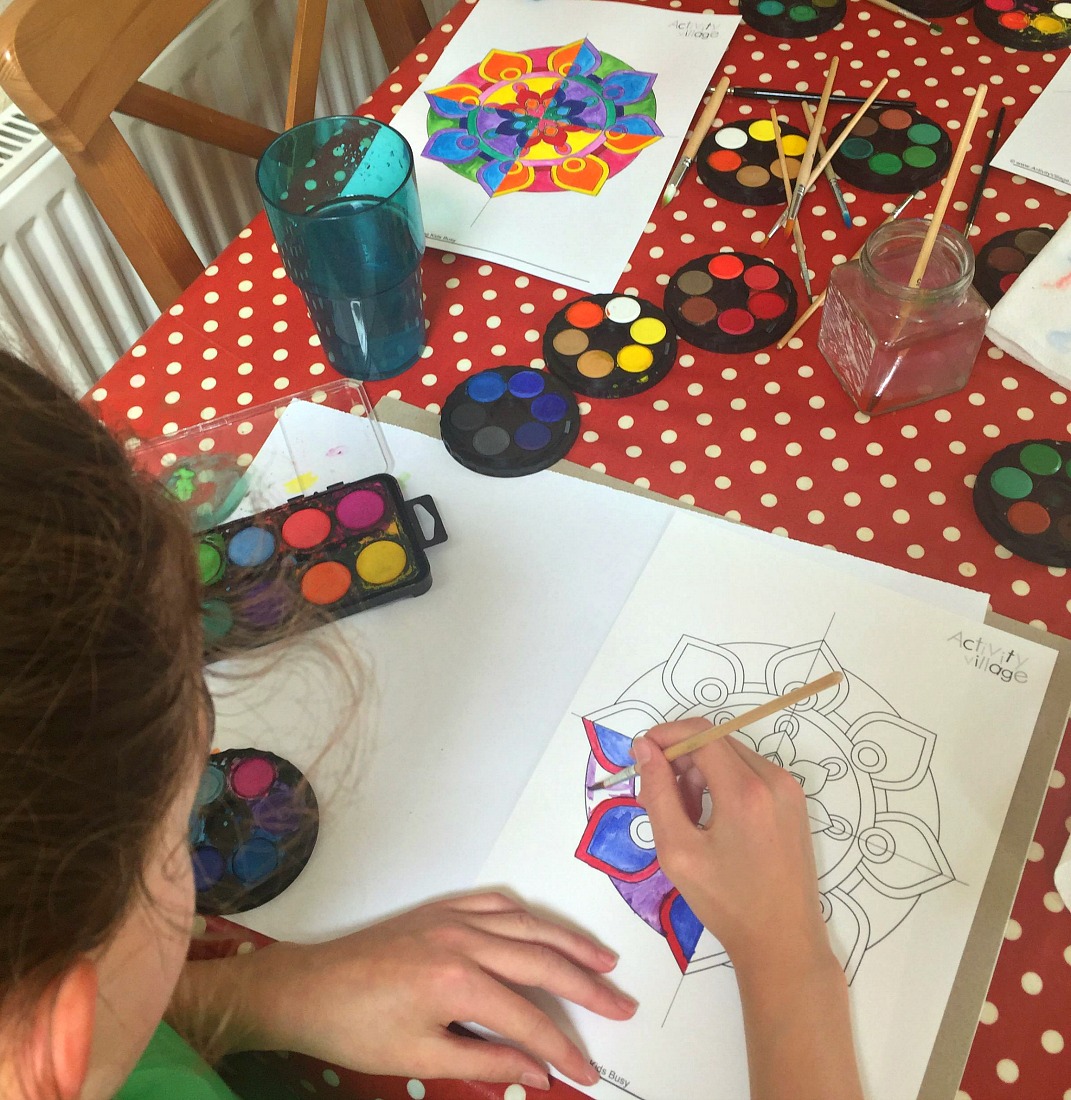
summer art project ofamily learning together


Posted in Homeschooling | Tagged , , , | Leave a comment

DK Insect Book

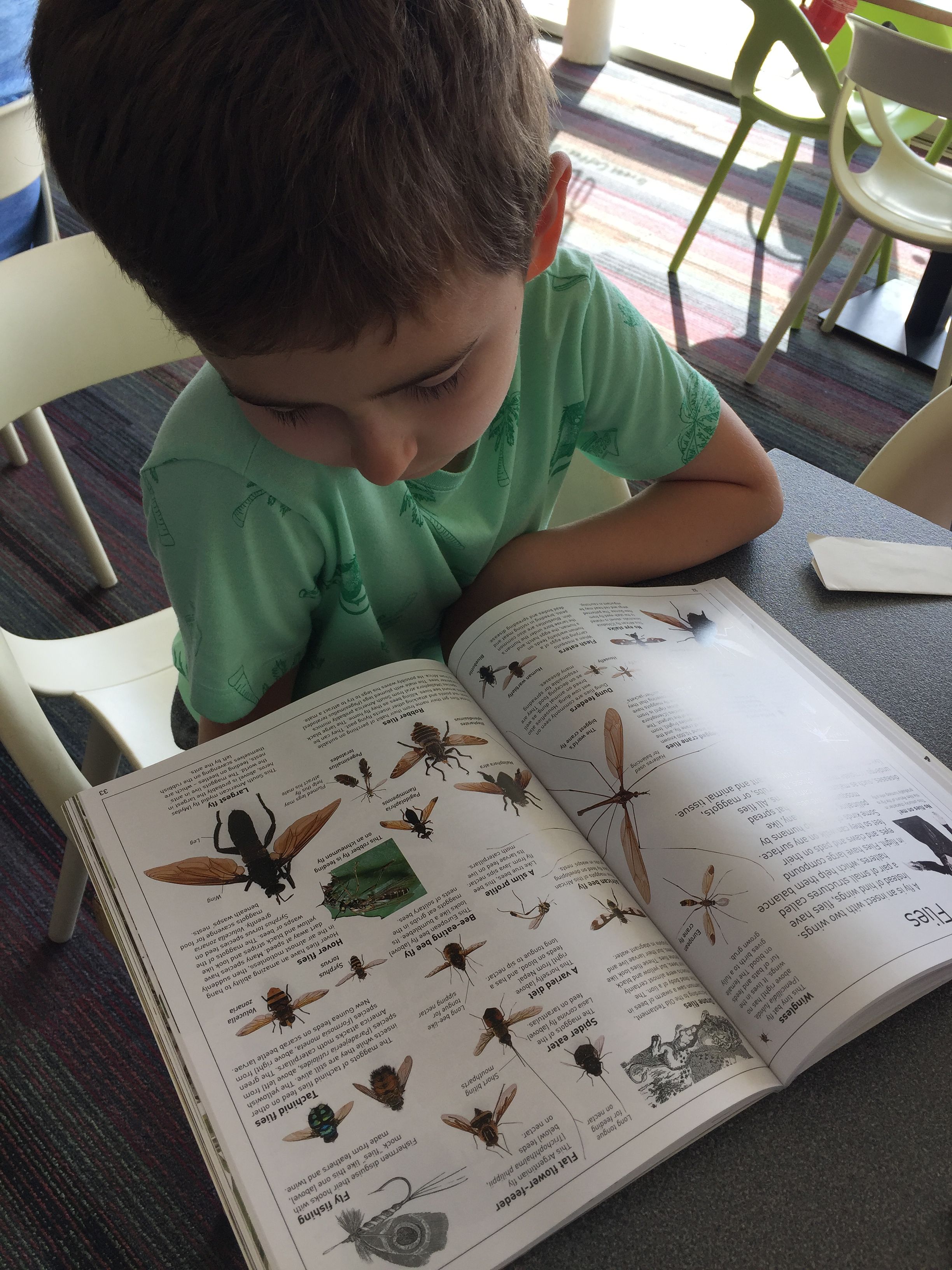
In May my son spotted this DK Insect book at our local library and we immediately borrowed it. It turned out to be a little gem of insect facts for my son. He has poured over this book, page by page, multiply times and even taken it out with us when he knew he would be waiting somewhere.

reading his DK Insect book

Unfortunately someone else reserved our Insect Book and we had to return it so I asked DK if they would send us a review copy and they kindly did. But really this is my son finding a book he loved in the library and then me going and asking the publishers for a copy, that is how much he loves it.

Why do I think he likes it? Because it does not dumb down the topic. It uses all the big words and they keep if factual and accurate – he does not like books where they oversimplify the topic.

And I must admit I find the format easy to read (and I am not as insect obsessed as my son) – each page has a brief summary at the top of the page and then below the summary they include lots of detailed facts – all labelled and with stunning photographs.

This slideshow requires JavaScript.

The photographs are truly amazing – the detail is incredible. The way the skin and hairs stand out and you can really see the texture.  Wow my son and I were blown away by the photographs.

This slideshow requires JavaScript.

So what does the book cover –

  • What is an insect / parts of an insect
  • The first Insects
  • Then wings / insects eyes / tough, smell and hearing / legwork / mouthparts – love the detail in these sections.
  • Battling Beetles
  • Complete Metamorphosis
  • Beetles / Flies / Butterflies and Moths / Bugs / Wasps, bees and ants – so the 5 main types
  • Then other insects
  • Living with plants and how the hide from predators
  • A watery life – this is great if your kids like pond creatures
  • Building a nest and Insect Architects
  • Social Ants
  • Honeybees and Hives
  • Helpful verse harmful
  • Looking at Insects
  • Extra did you know
  • Insect Classification.

Really it covers a lot.  A LOT

And if that was not enough the book comes with its own poster.  Which is a brilliant summary.

This slideshow requires JavaScript.

Oh and after the huge success of the Insect book we also spotted a Reptile version at our library which we borrowed just yesterday and I have a feeling it is going to be just as popular

This slideshow requires JavaScript.

As I mentioned above we first spotted these books at our local library but you can also get them from Amazon – Insect: Explore the world of insects and creepy-crawlies – the most adaptable and numerous creatures on the planet (DK Eyewitness)

Reptile (DK Eyewitness)

I do include Affiliate links. If you follow an affiliate link and go on to purchase that product, I will be paid a very small commission, however your cost will remain the same. I only include affiliate links for products that we use and love

DK Eyewitness Insect Book. Filled of amazing facts and details

Posted in Book Ideas | Tagged , , , , , , , , | Leave a comment

Wild Flowers and a Log Pile

I tend to write lots of posts about the books and resources that we use but one area I probably don’t talk about that much is our garden. It is such a sanctuary for the kids.

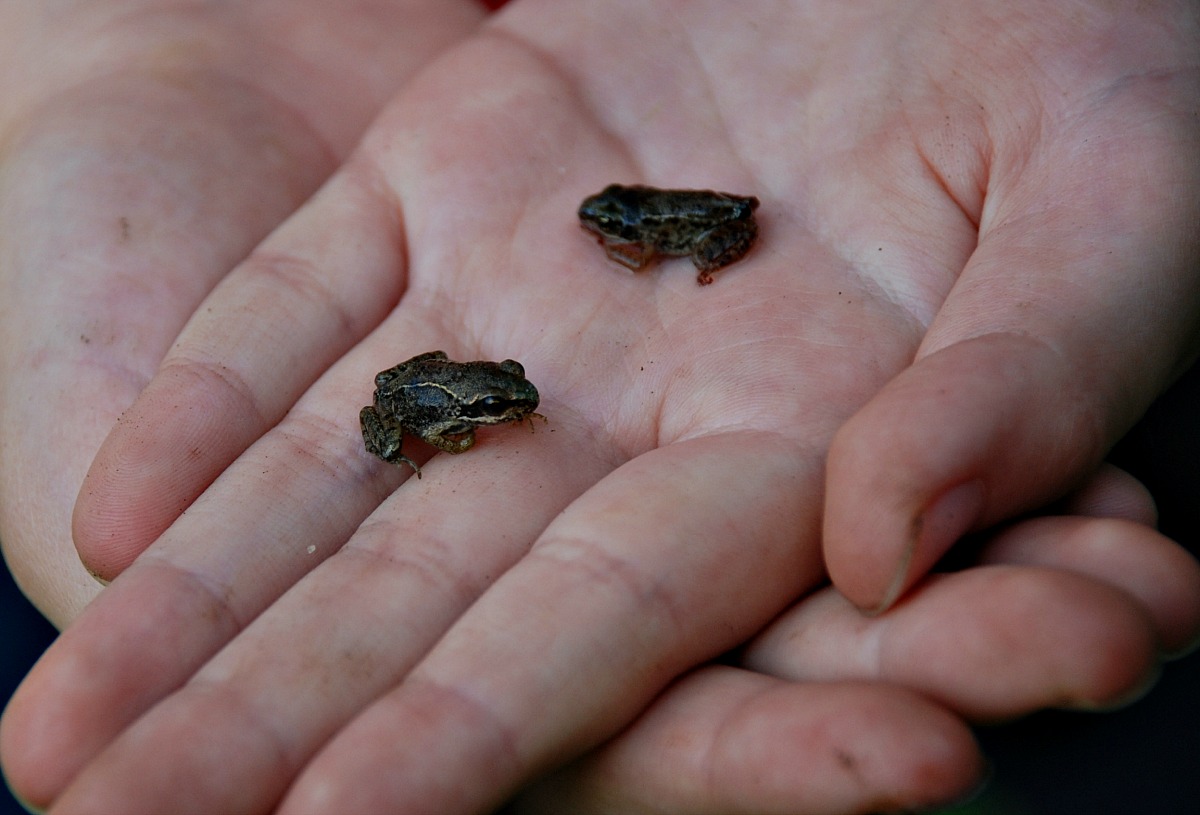
Last year when we cut down a dead tree we cut the branches into some small logs and stacked them at the back of our garden. Our back garden joins up to our neighbour who has a wonderful garden filled with flowers, a pond and lots of creatures. We knew some of his frogs liked to wander into our garden so we hoped the log pile might become a second home for a few of them. And it did.

frogs

We also bought some wild flower seeds and scattered them in some old sad looking flower beds.

The flowers bloomed. And the insects love them.

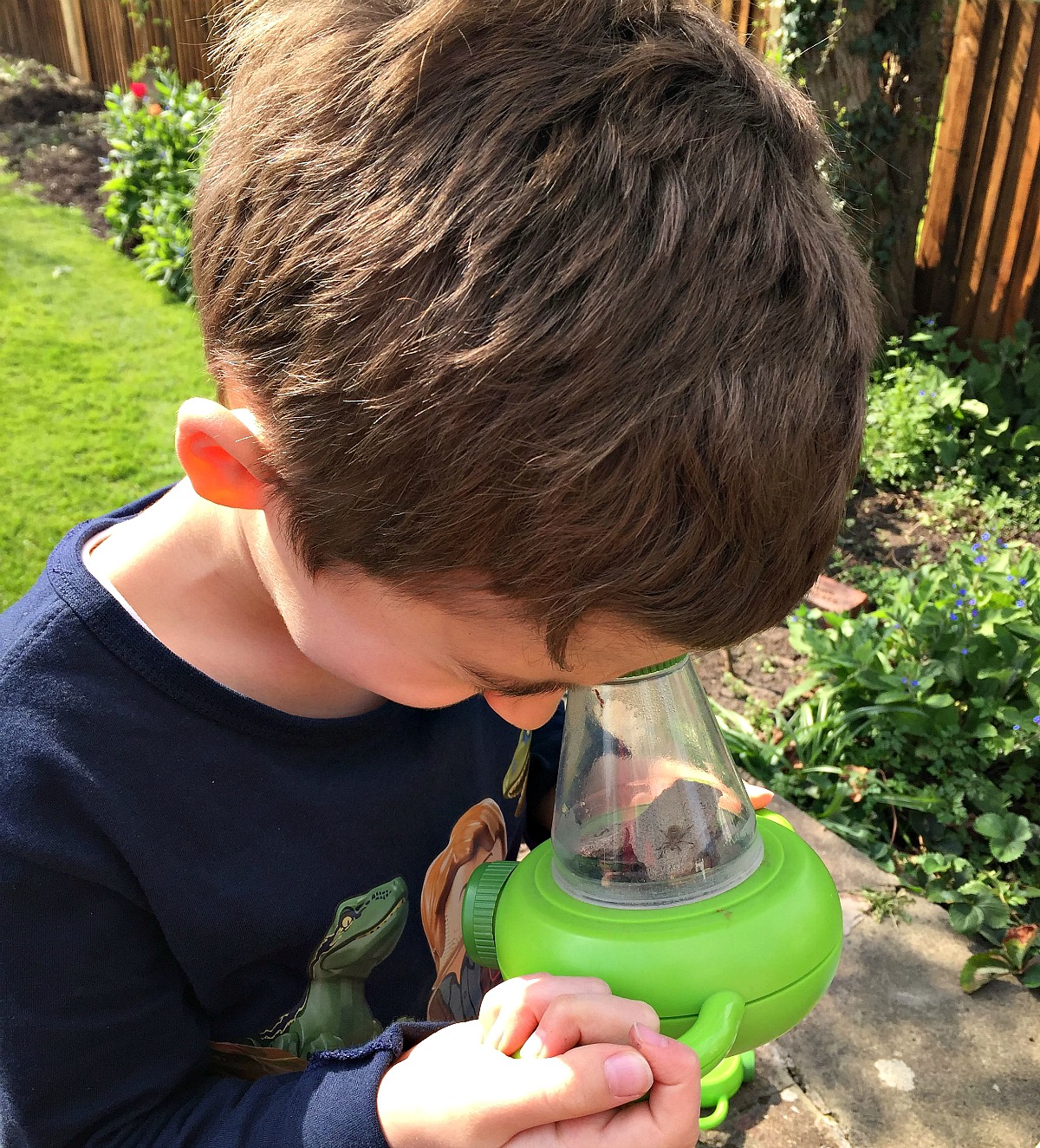
The combination of our little log pile and the wild flowers (together with on existing apple tree, my strawberries which the squirrel loves stealing) has meant we have had more creatures visiting our garden than ever before. The frogs love it, bees, butterflies lots of insects, squirrels, bird life – we have a robin that had been named Bertie, a family of magpies, a very cheeky pigeon that does not understand personal boundaries, a family of woodpeckers, foxes that sneak in at night oh and just spotted a slow worm. I am sure I am forgetting a bunch of others but these creatures are providing both kids with an amazing learning environment. The hours they spend in the garden, watching, catching insects to examine them up close – and even a few small bites have not put them off. They love it.

insects

I love seeing how connected both kids are with our little garden creatures. They noticed when the bees did not appear during 2 very hot days, the immediately spotted when a fledgling got stranded – they kept their distance and watched as one of the parents came to help.

Yes I buy books and other learning resources and I will continue to do that, but the £3 we spent buying wild flower seeds and the time we took to cut the branches and turn them into a log pile are two of the best money/time spent activities.

Posted in Homeschooling | Tagged , , , | Leave a comment

Times Tables workbooks

I was recently asked if there was a times table workbook that I recommend. And for me that is a slightly tricky answer because I have discovered what worked with my oldest has not suited my youngest. Plus we tend to do a mix of more activities/ games (using dice, skip counting cards etc), with some pages off websites and a few from workbooks. 

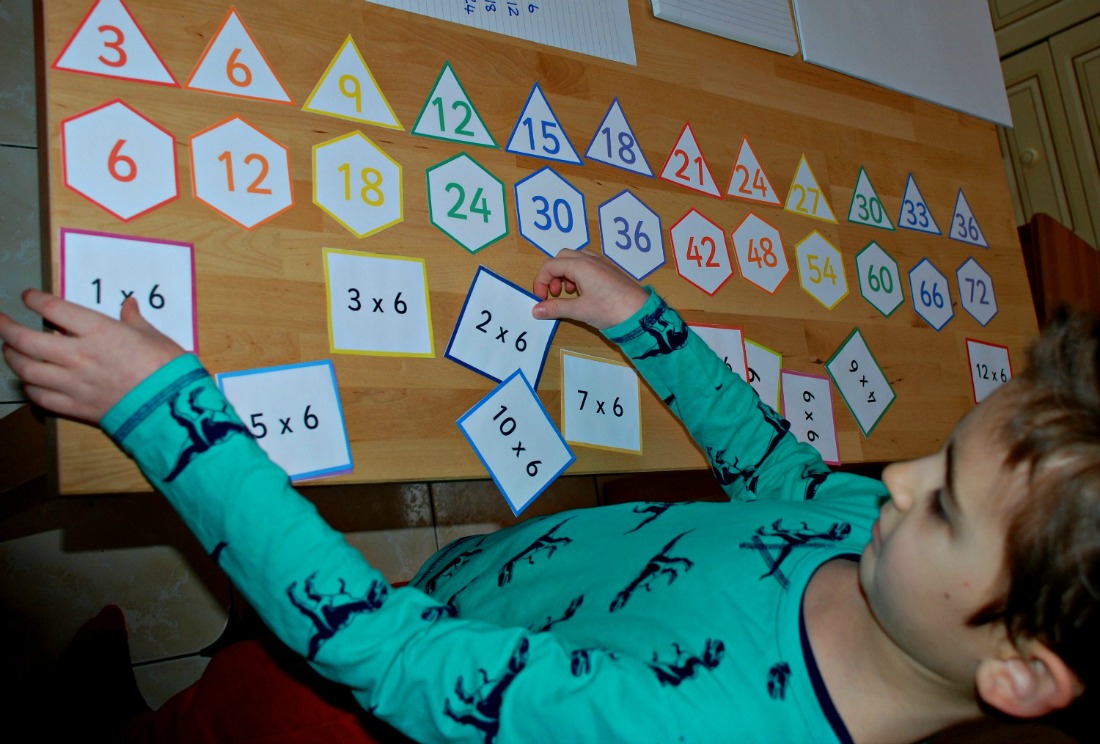
skip counting and times table folding cards from Activity Village

Just to mention the skip counting cards and time table cards in the photo above are from Activity Village. In the example above he is doubling the 3 times to get to the 6 times.

So I thought I would share 4 different times table workbooks that we have at home – give a quick break-down of what they cover and share a few photos and then you, the reader can have a better idea of what the options are.

Starting with the Learn Your Times Tables 1: KS1/KS2 Maths, Ages 5-8. Now this workbook focuses on 2x, 10x, 5x, 3x and 4x ONLY. And it includes lots of repetitive sums. Some might need this line after line practice but other kids might find it a bit much.

This slideshow requires JavaScript.

Then Times Tables Tests 1: KS1/KS2 Maths, Ages 5-8. This also only focuses on 2x, 5, 10x, 3x and 4x. But we found the examples included in the “tests” more varied. I found this suited my son a lot more than the first one just because it was not line after line of repetitive sums. (And yes these are written as tests but we often use so called tests as just normal practice pages).

This slideshow requires JavaScript.

Then moving onto other times tables we have the Times Tables Practice Book 2: KS2 Maths, Ages 7-11. This starts with the 6x (7 pages) goes onto the 8x, then 9x, 7x, 11x and 12x (and each one is about 6/7 pages long). We found this a combination of match the sum to the answer type pages, straight forward sums and a number of story sums.  I really liked the little story sums that they included in this book because I want the kids to understand when to apply their times tables.

This slideshow requires JavaScript.

We also have the Progress with Oxford: Multiplication, Division and Fractions Age 7-8.  This is more a combination workbook (i.e.  not only times table) but there are some useful pages in it so I thought I would include it.  It starts with 3x, 4x and 8x tables and then goes onto more multiplication sums.  Showing different ways to break down multiplication sums (we like this). Then some division and onto fractions – identifying fractions, calculating equivalent fractions, basic adding and comparing of fractions.  It is what I would consider a revision type workbook, so not lots of practice for each concept but a handy little workbook and one my son has actually enjoyed using.

This slideshow requires JavaScript.

These are 4 examples of different times table workbooks that I had in our house.  This is NOT an AD

Posted in Homeschooling | Tagged , , , , , , , | Leave a comment

Decimals and Percentages workbook

Just over a month ago I wrote a post about what is included in the Schofield & Sims Fraction workbook so I thought I would follow up that post with one about what is included in the Understanding Maths: Decimals & Percentages. (I think the two work really well together)
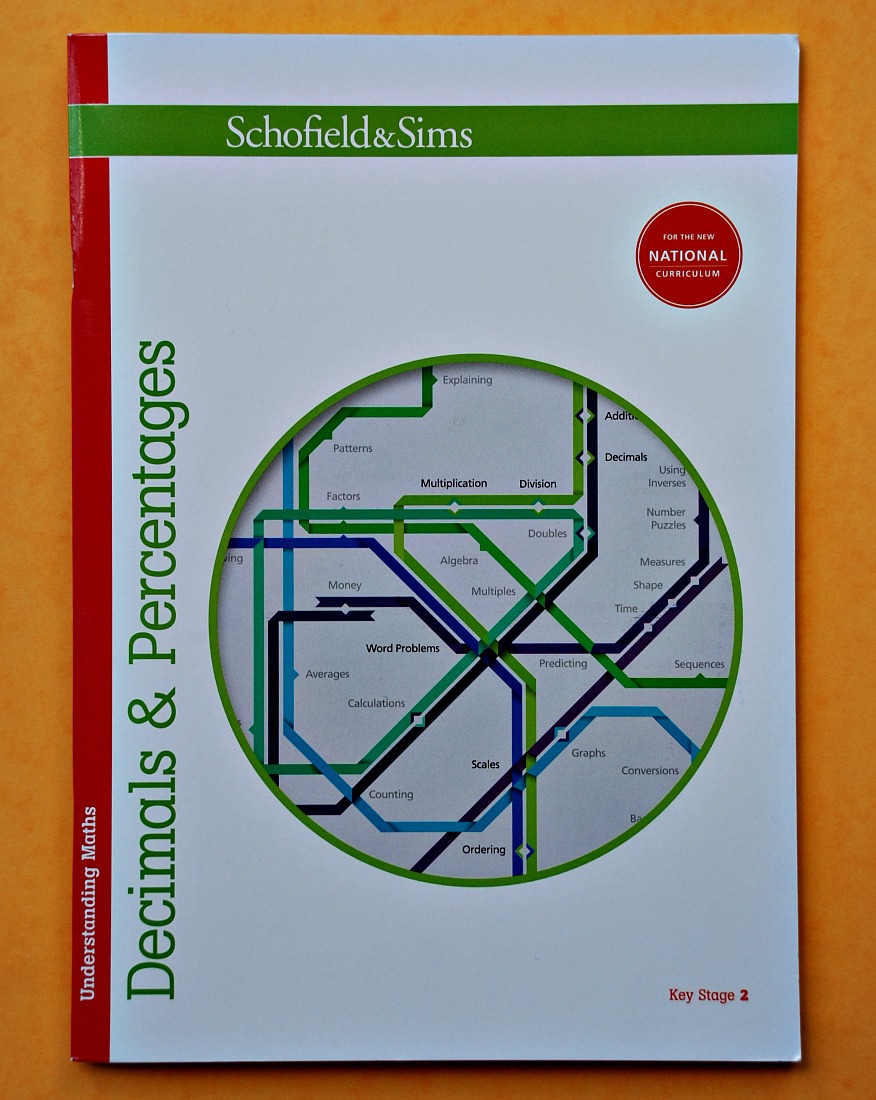
For those of you who are use to Schofield and Sims workbooks it is the exact same format as the others. But for anyone who has not used a Schofield & Sims workbook before let me quickly explain.

Their workbooks are NOT like those revision booklets you get – filled with stickers and lots of distracting bright colours. They stick to a simple format which we think works really well. Each page starts with a brief explanation of the activity and then there are normally 2 or 3 sets of activities. No overbearing colours or pages jammed fill of multiple concepts. One concept per page.

This slideshow requires JavaScript.

Scattered throughout the book are 4 progress tests each one just 1 page long. We think these are great revision activities. And at the end of the book there is a 4 page final test.

Schofield & Sims Understanding Maths Decimals and Percentages workbook for Key Stage 2

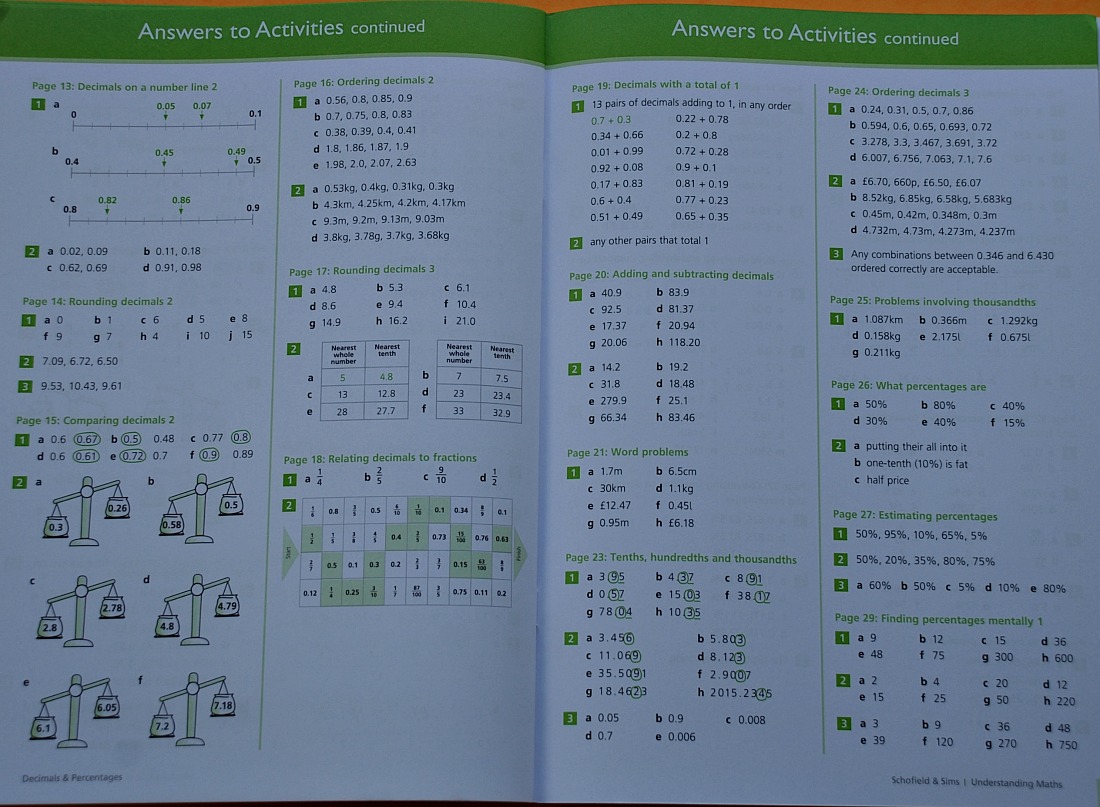
Also at the back of the book they have included all the answers.

Schofield & Sims Decimals and Percentages workbook. Answers are at the back of the book

We really like the way they set out their workbooks, they suit both of my kids.

You can follow the pages in the order of the workbook – and they build up the activities in a very logical manner. But we have, on occasion jumped ahead and completed a few pages out of order purely because the activity came up in something else we were doing, and you can do that as the pages do work as stand-alone activities.

So what is covered in this 51 page workbook?

  • How decimals are written
  • Tenths and hundredths
  • Dividing a whole number by 10 and 100
  • Decimals on a number line
  • Rounding decimals
  • Comparing and ordering decimals
  • Relating decimals to fractions
  • Decimals with a total of 1
  • Adding and subtracting decimals
  • Word problems
  • Tenths, Hundredths and Thousandths
  • Problems involving thousandths
  • What percentages are
  • Estimating percentages
  • Finding percentages mentally
  • Relating percentages to decimals and fractions
  • Percentage problems
  • Finding percentage using a calculator
  • Multiplying and dividing by 10, 100, 1000
  • Converting fractions to decimals and percentages
  • Multiplying decimals mentally
  • Dividing decimals by whole numbers
  • Rounding recurring decimals

This slideshow requires JavaScript.

Admin Bit – I bought this workbook for my daughter. 

I do include Affiliate links. If you follow an affiliate link and go on to purchase that product, I will be paid a very small commission, however your cost will remain the same. I only include affiliate links for products that we use and love.

Understanding Maths Decimals and Percentages by Schofield & Sims. Key Stage 2 maths workbook

Posted in maths ideas | Tagged , , , , , , , , | Leave a comment