The Parts of a Flower

During our many walks we have started trying to identify the different flowers that we spot and just talk about plant life more. Things like how to you think those flowers came here – could it have been wind dispersal? What about these flowers design do you think make them so attractive to the bees? How do you think that plant has adapted for its environment? The aim has just been to encourage both the kids to think more about plant biology. Both of mine LOVE biology but they love learning about animal biology and not  plant biology so we have tried to use our lockdown walks as a way to encourage them to think more about plants. I was not pushing it too much because I wanted to try and just spark their interest and not force it on them.

Then this morning my son noticed that one of the tulip’s petals had flapped down and he could see the “parts of the flower” – his words. So we took the tulip out of the vase and had a closer look. And it was a really good example – you could clearly see the different parts.

This slideshow requires JavaScript.

They both seemed interested so we pealed away all the petals to get a better look.
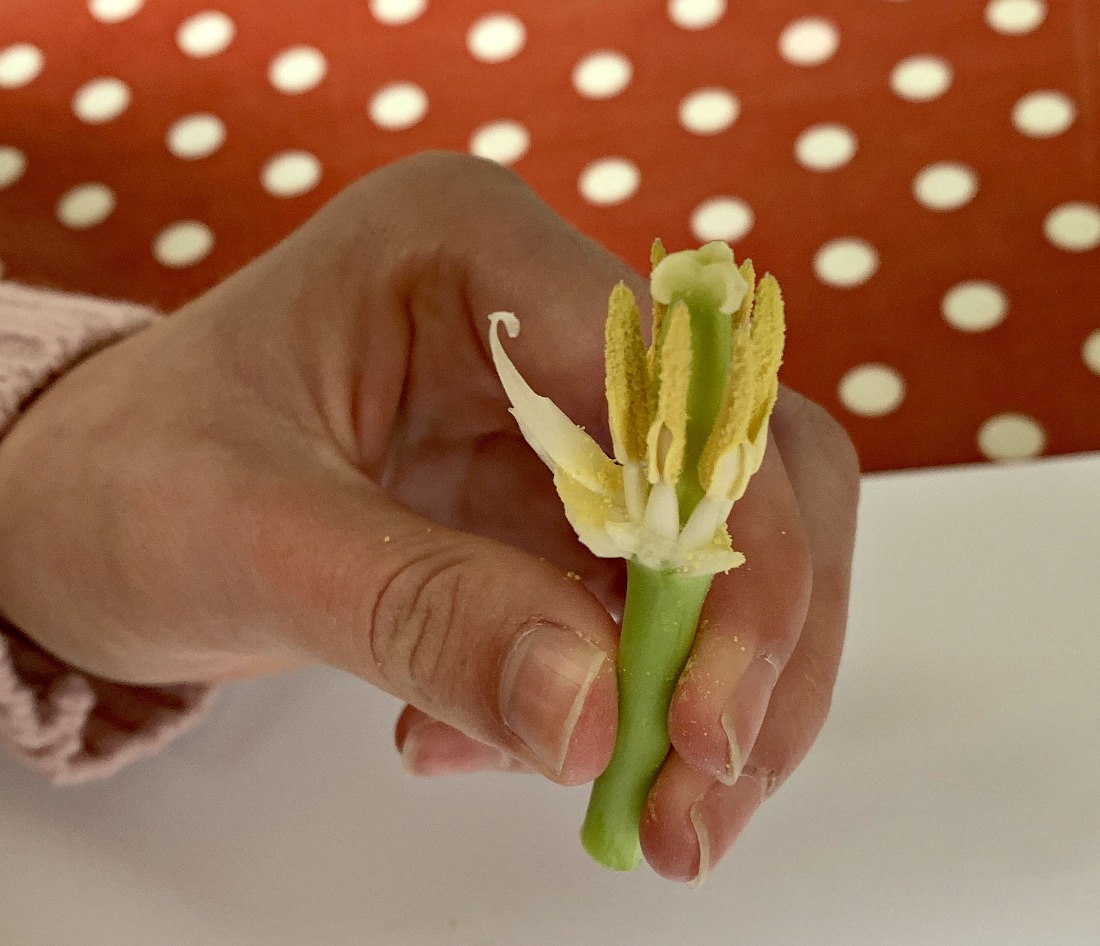
Looking at the parts of a Tulip

Then I asked if they could try and label the different parts. So we got some card and tape out and then they set about creating their own “scientific flower pages”.

They both started with taking an actual tulip and sticking that down.

This slideshow requires JavaScript.

Then they both moved onto trying to do their own drawings – more of a cross-section look – because the wanted to include a bit more detail.

This slideshow requires JavaScript.

I know I am biased but I think they did a good job.

Parts of a flower page created by the kids of ofamily learning together

I love activities like this because the more my kids use their hands when they are learning the more they remember – working with the actual flowers and then drawing them free hand is just more engaging. 

And yes this was totally unplanned and yes it did mean that our planned learning activity for this morning was not completed.  But I don’t mind.  I know that when they are engaged and asking questions it is the best time to just follow them, change gears and go with the topic they are interested in.  We will get to our “missed” learning activity next week.
Posted in Homeschooling | Tagged , , , , , | Leave a comment

KS2 Grammar Workbook

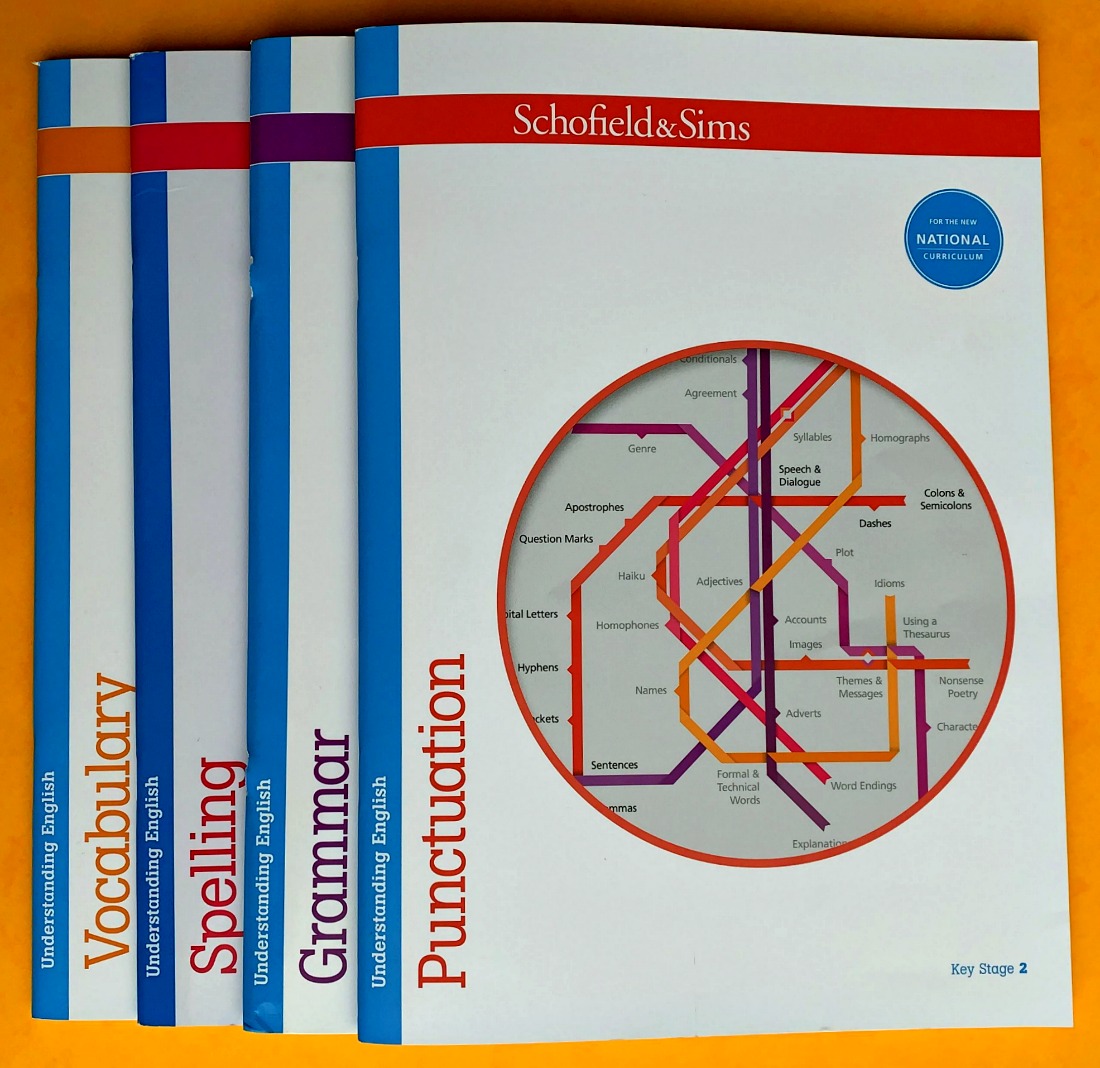
I really enjoy the Understanding English series from Schofield & Sims.

Understanding English range by Schofield & Sims

One of the books included in this series is the Grammar one – which I actually used as a revision book with my daughter in her Year 6 (great way to make sure you have covered everything and to possibly highlight areas you might need to go over again) and I am busy using it at the moment with my nine-year old. Now this book is designed for the whole of Key Stage 2 so I am not covering everything with him this year. I have been dipping in and out of the different Understanding English books taking pages for different activities and will continue using them with him for his next academic year as well.

Schofield & Sims Understanding English Grammar KS2 workbook

I think the reason why these books have been so popular with us is their design. Simple but effective. A nice brief explanation at the top of the page followed by 3 different activities. And normally the topic is split over 2 pages (sometimes even more). I will add that we I don’t use these books in isolation. I do tend to print out extra pages from websites to add in extra practice of concepts when I feel we need to. But I like the fact that everything is contained in this workbook, so I know these are the concepts we need to cover.

This slideshow requires JavaScript.

We also like the muted colours – they tend to be black and white with one other colour to highlight concepts and words. This suits my sensory kids because extremely colourful pages can often be more distracting than helpful.

So what is covered by this workbook? (The first 56 pages are activities and then they include all the answers at the back.)

  • Nouns
  • Adjectives
  • Comparatives and Superlatives
  • Singular and Plural
  • Verbs
  • Adverbs
  • Prepositions
  • Pronouns
  • Conjunctions
  • Understanding word classes
  • Linking ideas
  • Verb tenses
  • 1st, 2nd and 3rd person
  • Subject and verb
  • Standard English
  • Clauses (about 8 pages on clauses)
  • Sentence types
  • Modal verbs
  • Conditional sentences
  • Active and passive sentences
  • Informal speech and Formal speech
  • also a couple of editing pages

This slideshow requires JavaScript.

Other Understanding English Books that I am using with my son are – Punctuation and Spelling

I do include Affiliate links. If you follow an affiliate link and go on to purchase that product, I will be paid a very small commission, however your cost will remain the same. I only include affiliate links for products that we use and love.

Posted in Homeschooling | Tagged , , , , , , | Leave a comment

Ancient Algebra = Fun Maths

Whenever possible I try and make Friday maths a bit different – puzzles, codes, games just something that is a bit more relaxed. During the week I was searching for some Algebra pages and I spotted this set on the TechitPrimary website – Ancient Algebra – I immediately thought it looked like a fun Friday maths activity. We have often done coded pages (in lots of different formats and both my kids enjoy that sort of thing) so I downloaded and printed it out. Now I must admit when I went through it I thought it would be perfect for my nine year old even though it says it is a Year 6 activity – the reason being he has recently done Roman Numerals and actually asked for more pages where you have to figure out what the number value of different symbols is. Which is what a lot of this is – looking at the Aztec Symbols or Egyptian symbols and converting them into our traditional numbers. So I thought it would be perfect for him. But as soon as his older sister saw it and realized there was a history angle (ancient civilizations) she asked if she could also try it.

The set starts with a page showing what the different Aztec and Ancient Egyptian symbols were and what they mean in our number language.

This slideshow requires JavaScript.

Then there are 4 different worksheets – 2 pages on the Aztec symbols and 2 pages on the Ancient Egyptian symbols.

This slideshow requires JavaScript.

And they have also included the answers (although I must confess there are 2 answers that we disagree with – I am one of those moms that actually enjoys it when my kids find “errors” and point them out.  I like the fact that they question the answers given and are not afraid to point out when they disagree and explain why they disagree).

I must admit it was a great Friday maths activity.  Both my kids enjoyed it.

This slideshow requires JavaScript.

For those of you who may not be aware you can create a Free account with the TeachitPrimary website that allows you to download all the PDF’s on their site – this is the account that we have and we have used it for years.  They have lots of great content on their site and they also have sister sites for the Secondary Years (I have links in this post – Teachit Secondary Subject Sites).

And no this is not an AD in any shape or form.  I just thought this was an interesting maths activity.

Posted in Homeschooling | Tagged , , , , , | Leave a comment

Number Puzzle Book

I love the idea of number puzzles and word puzzles. I think they are a great activity for kids because there is always an element of logic and often an element of trial and error (which I think is important because kids will often do a Maths problem and get it incorrect the first time but they need to learn not to give up and to continue trying). So I was very happy when I spotted Schofield & Sims had both a Numbers Puzzle Book and a Word puzzle Book for Key Stage 2 ages – I am a massive fan of the Schofield & Sims workbooks. They are always well written and set out in a logical manner with examples getting progressively harder. And they always include a brief explanation at the top of the page (and yes answers are at the back of the books)

KS2 Number puzzle Book explaining how to do the puzzles

And this Number Puzzle Book does just that. For each type of problem there are three different double pages – each double page gets progressively more difficult.

This slideshow requires JavaScript.

They also include a nice range of different number puzzles:

  • Latin Squares
  • Sudoku
  • Arithmagons
  • Magic Squares
  • Multiplication pyramids
  • Grand totals
  • Kakuro

This slideshow requires JavaScript.

I wanted this book for my nine-year old.  He started with the easy examples which are perfect for the kids to figure out how they are going to solve these types of problems and great to practice on before they try harder examples.  Once he got the hang of it he moved onto the medium challenges (it is still a fairly newish book and we have not tried the most difficult challenges yet).

This slideshow requires JavaScript.

By working through these puzzles kids do practice the basic 4 operations (addition, subtraction, multiplication and division) and I actually now think the multplication pyramids are brilliant for times table practice.  But it is more than just the four operations there is logic involved and number sense.  Understanding place value also comes into the puzzles.

I think this Number Puzzle Book is a brilliant addition to normal maths activities.  It is fun and perfect for Friday Maths or keeping busy on a train ride (yes I am looking forward to going on train trips again) or car trip.

You can get the Number Puzzle Book directly from the Schofield & Sims, at your local bookstore (when they open again) or from Amazon – Number Puzzles: Key Stage 2, Years 3 – 6

Admin Bit – I was sent our Number Puzzle book from Schofield & Sims together with a few other books.  It entirely up to us which books we use, when we use them and if we decide to include them in a post.

I do include Affiliate links. If you follow an affiliate link and go on to purchase that product, I will be paid a very small commission, however your cost will remain the same. I only include affiliate links for products that we use and love.

Schofield & Sims Number Puzzle Book Key Stage 2 Maths


Posted in Homeschooling | Tagged , , , , , , | Leave a comment

Reading the Classics with Oxford Children’s Classics

One of the book series that we come back to time and time again are the Oxford Children’s Classics.

Oxford Children's Classic Books

I purposely sought out these stories because I was determined the kids would be exposed to a wide range of books and I wanted to make sure we included the more classic stories – and yes there is often old English words and phrases used and sometimes they talk about things like boxing kids ears or things that were acceptable back then but that are not acceptable now.  But for me this is part of why I want the kids to read them.  I want them to learn about how times have changed and how things/ words that were once acceptable are no longer considered acceptable.  And it actually makes for very interesting conversations, conversations that are actually really good to have with the kids.

I think the first time we tried one of these books was about 3 years ago – we started with The Railway Children – both of mine still rate this as one of their favourite stories and they often compare the characters in other books to the three kids in The Railway Children.  I really appreciated that it was an unabridged version of the story so whenever I have wanted another classic story I always first go and check to see if Oxford have it in their Classic range.  Which means we are now the proud owners of 6 different books in this range.

Great Books Oxford Children's Classics

We actually used our Black Beauty book as our English Literature study book – and by that what I really mean is we read the book really slowly, stopping a lot to talk about the characters, the events, the writing style, what the author was trying to do, why a certain word may have been used – yip slowly and with lots of discussion.  Both my kids really enjoyed it.  They loved the story and they enjoyed all the discussions and even after we had finished the story and moved onto another my son actually kept referring back to the characters in Black Beauty. (He did a lovely comparison between the horses in Black Beauty and those in The War Horse).

And as much as I like using these books for family reads (when the kids and I read them together) both of mine have read them independently.  My youngest tends to reread them to himself after we have read them together and my oldest just reads them for pure enjoyment – her current favourite is Little Women she is slightly obsessed with the story and the characters.

If you are looking for some classic stories then I highly recommend this range.

These are the books that we have are

Oxford Children’s Classics: The Railway Children (loved this one)

Oxford Children’s Classics: Black Beauty (my son’s favourite)

Oxford Children’s Classics: Heidi

Oxford Children’s Classics: The Secret Garden

Oxford Children’s Classics: Little Women (currently my daughter’s favourite)

Oxford Children’s Classics: Anne of Green Gables

Admin – This is not a sponsored post.  We just like these books.

I do include Affiliate links. If you follow an affiliate link and go on to purchase that product, I will be paid a very small commission, however your cost will remain the same. I only include affiliate links for products that we use and love.

Posted in Homeschooling | Tagged , , , , , , | 1 Comment