Arts and Crafts have helped my SPD kids

I am a huge believer in spending time helping SPD kiddies access arts and crafts that might possibly be “tough” on a sensory level.

I believe that art and craft activities are good for all children regardless of whether they have sensory difficulties but for sensory kids it is vital.   Not only are they getting the normal benefits of doing arts and crafts but they are also often challenging themselves on a sensory  level in a fun, relaxing manner.

My kids did not naturally take to art activities but I was determined to work on it, so we did and bit by bit we made progress.  It was SLOW but we recognised the small improvements and expanded on them, all the time trying to keep it fun and interesting.

To begin with my daughter really resisted colouring and painting.  So we switched to using oil pastels (she liked the feeling of the oil pastels on her fingers and she found the pressure easier to manage than normal pencils)
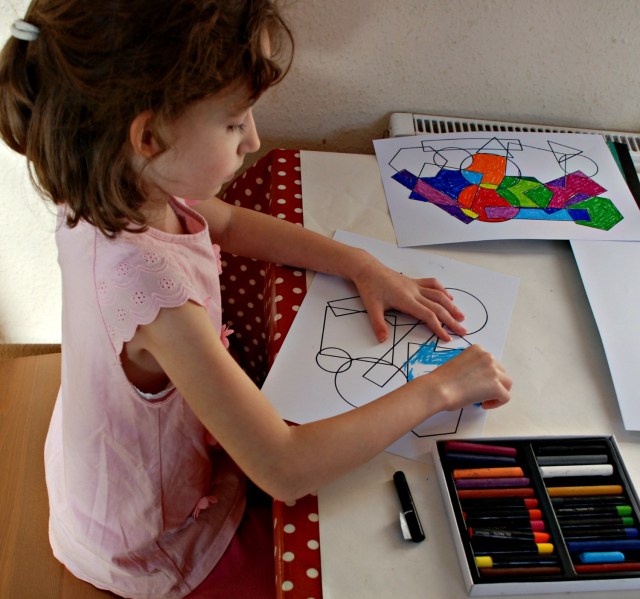
Using Oil pastles is often easier for SPD kids

and then we moved her onto the Woody 3 in 1 pencils.  The nice thing about the 3-in-1 pencils was they could be dipped in water and used as water-colour pencils, so we played with that for a while and then when she was happy with that we re-introduced simple water-colour paints.  We did not force her to use the orignal pencils that caused all the sensory problems, we tried alternatives and got her comfortable with the alternatives and slowly built from there.  Now she enjoys colouring and happily uses a wide range of pencils without complaining about the feeling of them on her hands.

We have also had to practice with glue – yes I know might sound a bit strange – but the feeling of glue on their skin for a child with SPD can be VERY distressing.  The first time we tried decopatch both kids hated the glue (Mod-Podge) and got very distressed by it.  So we did lots of small projects using the glue.  Initially the kids would just glue one or two small pieces of paper onto an old glass jar and then I would help them clean their hands.  As they got more comfortable so we worked with the glue for longer and longer periods.

Wet clay was another one.  The sticky wet feeling can be quite a challenge for sensory-avoiders.  I had to find activities that they really wanted to do in order to encourage them to use the clay.  This was one of those examples where I often worked with some clay and the kids would just watch and ask to join me.  Initially they sat on my lap and we worked with the clay together (this has helped both my kids get involved in activities they found difficult on a sensory level – them being on my lap and us doing it together – it gives them extra security to try to tolerate that difficult feeling). Also with the clay I have found that we could not leave the interval between using it too long.  We once did not work with clay for about 7 months and we had to take a few steps back to get my daughter comfortable with it again.
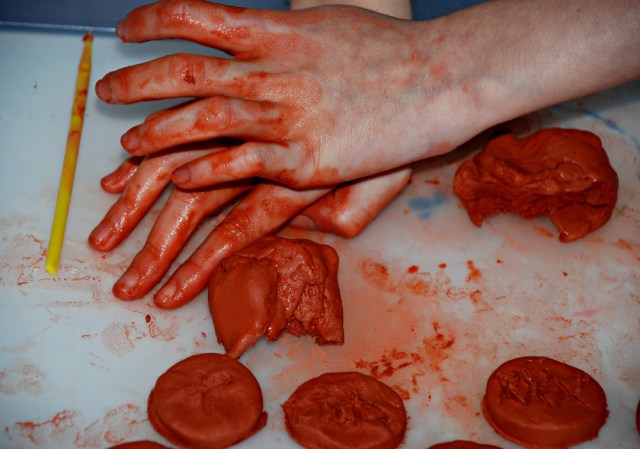
making Roman coins using air drying clay

The key for us has been variety, doing small projects and building up.  Keeping it fun and finding themes that they enjoy.  We have had a number of false starts but whenever we have tried something that has gone horribly wrong I try to figure out why – was it the feeling of the glue / did they need to press very hard to get a colour and ended up with sore hands / was there a very strong smell that made them gag ?  Once I think I understand why it went wrong I try to see if we can practice the issue in small doses – maybe give them a picture that is already partly coloured in and they just need to finish it / maybe using the paint dabbers instead of brushes might help with exhausted hands.  Small steps.  All the small steps add up and as they get more confident with the different sensory inputs from the arts and crafts they often start asking for more and more activities.

The feeling of glue is now something my daughter is able to tolerate if it means she can complete a craft project.  Both kids now enjoy working with wet clay and paint is always popular in our house.

Often art and craft activities can be difficult for kids with SPD as they are having to deal with something that is uncomfortable possibly even distressing on a sensory level.  But I do think art and craft activities can be an excellent way to help sensory kids experience those scary feelings in a relaxed, fun, non-threatening enviroment.  It has worked well for us and is one of the reasons why we do so many art and craft activities in our home.
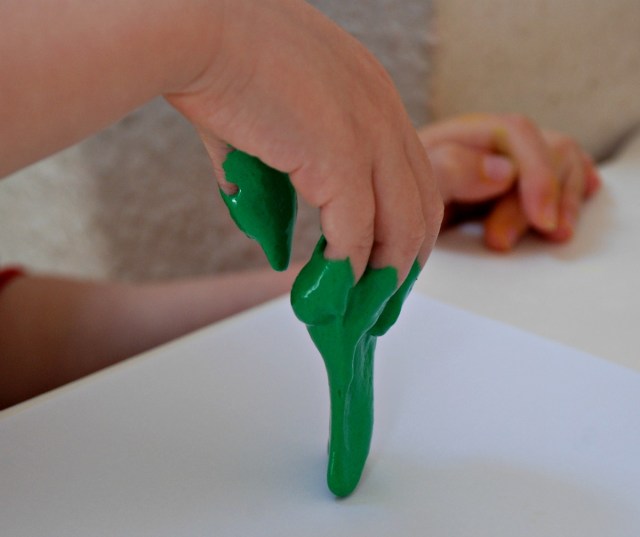
The finger paint from Baker Ross is brilliant

Some of the items I mentioned in the post –

Pentel PHN4-50 Oil Pastels – Pack of 50

STABILO Woody 3-in-1 Multi-Talented Pencil with Sharpener and Paint Brush – Assorted Colours, Wallet of 18

Mod Podge 8 oz Waterbase Sealer, Glue and Finish, Gloss

DAS Modelling Clay 500 g White Air-Dry


Save

Save

Save

Save

Save

Posted in SPD | Tagged , , , , , | 3 Comments

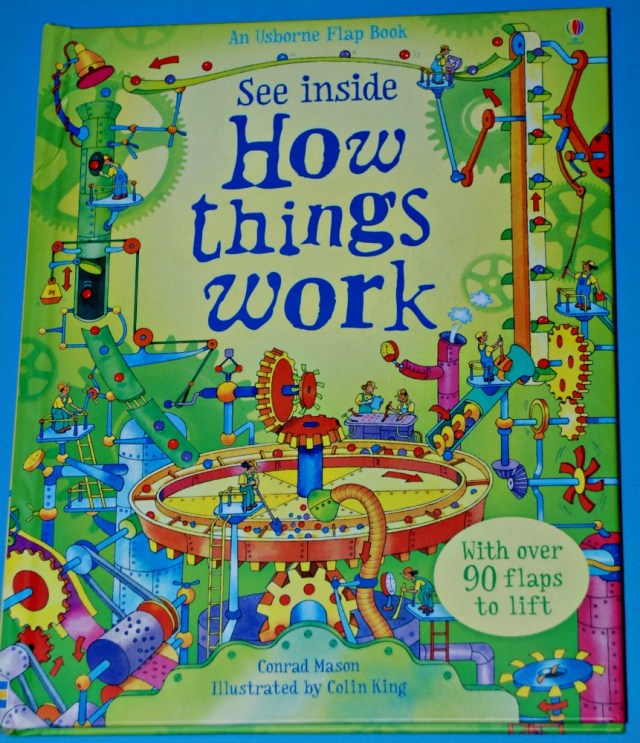
Usborne See Inside How Things Work

We actually gave this stunning book to my son (aged 6) as a Christmas present and it is such a brilliant book that I wanted to share some photos and details about the book.

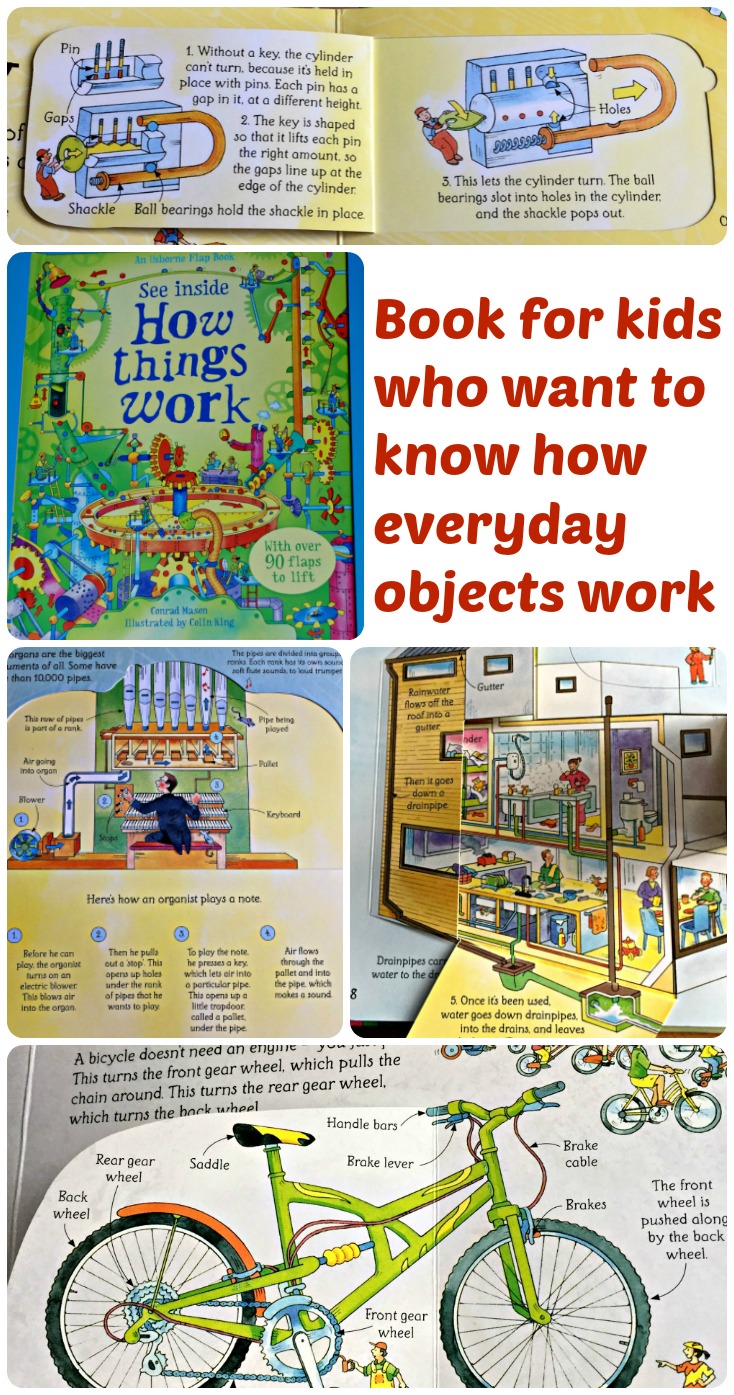
Usborne See Inside How Things Work. An excellent book which helps kids understand how everyday objects actually work

How Things Work (See Inside) (Usborne See Inside)is broken down into 7 sections. All sections (except for the first and last) are double pages.
  • Simple machines  – a quick explanation of a wheel, cog, pulley, an inclined plane, wedge, screw and a lever work.
  • Movers and shakers – diggers, cranes and other items from a construction site.
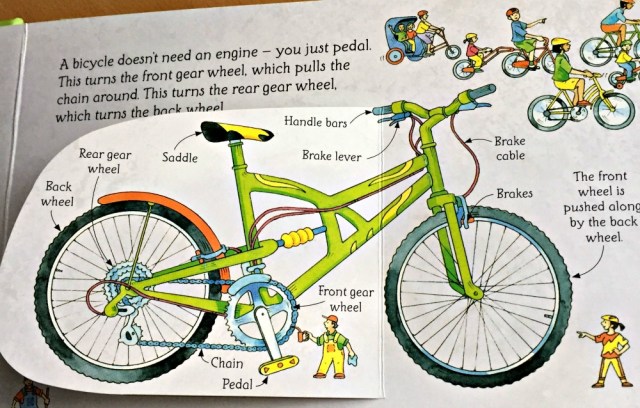
  • Getting going – cars and bicycles.  My son really likes this page as it features how a car’s engine works and how a bicycle manages to move forward without an engine.
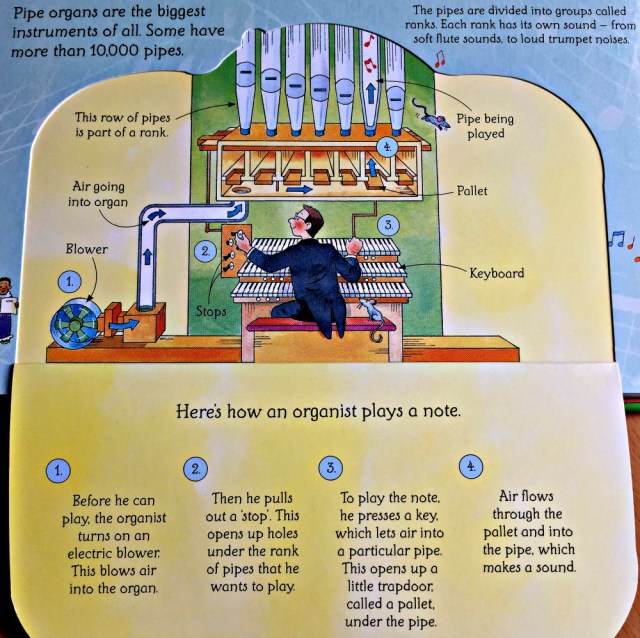
  • Making music – how instruments work – includes a piano, french horn, trombone and a pipe organ.

Usborne See Inside How Things Work. the Making music page includes how a pipe organ works

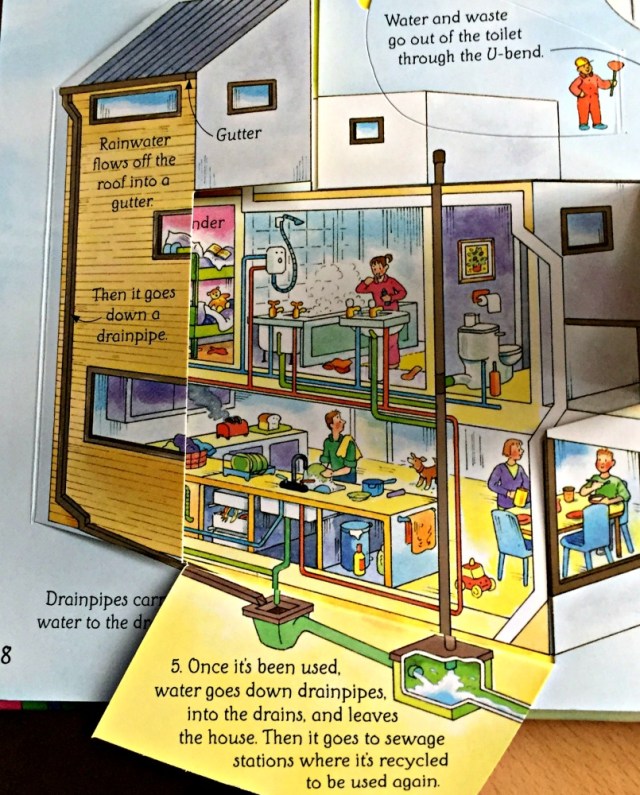
  • Waterworks.  The kids see how the toilet and pipes in a house work.
  • Floating and flying.  Planes and boats.
  • Everyday inventions – like hair dryers, toasters, vacuum cleaners etc

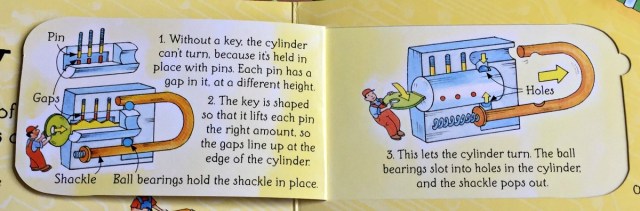
Usborne See Inside How THings Work. A padlock featured on the Everday inventions page

  • Up, down and around – lifts, escalators

The graphics are of the high standard that you expect from Usborne books and they manage to explain how the items work in short, to the point phrases.

Take the bicycle as an example

Usborne See Inside How Things works includes a bicycle

and when you lift the bicycle flap you see

Usborne See Inside How Things Works explains how the gears on a bicycle work

I also really liked the fact that the book includes the items you would expect like cars, construction vehicles etc but they also included the water system in a house (I was not expecting this).  This page has been the starting point for lots of discussions about toilets.

Usborne See Inside How Things works includes en axplanation of the water system in a house

I am a fan of the Usborne flap books because all the ones we own manage to keep the kids interested.  The kids enjoy reading the books, lifting the flaps to see what is underneath and all the while they are learning.  This one is exactly that.  The kids enjoy it, they keep going back to it and every time they read it they are learning.

I am thrilled we bought this book for my son as I think it makes a great addition to our home book collection.

Usborne See Inside How THings work.  Book for children who want to know how everyday objects work

I have included Affiliate links. If you follow an affiliate link and go on to purchase that product, I will be paid a very small commission, however your cost will remain the same.  I only include affiliate links for products that we own, use and love.

Save

Save

Save

Posted in Home education resources | Tagged , , , , | 1 Comment

Common Word poster games

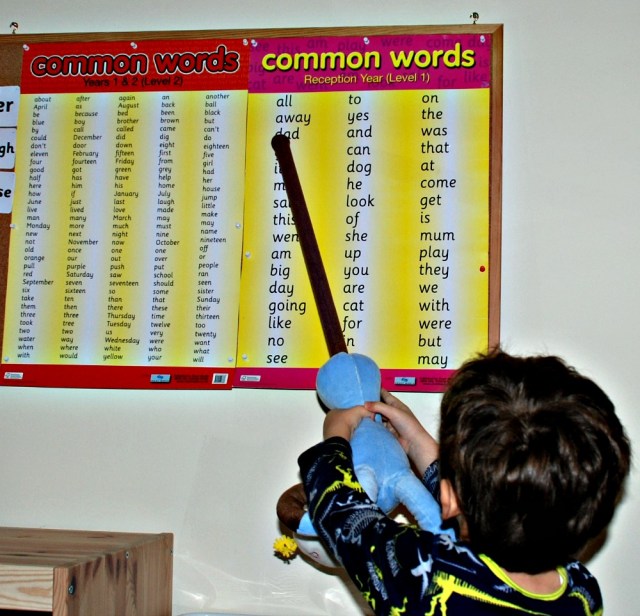
We have two common word posters which were on a notice board by the kids desks but beginning of this year we moved the posters upstairs to the kid’s bedroom and a new game evolved.  It was quite by accident.  One evening my youngest wanted to know what one of the words on the poster was, he used his toy goat to point (IKEA) to the word and our new word game started.  He started pointing at other words telling me which words he could read, which words sounded the same, which words were special words (mum and dad) and which ones were silly words.

Common Word Poster activities for children to practice reading.

After a while I started asking him questions.  Like can you say the word that is in the second column 6 words down.  And he would use his toy goat to point.  He thought this was fun and he started asking me questions like – mum can you tell me where on the poster the word – play – is ?  I would then have to find the word and describe its position.  eg third column, 10 words from the top.  We also included rhyming words eg can you find a word that rhymes with dig.

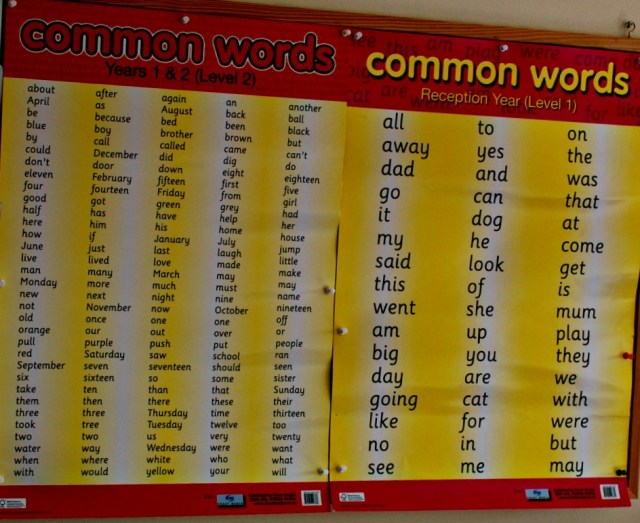
Common Word posters level 1 and level 2. High frequency words

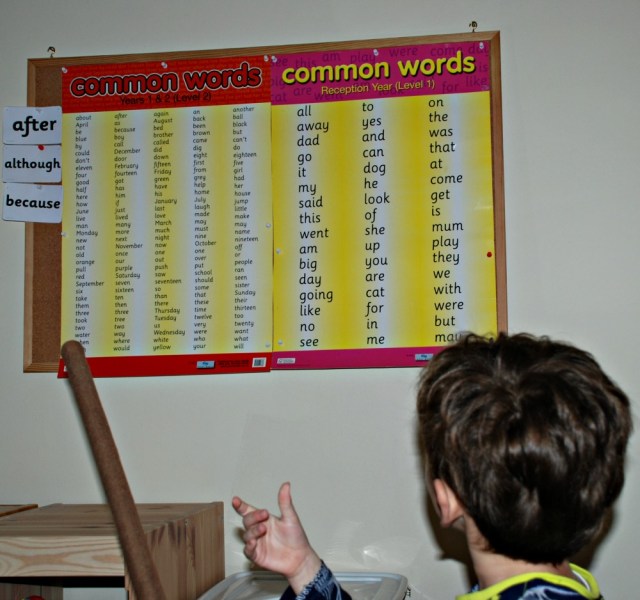
The following evening he called me to play the word game but this time he said we should include more instructions.  So we started with questions like – “what word is below “day” and what word is above “day”, or what word is to the right of “she” – those kind of scenarios.

It has actually now become part of the kids bedtime routine (yes he sister has also started joining in).  He always reminds me to play the word game.

Common Word posters can be interactive and fun if you include some games

And we even put an extra twist on the game last night.  Both my kids speak Afrikaans (it is their dad’s home language).  So now we have started including our 2nd language.  Can you find the English word for Pa.

Lots of fun and they are learning without even realizing it.

The Common Word Posters that we have are these ones

Common Words – Level 1 – Educational Poster 40x60cm

Common Words – Level 2 – Educational Poster 40x60cm

Common Word posters. High Frequency word posters

I have included Affiliate links. If you follow an affiliate link and go on to purchase that product, I will be paid a very small commission, however your cost will remain the same.  I only include affiliate links for products that we own, use and love.

Save

Save

Save

Save

Posted in Home education resources | Tagged , , , , , | Leave a comment

Usborne Young Reading Series

I am a huge fan of the Usborne Beginners series.  We have a large collection of the Beginners books and I have found them to be perfect for read alouds as well as brilliant beginner readers.  My daughter used a lot of the books in this series as readers and they really suited her as she found the topics more interesting than lots of more traditional readers.  So last year when I was looking for more advanced books I thought we could try some more in the Usborne Reading series.

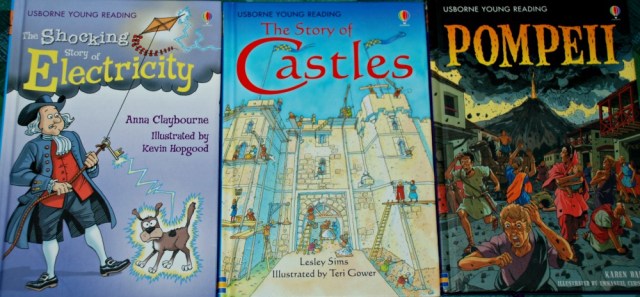
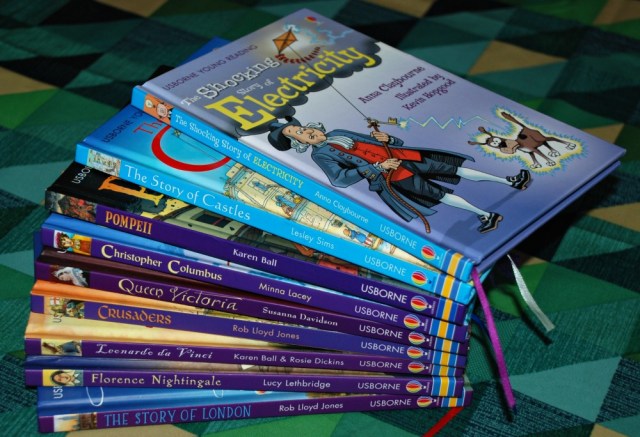
Usborne Reading Series the Shocking story of Electricity, The story of Castles and Pompeii

I initially ordered 2 books in the Young Reading series 2 range (The Shocking story of Electricity and the Story of Castles) and although these books are great readers and very informative they were too easy for her – photo below is from the book Story of a Castle a series 2 book.

Usborne Reading Series 2. Inside page from the book Story of a Castle

But we liked the style of writing and the way non-fiction topics were covered for young readers, we just needed a slightly harder version.  We decided to stick with the range and I ordered her a series 3 book to try – Pompeii.

The Pompeii book was a massive hit with both my kids and great reading practice for my daughter.  She was interested in the historical themed books in their range and wanted to try more so she was thrilled when Usborne sent her 6 more to try out. All Historical themes.  Perfect for us –  while she is gaining confidence, practicing her reading she is also learning about historical figures and events (plus her younger brother loves listening to the stories).

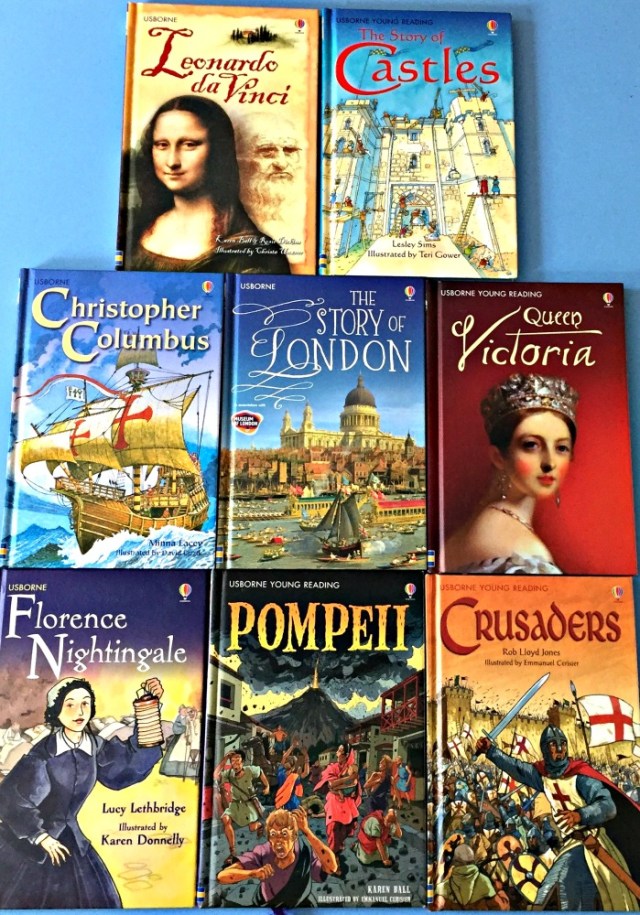
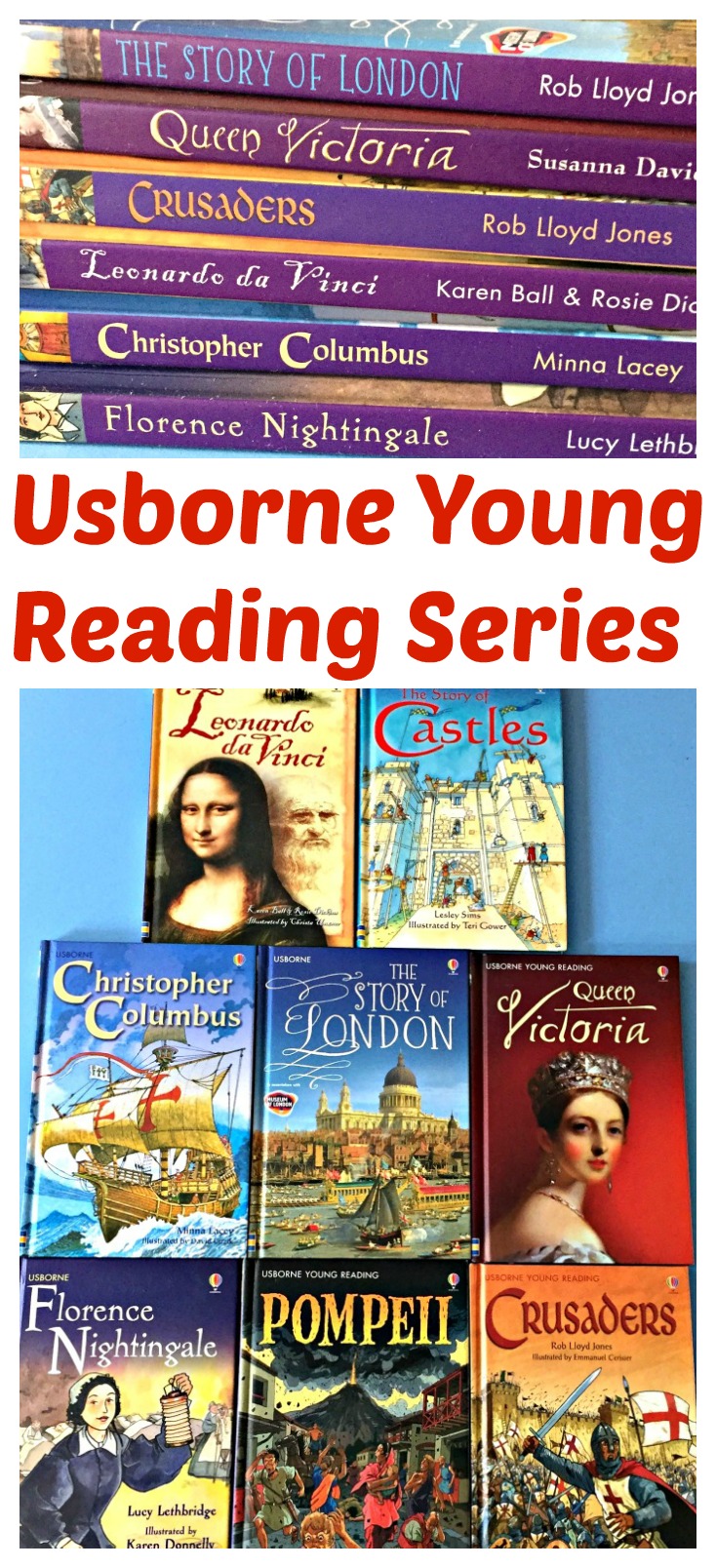
Some of the History books included in the Usborne Young Reading series. Excallent books for children.

The books are all well written.  There are a few challenging words (often the names of places and people) but she always manages the books by herself.

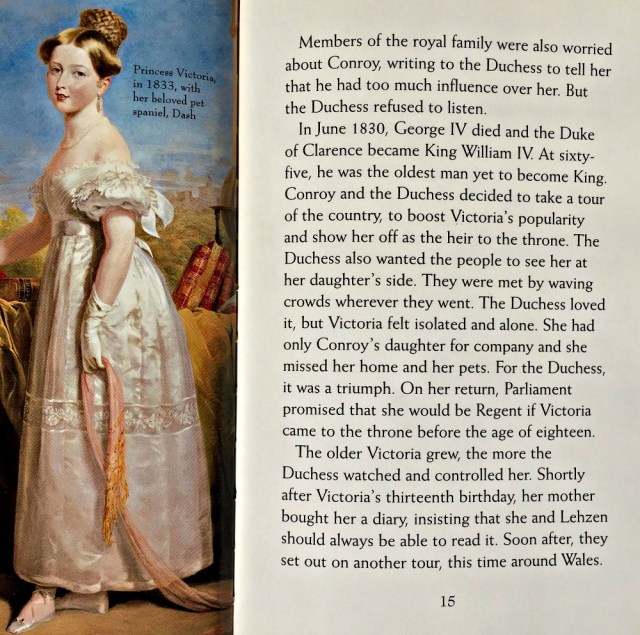
Queen Victoria.  One of the Usborne Young Reading Series 3 books.  Combines history with reading practice


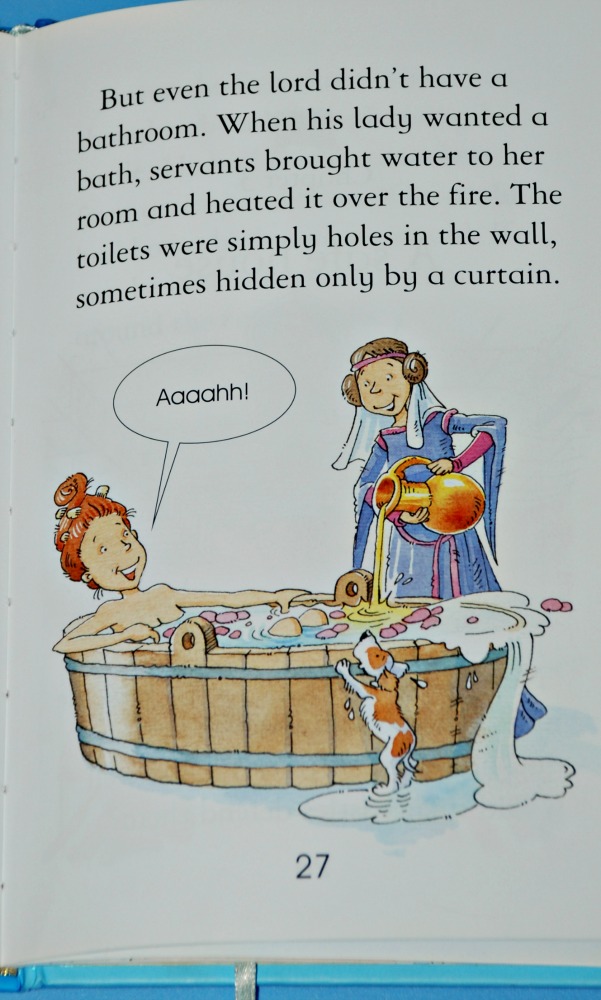
They are books about historical events and people so they do deal with death, sickness and disasters but so far we have not found the details too graphic or upsetting (but please do bear in mind some of the text might require a parents presence for younger highly sensitive children).  Below is a page from the Florence Nightingale book.

An extract from Florence Nightingale.  One of the Usborne Young reading Series 3 books

Personally I have stayed away from certain titles at this stage as my daughter is sensitive (eg:The Holocaust and Anne Frank – I know these would be very upsetting for her and I am rather leaving this sensitive subject matter for when she is a bit older.)

And as I have come to expect in the Usborne reading series they always include brilliant illustrations and often lovely colourful photographs.

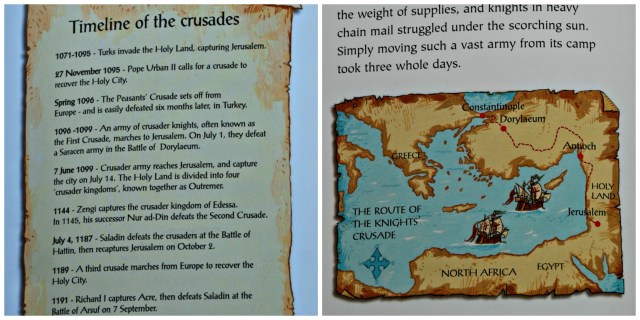
Also at the end of the books they include a one page timeline of the historical subject which is always a great recap of the order of events as mentioned within the book.  And a number of the books also include maps showing routes taken.

The Usborne Young Reader book Crusaders includs a timeline and maps showing the routes

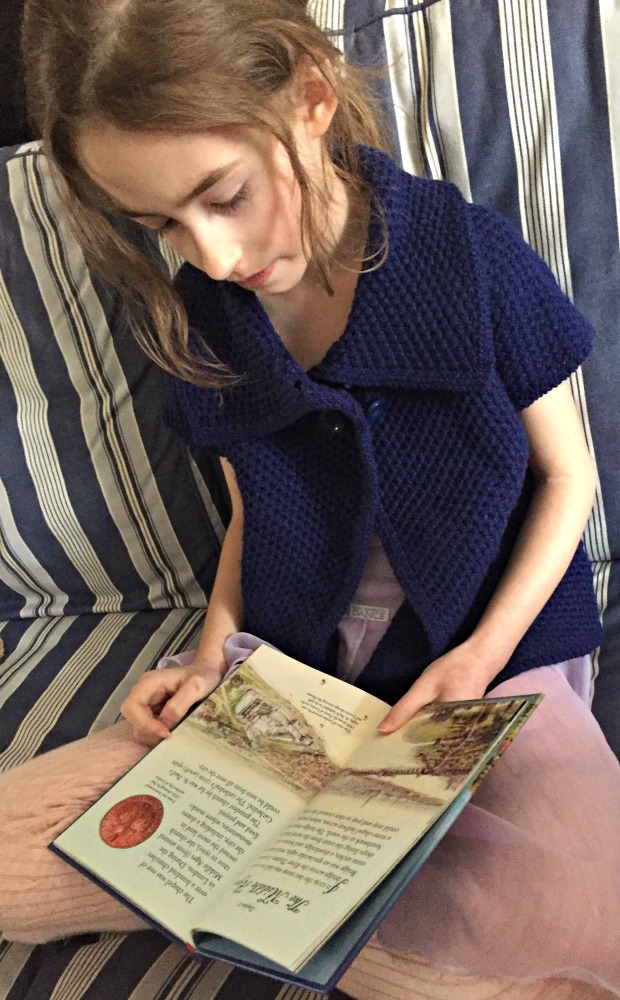
We are ALL really enjoying this series of books and as a home-educating mom I am finding them great starting points for fascinating discussions. The kids are learning about history in a very relaxed manner (often curled up on the couch reading a book with me). They are loving the books and keep asking me for more in the series.

Reading The Story of London. A Usborne Young Reader. Stunning readers for primary aged children

I am probably going to order some of the fictional titles in this range – I am just battling to decide which ones to order – possibly The Adventures of Huckleberry Finn or Anne of Green Gables.

The full range of the Usborne Reading series can be found on their website here are the links – Young Reading Series 2 books and Young Reading series 3 books

And the titles that we currently have on our bookshelf are these ones.

Usborne Young Reading series books which we use as part of our home education

Series 2

The Shocking Story of Electricity (Young Reading (Series 2))

Stories of Castles (Young Reading (Series 2)) (Young Reading Series Two)

Series 3

Pompeii (Young Reading (Series 3)) (Young Reading Series Three)

The Story of London (Young Reading Series Three)

Crusaders (Usborne Young Reading: Series Three)

Queen Victoria (Young Reading Level 3) (Young Reading Series Three)

Christopher Columbus (Famous Lives)

Florence Nightingale (Usborne Famous Lives)

Leonardo Da Vinci (Young Reading (Series 3)) (Young Reading Series Three)

Usborne Young Reading Series includes lots of brilliant historical books for children to read

I have included Affiliate links. If you follow an affiliate link and go on to purchase that product, I will be paid a very small commission, however your cost will remain the same.  I only include affiliate links for products that we own, use and love.

Save

Save

Save

Save

Save

Save

Save

Save

Posted in English Ideas | Tagged , , , , , , | Leave a comment

Real or Nonsense Ingredients for the Cauldron

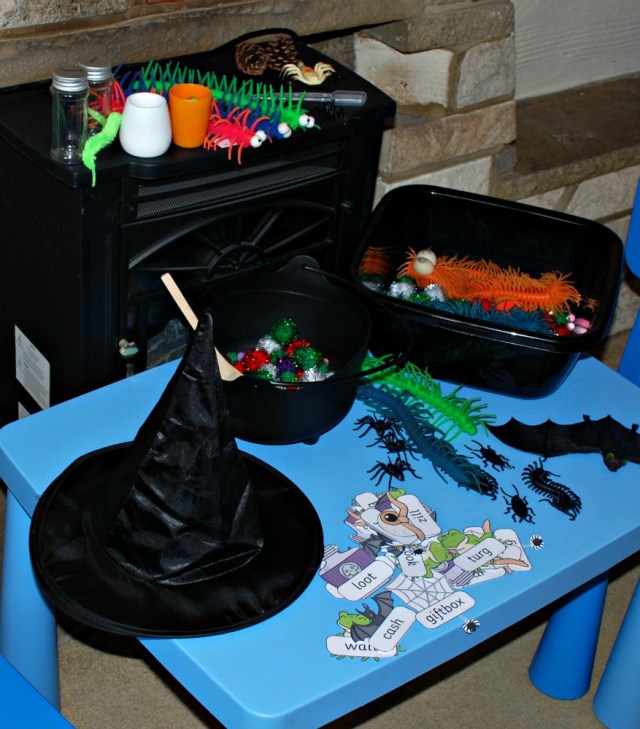
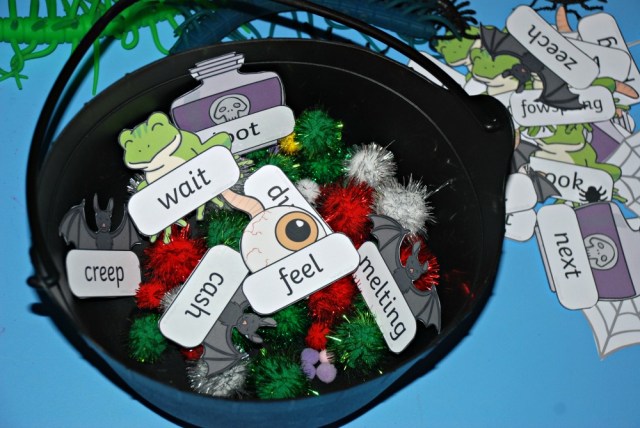
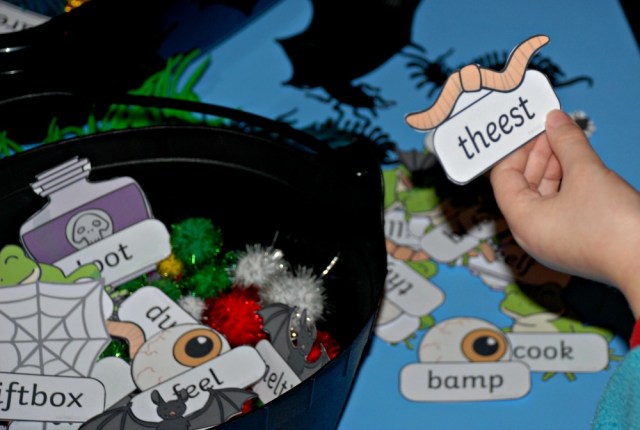
I have been looking for a fun phonic activity to do with my son (aged 6) but never really thought of the real vs nonsense word activities I have seen until I stumbled upon the witch/wizard version by Twinkl.  The idea being that the kids read the words, decide which is real and which is nonsense and then place the real words in the real cauldron.  Their pack includes cauldron pages which you can print out and the kids place the words on the cauldron sheet but I thought it would be fun to make it a bit more interactive. So I set up a potion area for my little wizard.

Potion making area all set up waiting for the Wiizards to come and decide which are real and which are nonsense ingredients

I only used goodies which we already had in the house.  For the Nonsense cauldron I used an old plastic container and the real cauldron is a play cauldron we bought a couple of years ago.  Inside the cauldrons I placed some craft pom-poms and I raided the kids toys and found some insects and creepy crawlies just to make the cauldron area a bit fun.  (Oh and old spice containers work really well in this sort of scenario).  I cut out the words and invited the local wizard to come and make a potion.

Phonic word activity from Twinkl. Only the real words get added to the Real cauldron

He thought it was a lot of fun and had a good go at sounding out the words.

Reading ingredient words to decide if they should be included in the potion.

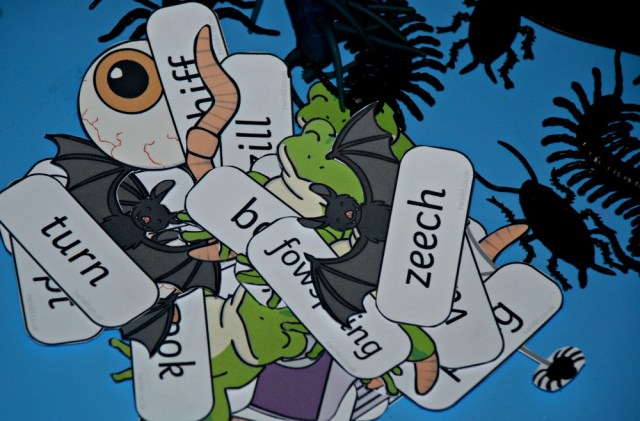
I must admit there was a good selection of words.

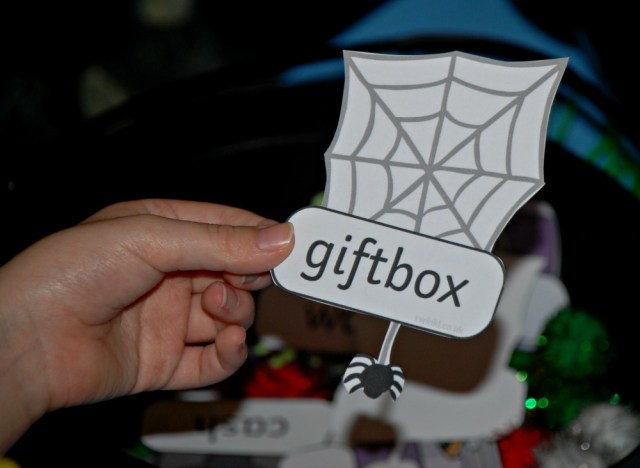
Reading the words to decide if it is a real or nonsense word. Phonic activity from twinkl

One of the great thing about this activity was I quickly picked up which sounds he is still mixing up (when he read words with oo or oi in them he would often mixed these up).  It definitely helped me understand which sounds he needs a bit of extra practice with.

Twinkl have a bunch of these little packs  – for our purpose we mixed a few of them together

Nonsense and Real word activity from Twinkl. Place the real word into the real cauldron

but you could just stick to one set of words –  here are the links (all are part of their Paid for Classic package).

Halloween themed Real and Nonsense Word activity – phase 2

Halloween themed Real and Nonsense Word activity – phase 3

Halloween themed Real and Nonsense Word activity – phase 4

Halloween themed Real and Nonsense Word activity – phase 5

Hope your Wizards have as much fun as mine did.

Phonic Activity for kids. Decide which word is real and belongs in the cauldron and which words are nonsense

All Links and reference to Twinkl are valid at the time of writing this post. 

Save

Save

Save

Save

Save

Save

Posted in English Ideas | Tagged , , , , , | 2 Comments