What’s that Building – a Big Cat reader

I love discovering interesting new reading books.  But I must admit upfront that we have often found the different reading series a bit boring, as a result we normally pick library books based on what looks interesting and we often use normal story books as readers.  So I am honestly not an expert when it comes to reading series.

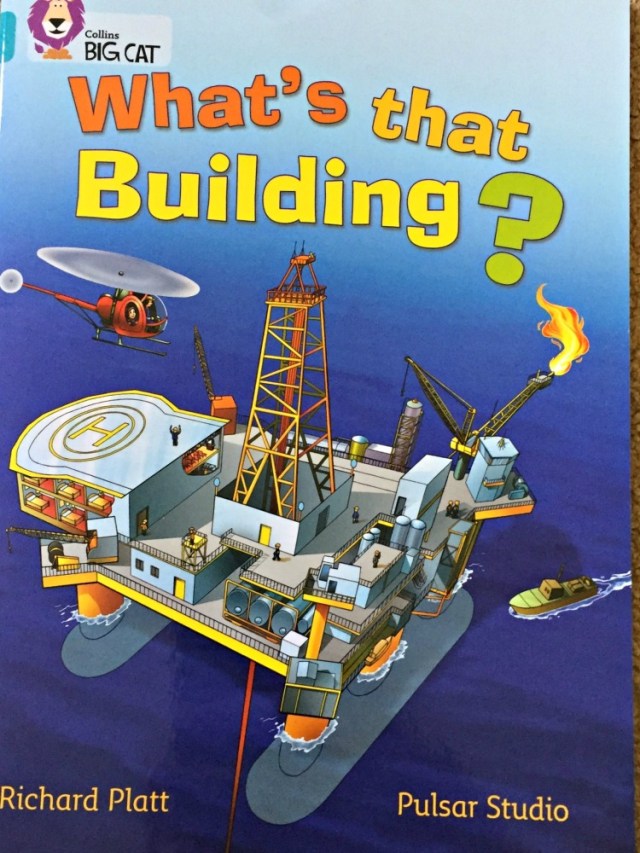
We recently tried our first BIG CAT book and both kids loved it.  It was this one – What’s that Building?: Band 07/Turquoise (Collins Big Cat)

What's that Building ? One of the BIG CAT reading series by Collins

According to the Collins website it is part of their Turquoise series – band 7 – which is aimed at  Year 2 ages.  (They do have a breakdown of their readers per age on their website and their readers do go up to Year 6).

What’s that Building ?  It covers unusual, interesting building structures.  It includes an aircraft hangar, a lighthouse, palm house, water towers, oil rigs, windmills, Khufu’s pyramid, nuclear bunker and Timbuktu mosque.  Not your typical buildings, a perfect topic for my son.
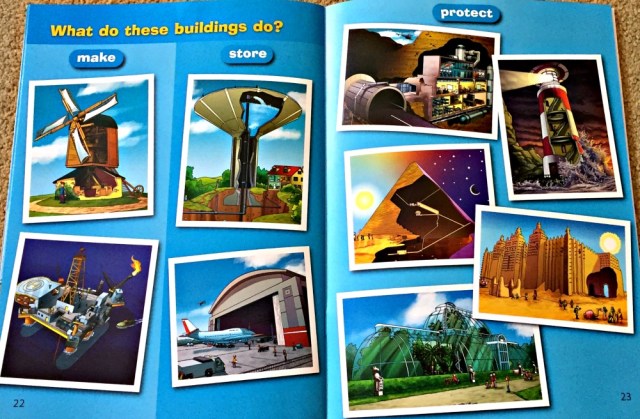
The BIG CAT reader, What's that Building includes lots of very interesting structures

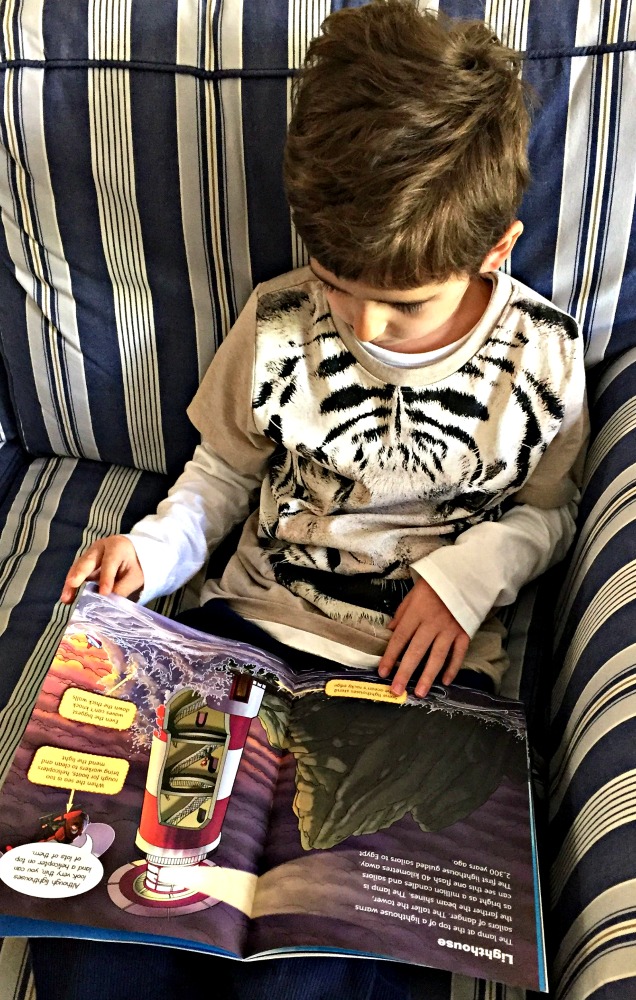
The pictures are simple but really well down, with little sections cut-out so the kids can see inside the structures.

What's that Building includes a page on Khufu's pyramid with a short paragraph and stunning illustrations

Each building has a short paragraph which explains a bit about that particular building.  Not too much so it isn’t overwhelming, but enough information to keep it interesting.
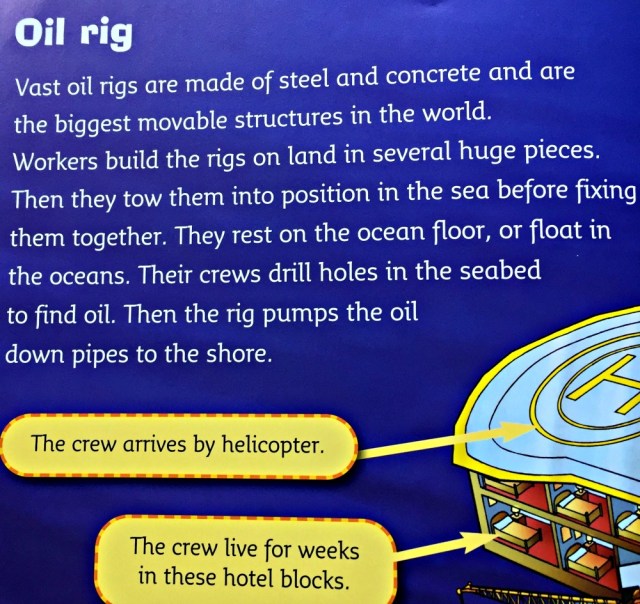
reading paragraph on the oil rig page part of the BIg CAT reader What's that Building

My son loved this reader.  He is a bit young for it but he was desperate to try so he read sections and his older sister filled in the words and phrases that he could not managed. And even though it was a challenging read for him he did not give up, he was determined and the two sat together and went through each page.  This has always been key for me.  If you give the kids books that they find interesting they naturally challenge themselves.  No nagging needed.

After reading this book we went on to THE GARGLING GORILLA (Roaring Good Reads) (fiction), it is part of the Ruby series so aimed at Year 4.  My daughter easily managed to read it (if my daughter was attending school she would be year 4) and her brother really enjoyed the funny story.  And we have My Journey across the Indian Ocean: Band 17/Diamond (Collins Big Cat).  I think this is going to be a very interesting story.  It is aimed at Years 5/6 but having paged through it I think my daughter will manage.  So far three books from the BIG CAT series and we are impressed.  We will definitely be looking for more in this reading range.

reading What's that Building part of the BIG CAT reading series by Collins

And if you are a home-educator looking for Free resources, Collins do have some FREE resources linked to a couple of books in each of the reading band.

What's that Building. Part of the BIG CAT reading series by Collins. Brilliant for kids who enjoy non-fiction stories


Save

Save

Save

Save

Save

Posted in Book Ideas | Tagged , , , , , , | Leave a comment

Make your own Learn to Draw Book

It is no secret I love “How to Draw” pages and my kids have been using them for some time now.  But I have never really stored them somewhere so often the individual pages would get packed away in-between other drawings or art activities. So I thought it would be a good idea to create our own Activity Village How to Draw Book and solve the issue of the missing How to Draw pages / Learn to Draw pages. (The Activity Village Learn to Draw pages that I used are part of their membership deal which is currently £12 for 12 months)

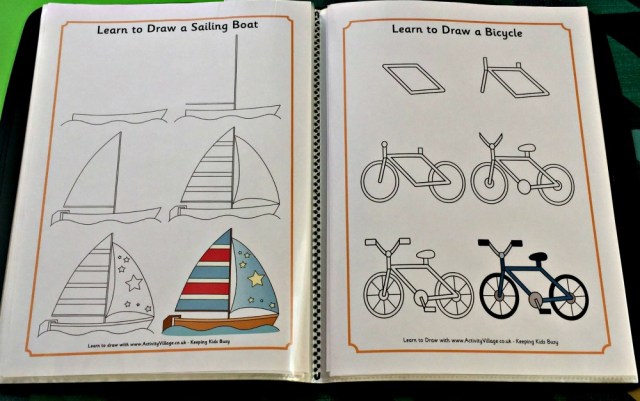
I used a plastic folder that we had in the house and slotted the Learn to Draw pages into the sleeves.

Create your own How To Draw book using the Activity Village How to Draw pages

I tried to keep the pages in a rough theme order.  So all the insects together then the transport vehicles, then people, then monsters etc.  The folder that we have is fairly big so I can store a large number of Learn to Draw pages in it, but I like the fact that I can also easily take them out and replace them with others.

Using the Activity Village How to Draw oages to create your own drawing book

Really easy and simple to do but it is just so much better than having all the Learn to Draw pages scattered around the house.

And the kids are using it more just because they know where the pages are.

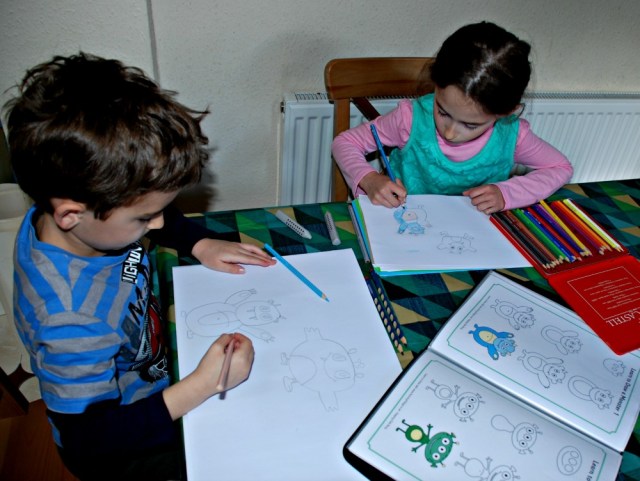
Using the How to Draw Monsters page out of the Home-made How to Draw book created using downloads from Activity Village

Using the Activity Village How to Draw pages to create pictures

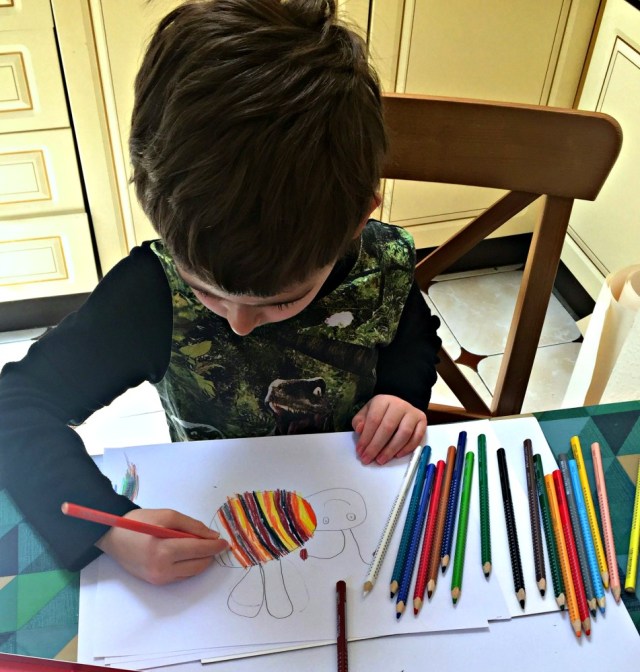
And I am noticing that the kids have certain favourite Learn to Draw pages and as they get more and more confident with the basic drawings they are actually using them in their own creative ways.  My youngest often follows the basic drawing and then adds his own creative flair to the way he colours it in.

Creating a picture using one of the Activity Vilage How to Draw pages

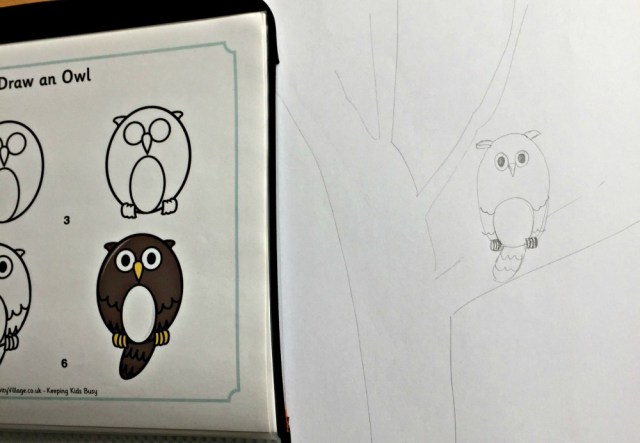
While my oldest has started playing around with creating her own pictures.

Using the Activity Village How to Draw an Owl to create a picture

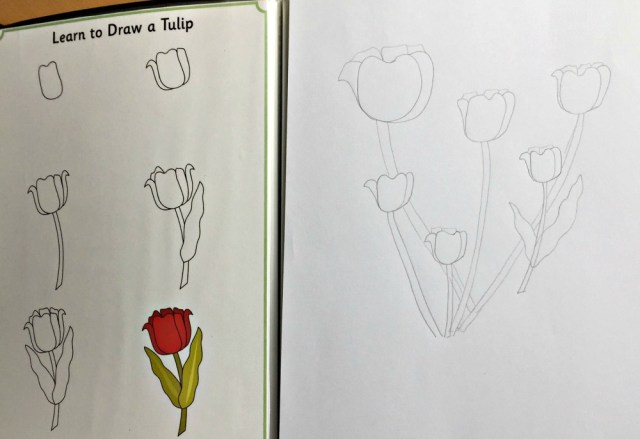
How to Draw Tulips from Activity Village

And me,  I have finally solved the answer to “Mom where is that How to draw page that we used last month ?”

Create your own Learn to Draw book using pages from Activity Village


Save

Save

Save

Save

Save

Save

Posted in Art and Craft Ideas | Tagged , , , , , | 1 Comment

Fractions, Decimals and Percentage learning aid

After spending a lot of time on breaking Time down into fractions it was no big surprise that my daughter wanted to do more fractions this week (Fractions is one of her favourite Maths topics).    We had been talking a bit lately about decimals and percentages so I thought it might be fun to create our own home-made fraction, decimals and percentage poster.

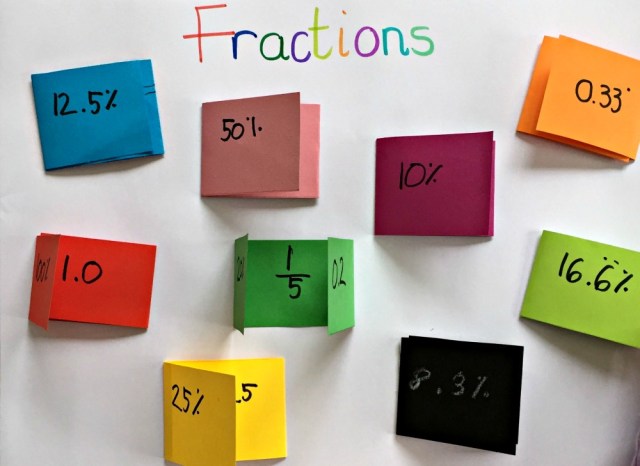
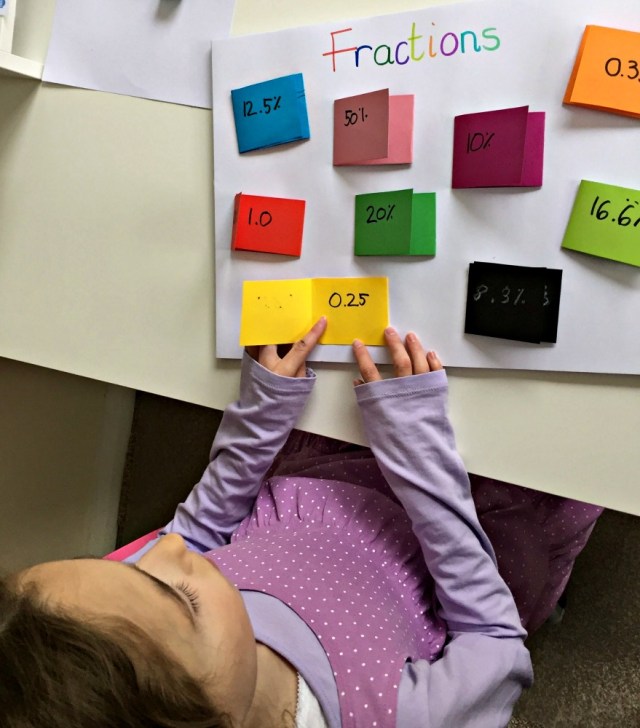
Home-made fraction, decimal and percentage poster with flaps for each set of numbers

The idea really came from my daughters Fraction Towers (Learning Resources Fraction Tower Cubes Equivalency Set).  The fraction towers show the fraction on one side, the decimal number on another side and the percentage on a third side so I thought let’s do the same thing but with some home-made flaps.
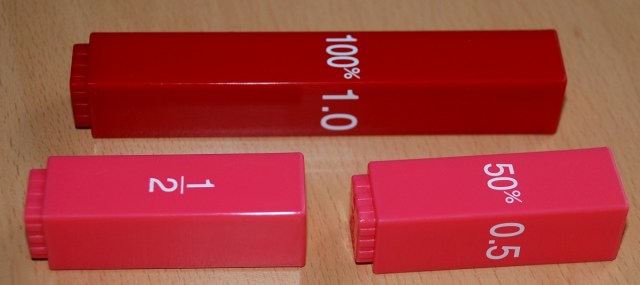
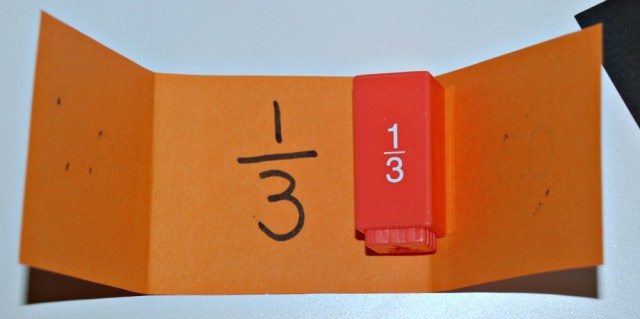
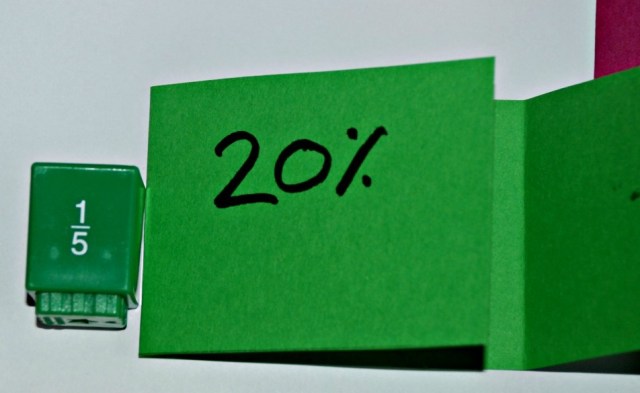
Learning Resources Fraction Tower pieces have the fraction on one side, the decimal number on another side and the percentage on a third side

We started off by cutting some thick coloured craft paper that we have into fairly thick strips and then each strip was folded into three, creating two flaps.

On each coloured flap my daughter wrote the fraction (she did this in the middle ) and then the decimal number on the first flap and the percentage on the second flap.

Creating flaps with the fraction in the middle and the percentage on one flap and the decimal number on the other flap

Fraction flap has the fraction written in the middle, then the decimal number written on a flap and the percentage written on another flap

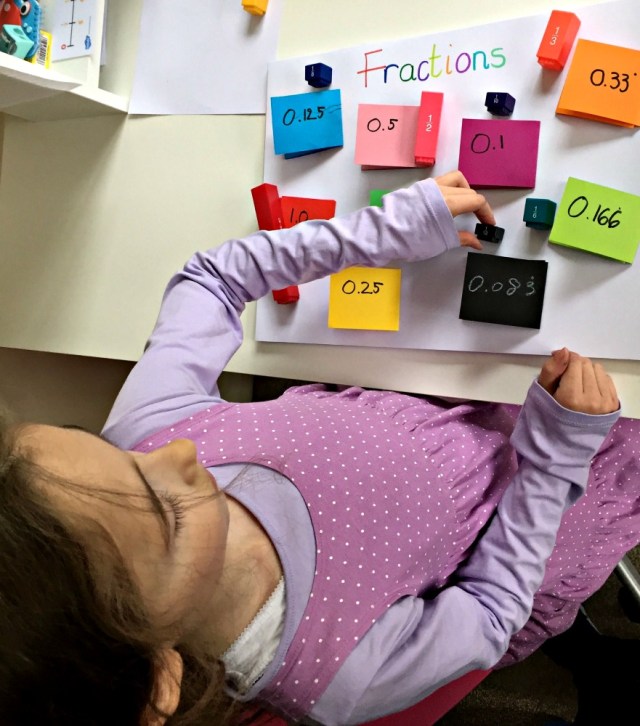
Once she had written all the combinations we stuck them down onto a piece of A3 paper (while she was doing this she was constantly talking about the fractions and the decimals, finding patterns and noticing a few connections).

Once all the flaps were stuck done she actually started testing herself.  She turned all the flaps so that the decimal numbers were on top and then checked to see if she could remember the correct fraction for each decimal.

Using our home-made fraction poster to see if she remembers which decimal and which percentage match

We purposely chose different colours for each fraction as I know my daughter will find that helpful (the red flap is for 1 and the pink flap is for 0.5 – so when she remembers it she will recall what is written on the pink flap – it is just the way she remembers things).

Matching our fraction pieces to the correct decimal flap on our home-made fraction poster

Home-made learning aid for fractions, decimals and percentages. Making maths fun

I have included Affiliate links. If you follow an affiliate link and go on to purchase that product, I will be paid a very small commission, however your cost will remain the same.  I only include affiliate links for products that we own, use and love.

Save

Save

Save

Save

Save

Posted in maths ideas | Tagged , , , , , | Leave a comment

About Time – An activity set to help understand Time

My oldest is not a fan of telling time or working out how much time has elapsed but she loves fractions so when I spotted the About Time Set from Learning Resources which includes a number of time fractions I immediately thought it was worth investigating.

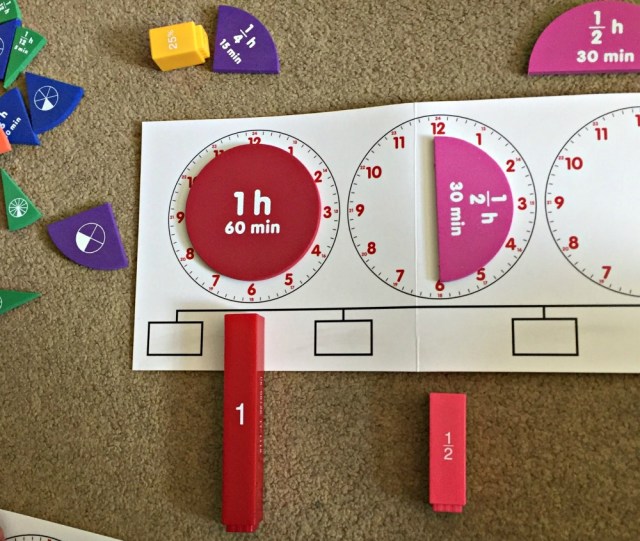
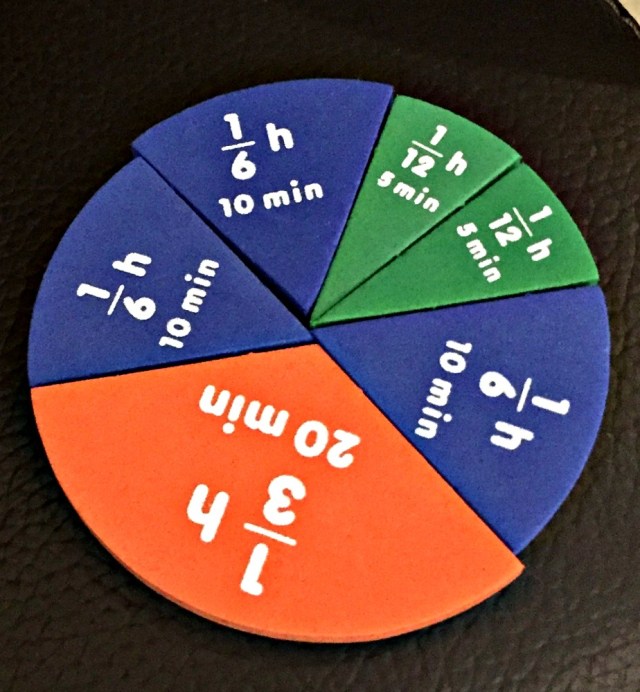
The set comes with 12 different “clock fractions” – a term my kids use to describe the time fraction circles, an activity card which has a clock face with moveable hands on it and an elapsed time number line.  (You can write on the elapsed time number line with white board marker pens and they rub off perfectly – the pens are not included in the set but it is definitely handy to have one when you use the set).

As soon as I showed the kids the set they immediately linked the time fraction pieces to their fraction tower set that they have. (The fraction tower set is this one –Learning Resources Fraction Tower Cubes Equivalency Set.)

Learning resources About Time Set includes time fraction pieces which break an hour down into fractions. Great for visual learners

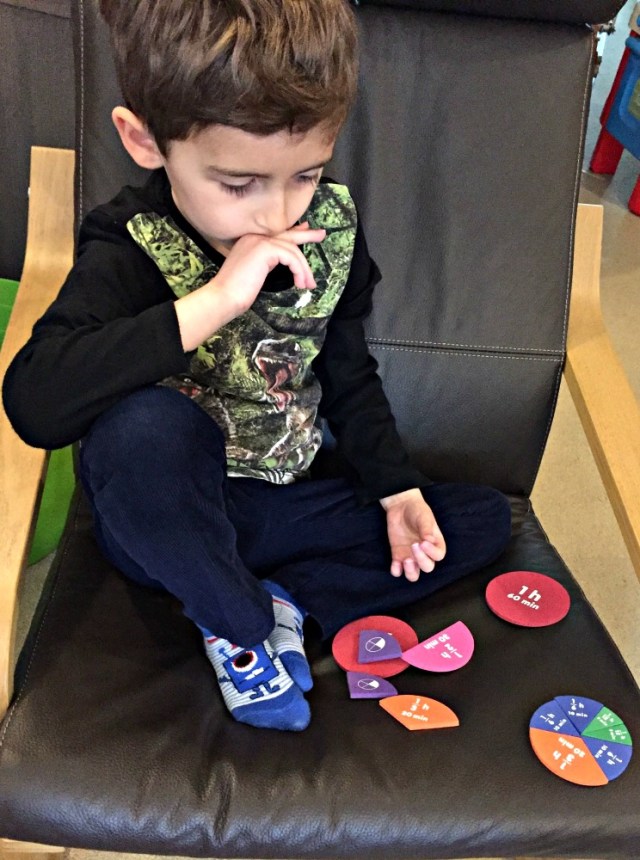
My youngest loves the clock fractions.  He started off using them to create hour circles sticking with the same time pieces (eg combining all the 1/4 pieces together to get an hour)

Learning Resources About Time set. The kids love using the facrtion pieces to work out what makes up an hour

but he very quickly moved onto combining different time pieces to create an hour.

Learning Resources About Time. Combining different time factions to make an hour

Both kids have been drawn to this idea and I have noticed that they keep coming back to the clock pieces wanting to create different combinations for an hour.  I really like this.  They are naturally exploring what makes up an hour by combining the different fractions, no prompting from me, just them building up circles and noticing how the different pieces fit together and sometimes don’t fit together.

Once the kids had spent some time playing with the time fractions on their own we did sit together and go through a few things.  I showed my son how he could match the time fraction pieces to the minute hand on the activity clock.  He liked this and he has been playing around with this quite a bit.

Learning resources About Time set using the actvity card with the moving clock hands and the faction pieces to represent time

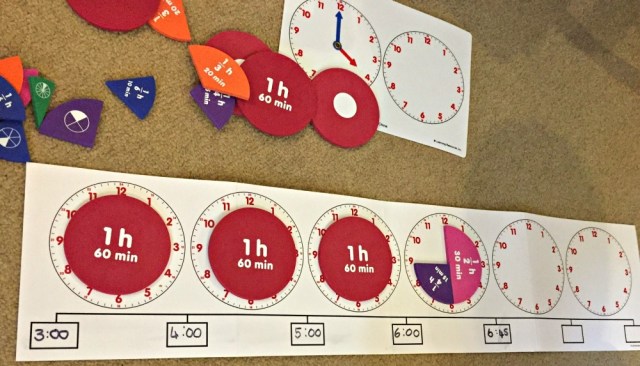
My daughter and I moved onto using the clock number line that is included in the set.  I started creating stories for her and then she would use the time fractions to see if she could answer me eg If it is now 3 o’clock and it is 3.5 hours before dad gets home what time would he get home ? Or if I drop you off at dance class at 1 and collect you at 3:15 how long is your dance class ?  Those type of scenarios.

Learning Resources About Time set contains a time number line and fraction pieces which help the children understand the concept of elapsed time

We did a lot and I must be honest for someone who has always struggles with time I can definitely see her understanding it better and getting more and more confident with her answers.  We are going to be using this set A LOT in the future as we work on more complicated time scenarios.

I really like this set.  I like the way they have represented time in fractions, I like that the kids can play with the fractions pieces and get comfortable with how different combinations can create an hour. And I really like the idea of the clock number line I do think it is helping my daughter understand time better.

Learning Resources About Time set helps the kids understand the concept of elapsed time

Learning Resources About Time set helps children understand how to tell time and what is elapsed time

You can get the About Time set directly from the Learning Resources website or from Amazon here – Learning Resources About Time – Telling the Time & Understanding Elapsed Time

Learning Resources did offer to send me a Maths set in exchange for a review.  I chose this particular set as I had been eyeing it out for sometime.


Save

Save

Save

Save

Save

Posted in Home education resources | Tagged , , , , , , | Leave a comment

Woodland Trust Free nature printouts

We love going for our nature walks and the kids naturally end up asking lots of questions about the plants and creatures that we spot while we are out.  They always want to know the names of the trees (I am really bad with trees) and the type of insects we spot (I honestly can not remember what the different type of beetles are).

So we have started taking little spotters and iDials with us on our walks.  Sometimes I leave them in my backpack until I get a question which I cannot answer and other times I give them to the kids and they go explore and see if they have find anything on their list.  Either way I am finding the Spotter sheets and iDials from the Woodland Trust website brilliant.  They are informative, written for the UK,  and I am able to pack a bunch of them into my backpack as they are small and lightweight (I do tend to laminate ours so they last longer).  They have a BIG selection and all of them are FREE to download

So I thought I would share the ones that we are using and loving.

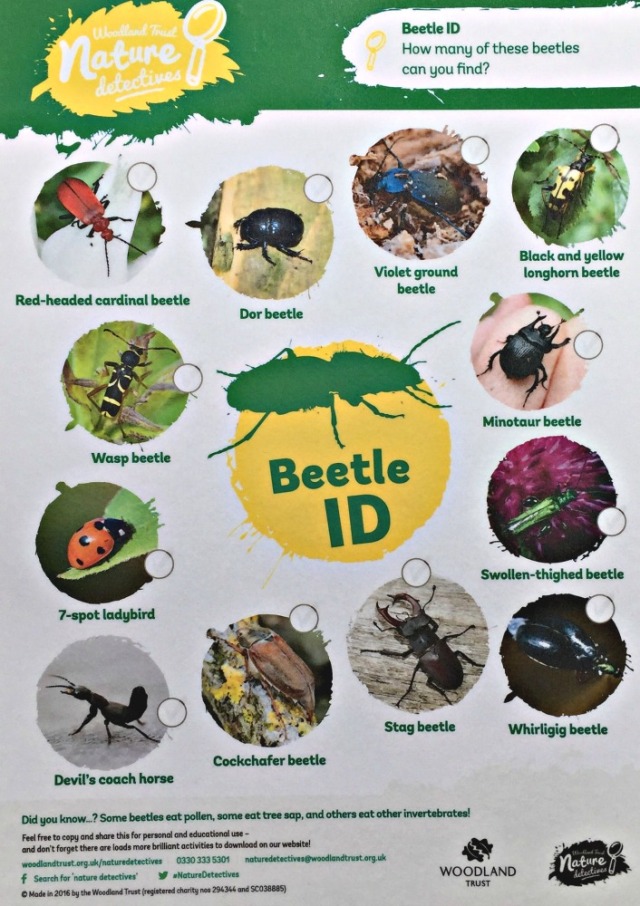
My son really likes the Beetle ID and Ladybird ID sheets.

Beetle ID spotter sheet from the Woodland Trust. Free to download

And the poo spotter is also a firm favourite with him.

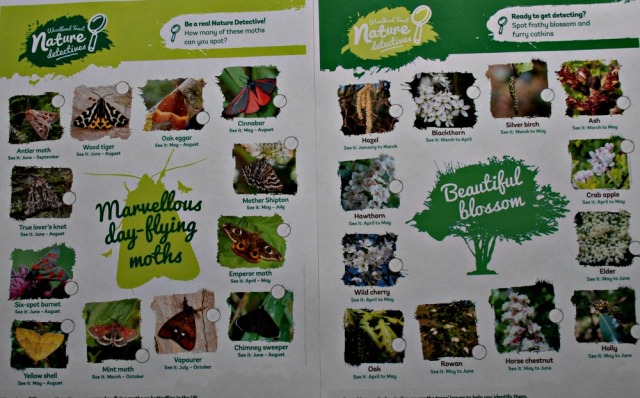
My daughter is currently trying to figure out what different plants are called so she likes the Beautiful Blossom sheet, the Spring Flower ID sheet and the Summer Flower ID sheet.

Marvellous day-flying moths and beautiful blossom spotter ID sheets from the Woodland Trust

And there are lots of pages on moths and butterflies – we like the fact that they split the moth spotting pages into day and night flying moths

She also is using the Leaf iDial together with the Twig iDial when we are out as a way of trying to identify different trees.  She is finding the two work really well together.  She normally starts with the leaf iDial and then checks with the twig iDial to see if the two results match (it ends up being a built in check as sometimes she is not 100% sure if she selected the correct leaf).

Leaf and Twig iDials free to download from the Woodland Trust website

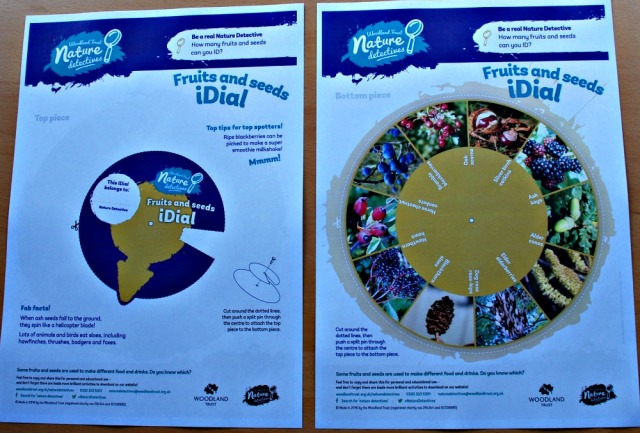
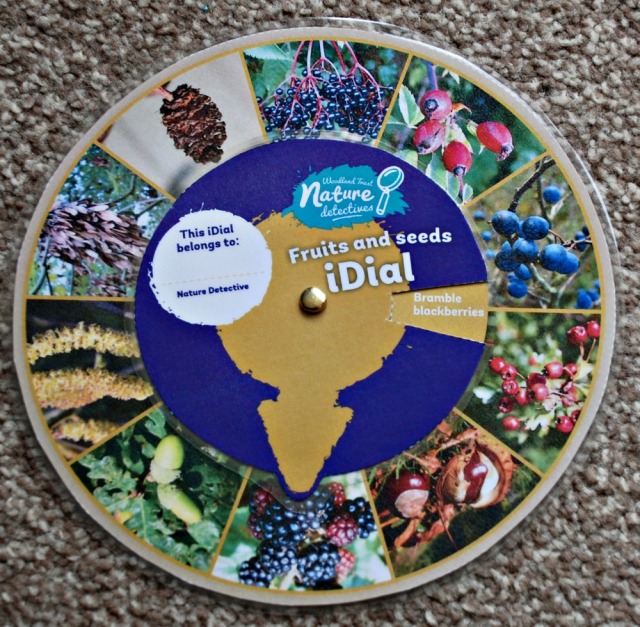
We also have downloaded the Fruit and Seed iDial which I am sure we will get around to using.  (The iDials print out as 2 separate pages.  We then cut out the circles, laminated them and attached the two circles together with split pins)

The Fruit and Seed iDial free to download from the Woodland Trust website

Fruit and Seed iDial once it has cut out and put together. Free to download from Nature detectives

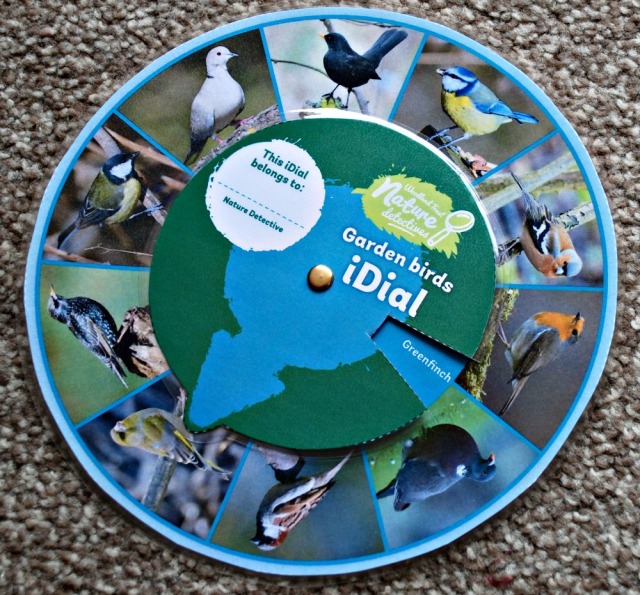
Another useful iDial is the garden bird one and they also have a wild bird iDial

Garden Birds iDial free to download from Nature detectives

It really is worth spending some time on their website as they do have LOTS of stunning Free to download nature pages.

Free to download natture pages from the Woodland Trust. Perfect for nature walks with children

Save

Save

Save

Save

Posted in Home education resources | Tagged , , , , , , , | 4 Comments