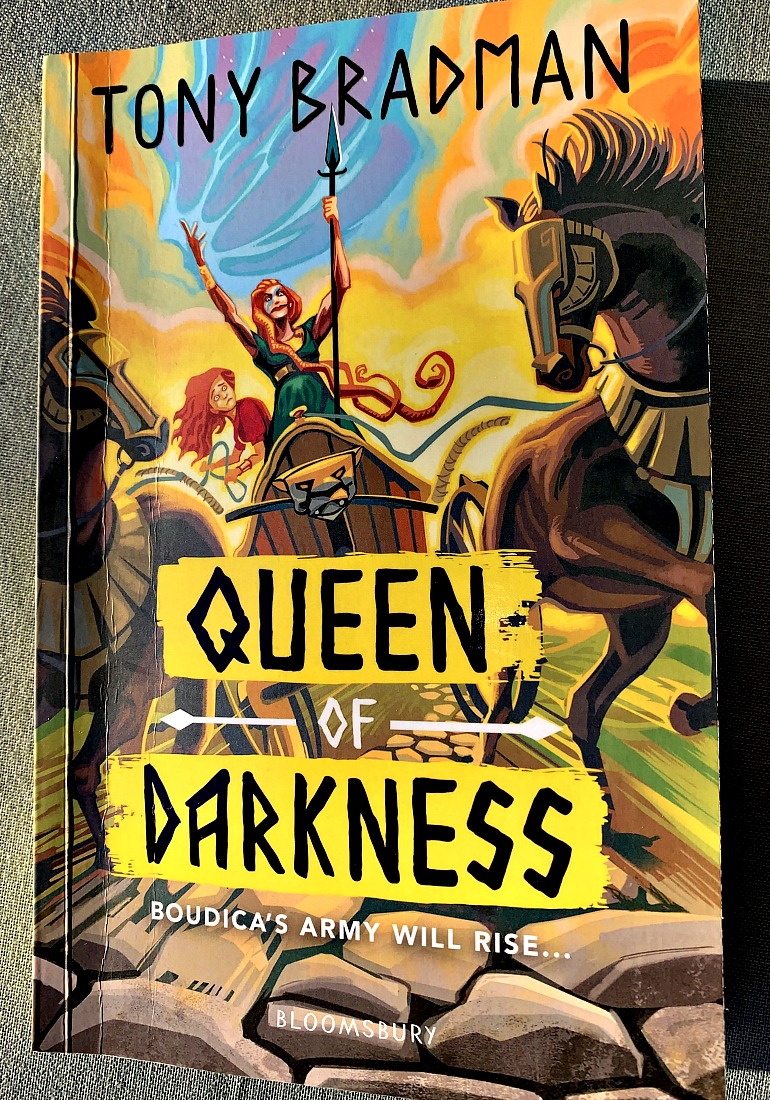
Boudica – Queen of Darkness Book Review

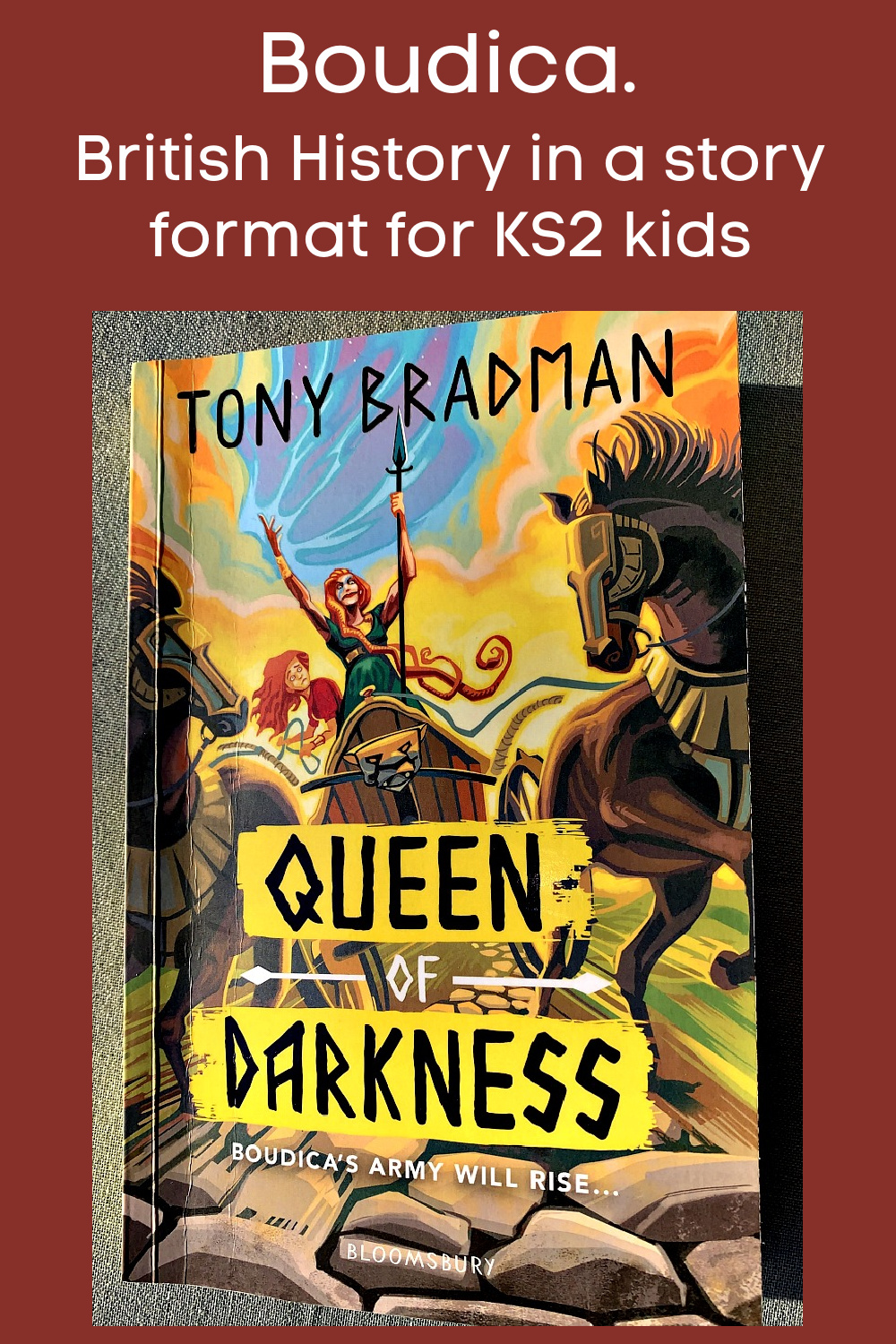
Earlier this year we watched a documentary – 2,000 year History of London and they mentioned Boudica and how her revolt burnt London to the ground. Now we have never really learnt about Boudica but both of my kids were interested to know more and somehow it just fall under the pile of other things that they wanted to learn about and we never took it further. Then two weeks ago I was chatting to someone at Bloomsbury about possible Historical Fiction books (always very popular with both my kids) and they mentioned Queen of Darkness: Boudica’s army will rise… (Flashbacks). I immediately remembered that we never went and read up about her so said we would love to get a copy of the book to read. And wow. I feel like we can tick Boudica off our list of topics to learn about but I must be honest both the kids and myself are not sure how we feel about her and the events around the revolt.

Queen of Darkness. Boudica's Army Will Rise

I am going to start by saying two things – firstly this is a Historical Fiction story, so yes the story is based in Historical facts and they talk about people that did exist and they accurately describe the life style of the times, the objects, the way society was structured but there is also an element of fiction woven in. Both my kids are happy with this, we like reading these type of stories and we always talk about which sections are realistic and which sections the author is being creative about. For us these  books bring the History to life, the kids can imagine what it would have been like living in those times and we often chat about an event by asking questions – “If you were there what would you have done?” or “do you think that person really had a choice?”

Secondly we found this story a bit more gruesome than others that we have read. There were two sections where I could see the kids had tears in their eyes but they both wanted to continue. I suspected this story might be a bit more gruesome than they are used to so we actually read it all together so I could make sure they understood those sections. And I was very glad to see the author did not discuss anyone being raped but did speak about Boudica and her daughters getting whipped.
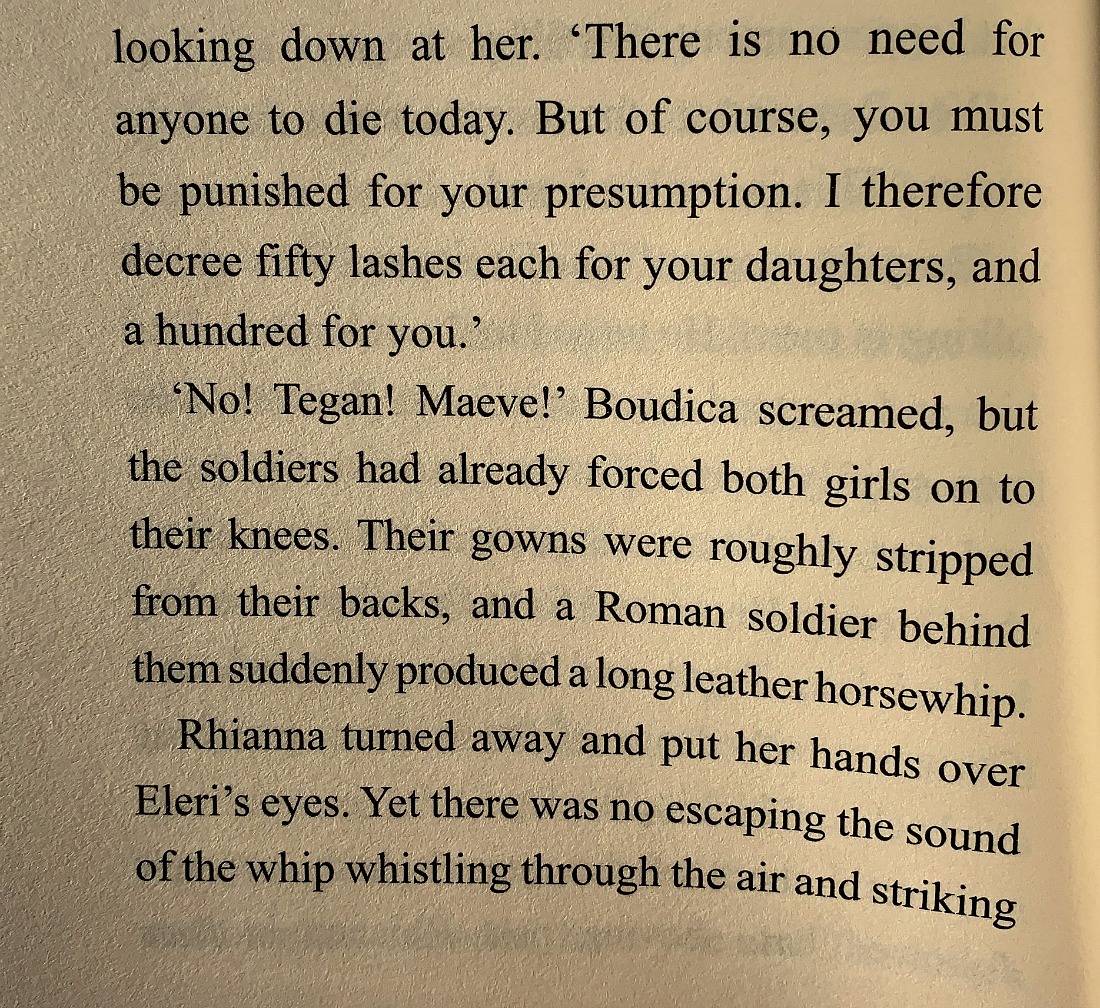
Queen of Darkness by Tony Bradman. An inside page

There are also sections that deal with people being sacrificed to the Goddesses. We used that as talking points about how you should treat prisoners of war and is executing people okay just because they are on the different side of the battle than you / or in a different tribe? And of course we chatted about how pagan beliefs were different.

The story actually follows a young girl Rihanna, who is in the Iceni tribe and ends up living with the Queen. You get to see the events of Boudica being whipped, her uprising, the treatment of the Romans and eventually Boudica’s defeat through the eyes of this young girl. Rihanna initially loves Boudicca and is in awe of her but over time as she sees the way Boudica treats others she starts to fear her and eventually tries to escape the tribe.

We liked the fact that the author based the story through Rihanna’s eyes and both my kids were really rooting for her and her sister Eleri to survive. Interesting, in the story there is another character Garwen, who fights for the Iceni but is portrayed as kind to the sisters both my kids really liked Garwen and thought she was wonderful. I thought this was a good touch because the kids got to see that just because you follow your tribe into battle does not mean you believe in everything that they stand for. And even if you think the leader is cruel there can still be kind people fighting for that leaders (think it is a great example for when we start learning about World War II). There is also a kind Mother on the Roman side who eventually helps Rihanna and her sister.  Again I liked this, I liked that the author included these kind characters as it provided a balance to the more brutual side of fighting and life back then.

As always I was blown away by the way that Tony Bradman (the author) seems to weave so many historical references into his stories. We love this about all his books. And I do feel that the kids have a much better understanding of that time period in British History, both in terms of how the people lived and why the tribes revolted and ultimately what happened in the revolt.

I highly recommend this book for kids learning about Boudica but I strongly suggest that you speak with them about the events or read it with them as I do think there are some tough situations and hard topics that are dealt with in this story.

Other Tony Bradman Books that we have read and enjoyed – Winter of the Wolves (Anglo-Saxon story), Lady of the Mercians and The First King of England.

For other Tony Bradman stories you can look on the Bloomsbury website – Tony Bradman

Note – there are a couple of different ways to spell Boudica – I have stuck with the way the author spells her name, which according to a quick search appears to be the Celtic version.  Also as I mentioned above we were given our copy of Queen of Darkness but were under no obligation to write an entire post about the book, the fact it has its own post is because I think it is a good Historical Fiction book for the kids to read.

I do include Affiliate links. If you follow an affiliate link and go on to purchase that product, I will be paid a very small commission, however your cost will remain the same. I only include affiliate links for products that we use and love.
Posted in Homeschooling | Tagged , , , , , , | Leave a comment

Spanish Armada Topic Pack

We are busy looking at Medieval England in quite a lot of detail at the moment but that does not stop the kids asking about other events that don’t slot in to the Medieval timeframe. This past week alone my son had some questions about the First World War, so we looked up the answers and spend a bit of time discussing the answers to make sure he understood, they also discovered a book about Boudicca which they are finding fascinating, we revisited Hampton Court Palace so once again we discussed Henry’s wives and then my daughter got onto Queen Elizabeth I. And she ended up back at the Spanish Armada and wanted to know why it failed. And not one of these things are linked to our current History Topic but I always try and answer the questions and help the kids find information to read when they ask, even if it does not link into anything we are “studying”.

For the Spanish Armada I actually turned to our Topic Pack from Oaka Books. And I think the topic packs actually work really well when the kids want to look at an event that happened without looking at the whole time period (Although I must admit my daughter has a good knowledge about the Tudor times so it is not like she was reading the Topic Pack in complete isolation – she knows about the conflict between the Catholics and Protestants at the time and already knows the names of most key figures.)

This slideshow requires JavaScript.

So for our purposes we read the Topic pack in one go – chatting about key points and characters as we read it. 

Two of the reasons I really like these topic packs is that everything is written in point form and they always have pictures depicting the event.  So we find the kids remember the points and often link key events or key people to the pictures they saw in the Oaka Packs – which for mine helps them to remember the different events and people (much easier to read the information in this format than in long, winding paragraphs).

This slideshow requires JavaScript.

After we had finished reading the Topic pack my son actually sat and reread the entire thing. (My son is eight years old so would be in year 4 at school and this topic pack is geared for Key Stage 3 ages so not “written” for his age but honestly it is written in such a way that I think you can use it for a wide range of ages and my eight-year-old managed fine.)

While he was rereading the booklet my daughter took the Learning Map and the Character cards and worked through the events once again from beginning to end.  Now I have said this before in other posts but these Learning Maps that they include with the Topic Pack are my daughter’s favourite part.  Being able to sit and work through the order and use the character cards as she retells the events really helps to cement everything for her. It seems like such a simple idea using a learning map and character cards but IT WORKS.  The pictures used on the character cards are the same ones they use inside the Topic Booklet so it reinforces everything and that simple activity of retelling the events is what allows everything to sink in properly.

This slideshow requires JavaScript.

For our purposes this week we actually did not use the “Write Your Own Notes”.  But for those of you who don’t know about the Oaka Books Topic Packs – they come with a Topic Booklet (you summary notes), write your own booklet (where the kids rewrite what they have learnt) and either a game or a learning map.  The write your own booklets follow the same format as the topic booklet and use the same pictures for the events so it does reinforce what the kids have learnt.  We normally do work through the write your own booklet but in this instance my daughter was happy using the learning map and character cards and then going to creating her own summary in a history book she is creating. But I am including photos below to show what the Write Your Own Notes looks like.

This slideshow requires JavaScript.

If you want to read about the Topic packs that we have used here are a few other posts – Battle of Hastings, River Topic Pack and Forces Topic Pack.


Posted in Homeschooling | Tagged , , , , , , | 1 Comment

Geog.1 Oxford Geography Resources for Key Stage 3 Review

I am going to start this post by saying Geography is one of those subjects that I just was not sure about. I feel like I have found my feet with Secondary English, Maths, History and Art but Geography has never been one of my subjects. However both of my kids are starting to really get into it. It started because Geography naturally links into their two key areas of interest.  My son loves learning about animal science and things like biomes, maps, landforms all seem to naturally link into his Animal Science learning. And with my daughter she has naturally wanted to learn about different countries, how they develop, maps and even landforms because it also links in really nicely with the History that she is so interested in. So Geography has just naturally developed as a subject and both kids are now finding it fascinating, so much so that I am starting to see it as a possible exam subject. Which means I want to make sure we are covering the right basics and it also means I need to brush up on my knowledge because I just don’t have the background knowledge with Geography like I do with History, Art and even Science.

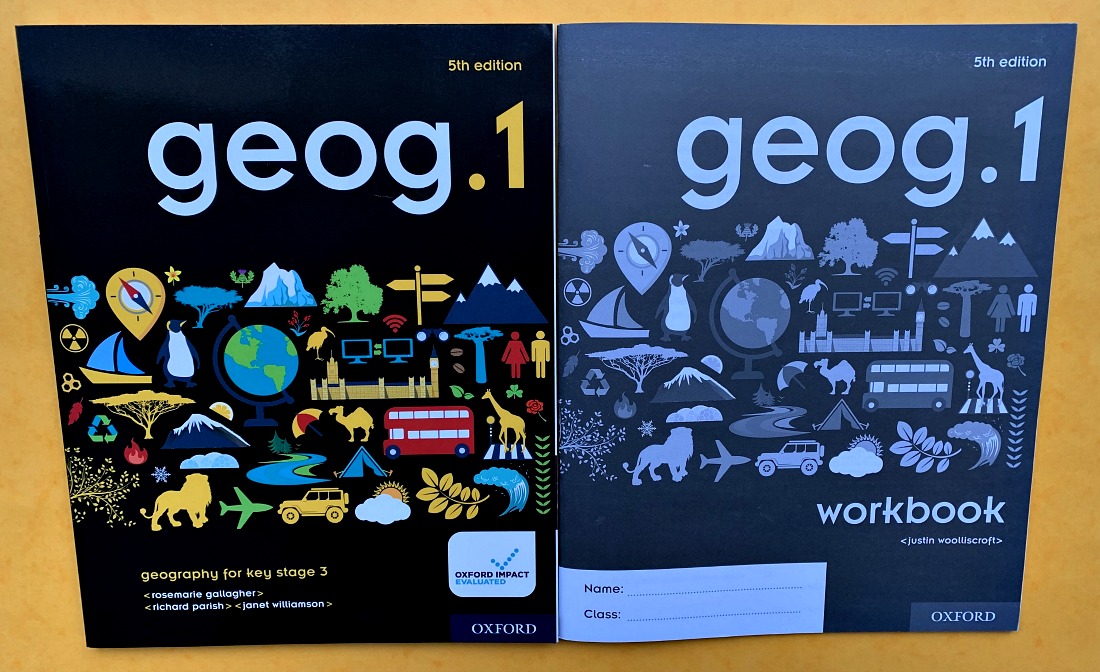
So I searched LONG and HARD for a good Geography book that we could use – I read lots of reviews, tried to find photos of inside pages and really spent ages trying to figure out what would work for us. And I always ended up coming back to the Oxford Geog.123 range. I just liked the look of their pages – short, concise paragraphs, step-by-step explanations, clear illustrations and photographs. I also liked the sound of what they included in their first book – Maps, UK, Glaciers, Rivers, Africa and Kenya – all topics (except for Glaciers) that we had already highlighted as areas to learn about this year. So I contacted Oxford and asked if we could review the Geog.1 student book. They kindly agreed and send us both the student book and the corresponding workbook.

Key Stage 3 Geography Resources the oxford Geog.123 range of student books and workbooks

This range is designed as a three year Key Stage 3 range (so for Key Stage 3 they have 3 different books – Geog.1, Geog.2 and Geog.3). From the reviews I have read everyone is happy with the way they have split the content between the 3 books. At this stage I am only commenting on the Geog.1 books.

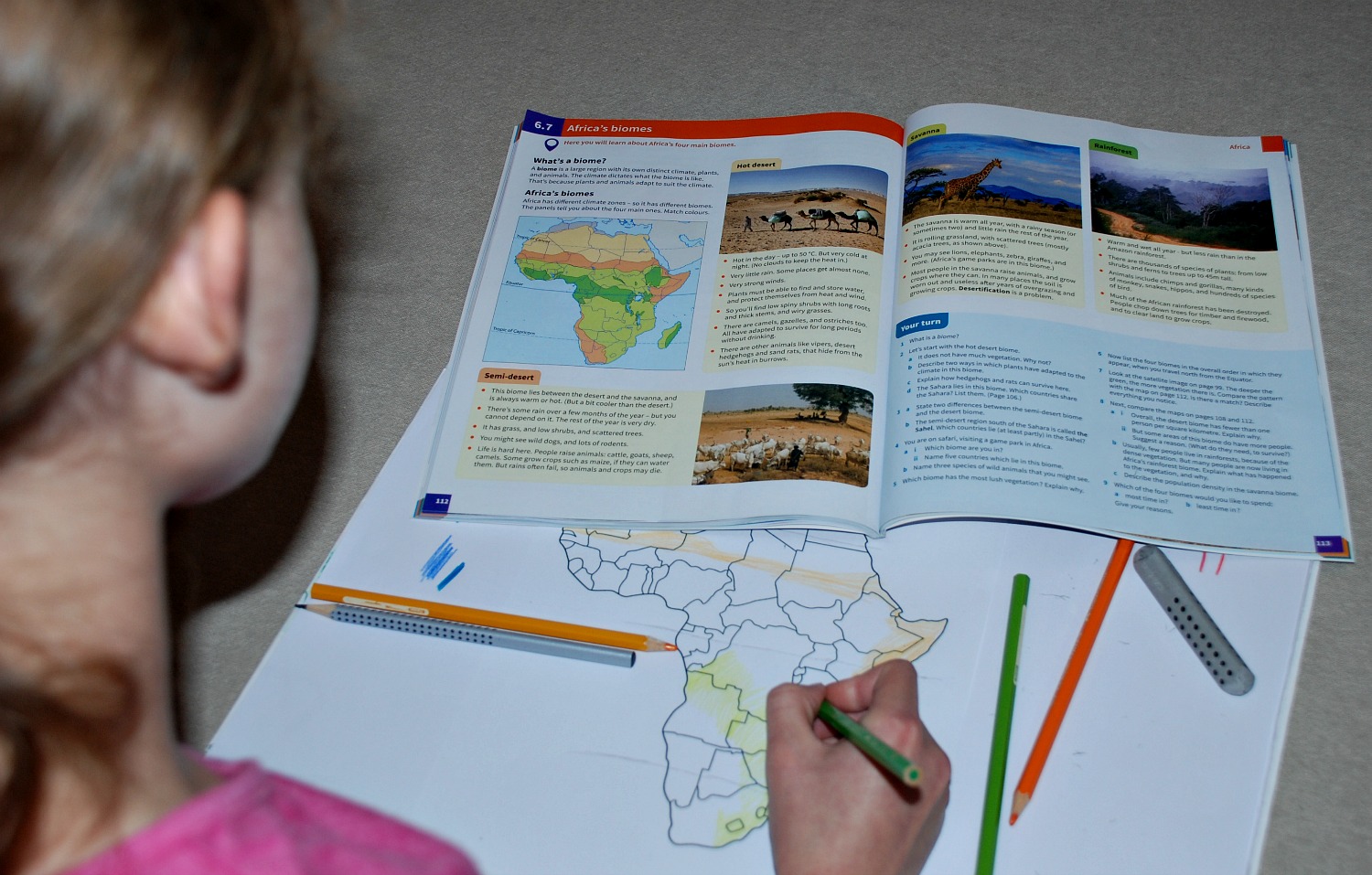
The Student Book is the “explanation book” – it is colourful but not over the top bright – my daughter is finding it very easy to use and does not get overwhelmed by it. It explains a concept over a double page and then at the bottom there is a “Your Turn” section which are questions covering what the kids have just learnt.

This slideshow requires JavaScript.

Now the answers are NOT included in the student book but are in a separate answer book (for me this is the one negative as I would have liked them to include the answers in the same book). However having said that we have been working through the questions and so far there is nothing that I have been uncertain about (we don’t have the answer book). The Workbook is a black and white question book – no explanations, no colour, just practice questions – some multiple choice, some sentence answers, some draw your own diagrams – a good mix of different type questions.

This slideshow requires JavaScript.

And the workbook really does go hand-in hand with the student book – they cover exactly the same topics, in the same order.

This slideshow requires JavaScript.

So what is actually covered in these books?

  1. Geography and You – Introducing Geography and a bit about how to answer the questions
  2. Maps and Mapping – Scale, using aerial photos, grid references, ordnance maps, contour lines and grid lines
  3. UK – some basic background facts, UK weather, UK population, London and then links to the wider world around us.
  4. Glaciers (now we were not planning on covering Glaciers this year but after browsing through the section my daughter is keen to look at Glaciers in more detail) – Background and where they are found, how Glaciers work, landforms created by erosion, Lake District and why Glaciers matter.
  5. Rivers – The Thames, water cycle, The river’s journey, how it shapes the land (erosion, transportation, Deposition), 6 landforms created by rivers, Thames Estuary and Flooding
  6. Africa – background about Africa and what it is like today, Countries of Africa (one of my pet peeves is people who talk about Africa as one country so we have already been learning about the different countries of Africa), population in Africa, physical features and biomes
  7. Kenya – general background, physical features, climate, history about its independence, population, Nairobi and then general life in Kenya.

This slideshow requires JavaScript.

And how do we actually use them as part of our home education?  Well we tend to sit together on our couch and read through a page or two together, chat about it, and even work through the Your Turn Questions from the student book together (my 11 year old daughter and her younger eight year old brother). Then my daughter takes her workbook and goes and works through the questions in that by herself. For us that means we all cover the same topics, so we then tend to watch the same follow up documentaries and can chat about it together but it also means by daughter is getting some practice with answering written questions by herself. (When we started using the workbook she was nervous about creating her own diagrams for answers – now she is not concerned when she sees a create your own labelled diagram question – I think she just needed to work through a few for herself). We also don’t stick to the order, we do tend to jump around a bit.  We have been working through the Rivers section but we happened to watch a documentary on Africa and then we jumped to the Biomes and physical features of Africa pages and read those.  I think you could easily start at page 1 and work though the book in that order, or you could just take the topics in any order.

using her new Geog.1 book

We really like this range for Geography, the format and style works well for us. I also think the addition of the workbook is really useful in that it gives extra examples and questions which means kids can practice to build up their confidence so “scary” questions are no longer scary.

You can buy these books directly from OUP or from Amazon (affiliate links below)

geog.: geog.1 Student Book 5/e

geog.1 Workbook

Admin – I approached Oxford and asked if we could review the Geog.1 student book. 

Posted in Homeschooling | Tagged , , , , , | 5 Comments

Jan Brett drawing videos

Last week my son tried a great white shark drawing video (it went really well) and then we spotted a turtle video (not such a success) which lead us to a video by Jan Brett showing how she created a box turtle for her book Mossy (Some of you may know her book The Mitten – she wrote and illustrated it). We watched it and I immediately liked her style. She shows the kids step by step how to create the animals but while she is showing them what to do she includes lots of detail – like if this is a male the shape here is different, or they would be red and not yellow. She also talks about things like what they eat and how the patterns on their shells are actually formed. You really get the sense that she has done a lot of research about her animal characters before she starts drawing them for her books. So the kids end up getting a drawing video, a bit about using watercolour paints and some interesting animal facts in one clip (the clips tend to be roughly 20 mins).

This slideshow requires JavaScript.

So both kids tried the turtle video. The drawing went really well (well I was impressed)

This slideshow requires JavaScript.

and then they tried to add the watercolour but I must admit we did not have nice small brushes and they struggled to get the watercolour looking like it should. (I am off to get some small detailed brushes this weekend.)

This slideshow requires JavaScript.

My son actually commented that it would have worked better if they tried using their watercolour pencils. So about 2 days later they retried. They redid the turtle drawing and then tried using their pencils to add the colour and shading in.

This slideshow requires JavaScript.

While we were working on the turtle video both kids asked about other drawing clips that Jan Brett had created and I searched and found her website where they have a listed a number of  different ones on it – Jan Brett How to draw videos.

We have already watched the Tiger one – my daughter wants to try that and the Rabbit one.

This slideshow requires JavaScript.

I have a feeling we are going to be trying a number of her drawing clips. If you are looking for drawing videos to use with your kids take a look at hers. Both the kids and I like the way she breaks the drawings down and we appreciate all the extra information that she shares while doing the drawings.

Admin – Please note this is in No way linked to Jan Brett, we happened to discover her drawing videos and think they are great


Posted in Homeschooling | Tagged , , , , , , | 2 Comments

Number Property Maths Posters from TeachitMaths website

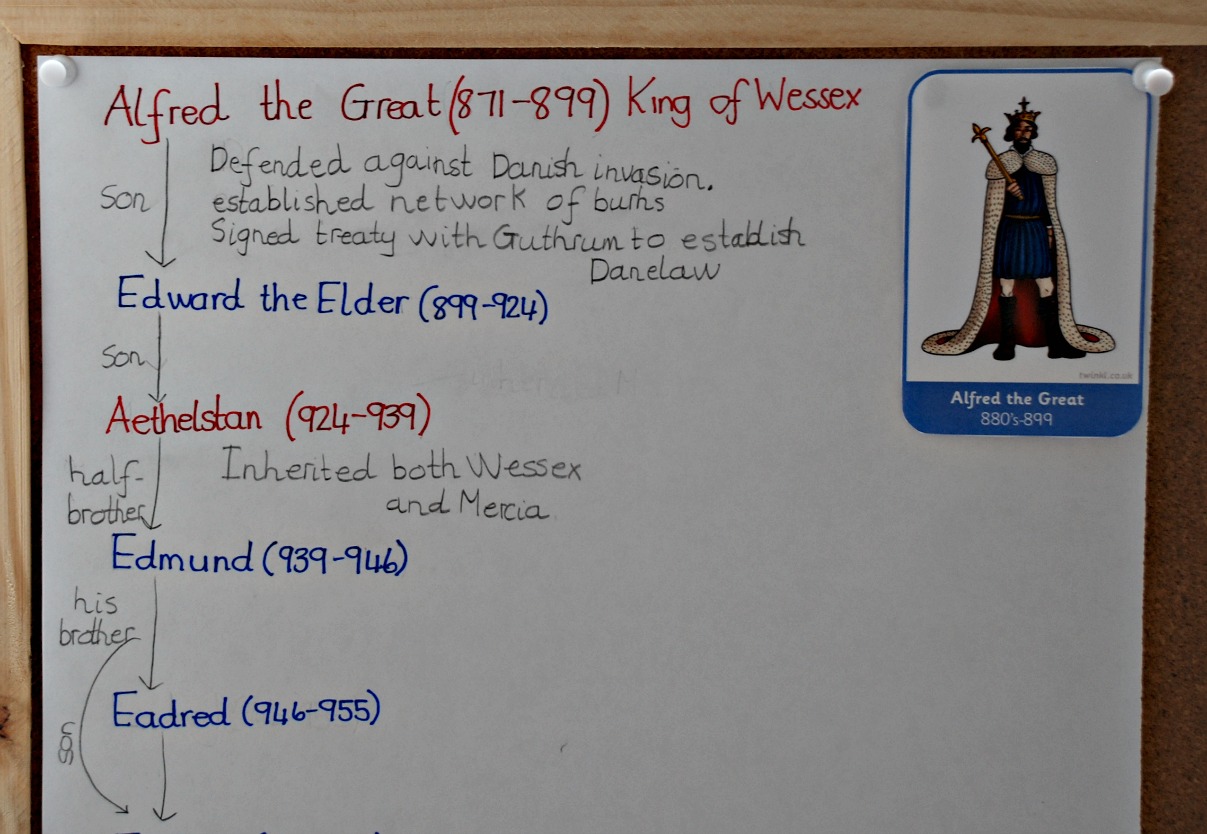
I have mentioned before that we like hanging up learning posters around the house. The posters work really well with both kids and we have seen over time that the information we hang up really ends up sinking in and being remembered. And our posters are a total variety of store-bought, printed from websites, me creating our own summary of facts and sometimes even one of the kids creating a page of something that want to remember and then hanging it up.

A section of the home-made Anglo-Saxon Kings timeline. Part of our British History

I like discovering new pages that we can pin up and I must admit I especially like Maths posters that I can pin up. I was recently on the TeachitMaths website searching for some secondary maths pages from my daughter and I stumbled upon a 10 page Maths poster set that I think is quite handy – they suggest printing the pages out on a3 size pages but I must confess I printed ours out on A4.

I really like this little set and think it is very useful so I am going to share photos of what they have included (The TeachitMaths website is a sister site to TeachitPrimary and you can download all the PDF documents once you have set up a FREE account – I set up a free account in May of this year and I have found the website very useful).

So included in their Number Properties Posters – Odd and Even Numbers, Number words, Multiples, Factors. Prime Factors and then Special Numbers.

This slideshow requires JavaScript.

I think it is quite a useful set.

If you want to see what other posters we have used before you can look here – Current posters and Boards

Admin – just to clarify.  We use the TeachitMaths website for our home ed, I am not linked to them in any way, this is just me sharing a link for some Maths pages that I think other might find useful

Posted in Homeschooling | Tagged , , , , , , | Leave a comment