Archaeologists Dig for Clues – book

It is no secret that my kids love all things prehistoric (obsessed could be a more accurate term).  We have tried to build as much learning as we can into this area as they both just get so excited whenever we read anything remotely linked to this.  So around a year ago I bought them this fab little book – Archaeologists Dig for Clues (Let’s Read-And-Find-Out Science (Paperback)) by Kate Duke.
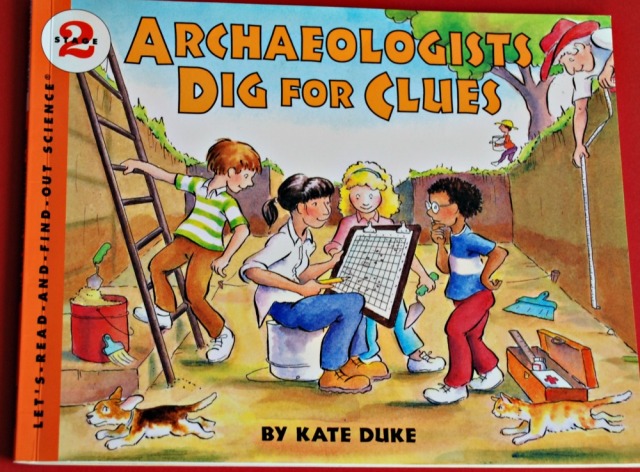
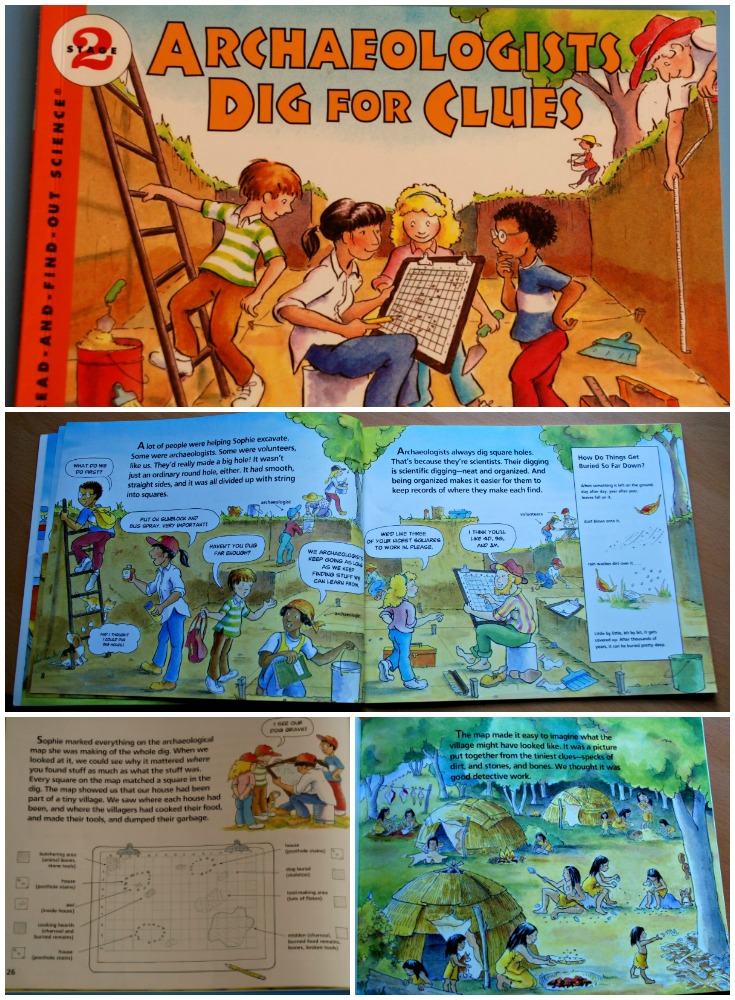
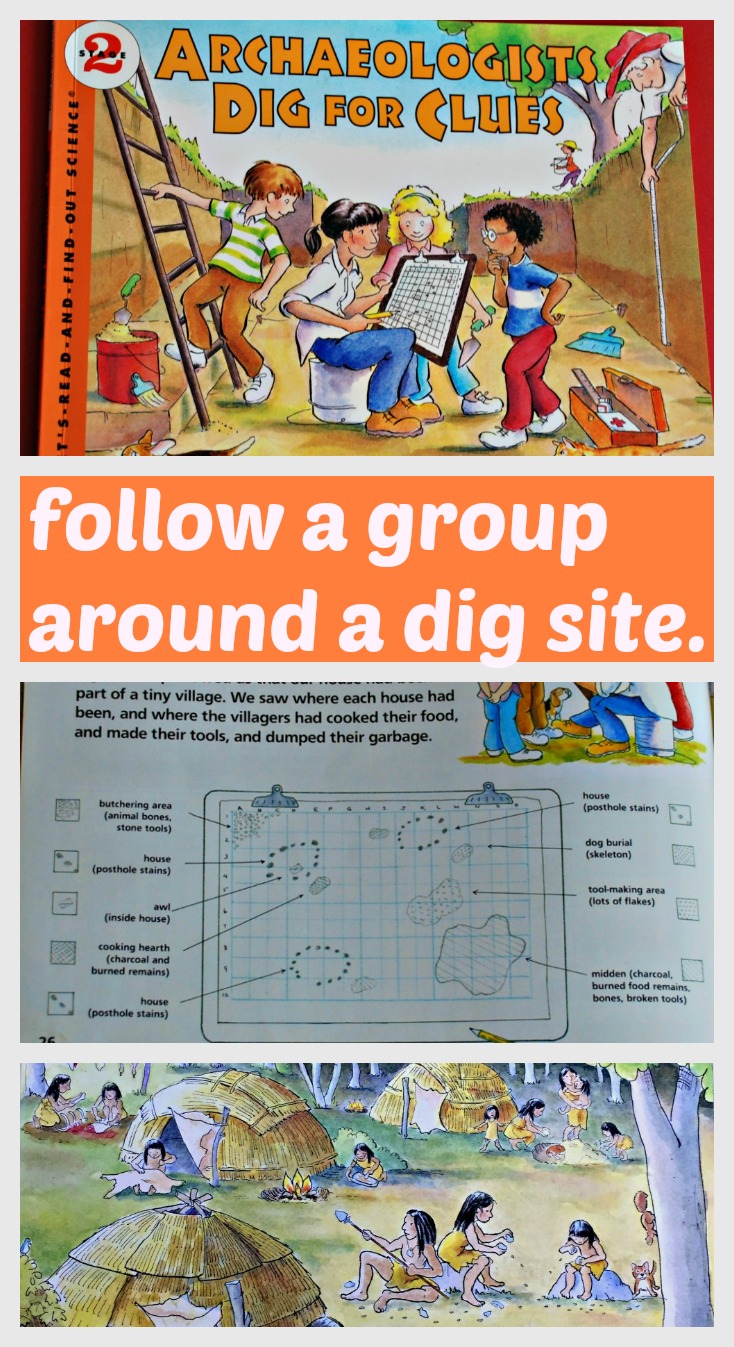
Archaeologists Dig for Clues. Follow a group of children around a dig site as they learn about the site, what happens there and discover what life would have been like

The book is based on some kids going with an archaeologist (named Sophie) on a dig.  As the kids participate in the dig Sophie explains how the dig works and what the discoveries may indicate.  They learn about how the dig site is mapped out into squares and how everything needs to be neat and organized on the site.  They also learn a lot about what life would have been like, what tools the people may have used, possible food they may have eaten and possible clothes.

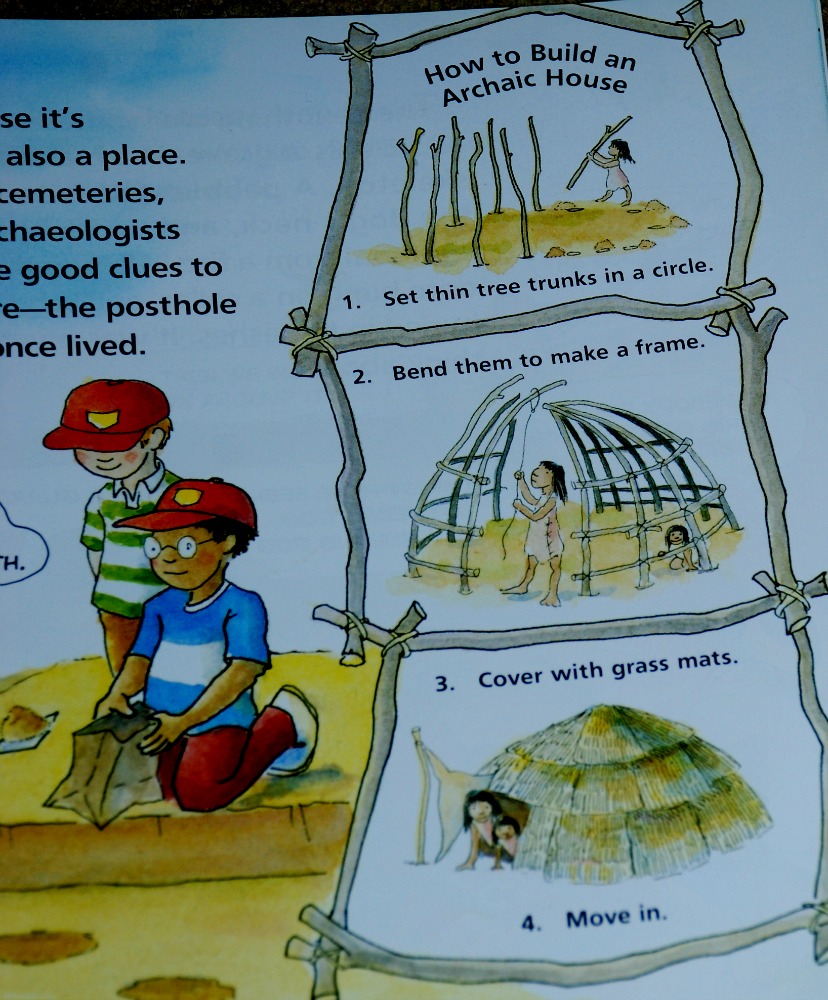
archaeologists-dig-for-clues-the-book-contains-lots-of-interesting-facts

archaeologists-dig-for-clues-contains-lots-of-information-about-what-life-would-have-been-like

In the book the archaeologists discover a row of dark marks in the ground which were marks left behind by the posts of an ancient house and together with a number of other things that they find, lead them to discover the site was actually an ancient village.  They create a map showing how the ancient village was set out according to the discoveries in each squared off area.


Archaeologists Dig For Clues. A children's book which follows a group of kids around a dig site as they learn about fossils and past events44

And based on the map and the other facts that the kids have learnt while on the dig they are able to imagine what the ancient village probably looked like.
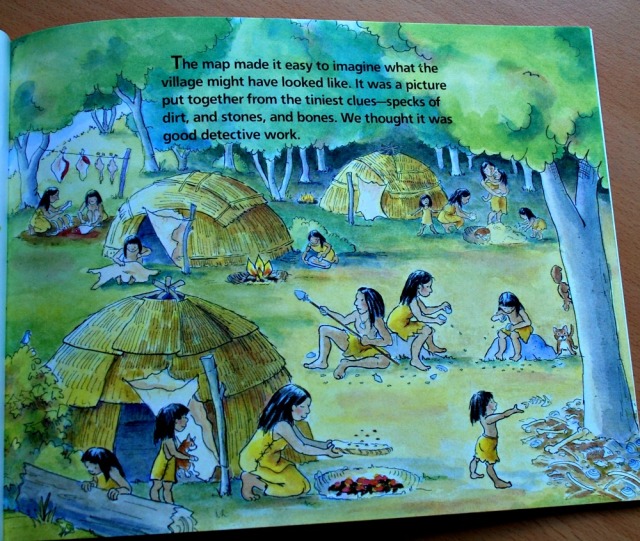
archaeologists-dig-for-clues-a-picture-of-what-the-village-might-have-looked-like

The story ends with Sophie taking the kids back to her lab where they meet more scientists and learn how everything is catalogued.  And the surprising fact that archaeologists actually spend more time back in their labs then on the dig sites (my son was very disappointed when he learnt this as he liked the idea of being an archaeologist on a dig site but did not like the idea of all the filing and working in the lab).

All in all a great little book (we bought ours for under £5), very informative and great for young kids who are interested in what life was like a long long time ago (words from my youngest).

For the US readers – Archaeologists Dig for Clues (Let’s-Read-and-Find-Out Science 2)

archaeologists-dig-for-clues-a-great-childrens-book-which-shows-what-happens-on-a-digArchaeologists Dig for Clues.  Follow a group of children around a dig site as they learn how to works and sicover what life would have been like

Save

Save

Save

Save

Save

Save

Save

Posted in Book Ideas | Tagged , , , , , | 2 Comments

Our Home Education Room (well areas)

Okay so maybe the title is a bit deceptive, we don’t really have one of those lovely home-ed rooms like I often see and absolutely love.  We don’t have a dedicated space but we have areas throughout our home that we use.  So I thought I would share some pictures.

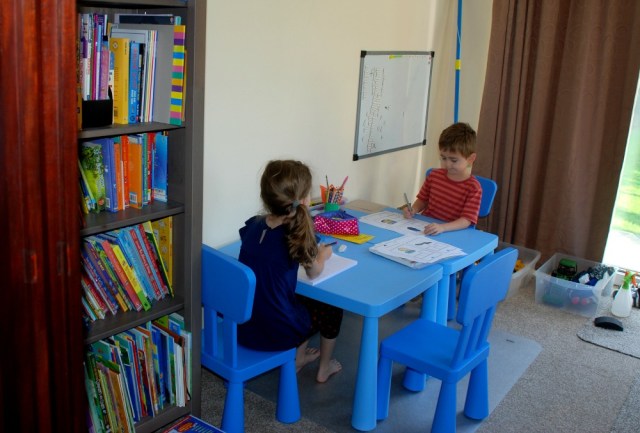
The kids play area.  This is a small extension which was built onto our main living area, it has a small step up and big folding doors which the kids can close. (My daughter loves the fact that she can close the doors and still see me).

home-ed-area-for-the-kids

the-kids-play-area-with-another-bookcase-some-toys-and-their-art-cart

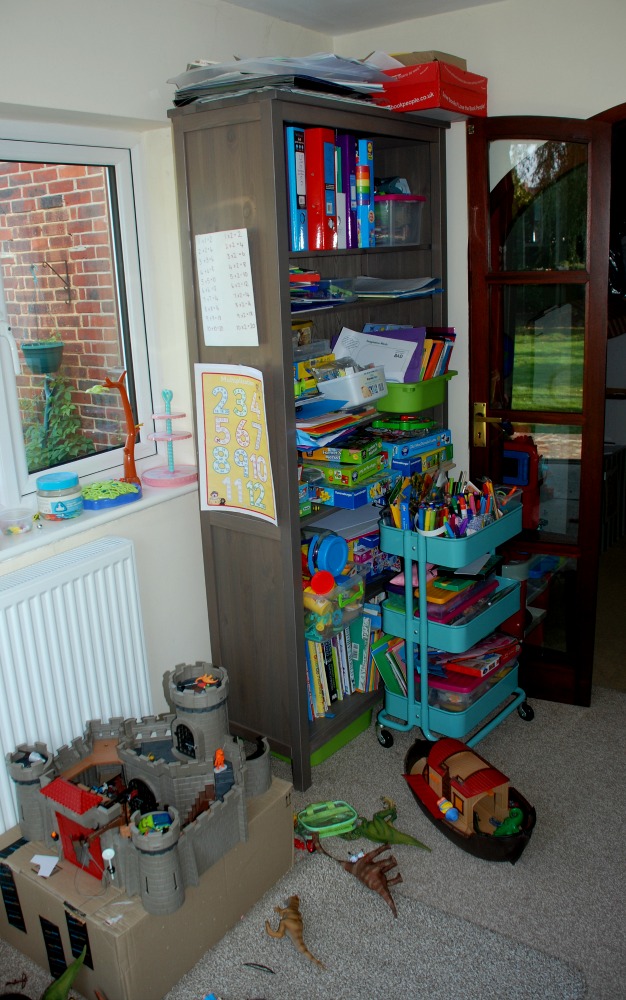
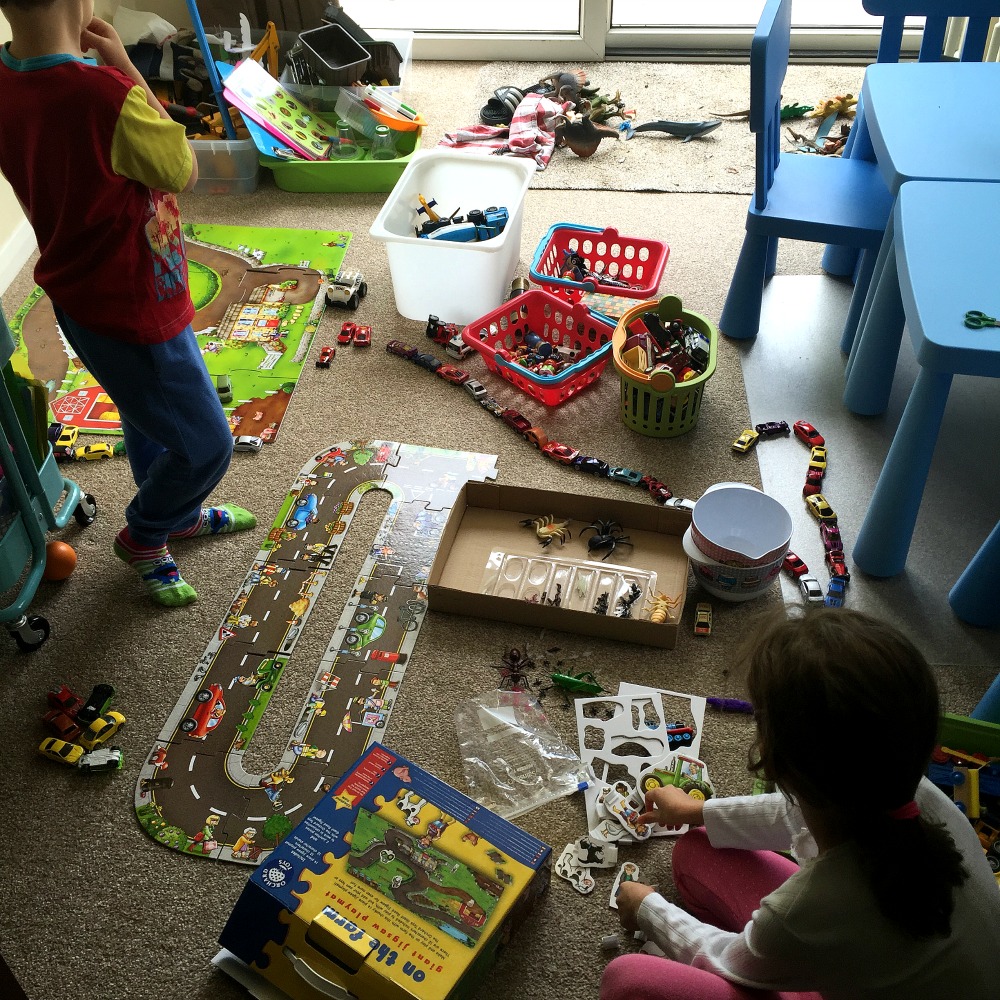
The kids love this area and they have claimed it as there own.  Inside we have two large bookcases, filled with book, games, puzzles, sensory tubs, and other learning activities. We also have two plastic tables and chairs from IKEA  (although my oldest is getting too big for this so we need to think of something new fairly soon).  The table and chairs are used for everything and anything.  The kids often sit there and do learning activities, they play games using the tables and sometimes just sit their creating their own little works of art. The kids art cart is also in the room so they have everything they need right there to create their own masterpieces.

And the kids move around the toys, tables and craft cart as they want (sometimes out into the garden).  A good day at home normally means this area ends up looking something like this.

play-area

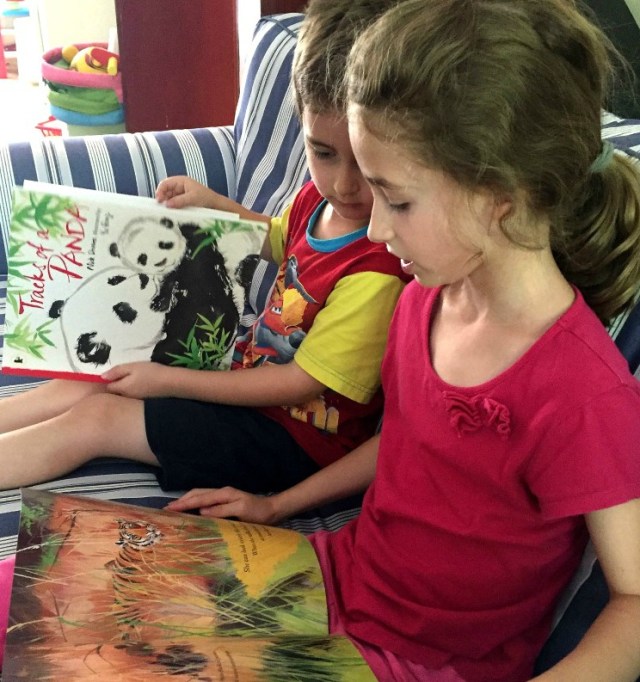
The main living area has more toys and games scattered around it and our couch which always has a blanket on it (both kids will often use the couch and the blanket as a place to retreat when their senses are a bit overloaded).  The couch is also the main reading area.

reading-their-nature-storybooks-on-the-couch-tigress-and-tracks-of-a-panda

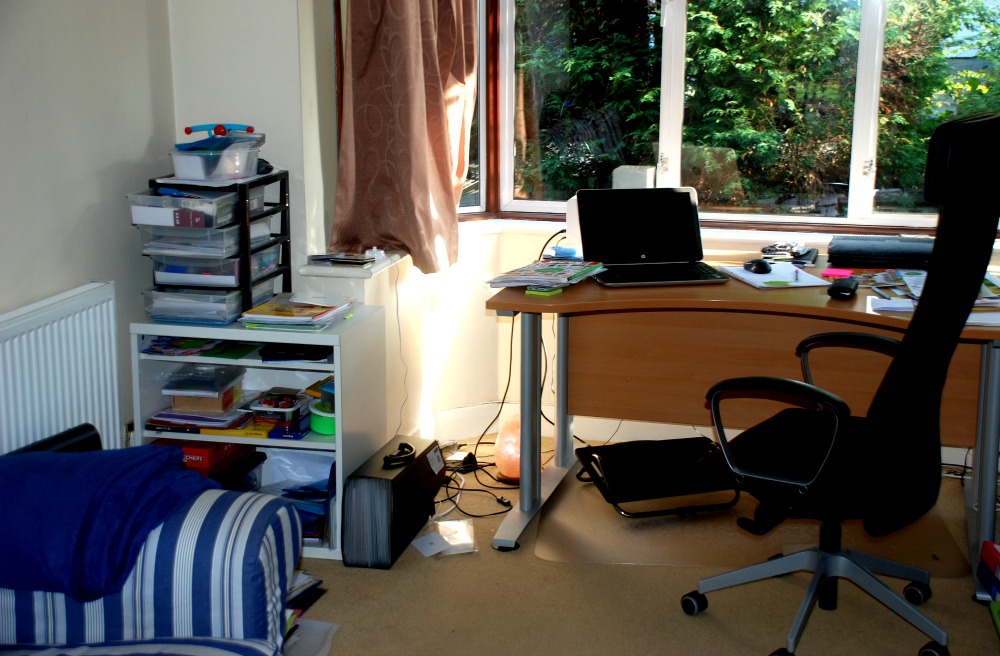
My desk is in the corner.  Okay confession – I say my desk but actually it is the desk that my hubbie bought for himself but I have claimed it as mine.  This is where I sit and search the internet and come up with some of our activities, it is also another place where my daughter likes to sit and write, she loves sitting in my chair and writing notes at “mom’s desk”.

my-desk-and-planning-area-and-sometimes-where-my-daughter-likes-to-work

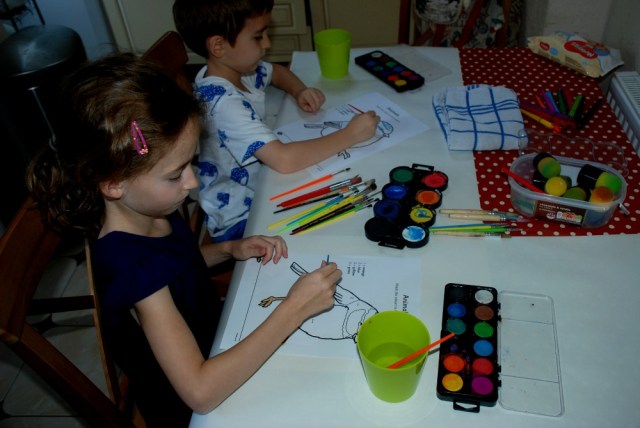
The other much used much loved home-ed area is our kitchen table which is really our art table / writing-table / baking surface and in between all that our eating area.  It is not a big table but we love it.  The kids often end up at the table while I am in the kitchen preparing dinner or baking.  It has become the one area where my kids will sit and colour or draw.  My kids do not naturally seek out colouring pages but they will often will sit and colour something in while I am busy in the kitchen.

painting-at-our-kitchen-table

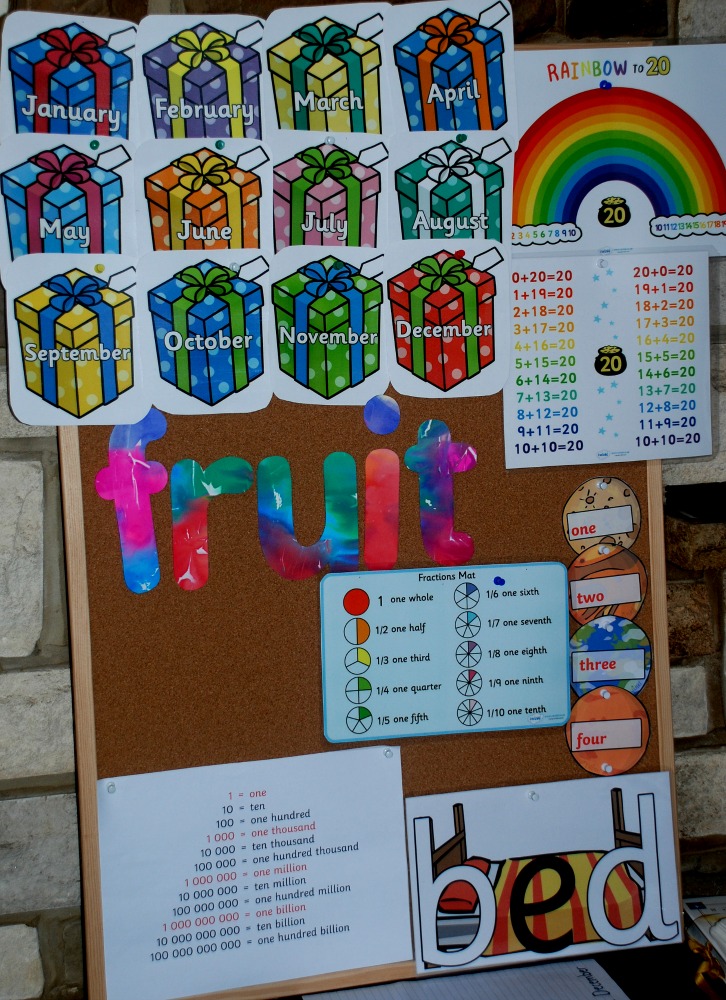
We also have a few cork boards scattered around the house.  They tend to contain posters, little snippets of whatever the kids are currently learning and some of their art.

cork-boards-which-contain-bits-of-information-for-the-kids

And our garden.  Yip I am including that as one of our home-ed areas.  The amount of play that happens in the garden which involves animals, dinosaurs is amazing and along with all the playing is a lot of learning.  Also the kids really enjoy gardening with their dad and have started growing some of their own vegetables (our potatoes did really well, our tomatoes totally failed and we had some limited success with onions and carrots)

So as much as I would love to post stunning pictures of a converted attic or basement which we use as a home-ed room we just do not have it.  We tend to use areas within our home for our home-ed, areas that all have multiple purposes but it works for us because our home-ed really is just part of our family life.

The cork boards that we have used are these ones 5 Star Office Noticeboard Cork with Pine Frame W900xH600mm (affiliate link)

Save

Save

Save

Save

Save

Save

Save

Save

Posted in Homeschooling | Tagged , , , | 1 Comment

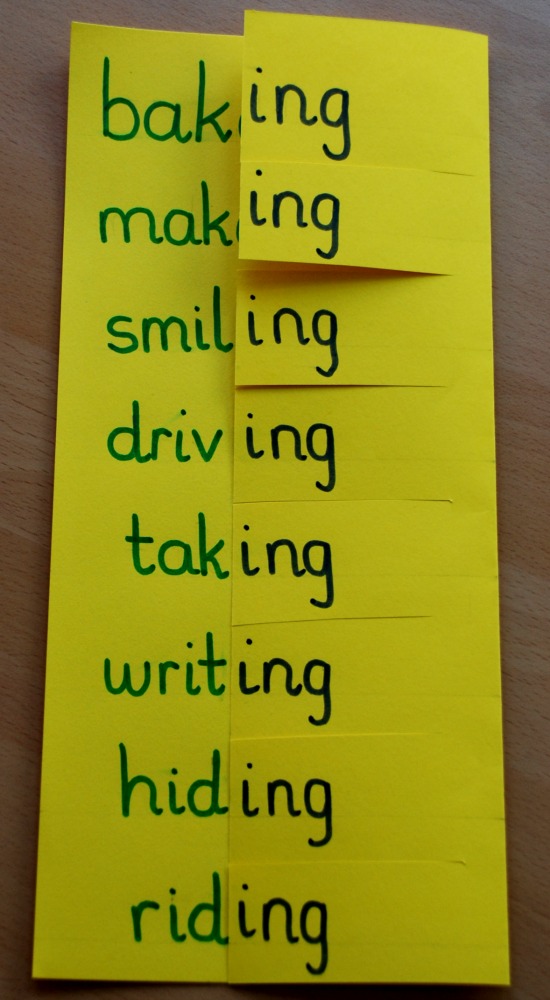
Add ing and drop the e

The kids and I have been talking about words with ing added on the end.  My youngest has just started coming across these words in his reading and his big sister was showing him how to break the word down into the initial word and then the ing (she is the best little teacher ever).  Anyway while she was showing her brother this she was telling him that the magic e drops away and he gave her a confused look so I knew it was something we needed to reinforce.

My idea was to have something where when the ing is added to the word (as a flap ) it naturally covers the e on the end so bake plus the ing flap would become baking.

I started by folding an A4 piece of coloured card and I drew some lines on it (I can not write straight without lines).

folding-the-a4-card-to-create-our-learning-aid

I also knew I needed to line the words up so that the e and only the e  would be under the flap, so I drew a dotted line running down the edge of the flap and tested out writing my words with pencil, making sure the e would be under the flaps.

line-up-the-words-so-that-the-e-is-under-the-flap-when-it-is-closed

Once I was happy I had everything lined up I wrote the words with the felt tip pens and then rubbed out the pencils and finally cut the flaps (I wrote the ing on the flaps in a different colour but that is just personal preference).

home-made-learning-aid-for-adding-ing-and-dropping-the-e-from-words

All in all it was actually very quick and easy to do and now it shows the words it their original form and the words with the ing added on. And all it cost me was the price of one piece of coloured card.

learning-aid-to-help-kids-remember-to-drop-the-e-when-they-add-ing-to-a-word

Both kids think it is great and my daughter has even been on a mission searching for her own words where the e is dropped when you add ing (she has been reading her books making a list of all the words she finds).

You Might also like our Add ed folding aid (when you change a verb to the past tense) and our K or CK spelling rule folder idea

Save

Save

Posted in Homeschooling | Tagged , , , , , , | 14 Comments

Maths Practice with random sums

One of our new ways to practice some basic addition and subtraction sums  – it is very easy and quick to set up.

fun-way-to-practice-sums

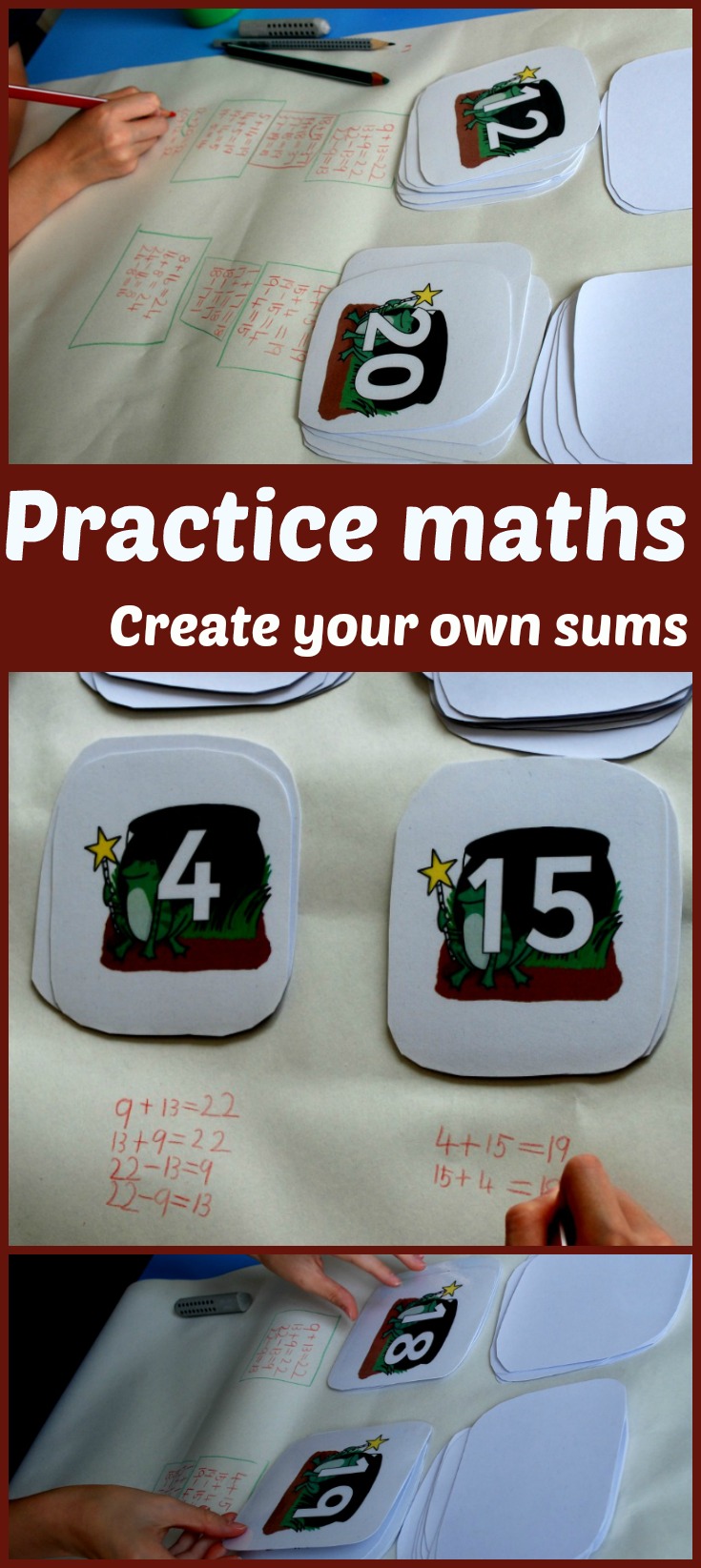
We divided some number cards into two groups  (we used the Free to download 0-20 cauldron number cards from Twinkl).  The cauldrons are actually created to print out 1 per A4 page which is a bit big for our purpose so instead we printed 4 cauldrons to an A4 page.  The cards where mixed up and placed cauldron down.  My daughter would then turn over two cards at a time (one from each group).

free-to-download-room-on-the-broom-number-cards

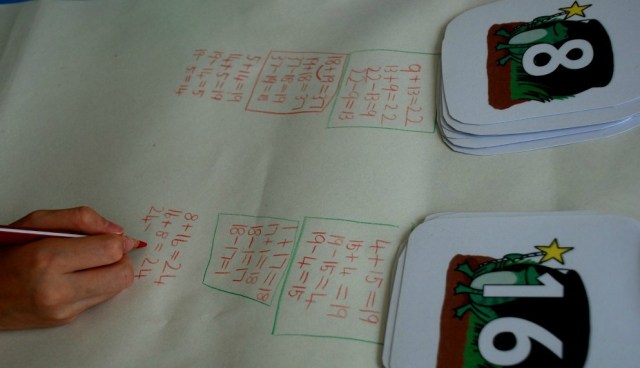
Once she had two number she would start writing out her sums.  She naturally choose to write an addition sum out for the two numbers.

Once she had her first addition sum she would then rework it to get the other addition sum and then rewrite it again to get two subtraction sums.

creating-your-own-sums-by-randomly-selecting-two-number-cards

The two groups of cards naturally generated a total mix of sums.  Some were really easy (plus 1) and some where a bit harder (18+19).  It was  great practice and she liked the fact that she was creating her own sums instead of being given sums to answer.

two-groups-of-number-cards-and-then-kids-turn-over-two-cards-and-then-write-out-the-sums

And a great way of reinforcing the inverse relationship between addition and subtraction.

My youngest also had a few goes but we modified it slightly for him as he is only doing basic addition and subtraction at this stage.  We included his snap cubes so he could manually add the two groups of snap cubes together to get his answer.

And it can also be used as a way of getting the kids to practice sums with more than two numbers – just make 3 or 4 groups of cards and then the kids turn over 3 or 4 different number cards (of course it might also be an idea to have duplicate numbers in the pack eg print out your number cards more than once so you can have 2 or 3 of the same number)

You could also extend this idea by using number cards with even bigger numbers on them.

practice-maths-by-creating-your-own-sums-using-free-to-download-number-cards-from-the-twinkl-website

Save

Save

Save

Save

Save

Save

Save

Save

Posted in Homeschooling | Tagged , , , , , | 1 Comment

Noticing the trees and the leaves

I love this time of the year, I love it when the leaves start changing colour and start falling to the ground and I love walking through a big pile of leaves lying on the ground.  There is something about autumn that always seems to inspire me and it seems my kids.

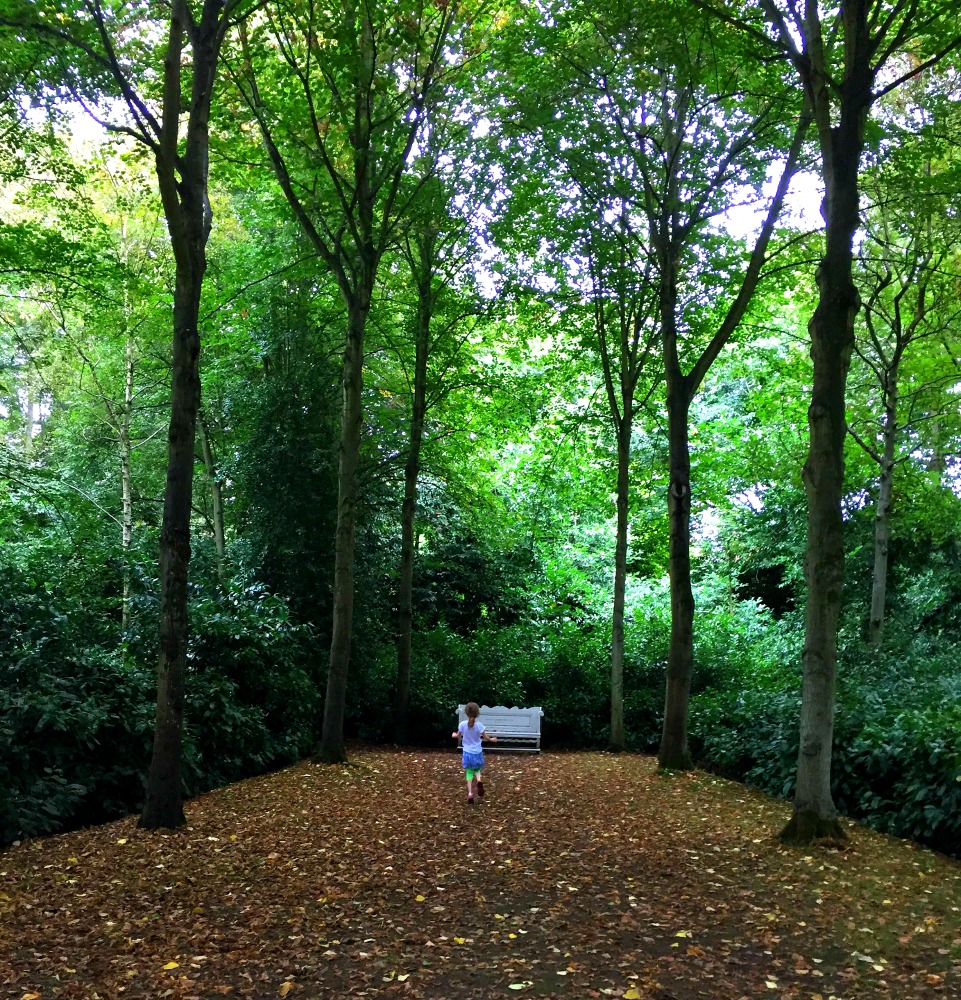
We had a brilliant morning at a National trust site – while the kids where running under some trees a gust of wind blew and suddenly all the yellowish leaves in the trees started falling down to the ground all around them.  I was totally mesmerized and missed the golden photo opportunity. The kids loved it, they both dances around under the falling leaves and afterwards  got them talking about trees and observing the changes and they requested to go back day after day after day.

running-under-the-trees-at-a-national-trust-site

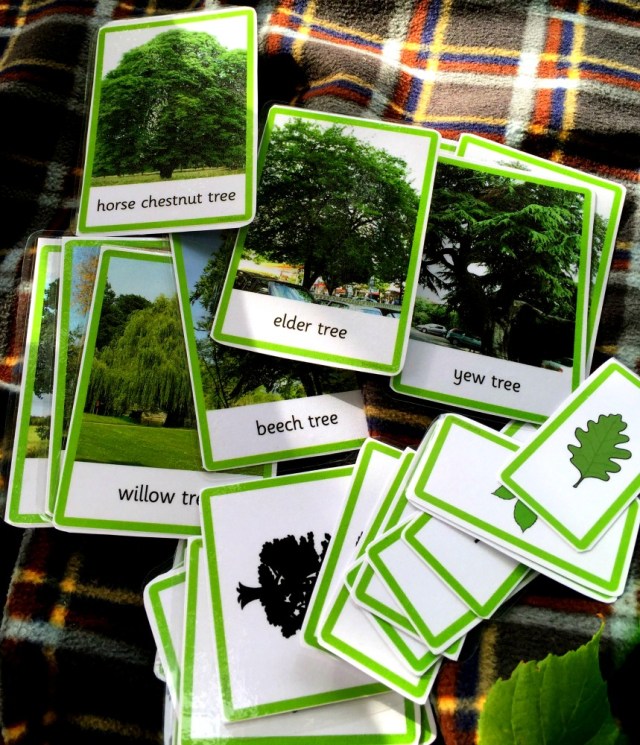
So the next day when we went back I packed the 3 part Tree cards that I had printed for my youngest a few months ago (Twinkl platinum membership needed for these cards) in my backpack. When we stopped for a picnic the kids had a go at trying to match the cards to the trees around our picnic mat.

twinkl-3-part-tree-cards-a-fun-way-to-get-the-kids-identifying-the-trees-around-them

And the great thing about this was once the kids were trying to identify the trees my youngest forgot how tired he was and actually ended up walking for a lot longer while he searched for the different trees.  He can be very determined if he has set his mind to complete a task.

We also dug out our Spot 50 Trees book (Miles Kelly) which is now permanently in my backpack for the kids to use on our walks.  I really enjoy this series of books as my daughter finds them easy to navigate and they are allowing her more independence (she will often look up a bird by herself in the Spot 50 bird book, read about it and then just place the book back in the bookshelf).

using-the-50-trees-to-spot-book-while-out-at-a-local-park

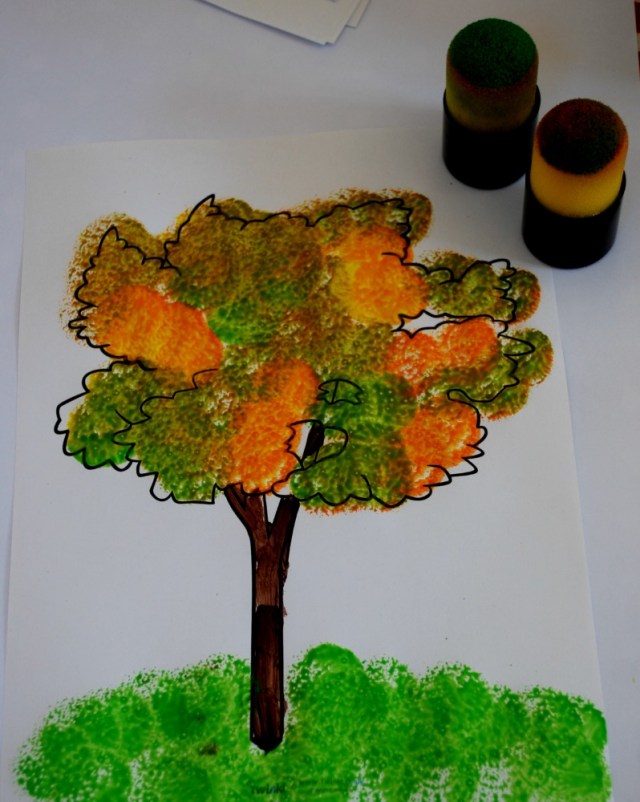
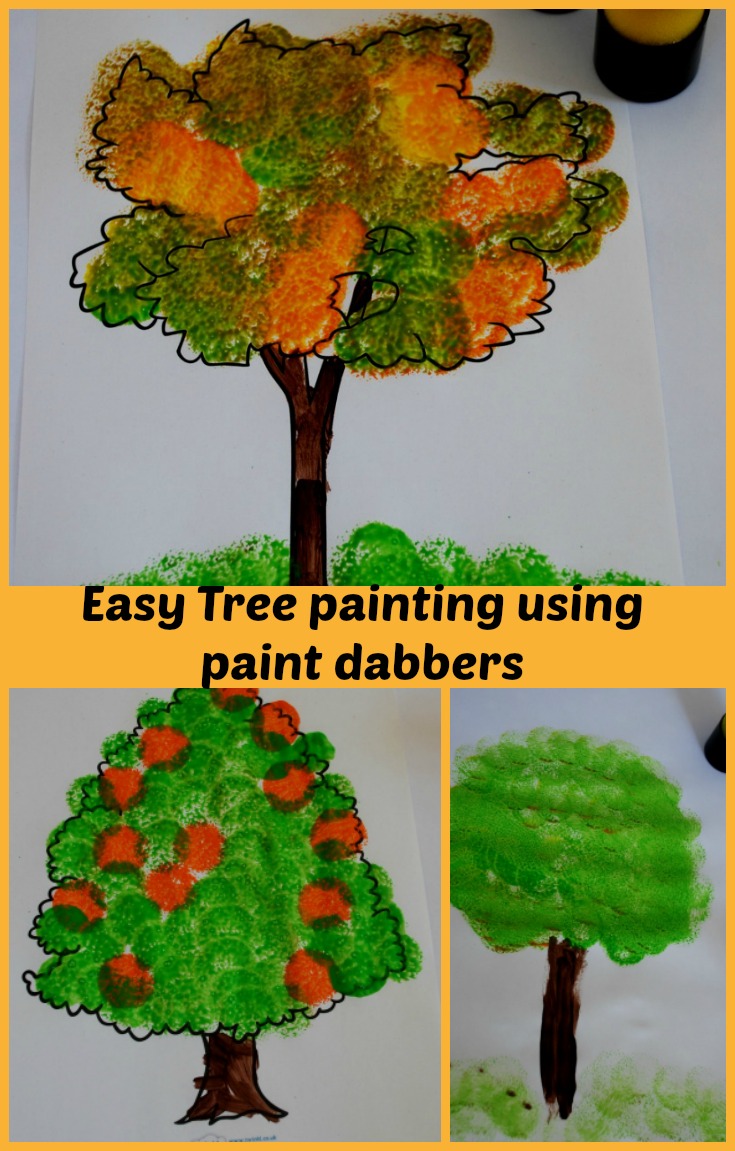
And no big surprise the increase in our park walks and all the talking about trees naturally lead to some art.  My youngest wanted to use his 12 Paint Dabbers (he loves using them) with a colouring page (we used the Free to download tree Outline pages from Twinkl).
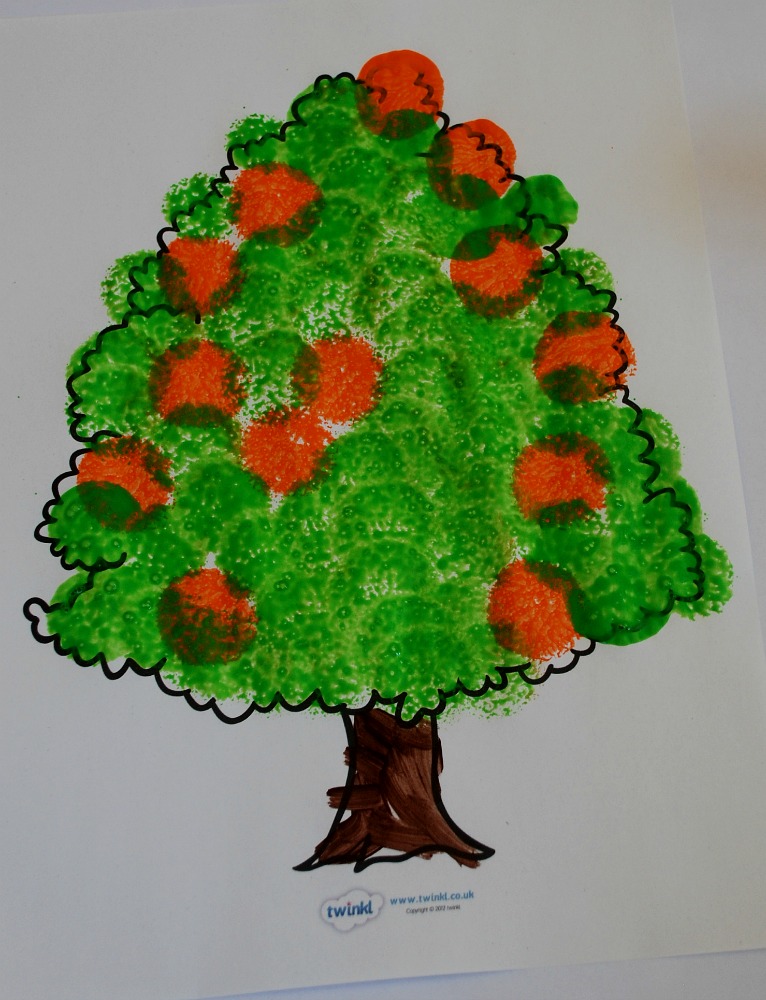
using-tree-colouring-pages-to-paint-some-autumn-treesHis sister also joined in with the paint dabbers. (It is  unusual for her to use the paint dabbers she tends to prefre using  paint brushes but she commented that using the paint dabbers gave a nice effect for the trees so she had a go).

autumn-tree-using-paint-dabbers-and-a-free-to-download-colouring-page

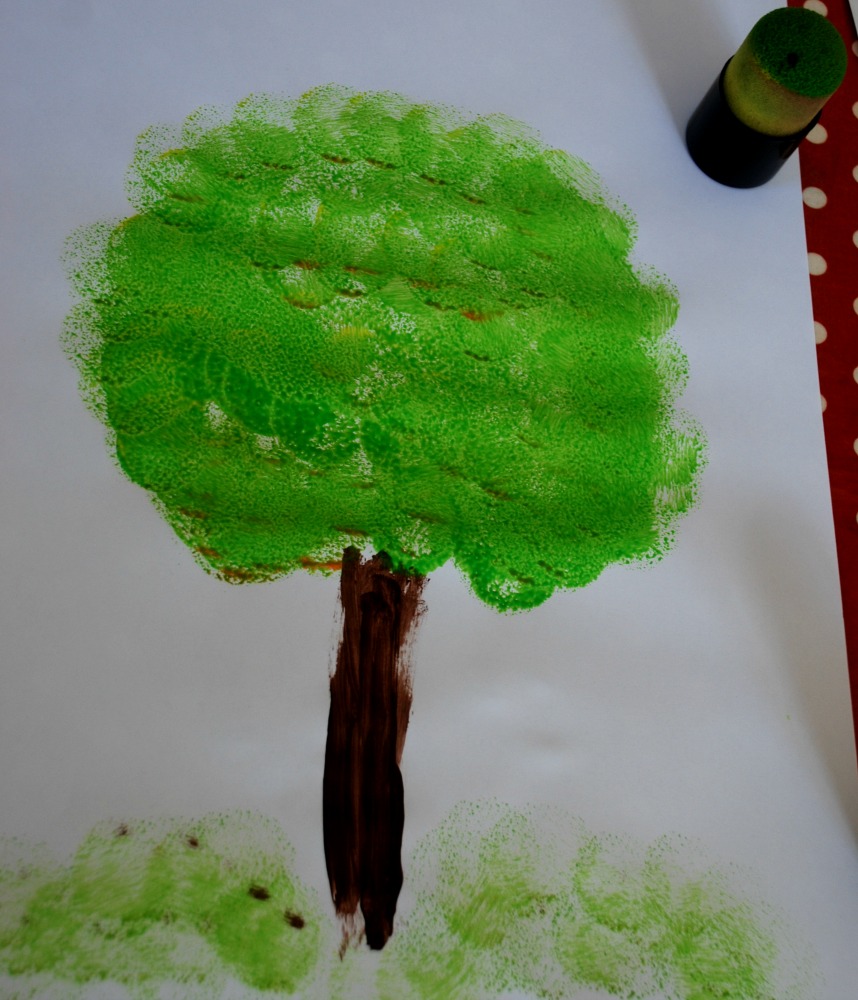
And they also had a go at creating their own trees with the paint dabbers (not going to bore you with all the pictures of trees I am sure you get the idea).

creating-trees-using-some-paint-dabbers

Autumn in our house definately seems to be an arty season.

easy-tree-painting-for-children-using-paint-dabbers


Save

Save

Save

Save

Save

Posted in Homeschooling | Tagged , , , , , | 1 Comment