Year 4 Resource Ideas

I have written a few detailed posts about what I am planning on using with my daughter as she starts year 7 but I have not really mentioned anything about my son who is starting year 4, I think that is largely because Year 7 resources were new for me whereas I feel like I have a handle on what resources we will be using with my younger son just because I have already learnt through trial and error what works for us.

But a few readers have asked so here are my plans.

Maths and English I tend to do in a more structured manner whereas our other subjects are covered by topics / projects. And yes most of the topics are driven by the kids interests and no I don’t worry about that because I have learnt over the years that we cover a LOT more when we follow the kids interests than we do if I try and force something. Also when the kids start learning about a topic you would be surprised what other subjects naturally get included. All our animal topics cover biology but they also end up covering a lot of Geography – habitats, countries, weather and Maths – he is constantly comparing sizes and converting measurements. With my son’s interest in planes we have already covered design, a bit of town planning, history, physics – yes physics – forces – streamlined shapes, wind, gravity, magnets and electrical circuits all relating to planes. So I am very happy with continuing on our project way of learning. And I do have a good idea of the kind of topics that interest my son so I do record documentaries and even reserve books in advance but I also often end up searching spur-of-the-moment for resources we can use when he goes off on a new tangent.

English. My son’s reading is excellent and he reads a lot by himself so I don’t feel like we need to work on his reading but we do still do family-reading where we all read a book together. This has become one of my must-do activities because I have seen how much they learn by just sitting, next to me while I read and it is often the starting point for new projects.
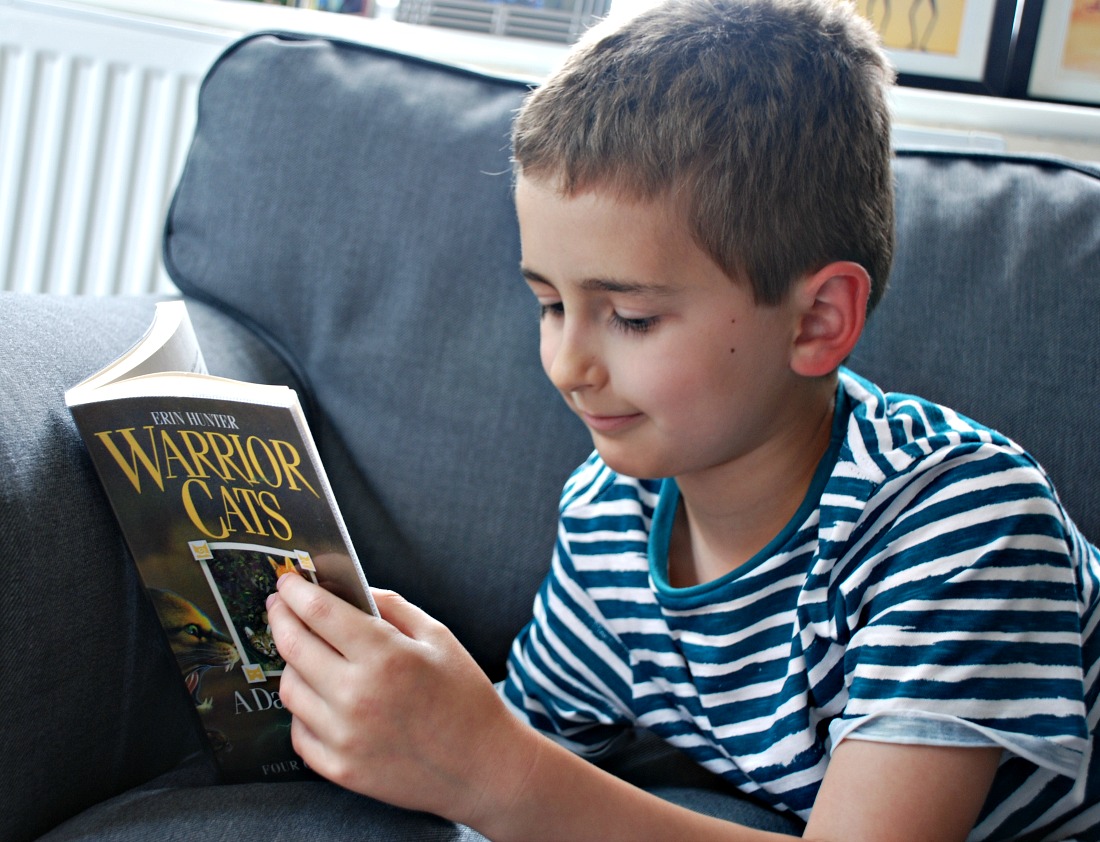
reading Warrior Cat a dangerous path

Writing – he actually writes quite a bit about the topics that he is interested in. He likes creating his own animal stories and he does this independently. But I do want to do a few exercises on story structure, just have not figured out what yet. Spelling and Grammar – I feel like he needs work on these two. He is not a natural speller and I have found that learning some basic spelling rules work for him but I need to reinforce them A LOT and he need LOTS of practice. For me this is something that we will persist with over this coming year as I personally struggled with spelling and grammar when I was younger and want to try and give him a better grounding. We will use a combination of resources/ ideas for this – I started using the Understanding English Spelling book with him last year and I really like it so we are continuing with it and are going to add some more workbooks from that series. They are the Understanding English: Grammar: KS2 English Study Book, Ages 7-11,Understanding English: Punctuation: KS2 English Study Book, Ages 7-11,Understanding English: Vocabulary: KS2 English Study Book, Ages 7-11, Understanding English: Spelling : KS2 English Study Book, Ages 7-11.

I like these books but I do not tear through page after page. We will complete a spelling page, do an activity on in, probably mix in a vocab page, another activity, maybe a grammar page and then go back to a different spelling page – and that can take us 2 weeks or so. If I just did a page a day and tried to work through the entire spelling workbook from cover to cover it would not work. For us it is a framework and then we add activities in.
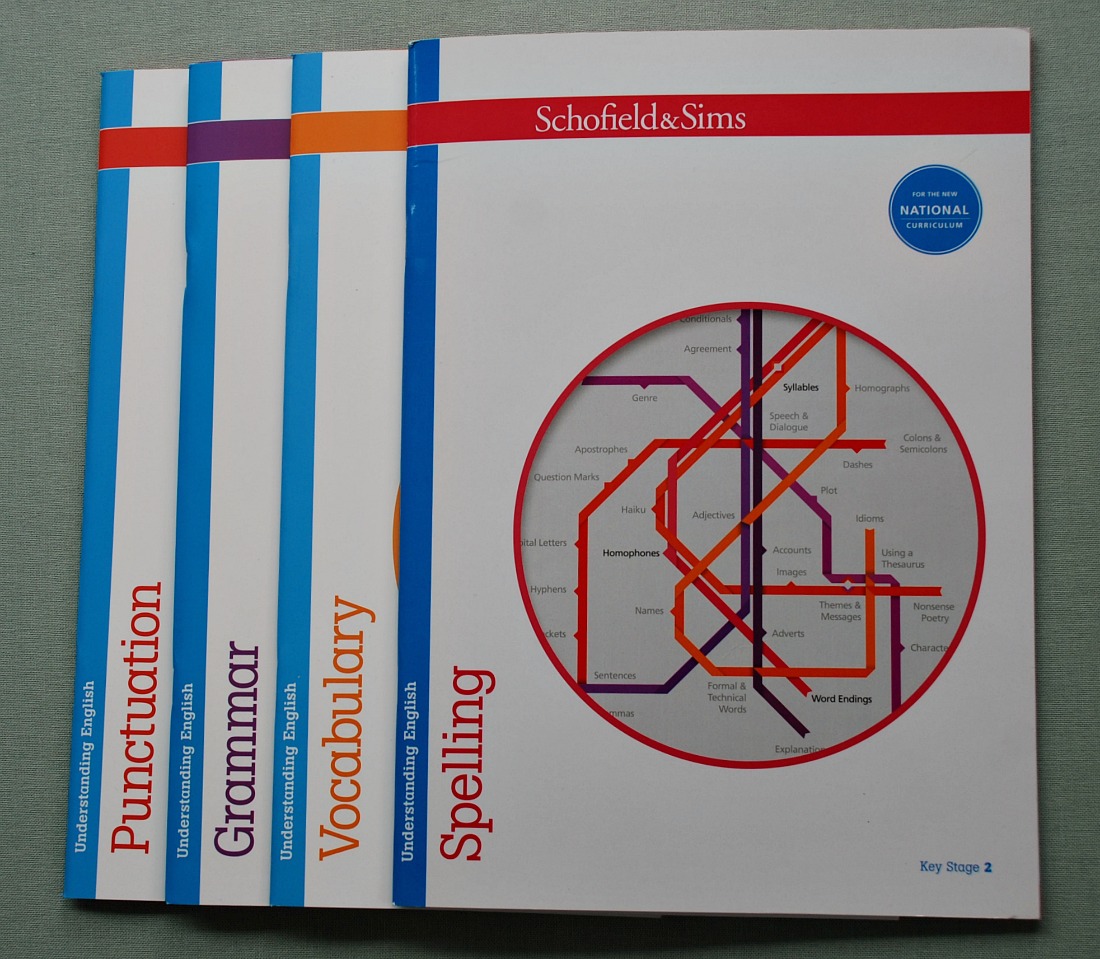
Schofield & Sims Understanding English Range of workbooks for Key Stage 2 ages

And the activities don’t need to be complex. A simple thing like covering our kitchen table with paper and then us picking adjectives out of his favourite book and writing them in groups with coloured pencils can be just as effective as some fancy Pinterest idea.

Maths – I started using some of the Understanding Maths Range with him in his Year 3 and we will continue with those. I like the explanations and the structure of this range but it does not include lots of practice and I believe kids need to practice Maths. So for practice pages we will be using the Bond Arithmetic books and possibly the Schofield & Sims Written Calculation books (I am thinking of buying him the Written Calculation: Multiplication Book 1 – KS2, Ages 7-11 and Written Calculation: Division Book 1 – KS2, Ages 7-11). He also likes practicing with Maths dominoes, so I will make more of those for him.

My aim for his maths is to finish learning all the times tables, work on long multiplication and division, we need to spend time on fractions and he enjoys geometry and graphs so that is always easy to slip in (in fact we often manages to include geometry and graphs in his different projects).

I have mentioned using the Oaka Books Key Stage 2 games quite a bit recently but I feel like I need to include them here again. We find it a relaxed form of learning and both my kids learn a lot while playing the games so we will definitely continue. So far we have three which cover different areas – The Predators and Producers game (Biology), The Space Race game (Physics) and the On the Map game (Geography). 

Board game fun with On the Map by Oaka Books

That is my basic starting point but as always we will adapt as we proceed through Year 4.

Admin Bit – I do include Affiliate links. If you follow an affiliate link and go on to purchase that product, I will be paid a very small commission, however your cost will remain the same. I only include affiliate links for products that we use and love.


Posted in Homeschooling | Tagged , , , , , , | Leave a comment

Starting Year 7 – Geography Resource Ideas

Our Geography learning has always happened as part of our projects, when we learnt about Vikings we also learnt a lot about Scandinavia and the parts of Europe that the Vikings invaded, whenever we learn about animals we always learn about their habitats and how the animals adapted to suit their habitats, even our map work actually came as a result of my sons airplane interest and then again we revisited it while reading our How to Train Your Dragon Books.  Geography always seems to effortlessly slip in with our project work and I must admit I really like that.  And this year I really want to keep that natural flow but add some more with in-depth learning for my daughter.

We are currently in a slight map craze.  Whenever we watch a documentary or read a book which includes countries or significant landforms we jot them down onto our maps.  Very simple, nothing fancy but this simple act has really meant the kids are remembering where the different places are and they really enjoy having maps that they have created.

This slideshow requires JavaScript.

We have been using the different Continent Maps from Activity Village for this.  My plan is to continue with this as much as we can.  We are definitely going to be doing it while we watch our River documentaries that I have lined up and I also want to expand on our Africa map, I have some cool animal themes documentaries that talk about significant areas in Arica that I think will work well with the map idea.

And we are going to stick to our country learning idea (pin the label onto the country) just because it has worked really well and both the kids enjoy it. I also want to bring in more flag recognition (I like the flag pages from Activity Village for this)

For us all of this happens very naturally, it is not considered a project the kids like watching the documentaries and then adding info to maps.

I do also want to do more detailed map work with my daughter – like creating relief maps, drawing cross sections of maps.  For that I have found some nice pages on the Twinkl Secondary site (Twinkl links – Drawing cross sections of a map, compass directions, sketch maps).

This slideshow requires JavaScript.

And Twinkl have a FREE to download Map Skills Set.  Oaka Books also have a new Map Skills Board game that looks interesting (we have not tried it out but I am thinking it might be a good Geography resource).

And of course we are sticking with the On the Map game.  This game has been a hit with my daughter and I have noticed that every time we play it she retains more and more information so there is definitely learning happening while we play the game.  The game also comes with two different boards – Europe and the Rest of the World – which means you can focus on either at a time – I really like this.

This slideshow requires JavaScript.

Topics.  Because we want to do more detailed map work I am not sure if we will complete 2 or 3 topics (I am thinking 2 topics as my daughter really likes the map work and is keen to work on a few projects around it).  Anyway for Topics I know we are going to look at Rivers in detail (it ties in nicely with some topics we have been looking at) but I am not sure if we will then do a Weather and Climate topic or Plate Tectonics.  We can decide on that later.

Key Stage 3 Geography Topic Packs from Oaka Books

For now I have three Oaka Books Topic Packs.  We have used their topics packs for History but we have never used a Geography Topic pack.  It looks the same – a topic booklet with summarized key facts – very visual – so pictures depicting the key points and no long paragraphs – we like this format.

This slideshow requires JavaScript.

Then a Topic workbook where the kids can write in the key words and make sure they understand what they have read in the Topic Booklet and a Learning Game.  In the past the learning games that come with the topic packs have always been very popular with my daughter, she likes this way of learning so I am hopeful that the learning games included in the Geography Topic Packs will also be as popular with her. (For those of you interested Oaka Books have other Geography Topics here – Oaka Books Key Stage 3 Geography).

Plate Rectonics, Volcanoes and Earthquakes learning game that comes inside the topic pack

With all of these topics I always try and find documentaries to watch with the kids and books to read.  We don’t just read through the topic booklet and leave it as that for us the strength of these Topics packs is the way they summarize the information into Key points.  The Key points are starting points for further investigation, and a good summary after we have gotten lost in the detail (This is important for us – when we learnt about the Battle of Hastings my daughter went into incredible detail, I loved watching her explore the topic like she did, finding out about different sources and opinions but I also needed to bring her back and remind of the key points and not just focus on her tangents.  She tends to get lost in detail so I feel like a good key point source helps her.)

For the three Topics above I have already found some extra pages to use.  Here are a few ideas.

Rivers.  I like the World River Map from Twinkl but apart from that the only other River item I thought we could use was their Year 6 Pack   (I know they are still adding to their Secondary site).  I have however found quite a few FREE to download River pages on the Teachit Geography site which look like they could be very useful (just type in  river in their search bar and you get a lot of resources all around rivers, erosion and flooding).  Just a few that I found – How does a river system operate, the long profile of a river, river landforms, river processes and a river’s journey.

This slideshow requires JavaScript.

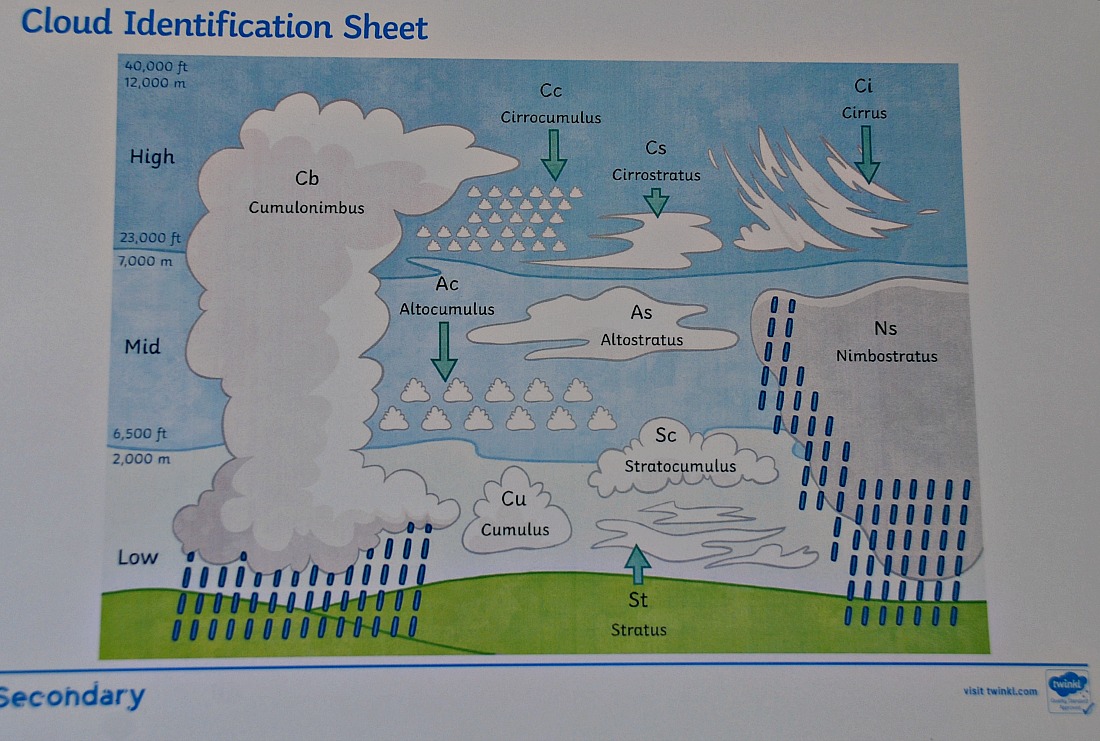
Weather and Climate.  I found quite a bit on the Twinkl Secondary site for this – Weather and Climate Unit of Work.  I still need to go through it all but it looks like there is quite a bit there that we could use. For those of you with Free Teachit Geography membership I also found some interesting looking pages on their site – UK weather, Extreme weather, Climate but I have not gone into detail yet of what they have.

Twinkl Secondary Geography Cloud Identification sheet

Plate Tectonics, Earthquakes and Volcanoes.  We have already looked at this a few times but it is just an interesting topic and every time we go into more and more detail. (We recently revisited it with a documentary about Pompeii – I really liked tying the two topics together).  But it is something that we do need to go back and do more detail. (If you are near London the Natural History Museum have a great section on this).

Twinkl Secondary have a few interesting looking under what they call Restless Earth.

Teachit Geography have a number of pages under Structure of the EarthPlate Boundaries, Earthquakes and Volcanoes. If you are covering this topic I would recommend having a look on the Teachit Geography site.

Admin Bit – I was given the Oaka Books Geography Topic Packs.  I have a free membership with the Teachit Geography site and I used to have a subscription with Twinkl (so they may have added new items they I have not mentioned).

Year 7 Geography Resource Ideas - Topic packs, worksheets, websites and games you can use for Geography for Key Stage 3

Posted in Homeschooling | Leave a comment

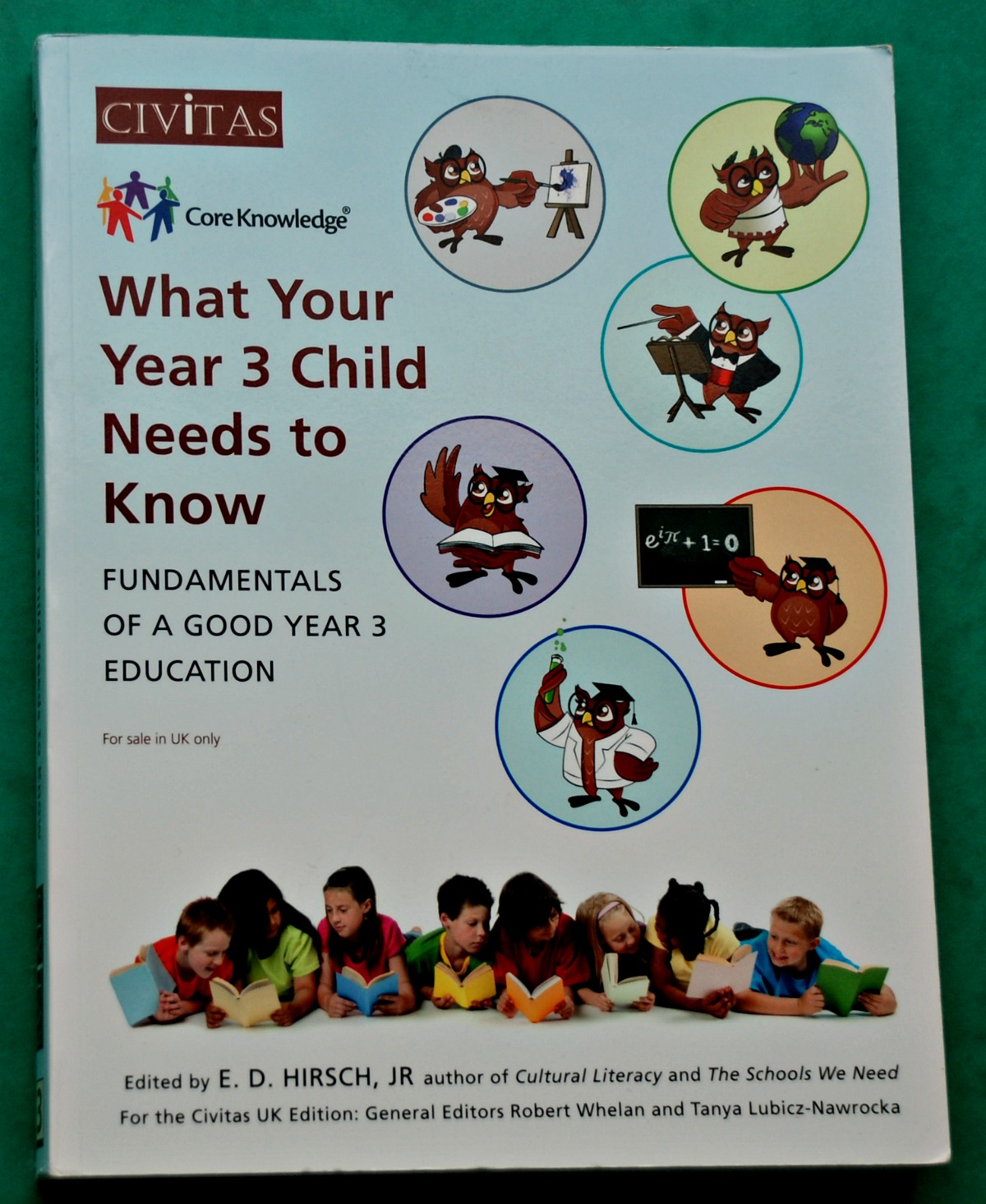
What Your Year 3 Child Needs to Know – a Core Knowledge Book review

I know I am writing lots of reviews at the moment but it is that time of the year when lots of people are looking for learning resources so I thought it would help if I wrote summaries for all of the Core Knowledge books that I own.

Core Knowledge. What Your Year 3 Child Needs to Know. helpful book for structured home educators

The Year 3 book follows the same set-up as the other books in this range. It is broken down into the same 6 subjects

  • Language and Literature
  • History and Geography
  • Visual Arts
  • Music
  • Mathematics
  • Science

And at the end of each subject chapter they include a Suggested Resource List (I always love looking at these suggestions to get ideas).  The Resource list includes books, DVDs, online sites, sometimes apps and places to visit.

1. Language and Literature

Under the Literature section they include recommended poems and extracts from recommended stories (I like this as it gave me some good ideas) but my favourite had to be the section on Greek Myths. It starts with a quick explanation about how Greek Mythology evolved, who the main Gods and Goddess where and a very useful comparison between the Greek and Roman God names (really handy).  Then they include some of the famous Greek Myths. 18 pages in total on Greek Mythology but I really liked reading this section, it was a great reminder for myself and my kids actually read the Greek Myths directly out of the book.

This slideshow requires JavaScript.

Language.  What are nouns, singular and plural, verbs, past and present tense, adjectives, contractions, abbreviations, capital letters and then finally familiar sayings (I quite liked the fact that they included in the familiar sayings).

2. History and Geography.

I must admit when I first started reading these books I thought it was strange that they grouped History and Geography together and did not have separate chapters for each.  But as we have progressed through our home education I must admit that our History and Geography actually often merges into one.  If we are studying Vikings we naturally learnt a lot about Scandinavia and the places the Vikings travelled to, likewise Anglo-Saxon History meant a lot of British Geography so now I actually like the combination.

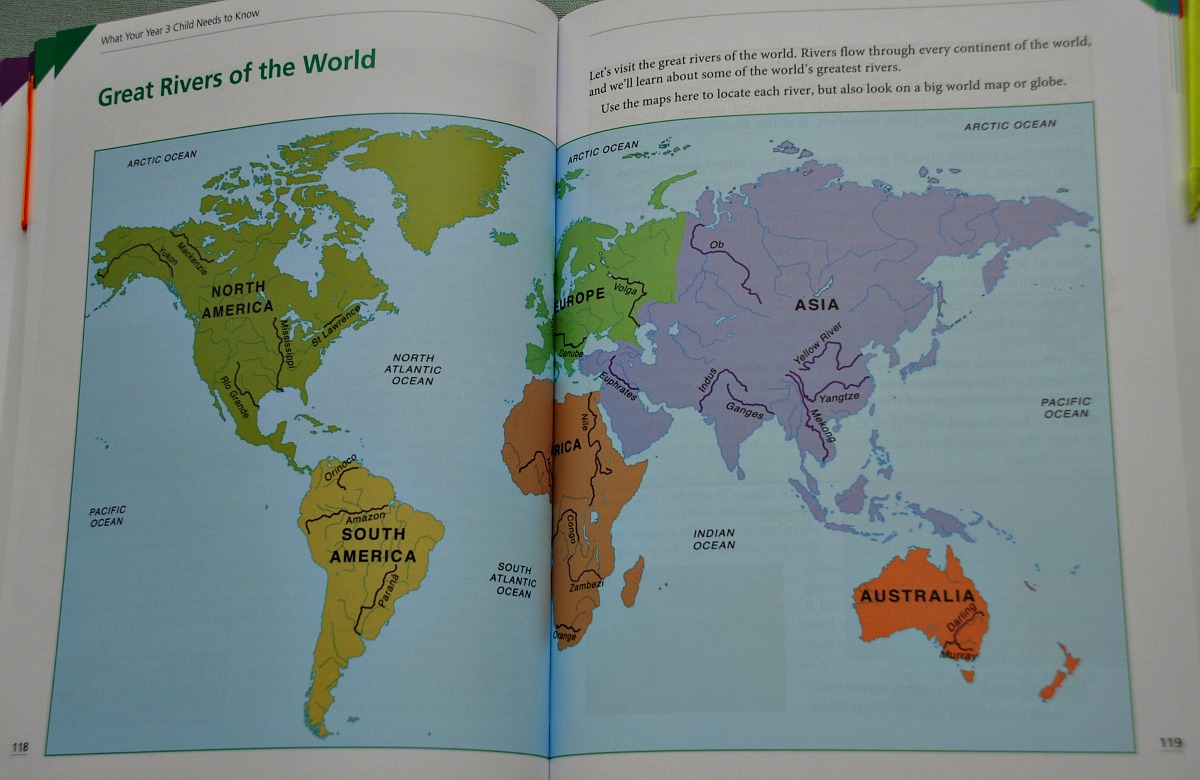
They focus on Western Europe and then talk about where you live and go onto Rivers, first Rivers of Britain and then Rivers of the World.

Geography Great Rivers of the World. What Your Year 3 Child Needs to Know

Then onto Civilisations in Asia (I found this fascinating to read). Indus, Ganges, Hinduism and Buddhism.  More detail about China and then Japan.  Then Ancient Greece – this ties in nicely with the Greek Mythology covered in Literature.

Then British History – a good summary up to the Elizabethan / Shakespeare era (20 pages). Highlights include-William the Conqueror, The Crusades, Magna Carta, War of the Roses, English reformation, religious conflict and then Elizabeth I.  I do consider this a nice layout of main events – in fact after rereadng it for this review I suggested to my oldest that she should reread this section herself.

3. Visual Arts

Talks about lines in drawing – creating forms, movement and symmetry. Then creating landscapes and still-life pictures, bringing in Mythological paintings and Classical Greek Architecture.  Not a very long chapter in total 20 pages.

4. Music

Again not a long chapter about 26 pages in total. It talks about different types of music and some famous composers as well as writing music down.  It also mentions some typical songs you might sing with a Year 3 child.

5. Mathematics

They split the Maths section into 4 groups

  •  Working with Numbers to 100 – this includes skip counting, tally marks, writing numbers as words, doubles and halves, introducing the idea of an equation, adding and subtracting with two digit numbers where you carry and exchange, rounding to the nearest ten, basic fractions and then finally three digit numbers

This slideshow requires JavaScript.

  • Measurement – length (100cm = 1m), weight, measuring time with a calendar, ordinal numbers, time in 5 minute intervals and the idea of how much time has passed.
  • Geometry – 2D shapes and what a perimeter is, 3D shape, points, lines and segments as well as lines of symmetry
  • Multiplication and Division – using brackets when you multiple three numbers together and division with remainders.

This slideshow requires JavaScript.

6. Science

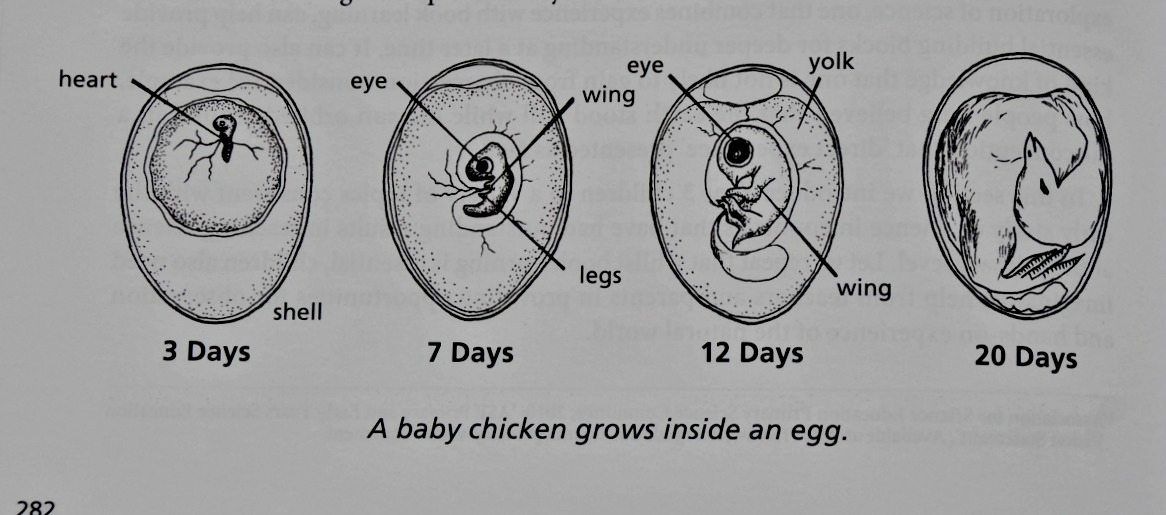
The Science Chapter starts with life cycles and the seasons (I like the combination).  They include life cycle of a chicken, flower and a frog.  Then onto the water cycle – talking about evaporation, condensation and precipitation. 

Science How a baby chick grows. What Your Year 3 Child Needs to Know

After the water cycle they go onto Insects – including what  in an insect, the parts of its body, metamorphosis and then onto bees.

Human Body is next  – a quick introduction to cells, your teeth, major organs and a healthy diet (very quick no detail).

Magnets and Simple Machines are next followed by a few stories about famous scientists. 

The Science section in this book is still fairly high level in the older year books they do into more detail.

You can buy this book directly from Amazon – What Your Year 3 Child Needs to Know: Fundamentals of a Good Year 3 Education (Core Knowledge UK)

Other Core Knowledge books I have reviewed are here – What your Year 2 Child Needs to Know, What Your Year 4 child Needs to Know and What Your Year 6 Child needs to Know

I do include Affiliate links. If you follow an affiliate link and go on to purchase that product, I will be paid a very small commission, however your cost will remain the same. I only include affiliate links for products that we use.

Posted in Homeschooling | Tagged , , , , , | Leave a comment

Starting Year 7 – Science Resource Ideas

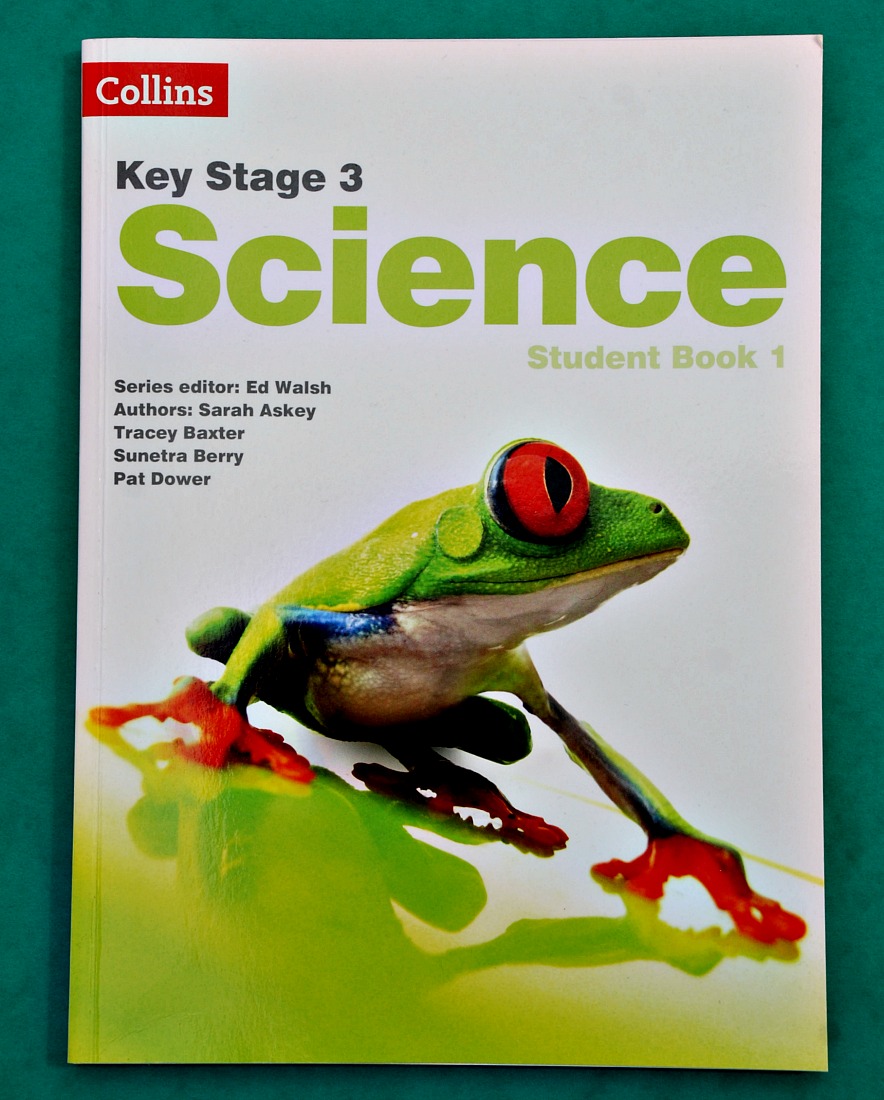
Sticking with my starting year 7 resource idea posts this is what I have gathered for Science. Both my kids tend to heavily favour biology so we have actually already covered a lot of biology – especially animal biology but I was a bit concerned that we were not covering enough physics and chemistry (chemistry was a big area of concern for me) so this year I really wanted a more structured science book that I could use as a way of making sure we are getting to everything. I spoke to someone at Collins and they actually sent me their Key Stage 3 Science Student Book 1 as an option for Year 7 Science. Which looks like it is going to tick all the boxes. It breaks down the science into the three major sections and works through the topics in a logical manner. We have not yet started using the book but I have been reading through some of it and I like the set-up.

Collins Key Stage 3 Science Student Book 1

Each chapter starts with a quick introduction of what the topic is.  Then they tend to discuss a new concept on a double page and the include questions on what they are talking about, lots of labelled diagrams (we really like this) and key words are written in bold and if the kids need to they can look these words up in the glossary at the back of the book. The paragraphs are good explanations, informative without being too wordy.

This slideshow requires JavaScript.

At the end of each chapter they also include a double page called “check your understanding” which is a summary of the key ideas that are covered in the chapter (this will be good to read through with the kids and see if they can explain the concepts) and there are also some additional questions at the end of the chapter.

This slideshow requires JavaScript.

Very briefly (I will write a detailed review once we have started using the book and I can give feedback about how my daughter is finding it) the student book covers

  • Cells – structure, animal cells, plant cells, reproduction in plants and humans
  • Eating, Drinking and Breathing – a healthy diet, the digestive system and the breathing system
  • Mixing, Dissolving and Separating – including chromatography
  • Elements, Compounds and Reactions – atoms, periodic table, metals and non-metals, combining elements.
  • Forces and their Effects – types of forces, Hooke’s Law, friction, air and water resistance, calculations.
  • Energy Transfers and Sound – how energy works and gets transferred, fuels, sound waves, speed of sound, reflection and absorption of sound.

To go with the student book I also purchased the Collins Year 7 workbook. I bought the workbook because I wanted exercises to go with the student book (the student book does contain questions after each topic but I wanted extra questions that my daughter could work through on her own, something to reinforce what we had learnt about in the student book). After looking at the two together I do think they are going to work well as a set.  Just to mention the workbook is just black and white worksheets but I like it because it is logically set out and I only paid £4 for my workbook which I think is good value for money.

This slideshow requires JavaScript.

For extra examples I have actually already downloaded a LOT of the Twinkl Secondary Science section. We like their worksheets, especially the labelling pages.

This slideshow requires JavaScript.

We have not yet used any of the Twinkl Secondary Science pages but my daughter has been using their Secondary History and Secondary Maths over the past 4 months and those have been very useful so I am hoping the Science will be the same.

I have also joined the Teachit Science website (I set up a Free account which means I can download their PDF docs) and I have actually already used a few of their biology pages with the kids. I am finding all the Teachit sites very useful sites for educational resources.

My daughter is a visual learner and we tend do have a number of cork boards around the house (currently 7 boards) with different pages/ posters stuck up. It is a really simple concept but using posters really helps her so with my concern over chemistry I asked Schofield & Sims if we could get their Periodic Table Poster. I must admit I was very impressed when it arrived. I like how their have included little of notes about the elements and structure of the atom on the poster together with the actual periodic table.

This slideshow requires JavaScript.

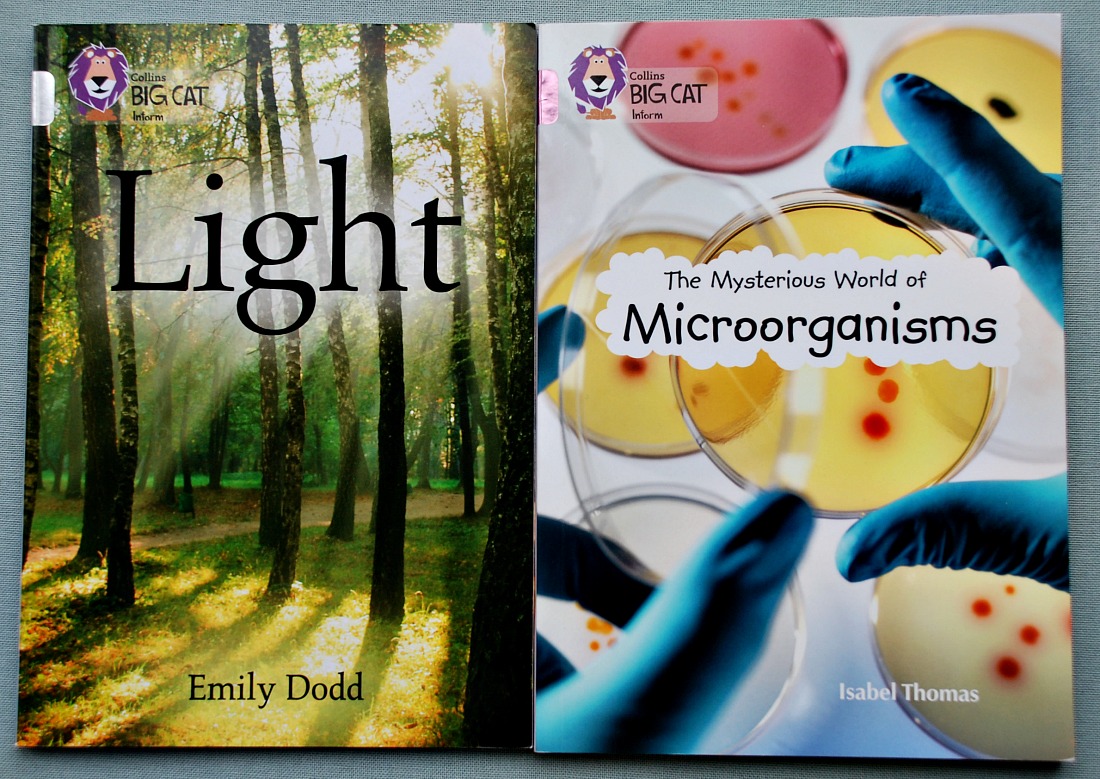
I also decided that I am going to try and get more bite-sized science books for the kids (this is how I do History with my son and it has been working really well) so I am trying to adapt the same concept as a way of encouraging more Science with this sister. I am still looking around for books but so far I have these two lined up – Light and Microorganisms. I am planning on buying more during the upcoming year.

Science Books. Collins BIG CAT inform Books on Light and The Mysterious World of Microorganisms

And finally our games. We found the Predators and Producers game worked really well as a biology activity and we recently started playing the Space Race game (physics game) so even though they are supposed to be Key Stage 2 games I am going to keep using them with my daughter as a fun way of reinforcing basic concepts. (Plus I have found the games work really well when you are educating different aged kids).

This slideshow requires JavaScript.

That is my starting point for Science. As we start working through our student book and covering topics I will add more activities and more books but I really wanted a framework for Science this year and I think the Collins book give us that we.

For those of you interested here are the Amazon links for the resources I mentioned (The poster and board games are not on Amazon but I have included links back to the companies that produce the products in the main text above).

Key Stage 3 Science – Student Book 1

KS3 Science Year 7 Workbook (Collins KS3 Revision)

Light: Band 17/Diamond (Collins Big Cat)

The Mysterious World of Microorganisms: Band 18/Pearl (Collins Big Cat)

Also if any of you missed my other Starting Year 7 posts here are the links for the English Literature one and the History one. I am hoping to have my Geography one finished this week and then a Maths one next week.

Admin Bit – the products used are a mix of items that I have been given (after I requested the specific items) and that I have bought.  Collins sent us the Student Book and both BIG CAT inform books.  Schofield & Sims gave me the poster and Oaka Books gave us both games.

I do include Affiliate links. If you follow an affiliate link and go on to purchase that product, I will be paid a very small commission, however your cost will remain the same. I only include affiliate links for products that we use.

Year 7 Science Resource Ideas. Workbooks, poster, games and other ideas for Science

Posted in Homeschooling | Tagged , , , , , , | 1 Comment

What Your Year 6 Child Needs to Know – A Core Knowledge Book

I am in the middle of writing posts about the different resources I am planning on using for my daughters year 7 and I realized I never actually wrote a post about the Core Knowledge Year 6 Book (What your year 6 child needs to know: Fundamentals of a good year 6 education).  I now own the full set of these books and I have used them all but I want to stress upfront I don’t follow these books word for word.  We don’t cover all the topics they suggest but I still find them very useful for 3 main reasons – Ideas of what we could cover in during out year, good explanations of concepts that I can use and their suggested resource lists. I really love their suggested resource list as the end of each section (they include resources for books, films and DVDs, online and places to visit).

Core Knowledge What Your Year 6 Child Needs to Know

The book is broken down into 6 main Topics

  • Language and Literature
  • History and Geography
  • Visual Arts
  • Music
  • Mathematics
  • Science.

I must confess I have found the Maths and Science sections the most useful but I am going to give a breakdown of what is included in each section.

1. Language and Literature

It gives examples of well-known poems and extracts from stories and myths that they recommend.  I found it interesting seeing which ones they included but as far as our literature goes we have followed our own paths (although even by following our own path we did actually cover a number of the items they suggest).  For me literature at this stage is very much still about enjoyment.  They also mention Shakespeare and I initially had no plan on covering Shakespeare but my daughter actually found some Shakespeare books and started reading them herself so I followed her lead on that.  I did like their explanations for literal and figurative language and then things like personification, onomatopeia, alliteration, simile and metaphor.

This section also covers things word classes (verbs, nouns etc) and punctuation when to use versatile commas and brackets.  Prefixes, suffixes and what is the different between informative writing and persuasive writing.

What Your Year 6 CHild needs to Know. English literal vs figurative language

2. History and Geography

Surprisingly I have not actually used this section because we have been continuing on our Viking / Anglo-Saxon / early Medieval Britain topic for History which has also ended up being a geography topic – the kids have learnt a lot about England and Europe through the History that we have covered.  But although we have not covered their suggested History and Geography topics I  have found reading the pages very useful and I am sure at some stage when we get to covering these topics I will reuse what I learnt from these pages.

The section starts with talking about Longitude, Latitude, time zones, a round earth and a flat map – interesting to read. Then it goes onto exploring Wales, Scotland and different parts of England (very interesting reading) and then American History and American Geography.

British History it starts with Queen Victoria, the Industrial revolution and the entire Victorian Age (which we did sort of cover last year).  They go into quite a bit of detail on this period.  If you are not familiar with this part of British History then it really is a good section to read.

History in the What Your Year 6 Child Needs to Know includes the Industrial revolution in England

3. Visual Arts

The Renaissance, how it started what it meant and some famous works from this period. Personally I wanted more detail but then I love art history and this period is one of my favourites.  It also mentions perspective in art and shading.  And a bit about Victorian Art.

4. Music

I call this Music theory – explaining the different notes, sharps and flats etc. Also some examples of famous songs.

Music Theory

5. Mathematics

(I am going to break this down into sub categories and give more detail just because I find this section so useful)

Numbers

  • numbers up to billions,
  • positive and negative numbers
  • how you compare integers (I like the way they showed this using number lines).
  • rounding
  • square numbers, power of ten, prime numbers

Computation

  • introduction to variables
  • inverse operations
  • division using bigger numbers

Decimals, Fractions and Mixed Numbers

  • comparing decimals and sums with decimals
  • multiplying by decimals
  • decimal division
  • rounding decimals
  • equivalent fractions
  • adding and subtracting fractions
  • adding and subtracting mixed numbers
  • multiplying fractions and whole numbers

This slideshow requires JavaScript.

Rations and Probabilities

  • introducing the concepts
  • finding a percentage of a number (I did think they could have covered more on percentages)
  • finding an average

Graphs, Functions and word problems

  • pie charts
  • line graphs
  • functions and inverse operations
  • graphing function
  • writing and solving equations

Geometry

  • angles
  • triangles and polygons
  • circles
  • finding the area of different shapes
  • volume of shapes
  • plotting points on a grid (all 4 quadrants)
  • symmetry

Maths Quadrants. What Your Year 6 Child Needs to Know

Sorry that is a bit of a list but they include lots of explanations about different Maths concepts which I find very useful.  Please remember this is not a workbook – so there are no examples for the kids try but they do include a few worked examples showing how they would tackle the problem.

6. Science

The Science section starts with Chemistry (I think these pages gives a good introduction).  It talks about atoms, parts of an atom and explains how the periodic table was created.  Then elements, metals and non-metals, molecules and compounds.  This is not covered in huge details (all of this is 9 pages long) but it is well-worded and explains the concepts well.

This slideshow requires JavaScript.

Onto Classifying Living Things which talks about why we classify, cells, how a cell is constructed and differences in cells

Life Cycles and Reproduction.  Asexual reproduction and sexual reproduction how they differ. Flower fertilisation and plant development, including what monocots and dicots are. Then reproduction in animals.

Next is the Human Body. It starts with Human Reproduction and then glands.

Lastly the section covers a few famous scientists.

I did find the Science section very informative but I did feel like they should have included some physics.

So rather long but that is what is included in the Year 6 Book.  Lots of good explanations about concepts and very useful resource recommendation ideas.  But please this is NOT a do pages 2 and 3 of day 4 type book and it is NOT a workbook.

Core Knowledge What Your Year 6 Child Needs to Know


Posted in Homeschooling | Tagged , , , , , , | Leave a comment