Board Games for the Summer Heat

Over the summer we tend to spend ages just pottering around in our garden. We normally have a few vegetables that the kids are growing and well it’s just nice to be out in the sunshine. But the kids also need a break from the sunshine (especially on those super-hot days) and every year we tend to find a project or an activity to do inside, something fun, which just gives them a break from the outdoor heat. In the past it has often been art projects that we were working on but this year we seem to be going through a mega board game craze. It has been perfect on those really hot afternoons to just retreat into the coolness of the house for a bit.

Now I know there are a lot of amazing newish board games out there but the two that seem to have taken my kids fancy are two more traditional board games – Monopoly and Cluedo. Good old favourites that were around when I was a kid.

Board Games Monopoly and Cluedo

In fact at the moment we are having epic weekend Monopoly Marathons that end up lasting the whole weekend (we tend to play for a few hours, leave the game set up and come back to it either after dinner time or the next day). Our kids even try and squeeze in a few rounds during their dad’s lunch break (hence the standing).

This slideshow requires JavaScript.

While the play they are constantly learning about money management.  My son keeps talking about loans, going into debt, having to pay off the debt, how he needs to keep some cash in reserve because you never know what might just happen.

But it is also the tactile side of it.  I discovered a few years ago that my kids did not really get the whole saving verses spending money when it was just sitting in a bank account, they needed to have the cash, to be able to count the cash and physically hand over the cash when they buy something to fully appreciate its value.  And it is this tactile element of Monopoly that I think makes it so vital especially in today’s world.  The kids need to grasp the whole concept of saving and spending and it always makes more sense when they have physical cash to use (even if it is Monopoly currency).

I think Monopoly should be one of those games that all kids get to play.

The other big hit is Cluedo.  Okay I am guessing some of you are wondering what the educational element of Cluedo could possibly be?  For me the skill of deduction.  I think it is a skill that kids need to practice.  The ability to figure out an answer by eliminating all the incorrect answers. And taking it a step further when the kids get the hang of the game they start to realise that some players purposely use characters or rooms because they actually have those cards and they are trying to force the other players hand – this was a huge lightbulb moment in the one game. Suddenly they started thinking a lot more carefully about how their father and I were combining our characters, rooms and murder weapons and if we were purposely using some cards over and over again because we already had that card.

I know there are lots of great board games out there but these 2 are my kids current favourites and I am really enjoying the educational side to both of these games.
Posted in Homeschooling | Tagged , , , , , | 1 Comment

Your kids are not normal

“Your kids are not normal.”

Wow.

Why does anyone think that is okay to say that? And why do they think their version of “normal” is what I want my kids to strive for.

Yes it is true my kids are what you would consider neuro-atypical. Yes they do not attend school (I am talking pre and post lockdown). And yes they are amazing individuals, who are kind, caring, non-judgemental (they really don’t care what you look like, sound like or if you cannot do something) and they are actually really bright kids.

And no, I do not try and make them fit into a neurotypical box that has been predetermined by someone else. And no I do not accept the assumption that any neurotypical kid is more important than any neuro-atypical child.

Also my kids are not going to be “cured”, they are not going to “outgrow it” or suddenly become neurotypical. And honestly I don’t want them to. They are amazing kids just the way they are. They are kind and caring. And wow the conversations they have, it blows my mind, they are fascinating kids with a wide range of knowledge that honestly I would never trade for a “normal” kid.

Last year a few incidents happened that really hurt me. Really hurt, which is why it has taken me so long to get my head around it and to actually write about it. I had assumed that certain people in our life wanted to actually have a proper relationship with my two kids (I mean a proper relationship where there is give and take and not a one-sided relationship where there is just taking). But slowly it dawned on me that there was actually an assumption that my kids and I should just be happy with them squeezing us in when there was nothing better for them to do or when I could be of service to them. Because after all my kids should just be glad that they wanted to spend whatever morsel of their precious time with us. Their time, their life was always more important because it was “normal”. And I should be glad that my kids got to spend some time with “normal” kids.

I believe in modelling behaviour to my kids. I modelled reading books since they were very small and now I have 2 bookworms. I am trying to model a positive body image and making healthy choices so they incorporate that in their lives and I am making a point of modelling positive relationships. I want my kids to see what positive relationships looks like and I mean that in terms of all relationships (not just between me and my husband but with friends and other people in my life). I want the kids to see that when someone treats us like we are inferior that we can do something about that, we don’t need to surround ourselves by people who are condescending or negative. I want them to see that a healthy relationship is give and take, that it is not just one-sided. I don’t want them to feel like someone it taking pity on them and is only spending time with them as a favour. I want them to feel worthy in their relationships, I want them to be on an equal footing in their relationships.

So yes if you have the urge to tell me that my kids are not normal, that my kids do not matter as much, that their time is not as important then sorry go and tell that to someone else. You’re the one who is going to miss out on getting to know some fascinating kids, kids who actually make really good friends.  We are quite happy doing our own version of normal over here.

ofamily learning together

Posted in Homeschooling | Tagged , , , , , | 1 Comment

Starting Year 8 – History Ideas

History is probably my daughter’s favourite subject so we cover it in quite a lot of detail and we do end up watching lots of documentaries and reading lots of extra books just because she is so fascinated by it. But for this post I am going to focus on our key resources that we will use and then during the year as we progress I will write about the extra books and activities that we do.

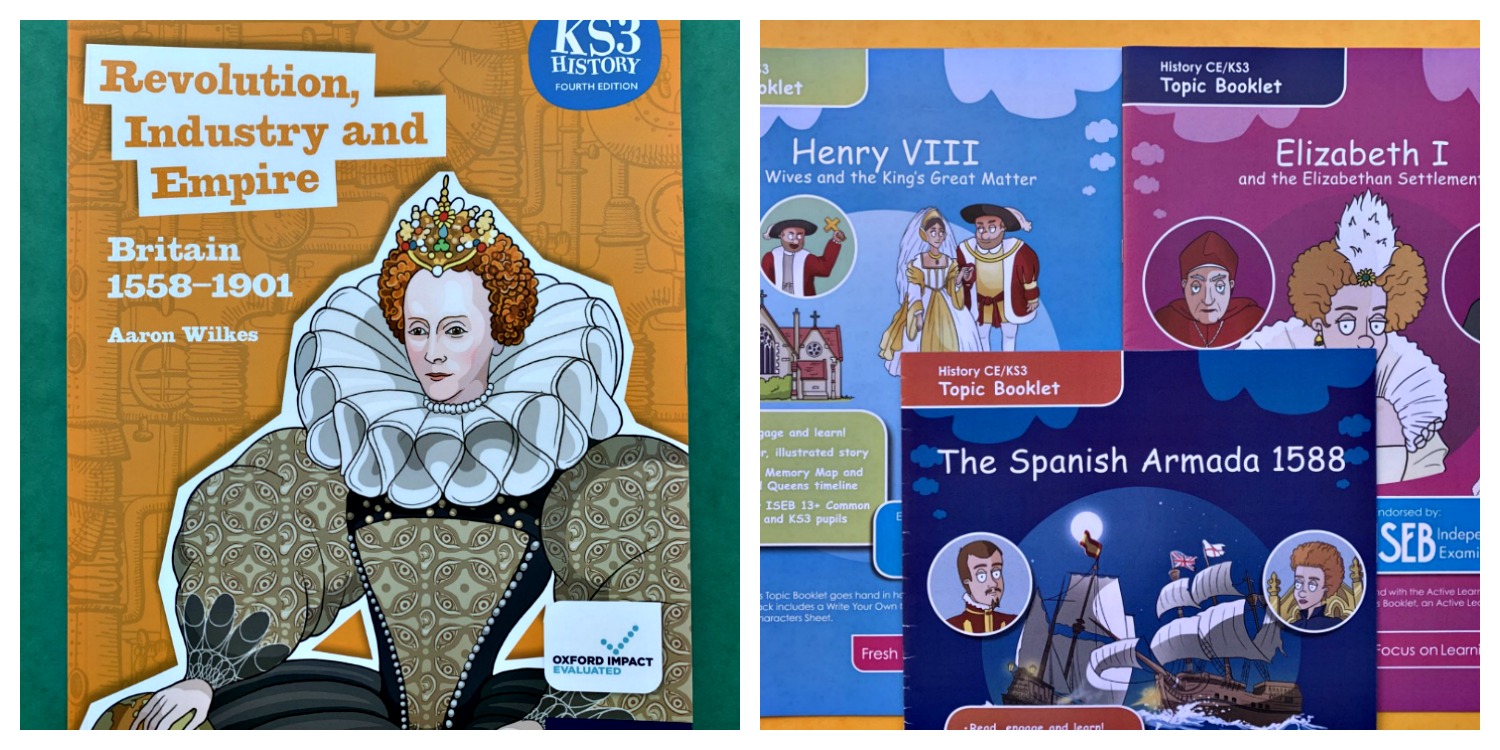
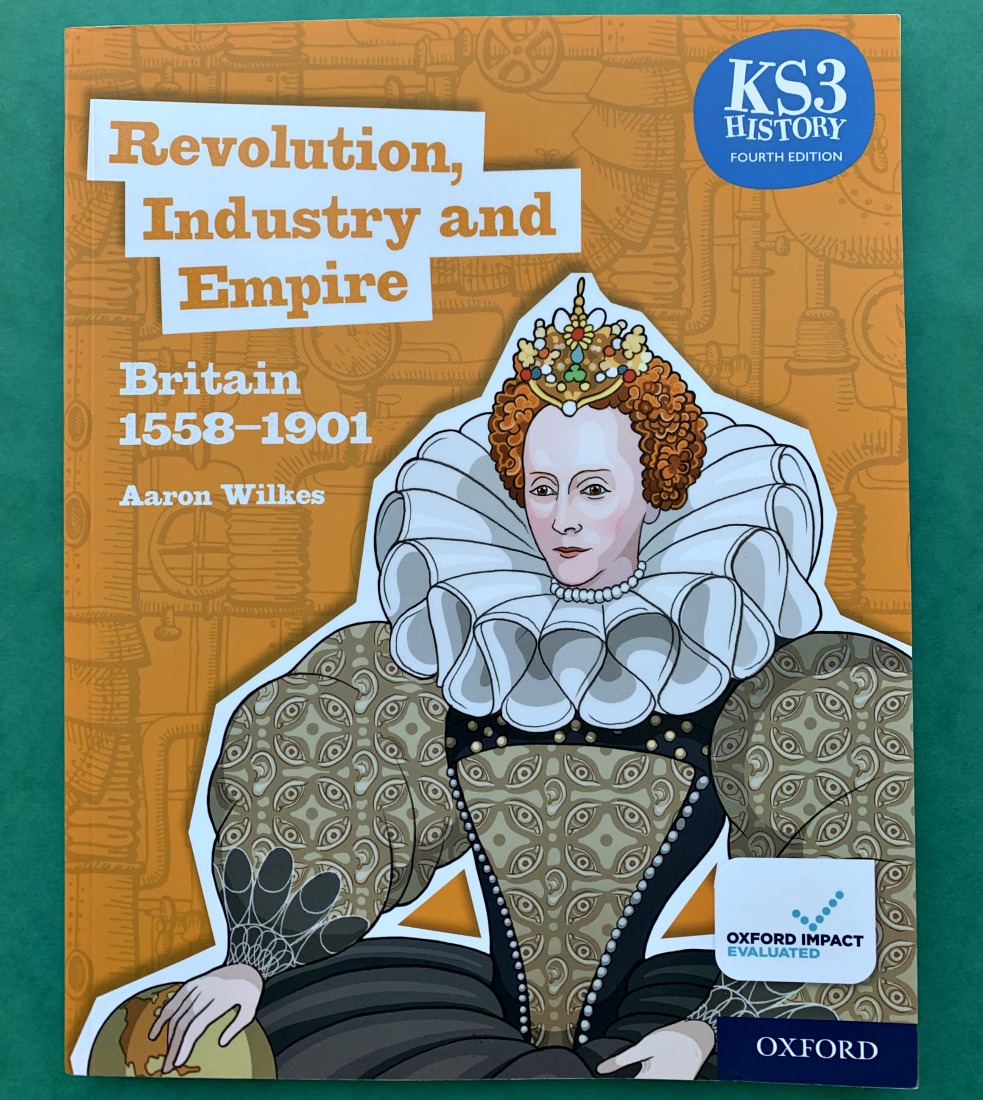
Our main book for her Year 8 History is going to this one – Revolution, Industry and Empire. It is part of the Oxford University Press KS3 History series (they have three different books for KS3 so we are working through 1 a year).

Revolution, Industry and Empire. KS3 History book by Aaron Wilkes

We actually started my daughter’s year 7 using the Collins range of History books but we found that they did not have enough detail and I was constantly feeling like I needed to supplement them and spent ages searching online for extra pages and activities. So we switched to the Oxford book and both my daughter I were thrilled with it. (Just to note –  The Collins and Oxford books do split the time periods slightly differently between the KS3 years so if you switch between the ranges you may need to do a small catch-up.  We found that switching books meant we did not cover as big a time period as we had initially planned but we definitely covered it in more detail and with a better understanding.)

She thoroughly enjoyed working through the Oxford book and I loved all the extended questions that they have at the end of each chapter and really appreciated the way they help the kids work through the extended questions step by step. So for us it was a no brainer that we would stick with this range for Year 8 History. And she has actually already read it cover to cover and informed me that it is just as good as the first one.

The one thing I think we are going to do differently this year is I am going to buy myself the Teacher’s Guide – I did not use one for Year 7 and really I could manage without it for Year 8 but I am very interested to give it a go and see if it adds more to the subject.

So using this book as our base we are going to be starting at the Tudor Times and then work our way through to the Victorian times.

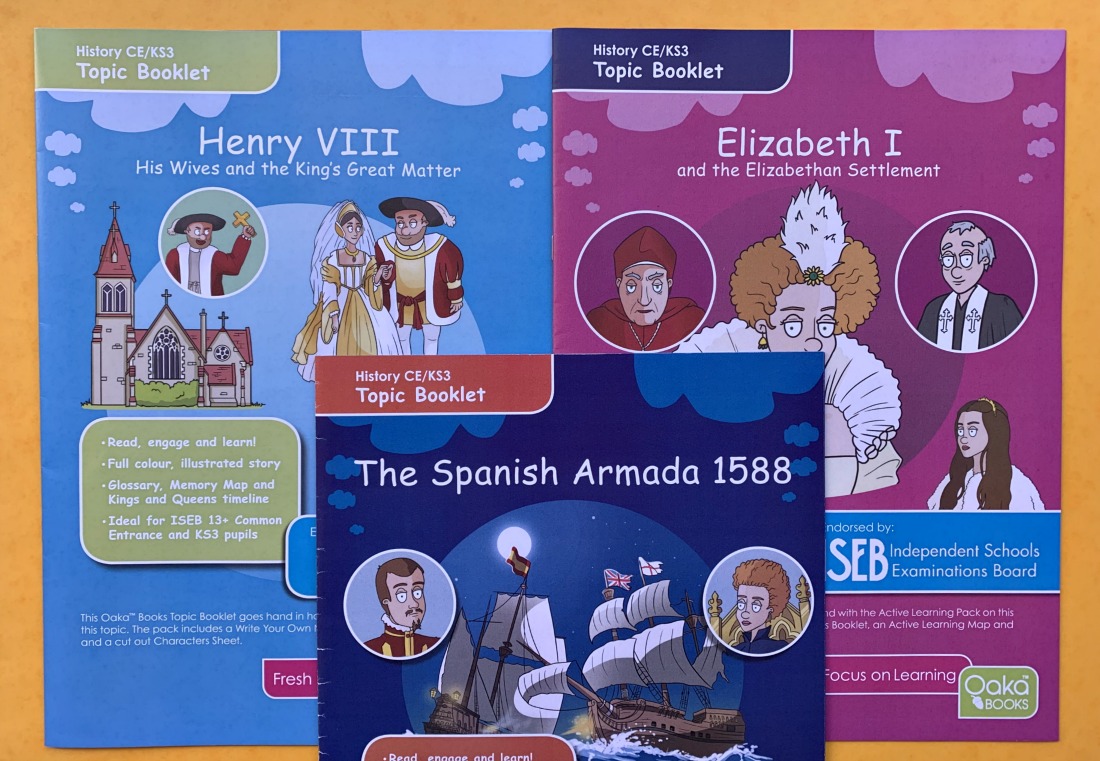
And like we did last year we are going to be adding in some of the Oaka Book Topic Packs. We like having a bit of variety in the different learning resources that we use and we actually quite like using these two together (the Oxford Book combined with the Oaka Topic Packs).

My daughter especially loves the learning maps with comes with these topic packs. (I must admit I also think they are brilliant – one of the best methods I have come across to revise a history topic).

Tudor themed Topic packs from Oaka Books

I have these three topic packs already  – Henry VIII, Elizabeth 1 and The Spanish Armada but Oaka also have The Dissolution of the Monasteries, Thomas Wolsey and the Battle of Waterloo which would link in nicely.

My son who would be in year 5 if he attended school actually works through his sister’s history topics with us. I know it may sound a bit strange to some that I do the same history with my year 8 and year 5 kids but it actually works really well. My kids enjoy learning about the same topics, I find it much easier to focus on 1 history period at a time with both kids and actually I think History is something which you can extend and challenge an older kid with harder questions while still involving a younger sibling with the topic. So one of the ways we do this effectively is by using the topic packs.  I have found them excellent when you are covering a topic with different aged kids. 

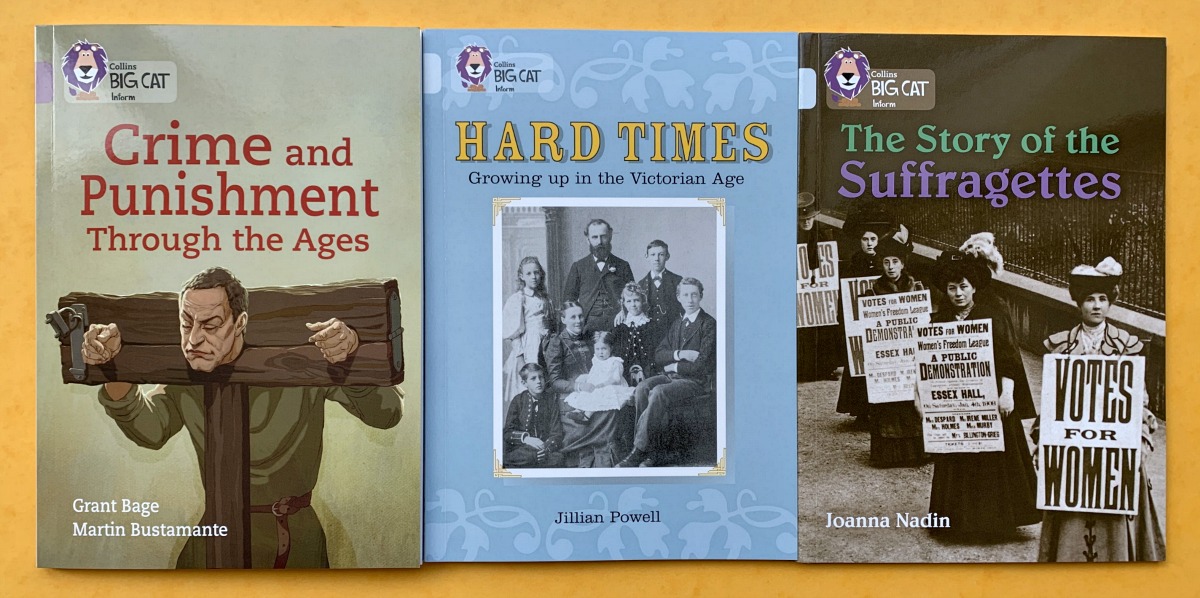
I also actively look for KS2 books for him to read. I really like the BIG CAT reading series for this. They are brilliant little summaries of historical events/ people perfect for my younger kid and also an excellent introductory read for my older. (In the picture beow are Crime and Punishment Through the Ages, Hard Times and The Story of the Suggragettes).

Historical BIG CAT readers perfect for home learning

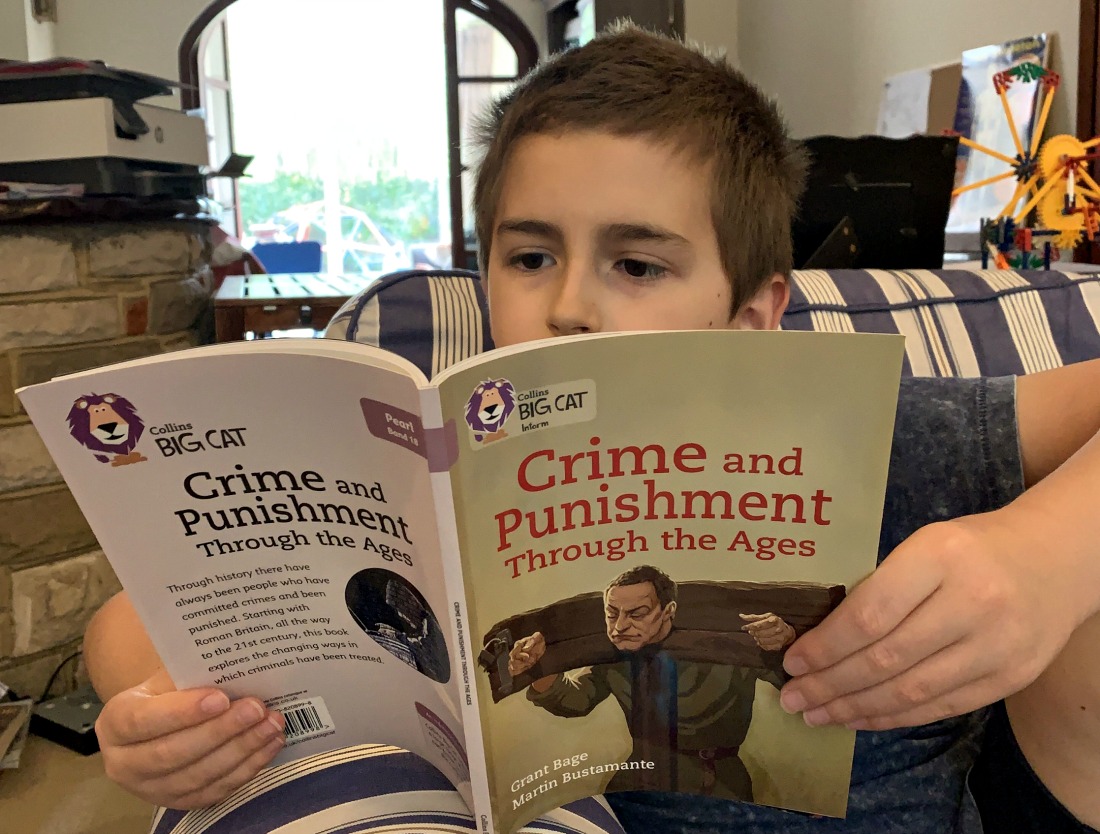
My son has actually already read the Crime and Punishment one and has been telling me lots of interesting facts from it.

reading Crime and Punishment through the ages

I really like finding good Historical fiction books for my daughter to read.  We have made a point of doing this for about 3 years now and it really brings the time period to life and makes it a lot more interesting. (I also personally think it reinforces a lot about everyday life, things like the houses people lived in, the food, jobs, transport – all of that is normally covered in Good historical fiction).  I am still searching for extra Historical fiction books but two that we already have (both of which I have read and think they are excellent) are Lady Mary  – perfect for Tudor times and The Austen Girls.

That sums up our starting point for History.  But as we progress I will add in some extra items and will share those as we use them.

Admin Bit – The books used are a mix of books that I have bought and some Free press copies which have been given to us.

I do include Affiliate links. If you follow an affiliate link and go on to purchase that product, I will be paid a very small commission, however your cost will remain the same. I only include affiliate links for products that we use and love.

For those of you looking for the books mentioned on Amazon here are the links

KS3 History 4th Edition: Revolution, Industry and Empire: Britain 1558-1901 Student Book

Henry VIII: His Wives & the King’s Great Matter: Topic Pack (Tudor Series)

Elizabeth I: and the Elizabethan Settlement: Topic Pack (Tudor Series)

The Spanish Armada 1588: Topic Pack (Tudor Series)

Crime & Punishment through the Ages: Band 18/Pearl (Collins Big Cat)

Hard Times: Growing Up in the Victorian Age: Find out what Victorian life was like for children in this enthralling non-fiction book. (Collins Big Cat): Band 17/Diamond

The Story of the Suffragettes: Band 17/Diamond (Collins Big Cat)

Lady Mary

The Austen Girls

Year 8 History resources

Posted in Homeschooling | Tagged , , , , , , , | 1 Comment

The Austen Girls

I have been looking for good fictional books for my daughter to read as part of her year 8 academic year. Books that are entertaining and also link in with our topics. This coming year we are planning on covering the historical periods from the Tudor Times through to the Victorian Times and as part of her English Literature she has asked to work through Pride and Prejudice so I was thrilled when I spotted this book – The Austen Girls .

The Austen Girls written by Lucy Worsley

And even more thrilled that it was written by Lucy Worsley. We are both huge fans of hers (we love watching the different historical documentaries that she does and we enjoyed Lady Mary). I really like Lucy’s writing style because her books are never scary (no nightmares) and there are no explicit scenes between couples. She has a knack for including lots of historical everyday facts in her stories, facts that you don’t always realize are there because they are woven into the story. After reading The Austen Girls I felt like I gained a better understanding of what it would have been like to live in that time period. It’s the everyday type stuff like how a house was run, how shops worked, was it normal to see a women sitting in a pub. The way she talks about the obsession with marrying off the girls, making sure the matches are good. The comparison between the richer Austen household and the poorer household and how it affects the girls’ marriage prospects. I also really enjoyed the way she brought the whole criminal justice system into her story (well really lack of an effective criminal justice system). But she highlighted the way the courts worked, the lack of a proper police force, how convicted people where often sent off to the colonies and even how the jails worked so differently. There is a lot of detail about general living conditions and social norms that she has managed to include in this story. And for that reason I think it would be an excellent book to read if the kids are studying Jane Austen or if the kids are learning about the Georgian time period.

The story itself is lovely. It focuses on Jane Austen’s two nieces – Fanny and Anna both of whom have a close relationship with Jane (Jane lives in her brother’s house).

Fanny's bedroom chapter 1 of the Austen Girls by Lucy Worsley

The story details the two cousins’ introduction into society and their attempts to find a husband. There are some interesting twists and the ending was not what I expected but I actually like the way she chose to end the story. 

The Austen Girls written by Lucy Worsley. The ending

I think The Austen Girls is another lovely book from Lucy Worsley and I am sure my daughter is going to love reading it. (I would say it would be suitable for any tweenagers and older). From a home educators point of view I think it is a brilliant book which can be used when you are studying Georgian History and or Jane Austen’s work in in English literature.

Admin – I do include Affiliate links. If you follow an affiliate link and go on to purchase that product, I will be paid a very small commission, however your cost will remain the same. I only include affiliate links for products that we use and love.

The Austen Girls written by Lucy Worsley. Historical fiction which deals with the Jane Austen books period

Posted in Homeschooling | Tagged , , , , , , | 4 Comments

Biology Pairs Game.

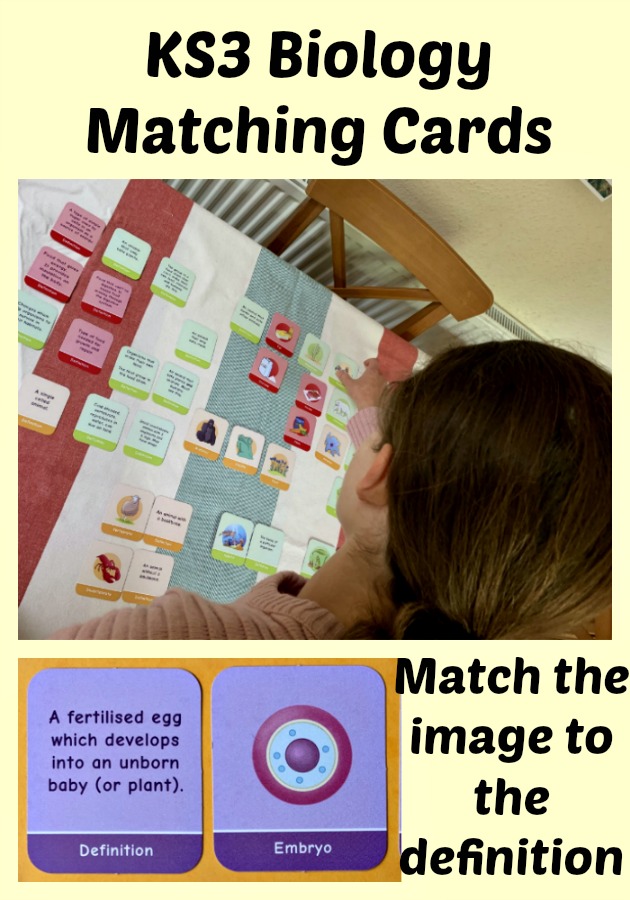
I mentioned last week that I have started collecting resources that we plan on using with our daughter in her year 8 academic year. And although I am still gathering together all my science items there is one resource which arrived last week and which both my kids have actually already been using and I REALLY LIKE. It is a Biology Matching pairs game that currently only sells for £4.99 and really is a great science activity. (My husband who has been doing a lot of physics with my daughter has already asked why I don’t have the physics version of this game – he is right I should also get that one.)

Okay First things first. If you look on the site it is marketed as KS3 resource. And it does cover KS3 biology but I have already been using the cards with my youngest (he is 9 years old). Granted he loves animal biology and has very good knowledge in that area so when he has a go at using the cards we separate out the cards that deal with this area.

Younger kid using the biology pair cards

Why would we do this? We like to work on topics together even though my kids would be 3 years apart in a school system for things like Science and History when I am working on topics with his older sister my youngest always sits with us and joins in. He likes it that way, he likes to be included and it works well for us. So when he sees his sister using resources like these cards he naturally wants to try them himself. And the beauty of these cards is you can actually do that, you can split the pack up and share them between 2 kids and you can separate out the cards that you think a younger sibling can work on while his older sibling tries different cards. I think this set works really well if you are educating 2 kids regardless of the fact that they might be different ages.

different aged kids using the biology matching pairs

The cards are split into 5 different sections (each section is colour coded) and altogether you get 75 different images which you need to match to 75 definitions. Which I think is actually quite a lot (I don’t think I could print out all these cards for £4.99).

This slideshow requires JavaScript.

The set also comes with an answer booklet (which is very handy).

Pairs Game Biology set answer booklet.  From Oaka Books

We have only had the set for a few days but so far we have used in it 2 different ways. Firstly as a straight forward revision activity – the kids matched the cards for definitions that I knew we had already learnt about (I sifted these out of the set).

And secondly as a new learning activity. My daughter is very tactile she likes to hold things, pick up items and feel something in her hands when she is learning so I selected cards that were linked to some reading that she had just done on the computer. It was a new section so I suggested she just try. She matched the cards that she could and then she took the answer booklet and searched for the cards that she did not know in the booklet and matched those. By just doing this a few times I know she will pick up the new definitions very quickly because not only is she using her hands but there are visual clues (the images) which are linked to the definitions and she always learn better when she can link words to a picture.

This slideshow requires JavaScript.

Like I said above – it is early days and the pairs game is a very new resource for us but I have really been so impressed with how many cards they included and the wide range of definitions that I wanted to write something now. We will definitely be using this set during the next academic year and I am also going to invest in the Physics set (and I am sure at some stage in the chemistry set as well – in total honesty if they had a Geography set I would also get that).

Admin – the price that I mention in the post is correct at the time of writing this.

Biology Pairs Matching game. Match the image to the description. KS3 Science. Fun revision

Posted in Homeschooling | Tagged , , , , , , , | 6 Comments