Buy It Right. Money game for kids

Last year my parents bought the children a shopping game called Buy It Right. It is a money game which can be played at three different levels (beginner level – only use pounds, intermediate level is pence only and the advance level is using pounds and pence combined). The three different variations of the game is the main reason why I was so interested in this game as it is something which both kids can play and learn from.
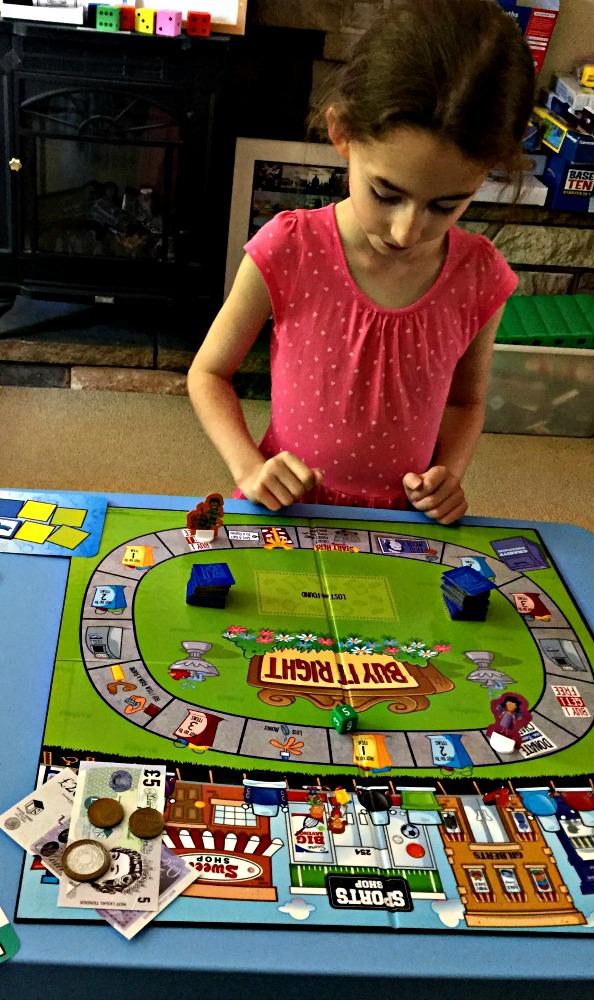
Buy It Right game from Learning Resources. A fantastic money game which helps kids with money maths, place value, addition and subtraction

The game comes with the following

  • game board
  • play money (Notes and coins)
  • 4 shopping Carts (board with 8 empty boxes that need to get filled)
  • 4 shoppers
  • 40 things to buy (item cards that are used to fill up the empty boxes on the shopping carts)
  • 3 dice

The box that the game comes in is actually designed so that it can be used as the bank.
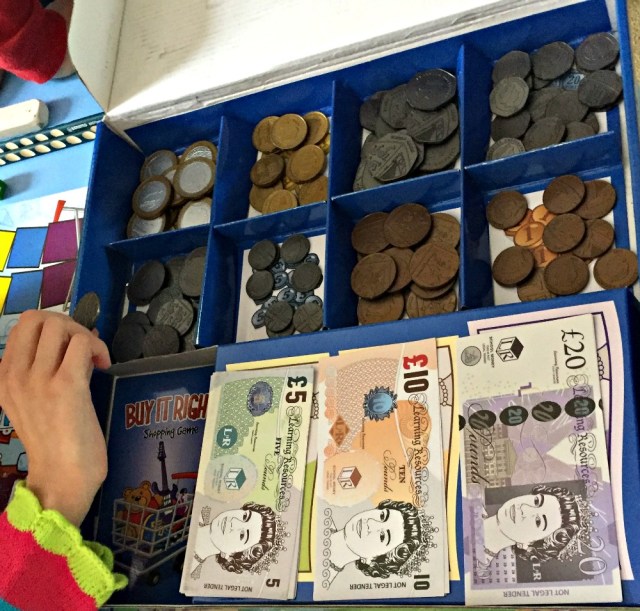
Buy It Right from Learning Resources. The box acts as a cash tray for when you play the game

Each player starts the game with an empty shopping trolley (which needs to be filled in order to win the game) and some money. The player rolls the dice to determine how many blocks he needs to move.  The blocks on the board have different descriptions like – buy 1 get 1 free, donate to charity, buy 2 items, lose money, ATM (the bank gives you money) etc.  Based on the block on which the player lands they need to pick up an item card or cards (these item cards are what you use to fill up your shopping cart).  The player then needs to roll the dice again to determine how much the item(s) are going to cost.
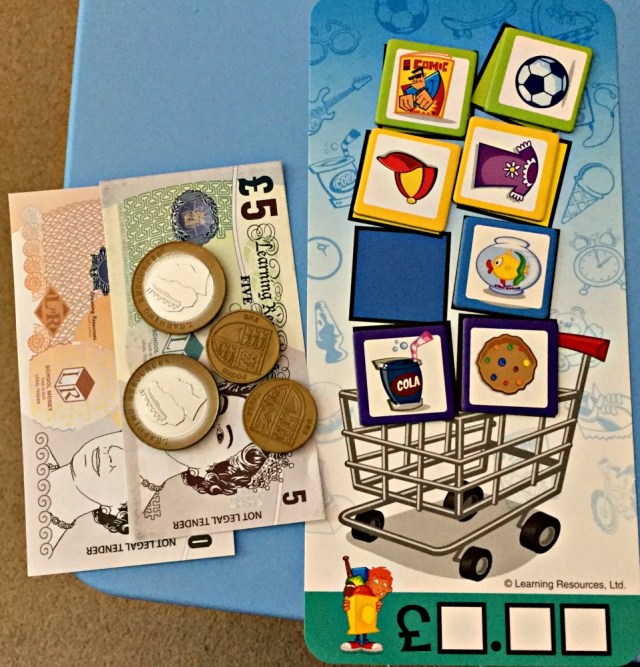
Buy It Right Game from Learning Resources. The children need to fill the shopping cart by buying item cards with the money they have

In the easiest version of the game everything is just pounds so you would only use 1 dice but in the hardest version you roll 3 dice.  Now it is up to the player to decide how they are going to arrange the 3 dice eg if you rolled a 6, 2 and 3 you could arrange it to be £6.23 or £2.36 etc.  I loved this aspect of the game as the kids (especially my youngest) ended up doing place value – where is the best position for the smallest number to go and the best position for the biggest number to go so that you end up paying the less for your items.
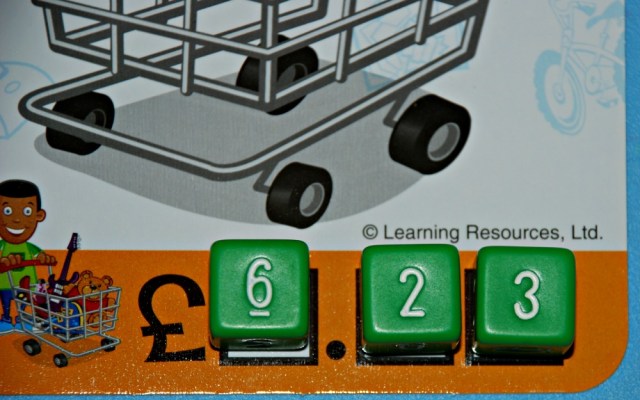
Buy It Right game from Learning resources. The bottom of the shopping cart has three spaces for the dice to go which represent the amount an item costs

The bottom of each shopping cart has three spaces for the players to set out the dice. In the beginning the kids always used this as it helped them organise their thoughts and get the dice in the correct order for the money but I have noticed with practice my oldest is not always placing her dice in the spaces.

So why do I LOVE this game.  The kids are practicing recognising different coins, counting money, working out change for themselves, working out how different combinations of numbers create different amounts, it is Maths practice and “handling money” practice.

The fact that the game has the different variations means both kids can play it.

We have tried other “money games” before and they have never popular with my two but this one ticks all the Maths boxes with me and both my kids enjoy playing the game.

You can buy this game from Amazon – Learning Resources Buy It Right Shopping Game
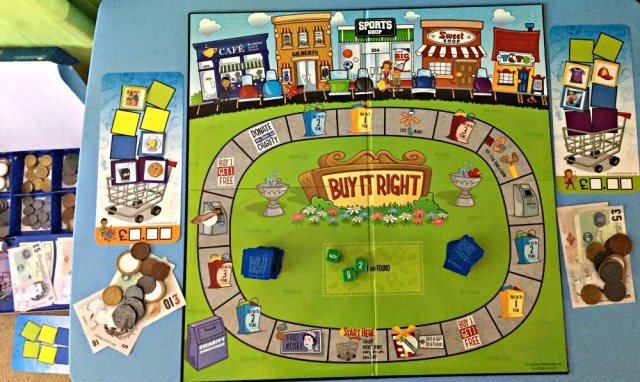
Learning Resources Buy It Right shopping game. An excellent money game for children. Lots of maths practice

I have included an Affiliate link. If you follow an affiliate link and go on to purchase that product, I will be paid a very small commission, however your cost will remain the same. I only include affiliate links for products that we own, use and love.
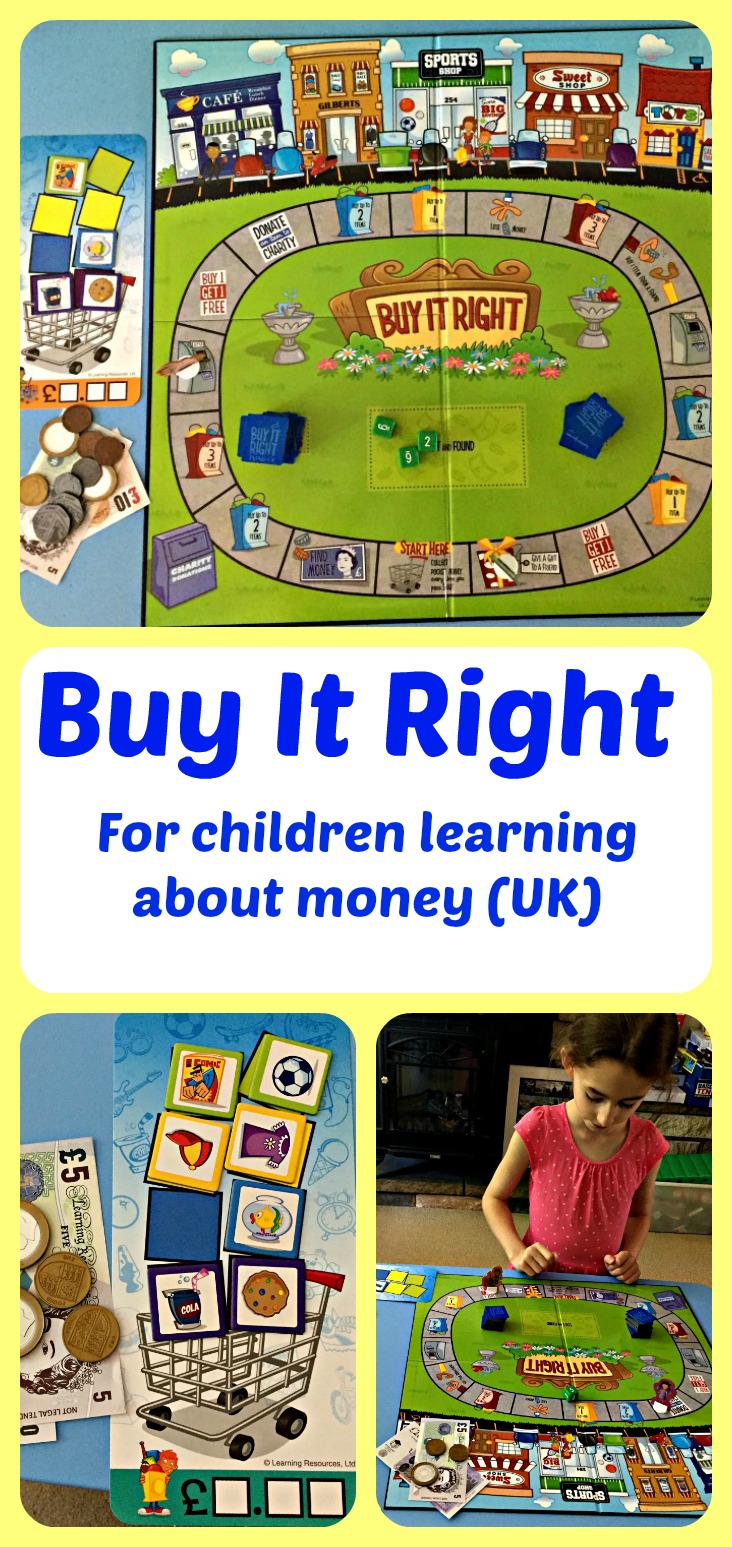
Learning Resources Buy It Right.  Shopping game for children learning about money.  Excellent at home learning tool

Save

Save

Save

Save

Posted in Home education resources | Tagged , , , , , | 1 Comment

Distracting kids with eBooks

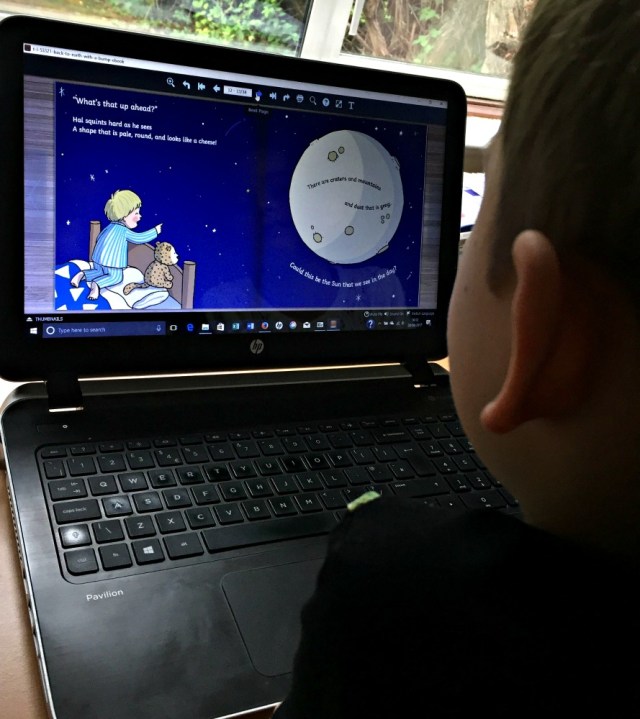
Yesterday our plans came to an abrupt halt.  We were suppose to be meeting friends but by the time we got there my son was doubled over with stomach cramps and not a happy little guy so we ended up coming straight back home.  The afternoon was then largely spent with me trying to distract a very uncomfortable and sore little guy (we think he ate something that did not agree with him as he is back to his cheerful self today).  After reading his latest favourite book to him twice I remembered the eBooks that you can download from the Twinkl website.

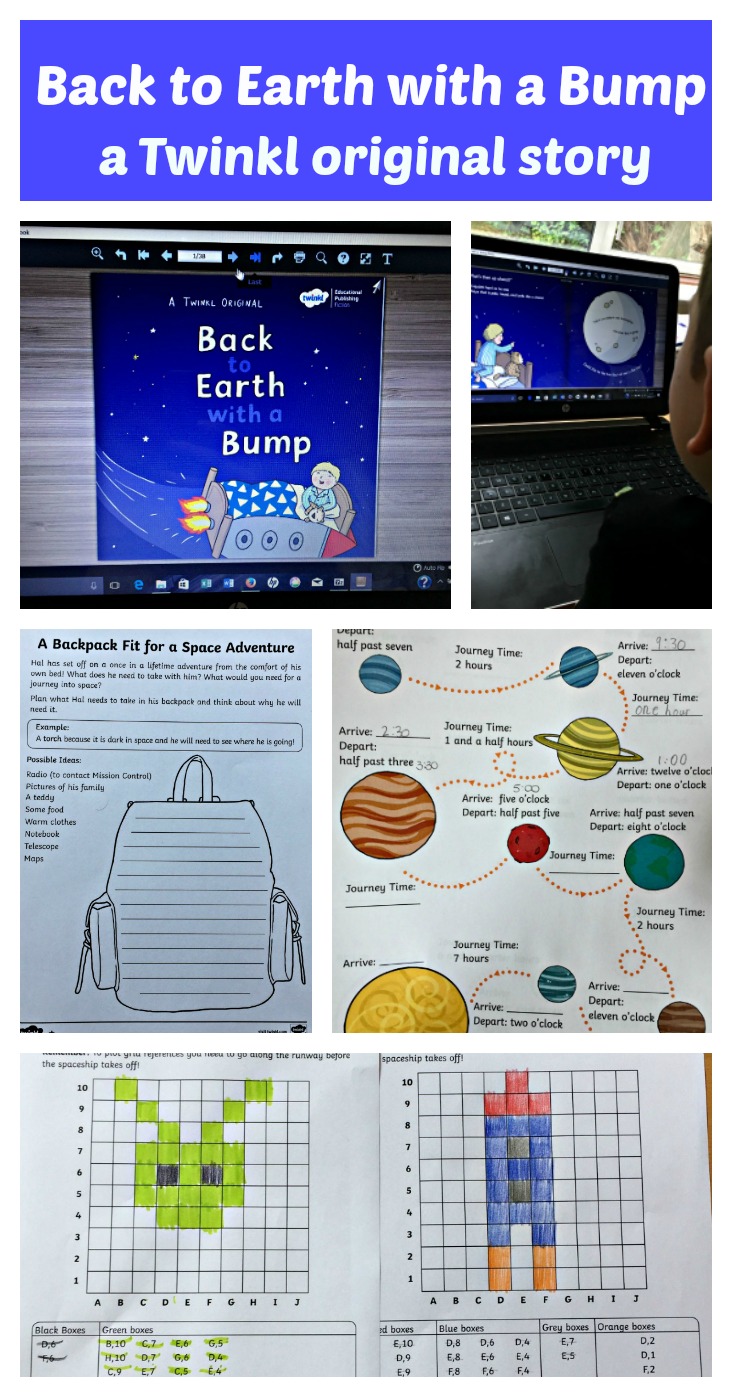
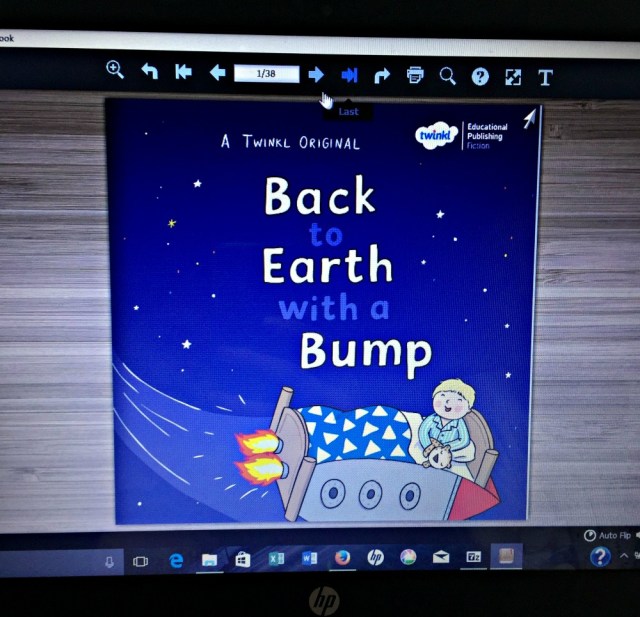
Twinkl original story. Back to Earth with a Bump

We started with two Twinkl original stories – Back to Earth with a Bump and Ronald the Rhino.  Both stories are very sweet and the kids enjoyed reading the books on “mums computer”.

Reading the Twinkl orginal story Back to Earth with a Bump. A lovely eBook which you can download as part of a Twinkl subscription

We then moved onto some of the traditional story eBooks – they have a wide range on their website.

It ended up being a great way of keeping my son busy.

And one of the bonuses about the Twinkl eBooks, they have activities to go along with each story.  So this morning the kids choose one of the eBooks as a topic and we printed out some of the activities.  They choose Back to Earth with a Bump.

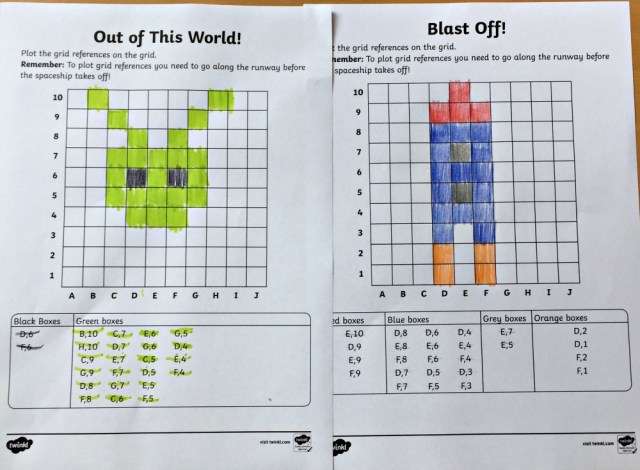
They did some grid pictures.

Back to Earth with a Bump grid picture activity to go with the Twinkl orginal eBook

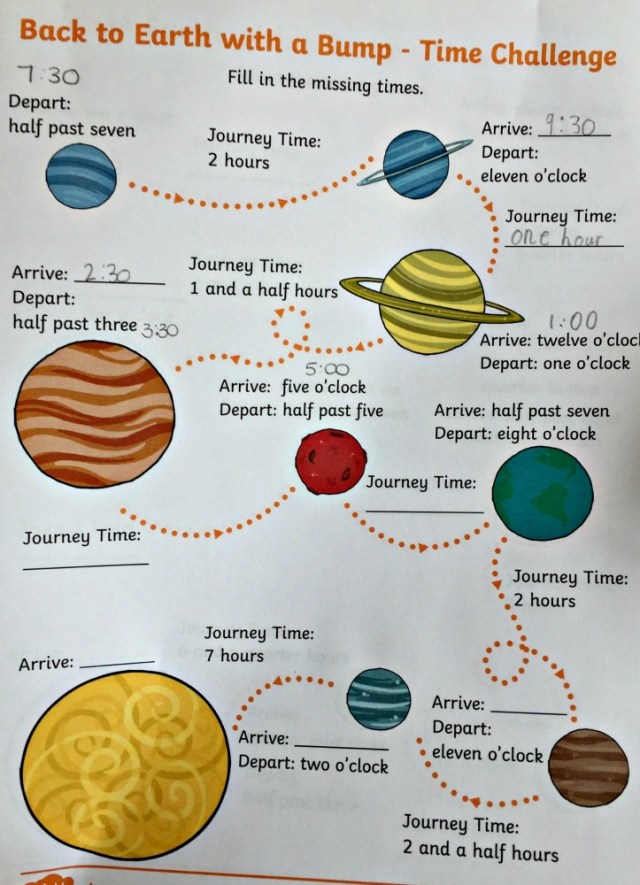
Worked on some time challenges – I really liked this as it was a great way of getting the kids to work on elapsed time.  If you depart one planet at a 7:00 and get to the next at 9:30 how long was your journey?

Back to Earth with a Bump time challenge worksheet from Twinkl Resources. great for practicing the concept of elapsed time

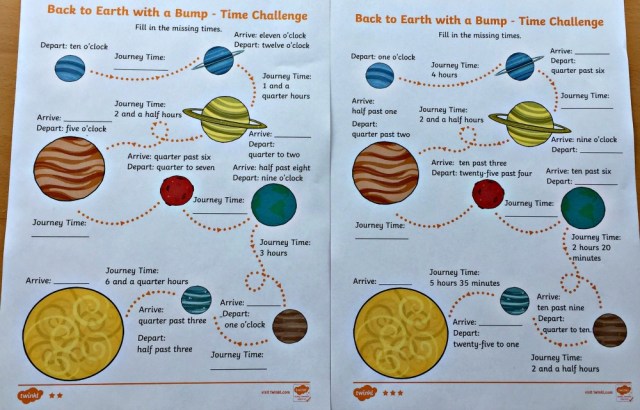
And there are different levels for this worksheet.  It starts with just hours and half hours and then goes onto 15 minuet intervals and later a total mix including 35 minute intervals and 25 minute intervals. Having different versions of the same worksheet suits our home learning style as I could sit with my youngest and help him complete the easiest version while his older sister did the more complicated ones.

Back to Earth with a Bump time challenge worksheets from Twinkl Resources

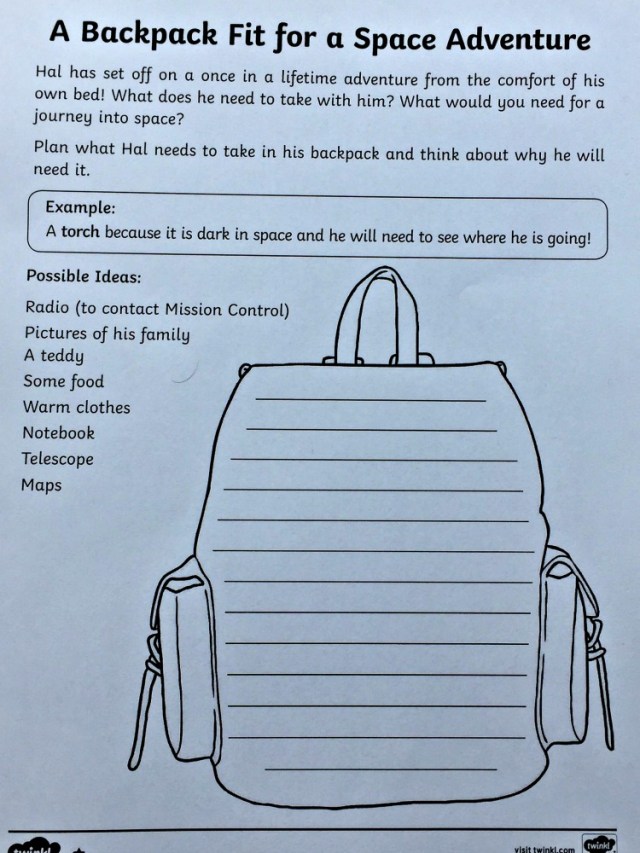
The kids also found some fun writing activities linked to the eBook.  My son’s favourite was listing what he would include in his backpack if he went on a space adventure (his list was not that most practical but he enjoyed the activity).

Back to Earth with a Bump writing activity. What would you pack in your backpack for a space adventure

I must be honest in that as much as we have used the Twinkl website in the past for our learning activities we have only ever used one of their eBooks before.  But both kids really seemed to enjoy reading the books and doing the activities so I think we might give another eBook a try next week.

Back to Earth with a Bump. A Twinkl original story. eBook and lots of activities to download from the Twinkl Resources website

Save

Save

Save

Save

Posted in Homeschooling | Tagged , , , , , | 1 Comment

Sensory Bounce Back

My husband and I have a term in our house –  bounce back.  Sounds strange I am sure but it is the time the kids take to “bounce back” to their normal selves after a sensory overwhelming activity / day(s).  When my daughter was very little the bounce back could sometimes take her three days but as she has grown older and with the help of some wonderful Occupational Therapists the bounce back time has reduced drastically.  Now as a general rule we try to allow one day a week as her bounce back day – for her that means a day when we are just at home, no outings, no visitors just the four of us.

But the bounce back period differs for different kids.  And some activities which my one child might find very intense and overwhelming the other will not, so it can be a bit of a juggling act.  But we have learnt that when either child asks for a bounce back day going out just does not end well.  So we respect it.

However having said that we have also learnt that every now and again we need to stretch them.  When we do stretch them I try to make sure my husband is around just in case I have misjudged it and not read the signals well.

The past eight days we stretched our sensory kids and they both blew us away with how well they coped (having said that we are at home today totally locked away).  But this is what we did

Day 1 – Legoland

Day 2 – driving to 3 different castles

Day 3 –  shopping and dance class and friends

Day 4 – Wisley gardens,

Day 5 – Beach day (very windy so massive sensory overload)

Day 6 – home, catching up on some learning activities, gardening

Day 7 – shopping at a busy town center

Day 8 – Trip into London using the dreaded underground

For my two that is a lot of sensory input over eight days.  And the last day, a trip into London using the underground going to a busy noisy museum with strange lights which my daughter does not like was a big ask after a very busy week.

But here is the thing.  If I had just relied on past experiences I would have vetoed the last day trip.  The Underground in the past has been a big issue, the last 2 trips in have gone well but we did them when everyone was well rested and had not had a busy week. The last time we went to this particular museum she found the one hall every tough we actually ended up leaving without having finished the museum.

But she has been showing us time and time again that she is getting much better at managing the sensory overloads and her little brother is learning a lot from her in how to deal with his sensory life.  So we tried it.  And there were no sensory issues.  The trip in was a nightmare because of signalling issues but the kids were fine.  We arrived later than planned and had to stand and wait a fair bit.  The museum was busy and noisy but she walked around the dreaded hall that has scared her last time. She even listerned to a talk and read the signs in the same hall that freaked her out just six months earlier.  The trip back was long and we ended up taking extra trains and it was hot and muggy.  Only by bedtime did the signs starts appearing.  Both kids were exhausted however they still insisted on reading their animal encyclopedia (yes they are reading an encyclopedia – totally another post on its own).  Our night was not the best, both kids were up during the night from sensory exhaustion.  But for me after where we have been through in the past, managing the last eight days the way they did and then waking up last night is such a small thing.

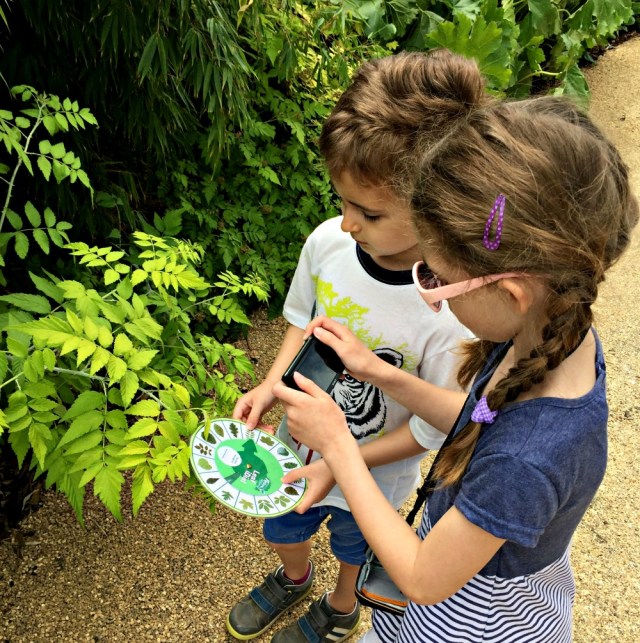
We have learnt a few tricks of our own to help.  Like driving in our car as opposed to using buses gived them time to unwind.  Making sure my daughter has books to read in the car helps her a lot.  Giving them activities while we are out – a map of the castle to use while we walk around, a leaf idial to match leaves too, a camera to use to take photographs.  It helps when they have an activity to focus on.  Lots of snacks.  Giving the kids sunglasses to wear on the underground or in shops.

Walking around Wisley Gardens keeping the kids busy with leaf idials and photography

All those small bits help but the main thing is the kids are getting better at managing their sensory life.  It has been through trial and error but pushing them sometimes and them knowing without a shadow of a doubt that when it gets too much we are there to help,  they are getting more and more confident with how they manage their sensory life.

We pushed the idea of what the kids could cope with on a sensory level, we really pushed it the last eight days and they both managed.  They proved to us and more importantly to themselves that they are getting better at managing sensory activities.

Save

Save

Save

Posted in SPD | Tagged , , , , | Leave a comment

Bodiam Castle and more

On one of our recent walks at a National Trust site I spotted a pamphlet with a castle on the front.  Bodiam Castle.  As we have been reading about castles and as it is a National Trust site which means no entrance fees for us (we have a National Trust membership) we thought it was worth a visit.  It was a bit of a drive for us so we thought it might be worthwhile to see if there was anything else in the area.  And there was.  We found two more castles on route to Bodiam – Knole and Scotney Castle.  And yes we did all three in one day and it was a great family day out.

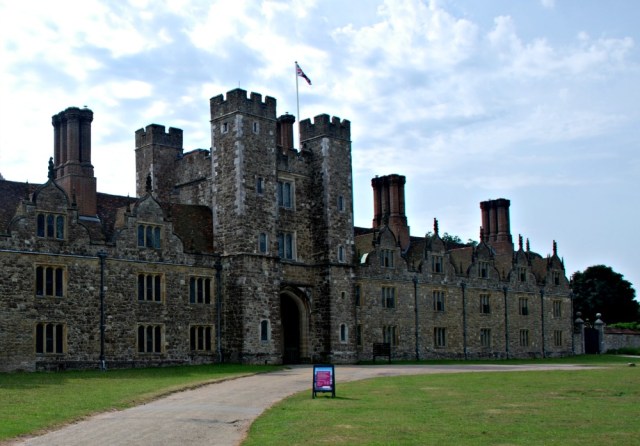
We started off at Knole.

Knole Castle. A National Trust Site in the UK. Kids can go up inside the gatehouse

The highlight of Knole for the kids was that they could go up inside the gatehouse.  They loved climbing the winding stairs to the top and then looking out over the area and spotting the deer wandering around the estate.  Knole has lots of the traditional features that they have been learning about – gatehouse, keep, battlements so it was a great way to start our Castle Day.

After Knole we went onto Bodiam Castle (our main focus of the day).  And I must say it truly is a stunning castle.

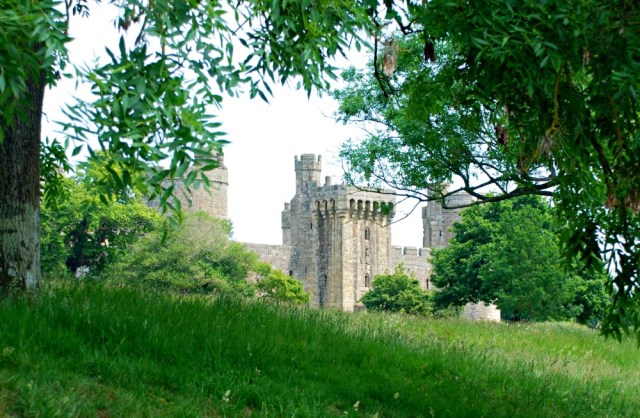
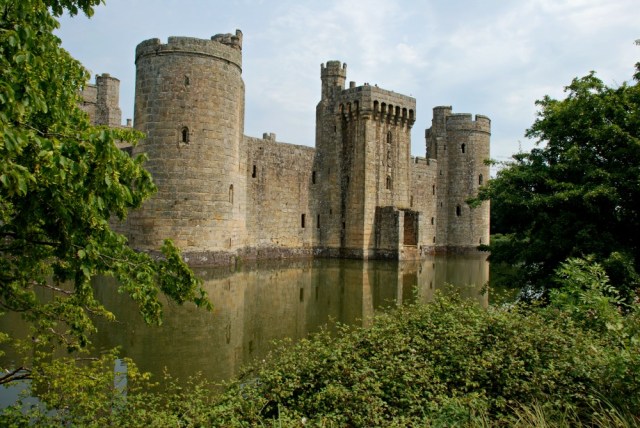
Bodiam Castle. A National Trust Site in the UK. stunning walk up to the castle

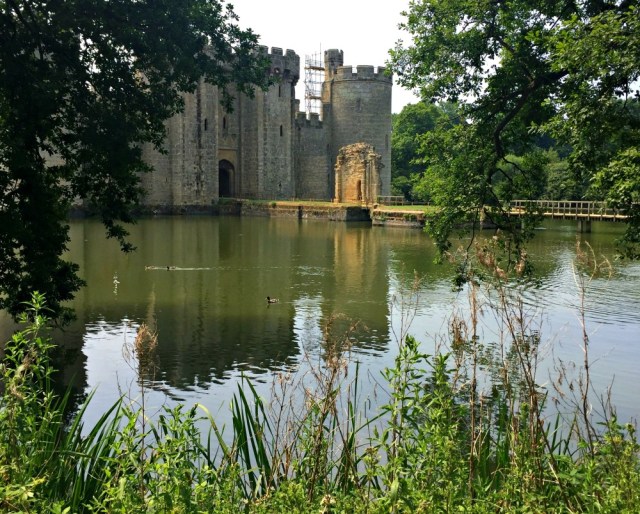
As you approach the castle you get lovely glimpses of it through the trees and much to the kids delight it is surrounded by a moat with ducks swimming and lots of fish.  Although both kids were slightly disappointed that the moat did not stink like it would have in the medieval ages (I was very relived about that).

Bodiam Castle. You walk around the moat and then enter on the wooden bridge through the gatehouse

The information pamphlet on Bodiam includes a map showing the layout and had a timeline which is very useful if you are doing the trip linked into a learning topic.

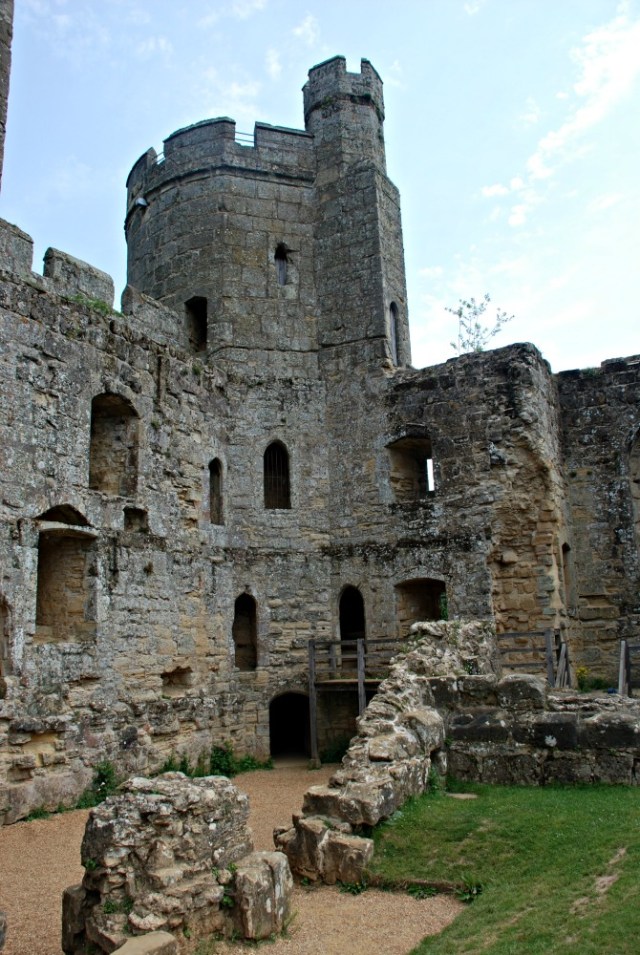
The inside of the castle is amazing.  Both my kids loved wandering around the different areas chatting about which room would have been here and what it would have looked like and what the function of the rooms would have been.  They actually liked the fact that the interior rooms were ruins as they could use their imaginations to think what it would have been like.

Bodiam Castle. Inside the castle walls. A stunning National Trust site

We were there on a very hot day (31 degrees) and both kids noted how cool the thick walls made some of the small rooms that we could walk into.  They also loved seeing the long, narrow “windows” and told me that the knights would have used the windows to shoot their arrows through.

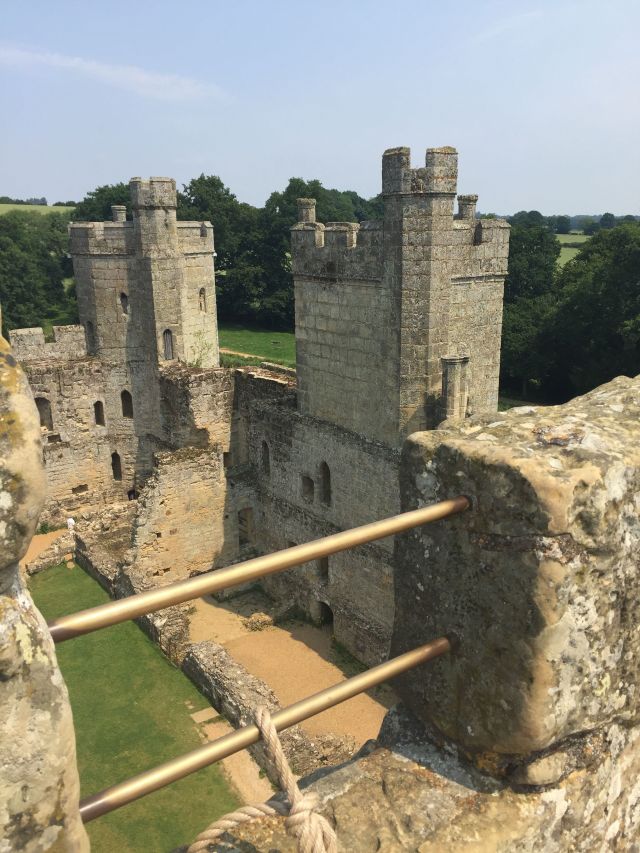
There are some stairs that you can go up and you get a lovely view of the inside of the castle.

Bodiam Castle. The view from a tower over the inside of the castle

We loved Bodiam Castle and I do think it helped make their Medieval theme come to life.

National Trust Site Bodiam castle. A great example of a UK Medievale castle

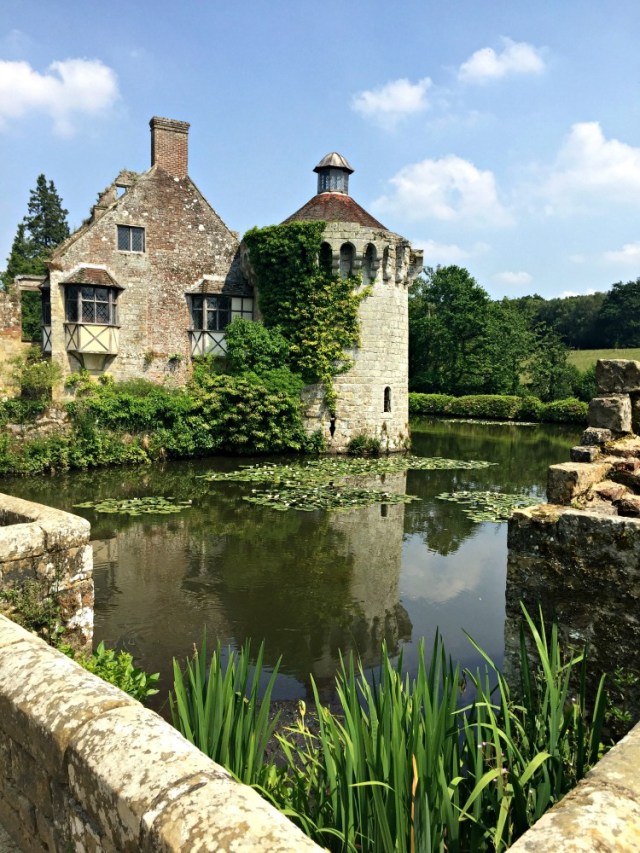
After Bodiam we went onto Scotney Castle.  When you arrive at Scotney you first walk up to an old House (you can walk around inside the house) but we walked on to the Castle.  The castle itself is surrounded by a moat and stunning gardens.  A lovely way to end our day trip.

Scotney Castle. A National Trust Site in the UK. The old castle is in ruins but is surrounded by a moat and stunning gardens

I love the fact that our National Trust membership meant we could take the kids to all three castles without having to pay entrance fees.  Yes it involved driving between the three sites but we all loved our day trip and the kids think visiting all three castles in one day was a brilliant idea as they got to compare the differences and note the similarities of the three castles.

Save

Save

Posted in History | Tagged , , , , , , , | 3 Comments

Learning about Castles

As part of our Middle Ages theme we have been spending some time learning about Castles.  The kids have enjoyed learning how castle designs developed from wooden structures to stone buildings and how so many features of the castle were for protection.  Also some of the more “yucky facts” have been very popular – like that fact the moats must have stunk with all the waste and sewerage that was dumped into it.

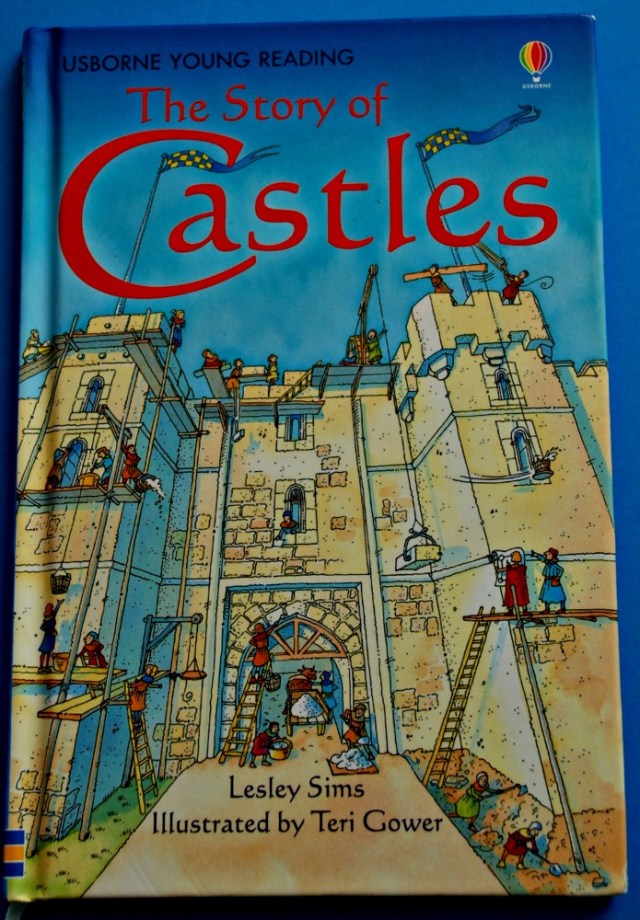
We had an Usborne Castle book in the house – Stories of Castles (Young Reading (Series 2)) (Young Reading Series Two).  It is a great book for setting the scene on how castles came about starting with basic wooden castles which were later replaced by stone castles as the wood burnt very easily.
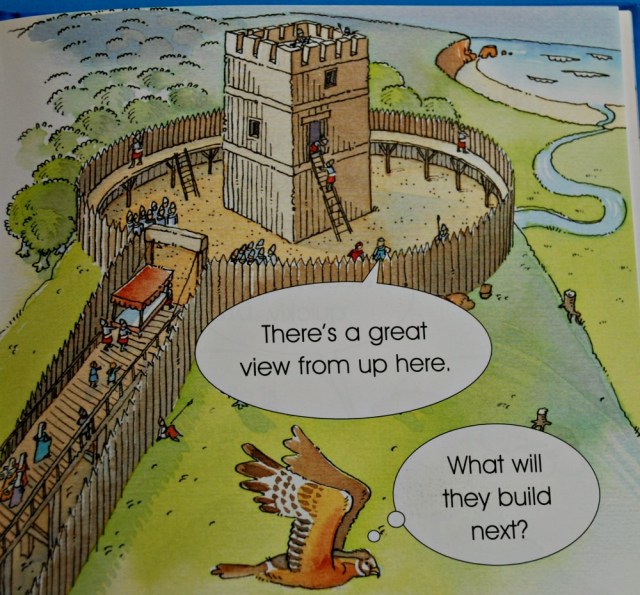
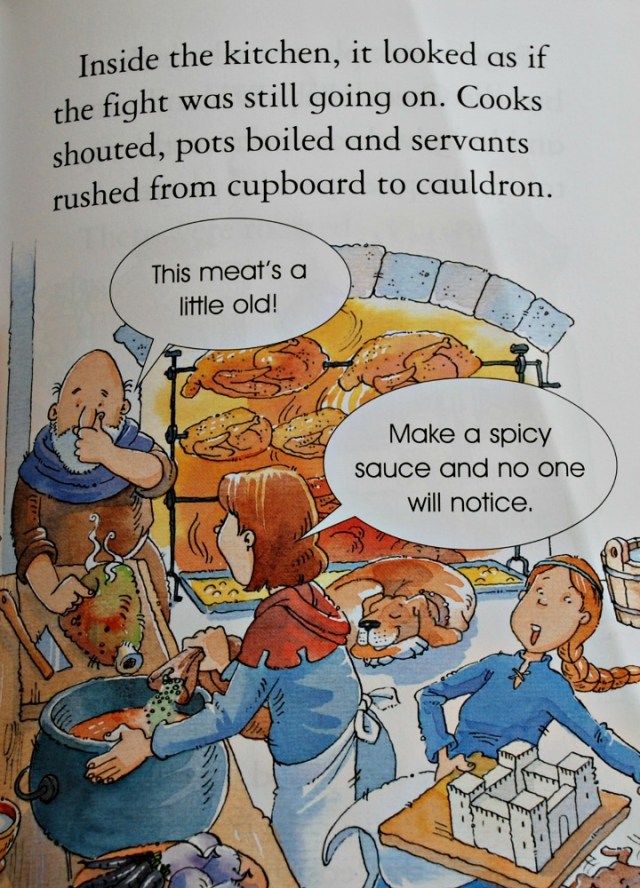
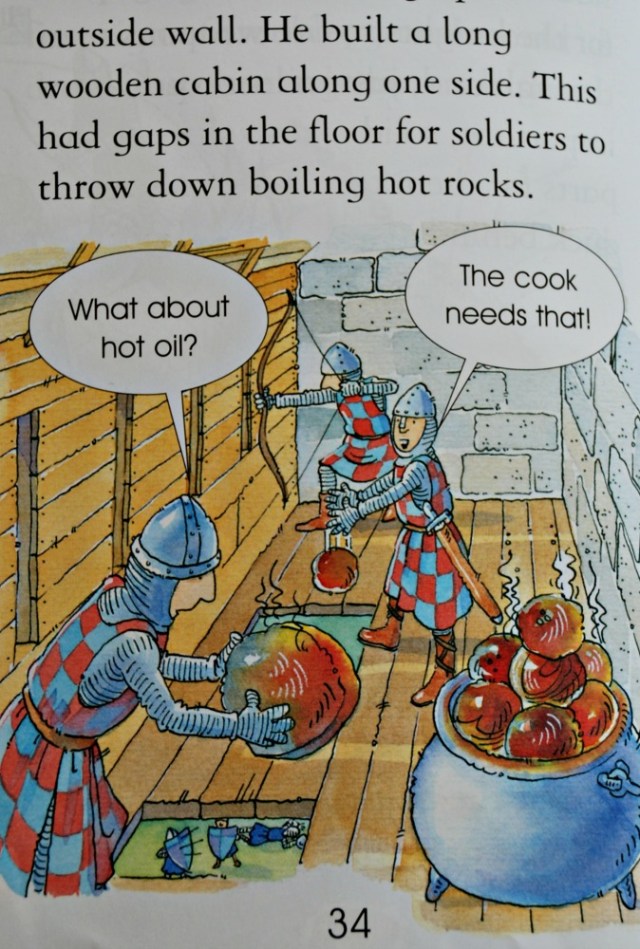
Usborne Young Reading book The Story of Castles starts with wooden castles

The book covers aspects of the life inside a castle, with some humourous pictures.

Usborne Young Reading book. The Story of Castles is written in a very child-friendly manner

I really like the way the book is set out as it takes the kids through the stages of how a castle evolved in a very easy manner.  It explains how lots of the features of a castle where actually there for defensive purposes.

Usborne Young Reading Book. The Story of Castles deals with castles being attacked in a very child- friendly manner

The book deals with the castles being attacked in  very child-friendly manner, the illustrations really help with this as the people depicted all look non-threatening.

If you are looking for a child-friendly book about castles this one is perfect.  It is informative and really well structured taking the kids from why castles initially came about to how castles stopped being so important.

Usborne Young Reading book The Story of Castles. A lovely children's book all about how castles developed during the Middle Ages

After reading the book the kids asked for some Castle pages as part of their home education activities.  We used these ones (all FREE to download from Twinkl)

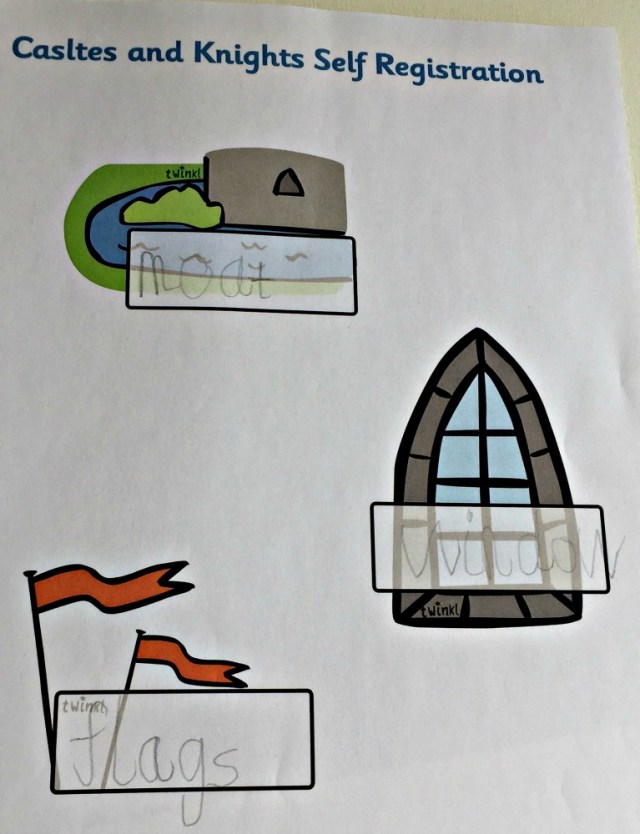
The kids had a go at filling out all the labels on the Castle and Knights Self Registration pages.

Free to download Self Registration Castles and Knights from Twinkl Resources. Great to use with children who might enjoy labelling a toy castle

My Youngest is still very much a beginner speller so I gave him the Castle and Knights Word Mat to use.

Castle and Knights Word Mat free to download from Twinkl Resources. great tool to help younger kids write words that they are uncertain of

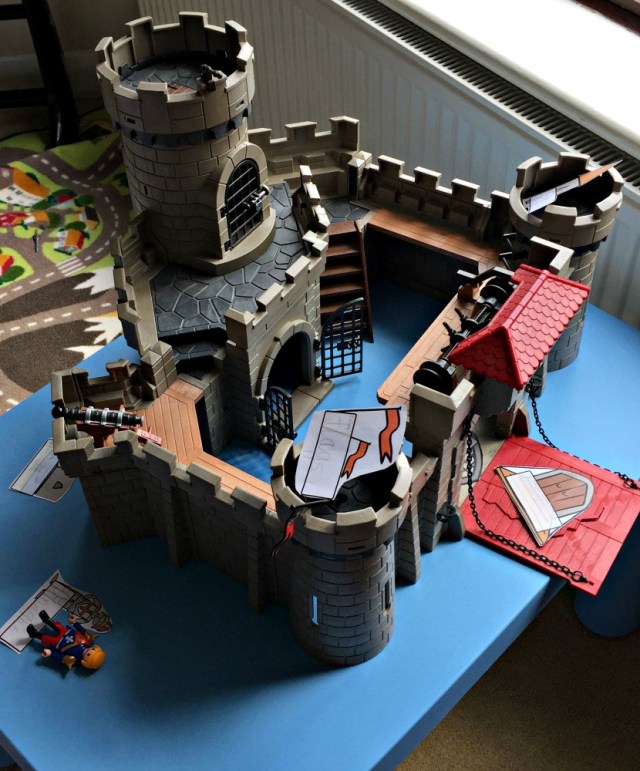
Once we had filled out all the labels we tried to match as many as we could to our play mobile castle.

Labelling our Playmobile castle using some castle and Knight pages from Twinkl Resources

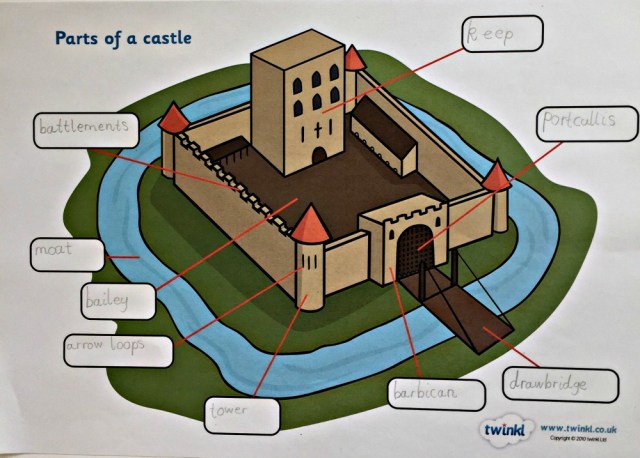
My son enjoyed this and actually pointed out a few things about the play mobile castle that did not meet with his idea of what a “REAL” Medieval Castle would look like.  My daughter also had a go at labelling this Castle diagram.

Free to download. Label the Parts of a Castle from Twinkl Resources. A useful activity to use with children learning about Medievale Castles

And this coming week we are having a home-ed trip to a Medieval castle. The kids are very excited as their dad is coming with us and they are dying to “teach” him about castles on our little field trip.

Usborne Young Reading Book. The Story of Castles. A great book for young kid learning about Castles, Knights and the Middle AgesParts of s Castle. Free to download pages from Twinkl Resources includes a word mat and labelling activity

Save

Save

Save

Save

Posted in History | Tagged , , , , , , | Leave a comment