Polydron – fun 3D shapes

During September the kids and I went to the Wonderlab at the London Science Museum. It was a brilliant outing and while we were there both my kids discovered the polydron framework items that were out as part of a building activity (total honesty I also had a go). They both loved them and spent ages creating shapes.

This slideshow requires JavaScript.

The kids and I were so impressed with the polydron framework set that a few days later I looked them up – Polydron. And enquired if that would like us to write a review – they did and they kindly sent us there Polydron Might Tub which is a combination of original polydron pieces and framework pieces. In total there are 198 pieces in the tub, so quite a bit to build with

The original pieces are the solid pieces and the framework ones are the ones that just look like a frame. The two fit together and can be interchanged and used together without any issue.

This slideshow requires JavaScript.

In fact my daughter preferes building with the two combined.  I prefer the framework pieces – not sure if it is because my hands are bigger than the kids but I sometimes find the originals a bit difficult to connect. I also like the framework pieces because they allow you to see “inside” the shape and when the kids start building more complex combinations it adds an extra depth element.  My son also likes both and also interchanges them without a second thought.

The set comes with some ideas on objects that the kids can build, which is quite useful. 

This slideshow requires JavaScript.

My son copied their car idea and then went on to alter it and add in extra windows and eventually turned it some sort of armoured vehicle. And if you go onto their website there are extra ideas that you can download but be warned a few are quite hard – there is one about creating a star that I still cannot figure out (although my son has informed me he thinks he found my error – hmmmm).

I like the fact that the kids can create the 3D nets (the net is what the 3D shape looks like when it is opened out) and then fit the pieces together to create the actual 3D shapes.

This slideshow requires JavaScript.

And the way the pieces fit together seems to really encourage the kids to create their own more unusual shapes.
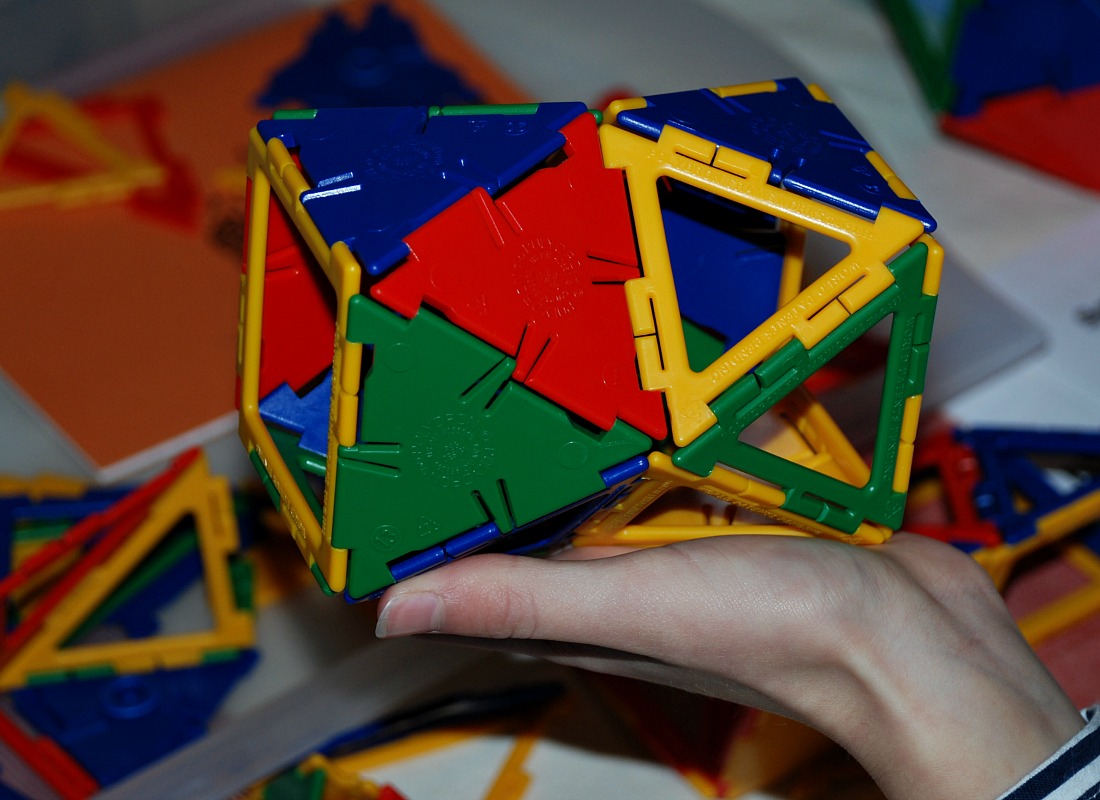
From a home educators view I really love this set. For me it is hands on Maths – the kids are playing with shapes – taking 2D shapes and transforming them into 3D. Seeing which shapes fit together (I really like that it comes with different triangles).

From a mom view it is just fun and it keeps both kids and their parents entertained (Yip all four of us have been building with this set).

This slideshow requires JavaScript.

For those of you using Amazon this is the set we have Polydron Mega Tub

Admin – As I mentioned above after discovering the frameworks at the Science Museum I asked polydron if we could review it and they sent us a Mighty Tub.  All opinions expressed are that of myself, my hubbie and our two testers.

I do include Affiliate links. If you follow an affiliate link and go on to purchase that product, I will be paid a very small commission, however your cost will remain the same. I only include affiliate links for products that we use and love.
Posted in Homeschooling | Tagged , , , , , , | 2 Comments

River Topic Pack from Oaka Books

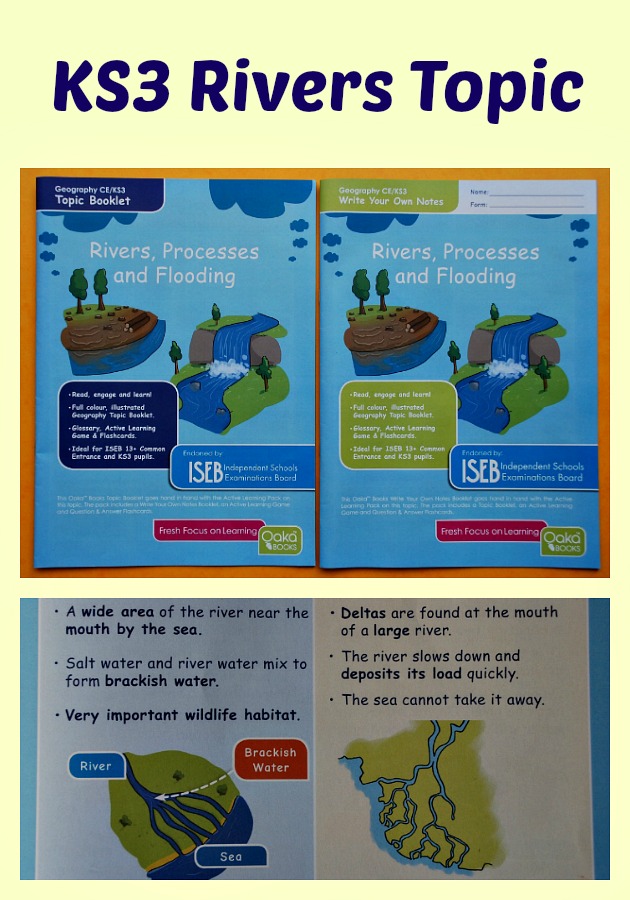
The kids and I have been learning about Rivers so I thought I would share one of the resources that we have been using – The Rivers, Processes and Flooding Topic pack from Oaka Books. We have used their topic packs before so we knew what to expect and we have already developed our way of using them – we first tend to watch a few documentaries and read some books about the topic to get a background and then we start looking at the Topic Pack.

This slideshow requires JavaScript.

We start by reading through the Topic Booklet – we do this section by section and take our time and then my daughter starts filling in her Write Your Own Notes Book.  We do both together – so with this one we focused on the river stages, features and processes first did the Write Your Own Notes and even played the game (I just filtered the question cards) before we moved onto the Flooding Section.  I find this works best for my daughter – focus on a subsection, do that properly and then move on.  If we read the whole booklet in one go and then tried to do the whole Write Your Notes it would not be as effective.

My daughter is a visual learner, so she likes pictures that represent facts, colour (but not overwhelming colour) and sentences written in bullet point.  The layout of the Topic Notes fits in nicely with her preferred learning style.  Most pages are split into four blocks and each block contains just a few points and a picture depicting the point.  The pictures are spot on – simple pictures, with not too much detail and just a few labels.  Easy to remember.  In fact she has told me that sometimes when she is trying to think of a fact she recalls the image and then remembers the fact – the simple image of the plant roots and the rabbit for weathering is one such example.  It helps her remember the difference between weathering and erosion.

This slideshow requires JavaScript.

The Write Your Own Notes also suits her because she can revise what she has learnt without having to write massive, long paragraphs.  And filling in the blocks reinforces what we have been learning and sometimes highlights a point that she may not have understood properly.  (The Write Your own Notes tends to be a combination of fill in the words and write a brief explanation).

This slideshow requires JavaScript.

And I think our favourite has to be the game they include.  We love these games.  They are quite a simple concept – a basic board with dice and questions cards but it works.  It really works for us. It is a more relaxed, fun way to reinforce facts learnt and sometimes a way to revisit a topic we learnt about a few months ago and revise it in a more relaxed manner.

This slideshow requires JavaScript.

The Rivers, Processes and Flooding Topic Pack has been a very useful resource for us.  And I must admit Geography is not one of my favourites so I really liked have a good resource that I could turn to, something that did not require me to spend ages researching the topic.  It was all there, ready for us to use.

For those of you not familiar with our learning style – my youngest (he is 8) often joins in with whatever his sister is learning.  So he read through the Topic Booklet with us and quite happily played the game.  The pack is aimed at Key Stage 3 ages but my younger son managed fine.

Admin – We were given a few Geography Topic packs (including this one) from Oaka Books to use for a different post.  We just happened to be using this pack at the moment so I am writing a more detailed post about it.

KS3 Rivers Topic for Geography. A topic booklet, write your own notes and a learning game all Oaka Books


Posted in Homeschooling | Tagged , , , , , , | 1 Comment

Sick Day Activities

So what do we do when the kids are sick – I mean we are already at home so does it make a difference? Yes, it does. We do have sick days. Just because we are educating at home does not mean we have to keep “learning” if everyone is sick and miserable – really who wants to concentrate when they are burning up with a fever or trying not to vomit. Sorry Sick Days exist. And no, I don’t worry that we are not doing enough – sick days are sick days, they are days off, not days to try and explain some complex new concept.  Give yourself a break and have your sick days, when everyone is feeling better that topic/ concept will much easier to work through/ understand.

And that applies to me too (the stay-at-home parent who does the day-to-day home educating).  Have you ever tried to explain a new Maths concept when you are full of flu? I did once and it did not go well because if I feel miserable I tend to have no patience and I am not the best at explaining, helping or guiding the kids with a new concept.

What we do on those sick days depends on what is wrong and who is sick.

My son is really happy curled up under a duvet watching TV for most of the day but his sister finds TV overwhelming and only manages 1.5 hours a day.  So with her we have found books tend to work best but if she has a headache or feels like vomiting then actually audio books are my answer. She went through a stage last year where she struggled with headaches and we found the best thing for her was lying in a dark room just listening to a story. She loves the audio stories and it is actually very relaxing to just lie there and listen. With my sons recent bout of flu she convinced him to try an audio story and it actually worked like a charm – he ended up falling asleep while he listened – he had been resisting going for a nap even though he really needed it.

If they are Not too sick then they both tend to do what they consider “easy activities”, for my son that is often drawing or some sort of building (in the photo he is building with something called Polydron) and for my daughter that is often writing in one of her books.

This slideshow requires JavaScript.

But whether it is documentaries, reading, audio books or a light activity we definitely leave new topics/ new concepts alone until everyone is feeling better.


Posted in Homeschooling | Tagged , , , , | Leave a comment

Spelling, Punctuation and Grammar workbook for Key Stage 3 ages

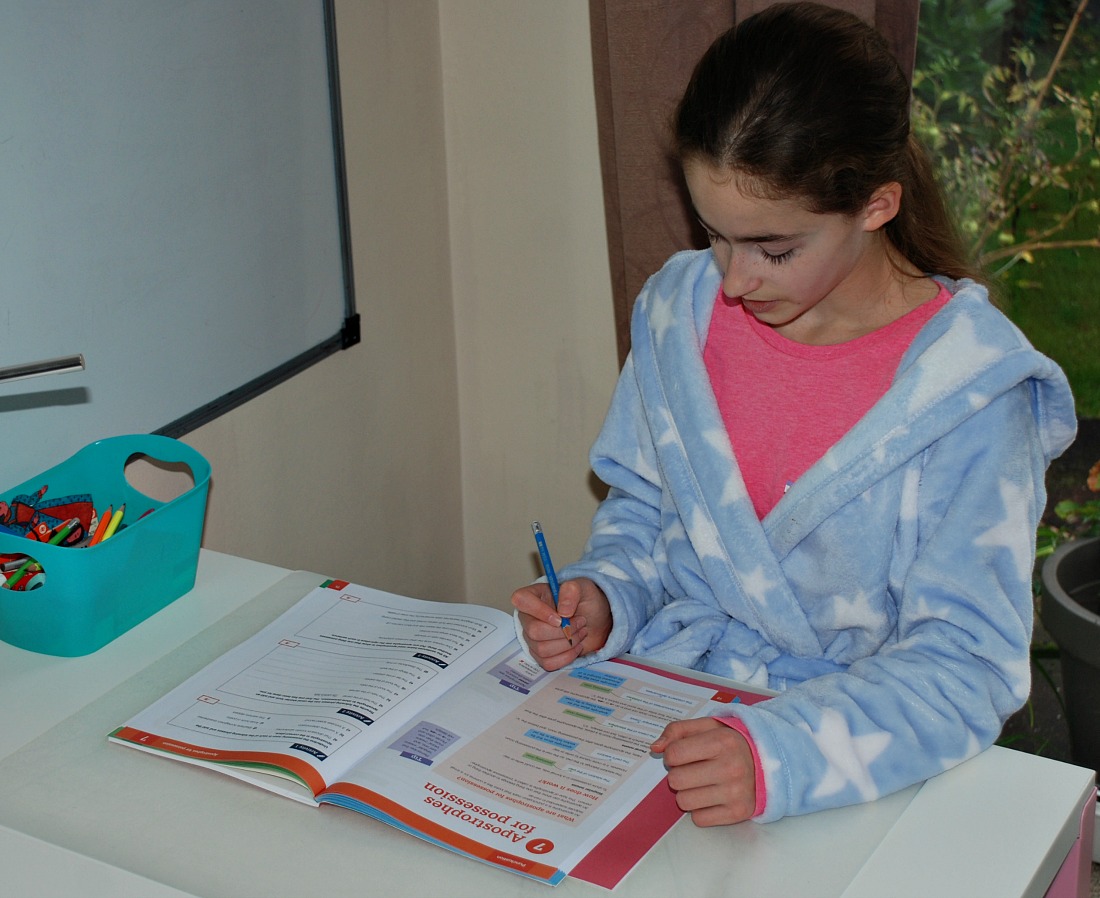
Over the summer holidays when I was gathering together our Year 7 resources I did not select anything for Grammar, Punctuation or Spelling. I just did not get around to it and we were still finishing up with a Key Stage 2 book so it just became one of those things that I still needed to find.  I knew what we wanted and it was just a case of finding the correct book for us. So I was thrilled when Oxford University Press sent us a box of secondary resources and they included this stunning workbook – Get It Right Workbook 1.  It is perfect for us – no overwhelming/ overcrowded pages (my daughter does not like pages that look they are bursting with information or pages where multiple concepts are crammed together).  This book has clear explanations followed by about 3 activities – the design is perfect for my daughter to work through by herself and just ask questions when needed. (And yes she is working in her PJ’s – she has flu).

working through her Get It Right Workbook 1. Spelling, Punctuation and Grammar for Key Stage 3 ages

The explanations are written clearly onto a page using pastel colours to highlight certain parts (the colours they have chosen work really well as they highlight points without being distracting). They include a few tips but you never feel like the page is packed.  It is really well spaced out and makes reading through the points easy, almost relaxing in a strange way (starting to wish more workbooks used this layout).

This slideshow requires JavaScript.

After the explanations they normally include 3  different activities (answers for the activities are in a seperate answer book). I don’t have the answer book and so far we are fine working through without it.

This slideshow requires JavaScript.

The topics in the workbook follow a logical manner but I must confess we jumped in and started using some pages in the middle of the book just because they happened to be what we had just learnt about and that worked fine.  You can jump around the pages as you want or you could follow their order (if you do jump around they will reference you to other pages that link up)

So what exactly is covered in workbook 1?

Grammar (this is the biggest section)

  • Nouns
  • Adjectives
  • Verbs (including verbs in context, past and future tense, main and auxiliary verbs)
  • Subject and Object
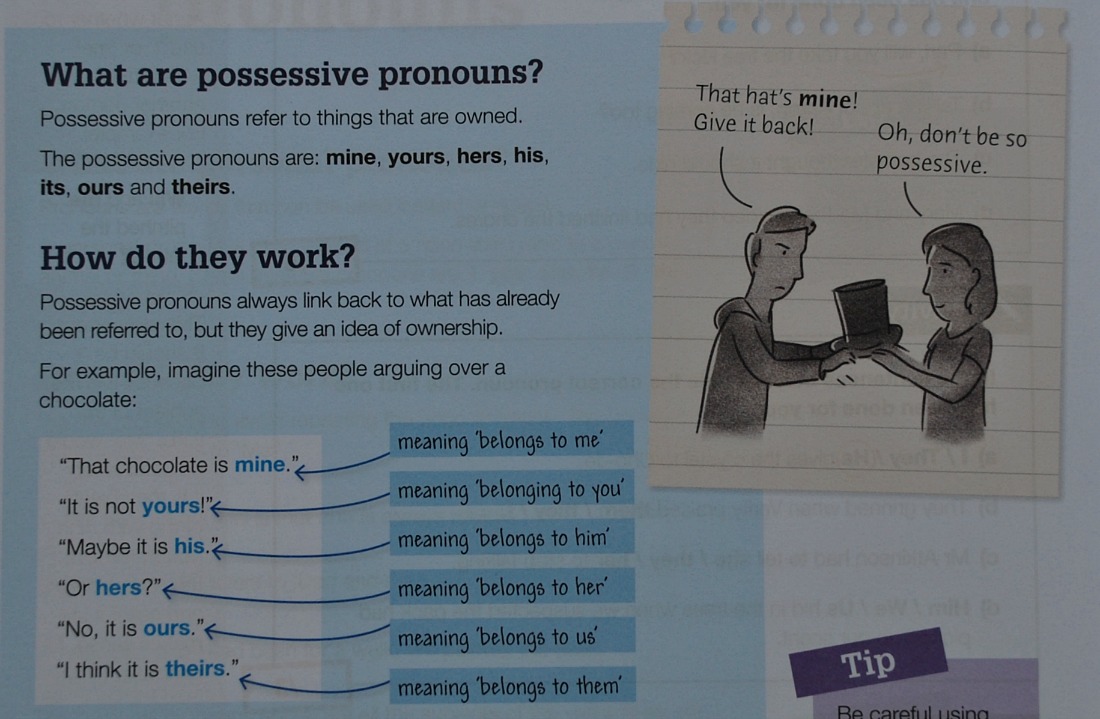
  • Personal and Possessive Pronouns
  • Determiners
  • Prepositions
  • Adverbs
  • Phrases
  • Conjunctions
  • Clauses
  • Sentence types
  • Single-clauses sentences
  • Multi-clause sentences – compound and complex
  • Paragraphs

Get It Right Workbook 1. Spelling, Punctuation and Grammar for Key Stage 3,

Punctuation

  • Capital letters and Full stops
  • Question marks and Exclamation marks
  • Commas
  • Colons and semi-colons
  • Apostrophes for possession and Apostrophes for Contraction
  • Direct Speech

Spelling

  • Vowels and Consonants
  • Plurals
  • Silent letters
  • Prefixes and Suffixes
  • Commonly confused words
  • How to learn spellings

spelling rules included in the Get It Right Workbook. Spelling, Punctuation and Grammar for Key Stage 3

I think it is a good base for Year 7 English.

We just have the first workbook but there is a complete series of them – three different workbooks for Key Stage 3 ages and one for GCSE ages. (And if you are wondering we will probably be getting the others for my daughter).

This slideshow requires JavaScript.

To find out more you can look on the Oxford University Press website – Workbook 1, Workbook 2, Workbook 3, GCSE workbook.

You can also buy the workbooks from Amazon

Get It Right: KS3; 11-14: Spelling, Punctuation and Grammar workbook 1

Get It Right: KS3; 11-14: Spelling, Punctuation and Grammar Answer Book 2

Get It Right: KS3; 11-14: Spelling, Punctuation and Grammar Workbook 3

Get It Right: for GCSE: Spelling, Punctuation and Grammar workbook

Admin Bit – As I mentioned above we were sent a box of Secondary Resources from Oxford University Press.  We were under no obligation regarding which items we choose to use.  All opinions expressed are that of myself and my tester (in this case my eleven-year-old daughter).

I do include Affiliate links. If you follow an affiliate link and go on to purchase that product, I will be paid a very small commission, however your cost will remain the same. I only include affiliate links for products that we use and love.
Key Stage 3 English workbook. Get It Right. Spelling, Punctuation and Grammar. perfect for Year 7

Posted in Homeschooling | Tagged , , , , , , | 2 Comments

Life Cycle Books

On a recent trip to the library my son spotted one of these life cycle books and immediately borrowed it and brought it home. He really enjoyed reading and asked if I could see if there were any other books in the series which we could borrow from the library (our library allows us to check online and reserve copies), there were and we ended up with four different life cycle books.

Life Cycle Books. Life cycles of animals that live in the Mountain, Forest, River and Ocean

And I must admit I share my son’s opinion about these books they are brilliant. Each book focuses on a habitat – desert, ocean, river, forest and mountain. The book starts by introuducing that habitat (very briefly) and it shows a world map depicting where you can find these areas. It then selects 3 of those areas and choses a food chain from each of those 3 areas. Then it goes through each food chain and shows the life cycle of each animal within the three food chains – so not only do the kids see a number very different  life cycles but they see how they interact with each other within a food chain – I love this. Then at the end of the book they show one food web for one of the three food chains that was discussed in the book.

This slideshow requires JavaScript.

Really a well thought out way to present this information and they end up dealing with many topics within these little books. I really am impressed with how this was planned and presented (the only thing I would have liked was if they included the starting point for each food chain – the producer).

Life Cycle book an example of a page layout. The Forest Life Cycle book

Oh and the page layout is also brilliant on the left hand side they show the outlines of the different animals in each food chain and the animal on your page is circled so the kids can also check to see where they are in the current food chain.  I think these are brilliant books for primary aged kids to read.

So to give you a better idea of the food chains and life cycles covered in these books I am going to breakdown the four books that we have been reading to each food chain and the life cycles included in those food chains. (The books we borrowed from the library were older editions and the newer versions have different covers but the inside pages still look the same).

Life Cycles: River

The first life food chain is from the Rivers of South America and includes the following life cycles – catfish, cormorant, piranha and river dolphin.

The second food chain is from the Rivers of North America and includes the following life cycles – mayfly, brook trout and grizzly bear.

And the third food chain is from ponds of Europe and includes the following life cycles – great pond snail, great crested newt, little grebe and the otter.

This slideshow requires JavaScript.

Life Cycles: Ocean

The first food chain is the Indian Ocean and includes the following life cycles – coral, crown of thorns starfish, pufferfish and tiger shark.

The second food chain is the Pacific Ocean and includes the following life cycles – pink shrimp, black-eyed squid, silver salmon and bald eagle.

And the third food chain is from the Atlantic Ocean and includes the following life cycles – box jellyfish, sea turtle and the orca.

Life Cycles: Forest

The first food chain is from the forests of southern Asia and includes the following life cycles – honey bee, white crab spider, grey langur and the bengal tiger.

The second food chain is from the forests if North America and includes the following life cycles – white-tailed deer, vampire bat, red-tailed hawk.

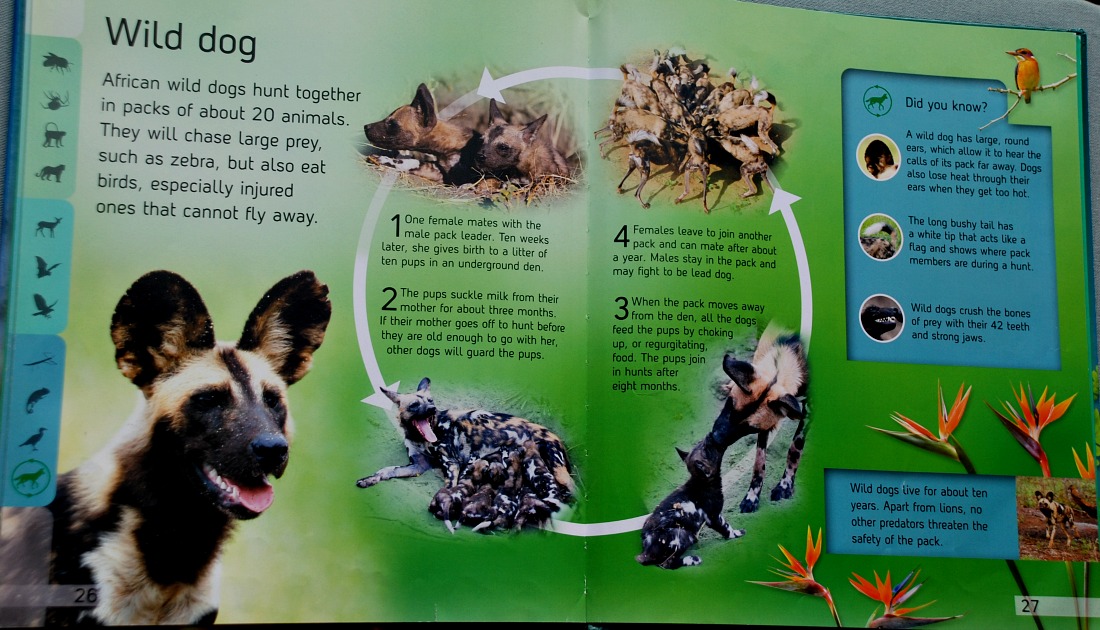
And the third food chain is from the forest o southern Africa and includes the following life cycles – stick insect, chameleon, hornbill and wild dog.

Life Cycle books example of a page layout the White-tailed deer

Life Cycles: Mountain

The first food chain is from the Rocky Mountains in North America and includes the following life cycles – earwig, woodpecker, flying squirrel and wolverine.

The second food chain is from the Himalayas in Asia and includes the following life cycles – mosquito, alpine butterwort, mountain goat and the snow leopard.

And the third food chain is from the Andes Mountains in South America and includes the following life cycles – chinchilla, skunk and the owl.

This slideshow requires JavaScript.

As you can see the do include a wide variety of different creatures.

Admin – as I mentioned these are books that we have borrowed from our local library

I do include Affiliate links. If you follow an affiliate link and go on to purchase that product, I will be paid a very small commission, however your cost will remain the same. I only include affiliate links for products that we use and love

Posted in Homeschooling | Tagged , , , , , , | Leave a comment