Some ideas from the Activity Village site

Whether you are a home educator or a parent who suddenly has to help with distance learning while the kids are at home there are a number of useful pages from the Activity Village website. So with everything going on at the moment I thought I would share a few of our favourite pages, but please these are just our favourite ones, there is a lot more on the site.

I have to start with the Acrostic Poem section. When we first discovered these pages I printed a few out and both my kids went on a writing spree.  They loved creating all these crazy Acrostic poems and we have come back to them a few times since then and each time both kids just write and write.  It is probably one of our favourite fun writing activities. And really you can find an Acrostic poem template for most themes on the site. (Here is a post I wrote out these poems – Having Fun Writing Poems)

Rainbow Acrostic Poem written using the pages from the Activity Village website

Sticking with the writing idea we also have used the printable story paper a lot.  It is really good when the kids are just writing sentences or paragraphs and I have found the pictures helps to get them going (in our house there is nothing less productive then giving our kids a blank piece of paper, they always do much better if they have a starting point of some sort).

And if you are working on characters have a look at the Story character pages.  My son loved the Monster set and my daughter loved using the History set.

One set of pages that we use over and over again are the Continent Maps.  Really I keep coming back to this section.  We printed out the labelled maps to hang up and then the blank maps have been used for activities – I created labels and the kids pinned the labels onto the correct place, we did sessions where I called out countries and they had to colour them in, we have used them to plot rivers and mountains as we watch documentaries.  And I know I am missing some stuff out.  But if you want to do some Geography these maps are really useful.

This slideshow requires JavaScript.

Weather.  We love the extreme weather section – especially the clozes.  My son enjoys finding documentaries about extreme weather and then after we have finished watching the documentaries I tend to add in a few of these pages for him to complete.

And linked into the Weather section are the Water Cycle pages – everything you need if you are looking at the water cycle – we actually used some of the word cards to label a very large water cycle diagram that the kids created.

For animal/plant science have a look at the life cycle section. (Frog life cycle post)
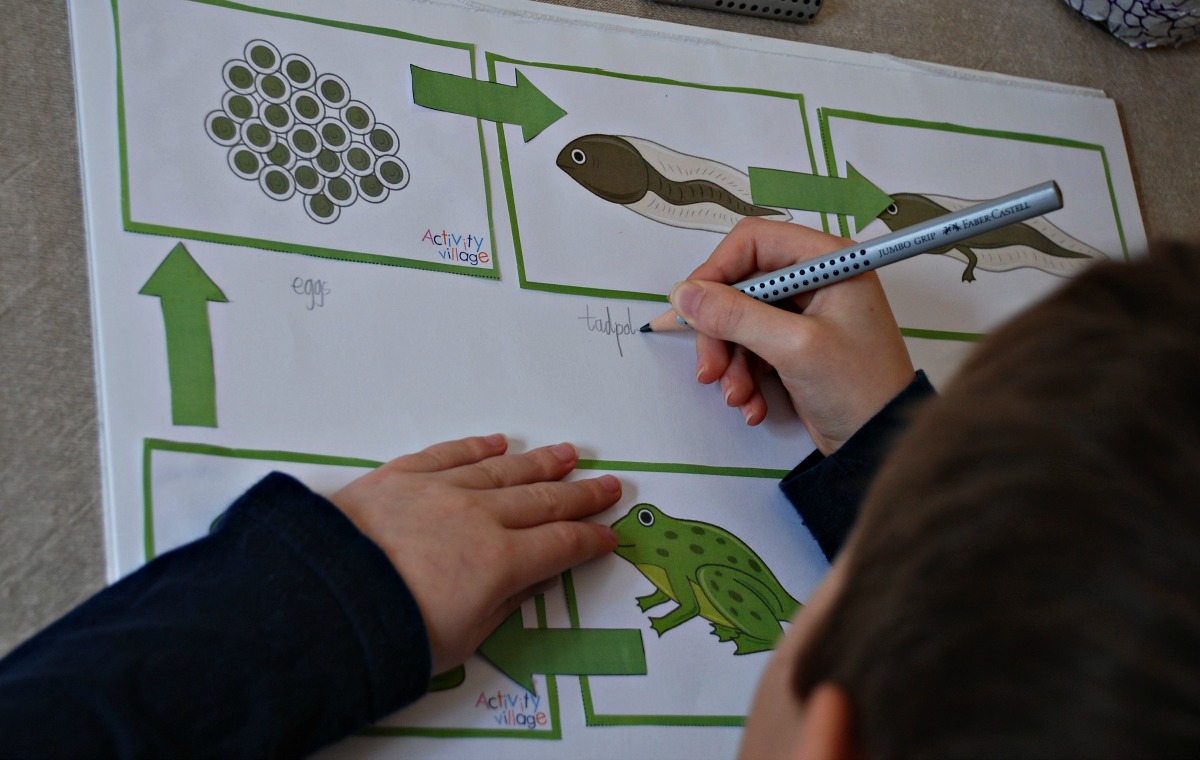
creating his own life cycle of a frog poster using sequencing cards from the Activity Village website

If you search by type of animal (e.g. pet, African animal or Australian animal) you will also find a number of worksheets including word searches, vocabulary pages, how to draw pages, animal alphabet pages and a number of crafting templates.  Oh I love the animal templates.  That for me is just crafting happiness.  You can use the templates for so many activities – a basic outline for drawing and then the kids add detail, a shape for collages, use the templates for paintings or for creating stick puppets.  We use our templates so much that I tend to print ours out onto card so they last longer.

If you kids enjoy reading the Secret Seven or the Famous Five then you must look at the pages under these sections.  A few years ago we went through a Secret Seven craze and I printed out a number of the pages and the kids had a blast.  They created their own badges, wrote out club rules, created signs and actually ended up writing out a few of their own mini-stories.

Maths.  There are a number of different Maths and Basic Number pages for younger kids have a look here – Maths Stages but I want to mention some other maths pages.  Firstly for times tables we used the skip counting cards and the times table folding cards A LOT.
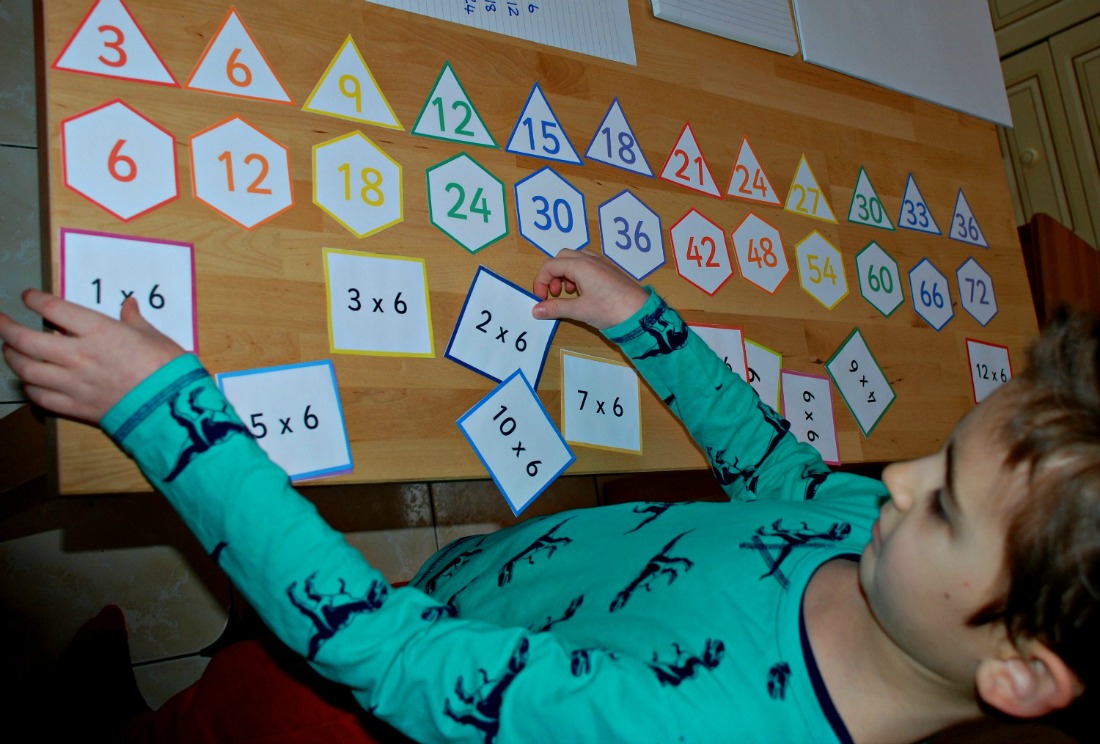
skip counting and times table folding cards from Activity Village

For telling time we like the different clocks that they have on the site.

But our favourite Maths pages are the ones that are more puzzly maths.  Like the Pyramid puzzles or the mental maths gym pages. And don’t rule out using their art pages for maths – we used the grid copy pages to learn about co-ordinates.
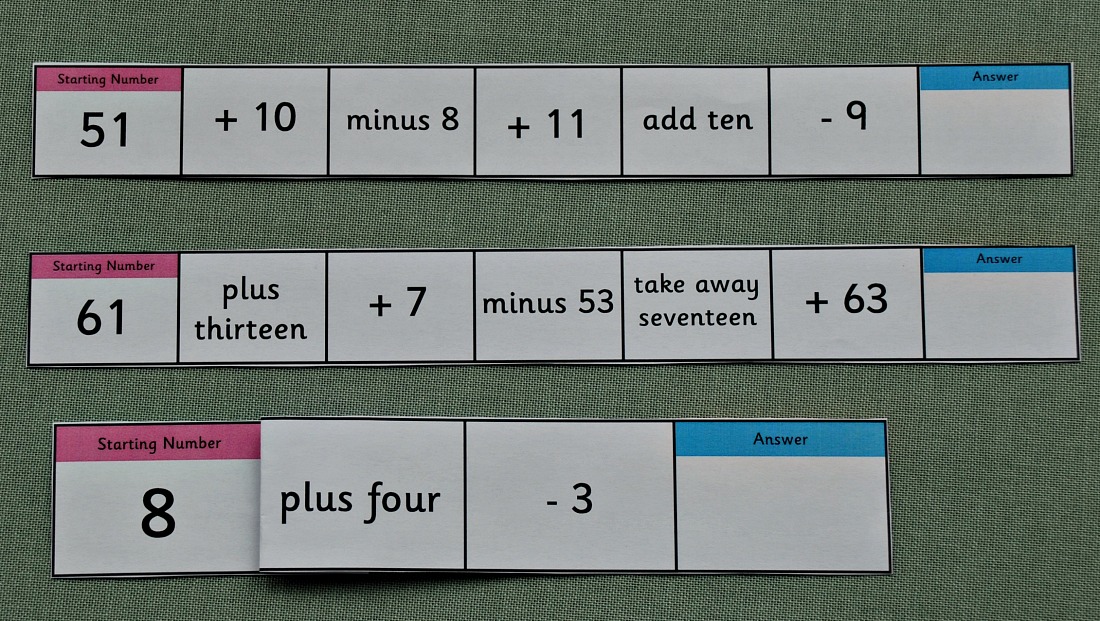
The Mental Maths Gym pages from Activity Village cut into strips so that we can mix up the order

Although not directly Maths as such the Sudoku pages are one of my favourites for logical thinking.  We have done these so MANY times.  I actually have a set printed out on the bookcase ready and waiting for an “I am bored session”. (Sudoku for Kids post)
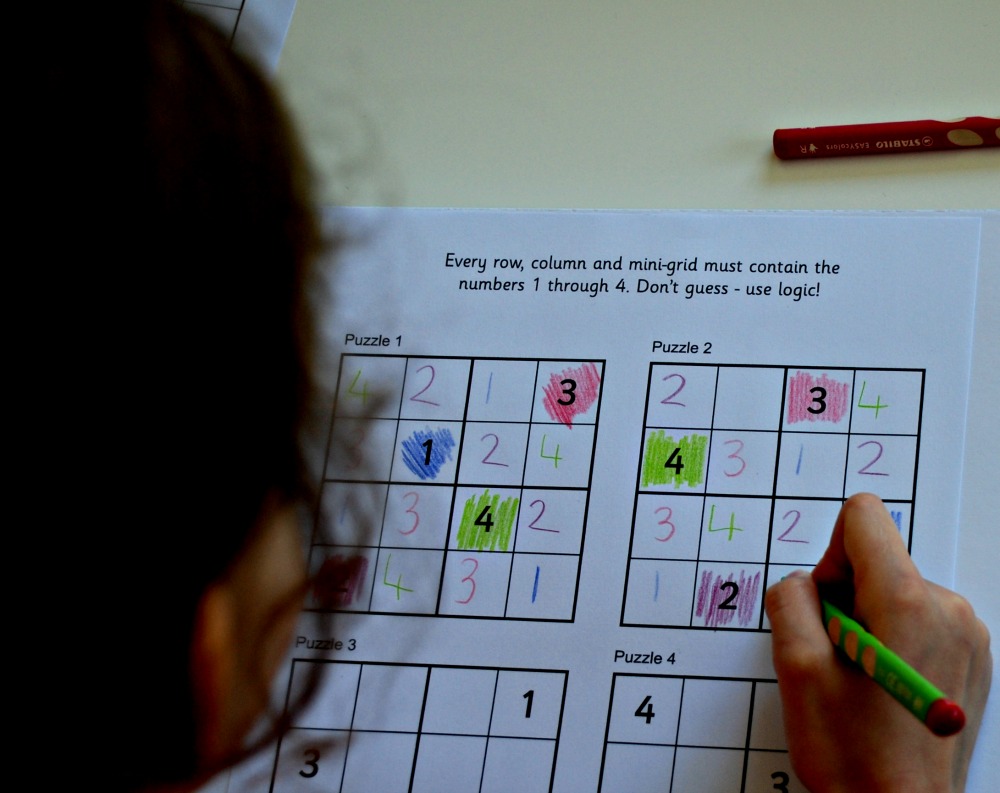
Solving the Activity Village sudoku puzzles by using coloured pencils to help create a pattern

And I cannot end without mentioning the Famous People section.  We come back to this whenever we are learning about someone and I have found time and time again that you can use these pages with a number of different books – here are a few examples – Mary Anning, Guy Fawks and Christopher Columbus.

This slideshow requires JavaScript.

And I forgot to mention the Phases of the Moon pages.  And I could go on and on but I am hoping that gives some of you a starting point with the Activity Village site.

PS. Don’t be scared to just type in few words into the search bar at the top.
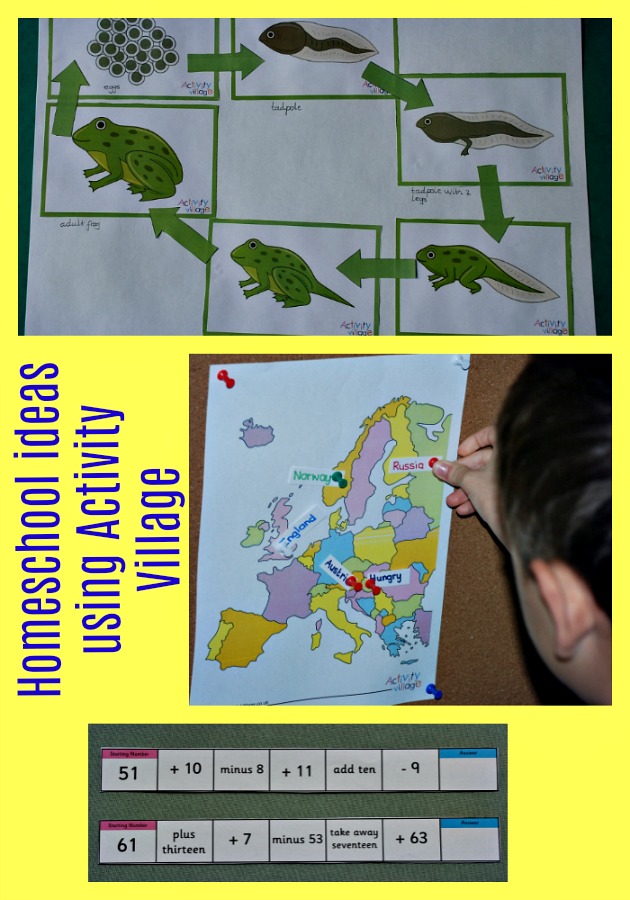
Homeschool ideas using Activity Village pages. Maps, life cycles, maths, sudoku, weather, comprehensions

Posted in Homeschooling | Tagged , , , , , | Leave a comment

Home education routine vs timetable

Let me start by saying I get the need for a timetable it is reassuring to know what is happening when and to figure out how you are going to fit everything in especially when things around us seem more chaotic than normal. I get that. I do.

But I want to suggest to people who are being thrown into this “homeschooling” for the first time to ease up on the timetable and rather try a routine approach. The difference may seem small to some but please trust me there is a difference. A timetable is rigid, it is saying between this set time period you need to do x and then when the clock chimes you need to move onto y. It is more school than home.

A routine is more loose than a timetable, it says we are going to try and get some Maths, and English done this morning but if you need to take a bit longer at breakfast and chat to us about what is bothering you we can do that. We can sit and chat for as long as needed until we all feel better. There is no rush to start doing “homeschool” at a certain time or have it finished by a certain time.

We follow a semi-structured approach for our home education. Which for us (it is different for every family) means we do Maths and English every morning. After that we often have an activity (right now we try and get out for walk when we can) and then we do project work / topics for other subjects. There is a loose routine but we are flexible.

This past week when my nine year old was sitting down to do some maths he brought his maths book to the couch and came and chatted with me (we have a couch right next to their desks). We ended up have a long chat and cuddle, he needed it, he had lots of concerns about all the changes going on. After the chat and cuddle we had a snack and then went for a long walk in the woods to one of his favourite spots. It was only after lunch time that he sat down and did his Maths. And by then he was happy to sit and do his Maths and he did it quickly and easily, his mind was at rest and he could concentrate.

The same goes for us adults, the ones doing the “homeschooling” if something has happened that has stressed you out, trying to sit down and complete that Maths session is not going to work. Last time I tried to go shopping, I came home stressed, I only got a few things on my list, I was stressing. Now for me to sit down and try to explain / help with Maths would not have been a good thing. I would have been impatient with the kids. Even though it was morning time and our normal Maths time we swopped it around. The kids and I watched a History documentary and then we all baked and had some banana bread for lunch. Later that afternoon when I was not feeling so stressed about my failed shopping trip we sat and went through the Maths. And I was better at explaining and helping because I was feeling better.

I understand why people want a timetable but please bend it, let it be flexible and more like a routine. Take time out when your kids need a chat or a break and please give yourself a break when you need it. I promise, trying to help with maths when you are stressed is not a good thing. I have done that in the past and it ever ends well. Bend that timetable to go with the rhythms of the family and what everyone needs that day. 

This is home, so Maths can happen with cuddles, fractions can get taught with baking, curling up on the couch reading counts, play some board games, talk about things.  Please, please bend those timetables and give your kids and yourself time to deal with whatever is stressing you out. 

ofamily learning together

Posted in Homeschooling | Tagged , , , , | 1 Comment

Rusks

I love baking with the kids and one of our favourite recipes has to be our rusk recipe. Now I must confess when I first tried baking rusks I tried a few different recipes and everyone was a flop – and I mean complete, utter flop – the kind when nothing can be eaten. But my kids love rusks so I kept trying and then my daughter’s Godmother gave her this recipe and we have used it over and over again and not one flop.

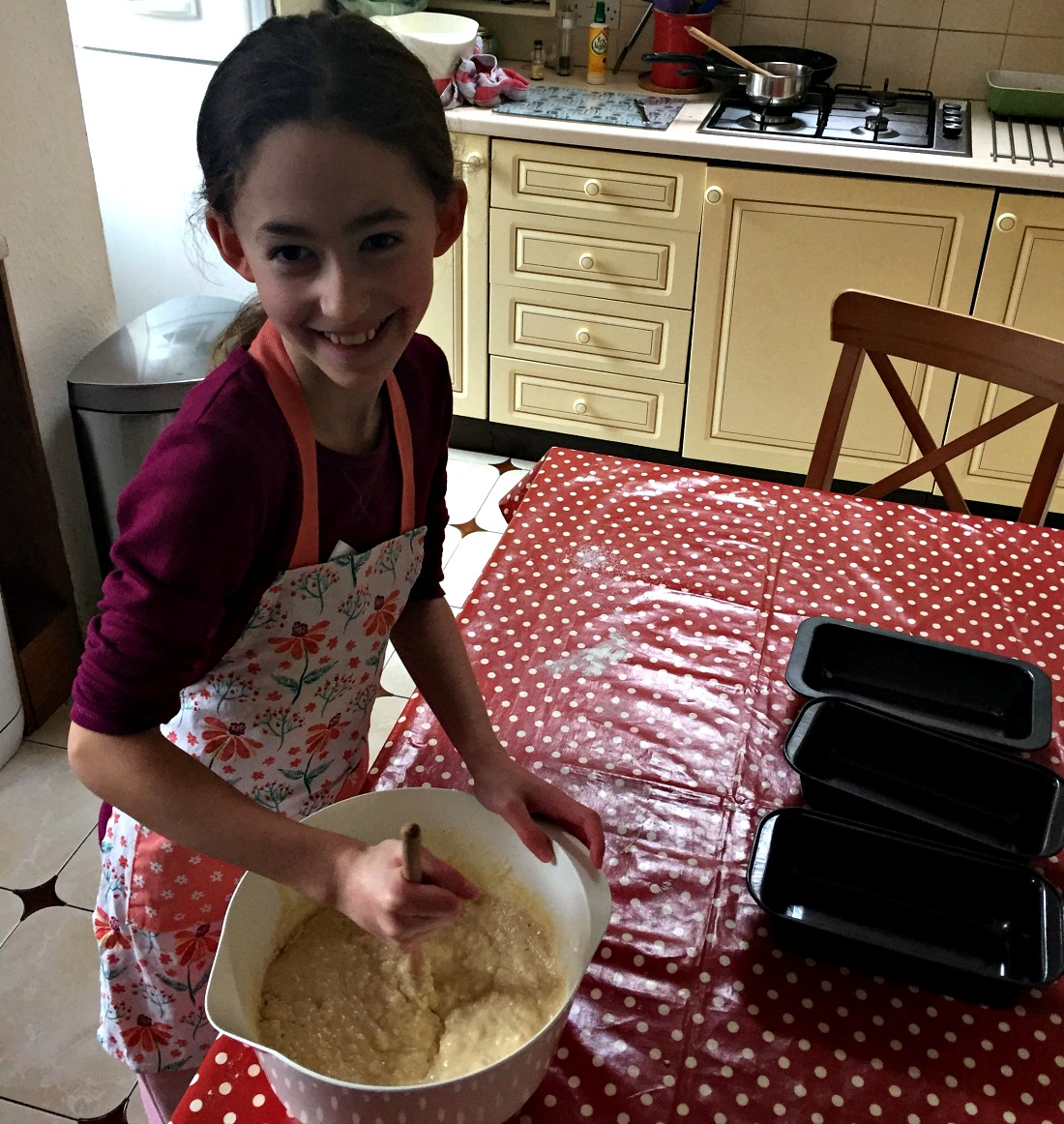
mixing her rusk mixture ofamilylearningtogether.com

In fact last weekend when we were getting worried about the food shortages in the shops we baked a nice big batch and the kids have been having rusks and Rooibos tea for breakfast.

So here it is

Ingredients

  • 250g melted butter
  • 1kg self-raising flour
  • 4 eggs (beaten)
  • 2 cups sugar
  • 2 x containers of buttermilk (ours are normally 300ml containers but in our latest batch I could only get 2x 275ml and they turned out perfect)
  • 1tsp vanilla

Instructions

  • whisk the sugar and eggs together
  • add the vanilla and the buttermilk and mix well
  • in a separate bowl add the melted butter to the flour and rub it in properly
  • Add the buttermilk mixture to the flour mixture and mix together.

This slideshow requires JavaScript.

We bake ours in 3 loaf tins at 180C for 1hr (check on the time – in my old oven it was closer to 50 mins)

Take the rusk loaves out of the tins and let them cool under a dishcloth for about 2 hours.

This slideshow requires JavaScript.

Now you need to slice the rusk loaves.  I cut our loaves into 4 sections and then slice each of those sections.

The next step is VITAL – you need to dry the rusks.  If you don’t do this properly they will end up yucky (yip yucky).

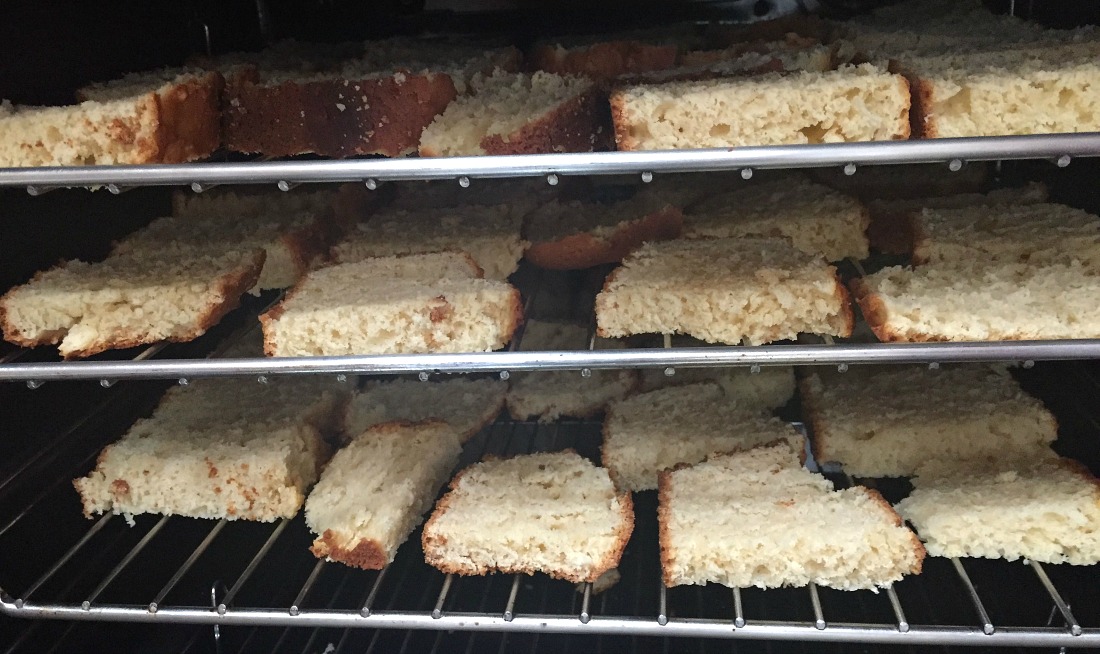
drying in the oven

You want to place the rusks on oven racks in a cool oven (about 100C) for around 3 hours.  We leave our oven door slightly open (we place a wooden spoon in the side of the oven so  there is a slight gap.  This drying process is vital.  And after the 3 hours I normally check one of the rusks by dunking it in tea and if it has not dried properly I even leave it in for longer.

In the past the drying period often messed me up – rule of thumb if you are not sure if they have dried out properly leave them in for longer.

This slideshow requires JavaScript.

And enjoy !!!

Posted in Homeschooling | Tagged , , , , | Leave a comment

What’s Where in the World. Informative and eye-catching book

Last year my son spotted a very well-read (trying to be polite for scruffy and torn) book in our local library and immediately was totally engrossed with it. So he borrowed the book and kept renewing it for as long as he could. He absolutely adored this book and really did NOT want to return it. And in all honesty I really did find him week after week pouring over this book. And I could understand why he found it so fascinating so I bought him his own copy.

What's Where in the World Planet Earth as you've never seen it before

So I am going to share a few images and details about this book – really it is one of those books where as you page through it you wonder at how they managed to fit so much into a book and do it is such an interesting manner.

The book is 192 page long and is actually quite heavy (my son is constantly packing it into his day backpack when we are going places because he likes to look at it but it is a heavy book to carry around while you are out and about). All the pages are double page maps of the world with the information visually expressed on the map and then some detailed blocks explaining concepts on the side. This book covers a LOT, so it does not cover everything in detail, a good example would be it talks about the World Biomes on one double page – so if you know anything about Biomes, this is quite a summary, there is NO detail. But that is not the point of this book. This is not a book which you will use for a topic, this is a book that covers a lot in a fascinating visual way, that will then hopefully inspire the kids to go and read up more detail. (That is exactly what it has done / is doing with my son – the maps have prompted lots of discussion and then further reading.)

This slideshow requires JavaScript.

The book is split into 6 different sections

  • Land Sea and Air – Earth’s crust, mountains, volcanoes, oceans, rivers, weather, biomes……….

This slideshow requires JavaScript.

  • Living World – Anything to do with animals – predators, whales, sharks, deadly creatures, endangered animals, extinct animals…………..

This slideshow requires JavaScript.

  • People and Planet -all kind of population maps – nomads, billionaries, pollution, fossil fuels, food production…………

This slideshow requires JavaScript.

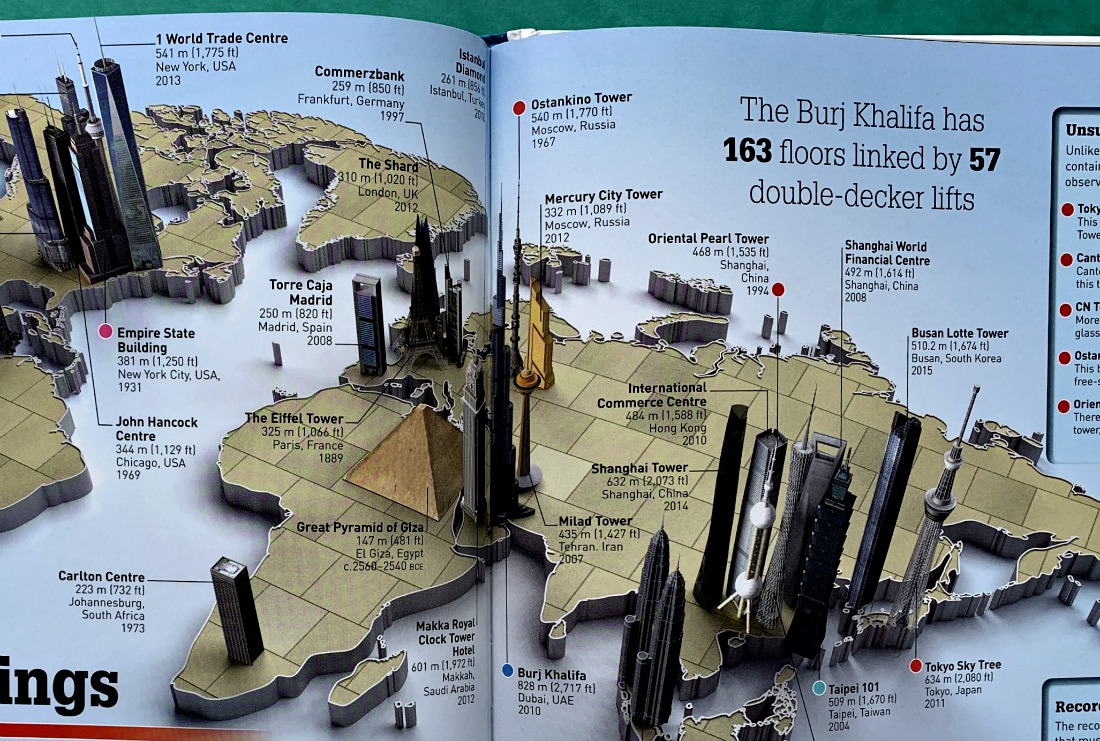
  • Engineering and Technology – things like air traffic, railways, tallest buildings………

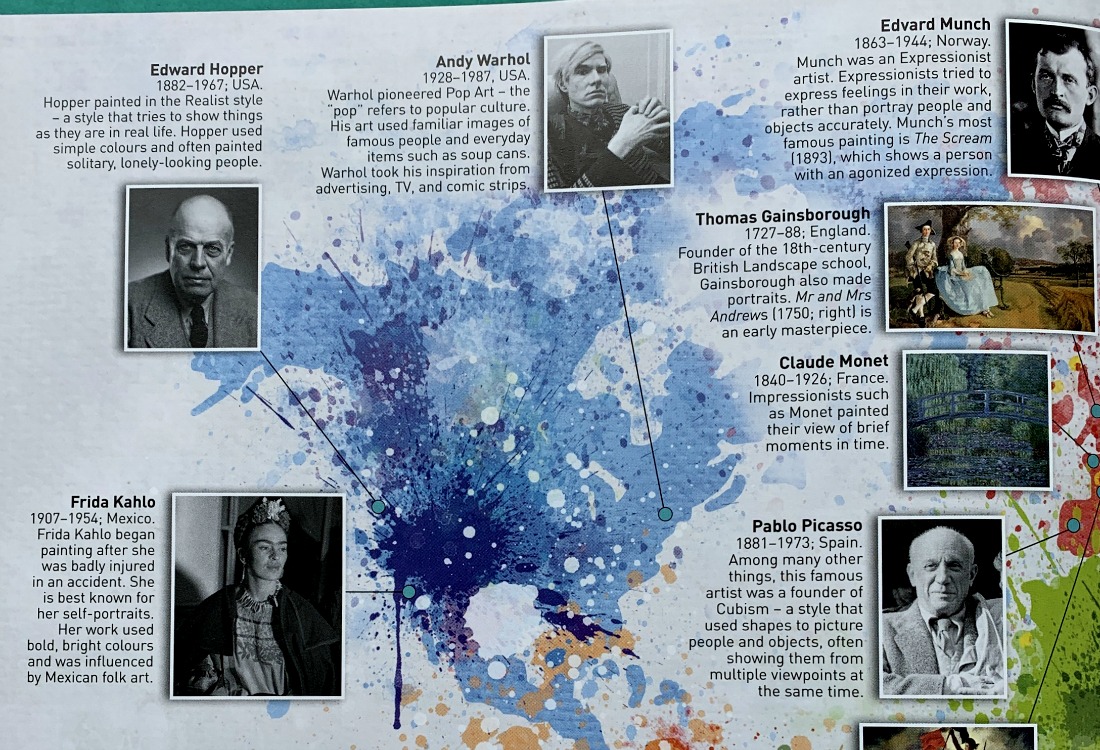
What's Where in the World. Tallest Buildings

  • History – interesting looking at broad periods of history like Ancient wonders and Medieval empires, shipwrecks, revolutions…………..

This slideshow requires JavaScript.

  • Culture – art, festival, flags…………

What's Where in the World. Artists

It is an incredible way to see all these concepts, because it is a very visual portrayal of how these things have impacted our earth and our lives.  Seeing the Deadly creatures or the Bird Migrations on a map just makes more sense than reading a detailed sometimes confusing paragraph.  For kids (and adults) I think this is a great way to communicate all these facts without overcomplicating things.

My entire family thinks this is a fascinating book and it has been one of those books that starts lots of interesting discussions.  Really worth the money I spent buying it.

I bought our copy from Amazon – What’s Where in the World

I do include Affiliate links. If you follow an affiliate link and go on to purchase that product, I will be paid a very small commission, however your cost will remain the same. I only include affiliate links for products that we use and love


Posted in Homeschooling | Tagged , , , , , | 1 Comment

In search of the ultimate home education resource

Is there really a golden home education resource that everyone must have?

When I first started home education I used to wish for such a resource, I would read reviews after reviews searching but now 8 years later, I don’t want one single golden, perfect resource, now I like the fact that we use multiple resources.

What I’ve come to appreciate is most resources have strengthens and some weakness and there is always a distinctive style with the way they are written and the type of questions that are asked. So when you use more than one resource you actually end up getting a broader, more accurate view of the topic.

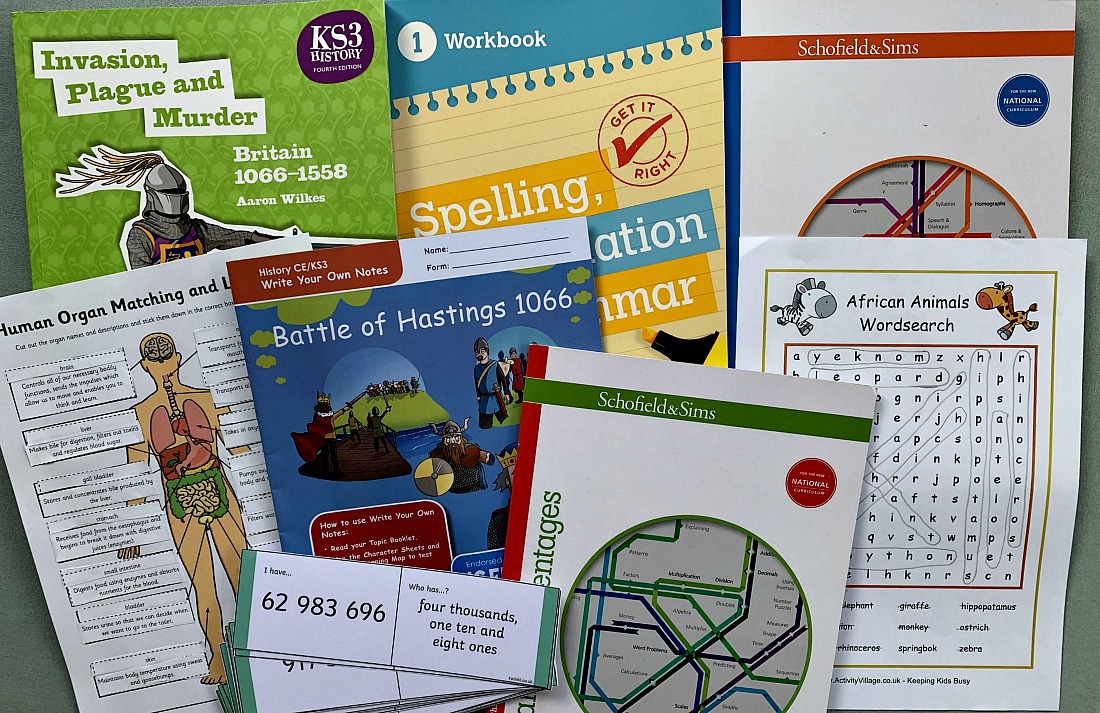
Take my son’s Maths (Primary Maths) – we used the Understanding Maths series from Schofield & Sims, which has nice brief explanations but not a lot of practice, so we download extra examples from the TeachitPrimary and Twinkl websites (also for younger kids Activity Village have some Maths pages). And he also logs onto Khan Academy and watches some videos and does some exercises there.  But it’s that combination that works.  And the nice thing about combining the resources is he has gotten used to different formats and different styles of asking the same questions.

My daughter was recently looking at some human biology and she had a student book from Collins open, a student book from Oxford, Twinkl labelling pages and even a website open – all on the same topic, but they all looked a bit different.

For us the golden rule for our resources has actually been combining different sources, exposing the kids to the different styles and allowing them to get a broader understanding of a concept because no single resource ever covers it completely.

Now I am not saying we don’t have favourites, of course we do. I have certain go to websites that I use (The Teachit sites, Twinkl and Activity Village) and certain publishers (Schofield & Sims for primary and Oxford University Press and Oaka Books for Secondary) that I will always search first just because I have had good results with them in the past.

And that is why I often write what seems like multiple posts on the same topic.  Sometimes it may seem that I have already written about Medieval History and then a new post crops up, with a new resource.  It’s just how we like to work, we like to use the Oaka Books Topic packs, together with her Oxford Student book and some Historical Fiction books, sometimes even a BIG CAT inform book might be added or an extra non-fiction book that I found, possibly some extra pages were read, a documentary watched.  For us this is really why home education suits us – they get to use that wide range of resources, they get to see the same topic from different perspectives and different angles.

So I am sorry to say but after 8 years I no longer search for that golden home education resource instead I enjoy combining different sources together to get a more holistic view of the topic we are learning about.

educational resources for home education

Posted in Homeschooling | Tagged , , , , | 1 Comment