Starting home education

I know there are a number of people who are starting their home education journey at the moment and I have seen lots of posts from people worried about it so here are my thoughts on starting home education.

Stop, Breathe, it is okay.

No scrap that it is more than okay, congrats on starting this.

This is going to be an adventure and I can honestly say deciding to home educate was the best decision we ever made (we are about to start our 9th year of home eductation). But I am going to be brutally honest in this post. There are going to tough days, days when you want to give up. That’s okay. There are also going to be amazing days, days when you sit back and cannot help but marvel at how far the kids have come. Enjoy those days. Try and think of this as a journey and know that the tough times will pass but that we need to go through those tough times to get out on the other side. (And yes we have had tough days).

Some of you may be feeling a lot of pressure – thinking that you are expected to be all set up for the first day of home educating. Here is the thing. You do not need to stick to the local school timetable. I don’t. Never have and never will.

You do not need to have everything sorted out by the time your local school starts again. So take that pressure off yourself. You are not trying to recreate school at home.

My advice is don’t rush out and buy a full year’s worth of books. 

Most home educators admit that when they started they bought a bunch of books and then never actually used them (I include myself in that list). I think there is this worry that you need all these books and you need to have everything mapped out beforehand. But most of us did not actually know that much about how it works and did not know which books were going to suit our kids.  I learnt through a lot of trial and error and even last year when my daughter started her Year 7 I bought some Secondary books which we actually ended up scrapping in favour of different ones.  So rather take a bit of time.  Just get one or two to start with and see if you like them, see if they have good explanations, enough practice pages, if answers are included.  Just take some time to figure out what is going to work for you.

Remember every kid and every family is unique.  So what works for one will not always work for another.

If your kids are in primary school why don’t you ask them if there is a topic that they want to learn about? Go to the local library and find some books on that topic, look for a documentary that deals with it. Maybe look online at some websites and see if they have learning pages linked to it (Pinterest is great for ideas).

We always have a family reading book, a book that I read with the kids, so why don’t you choose something like that, something that you can read with them (my kids loved the How to Train Your Dragon Series).

If you have access to membership sites.  Have a look at their Maths section and maybe start with place value.  Twinkl have lots of Maths resources that are aimed at each year.  Just type in Year x Maths into the search bar and you will get a lot of ideas. If you are a member with Activity Village why don’t you have a look at their Summer Learning Hub pages – there are lots of ideas there.

For primary years I would say, get a good book (well books to read), start with some Maths and find a topic that interests the kids.  The joy with topic learning is it can cover so much – if you are looking at African animals you can still do spelling – learn how to spell the animals, you could look at animal plural words, collective nouns, verbs (lots of ways to describe how the animals move). You can bring Maths in – why not look at the measurements of animals, how to convert between different units. You can bring in Geography and Biology. Finding a topic that your kids want to learn about can open all kinds of doors into lots of different subjects.

Okay so what about the older kids – Secondary Years.  Everyone gets a bit more worried as they get older.  I still say take a bit of time. What is your kids favourite subject?  Why don’t you first make sure you have resources for that?  Sort that out.  Then look at Maths and English and gradually build up from there.

My daughter loves History and English Literature and I can already see that these are two subjects that she will probably take further so when it comes to planning I always start here.  I make sure we have those two sorted out first and then I start planning the others.

For KS3 the subjects are a bit different.  They do not split it up year by year but rather say these are all the topics that need to be covered in the whole of KS3, which a lot of home educators find a bit challenging.  So a suggestion is  find a rough plan of how to split it out between the years (and remember it is a plan, it does not mean you have to stick to it but it does help to have a guide).

I like this KS3 Maths map from Twinkl (I downloaded their version and actually used it is create my own slightly altered version).  They also have an English version (I have found interesting links on the English one to whole packs of work that I did not even know they had on the site) and a Science one which a lot of you may find helpful.

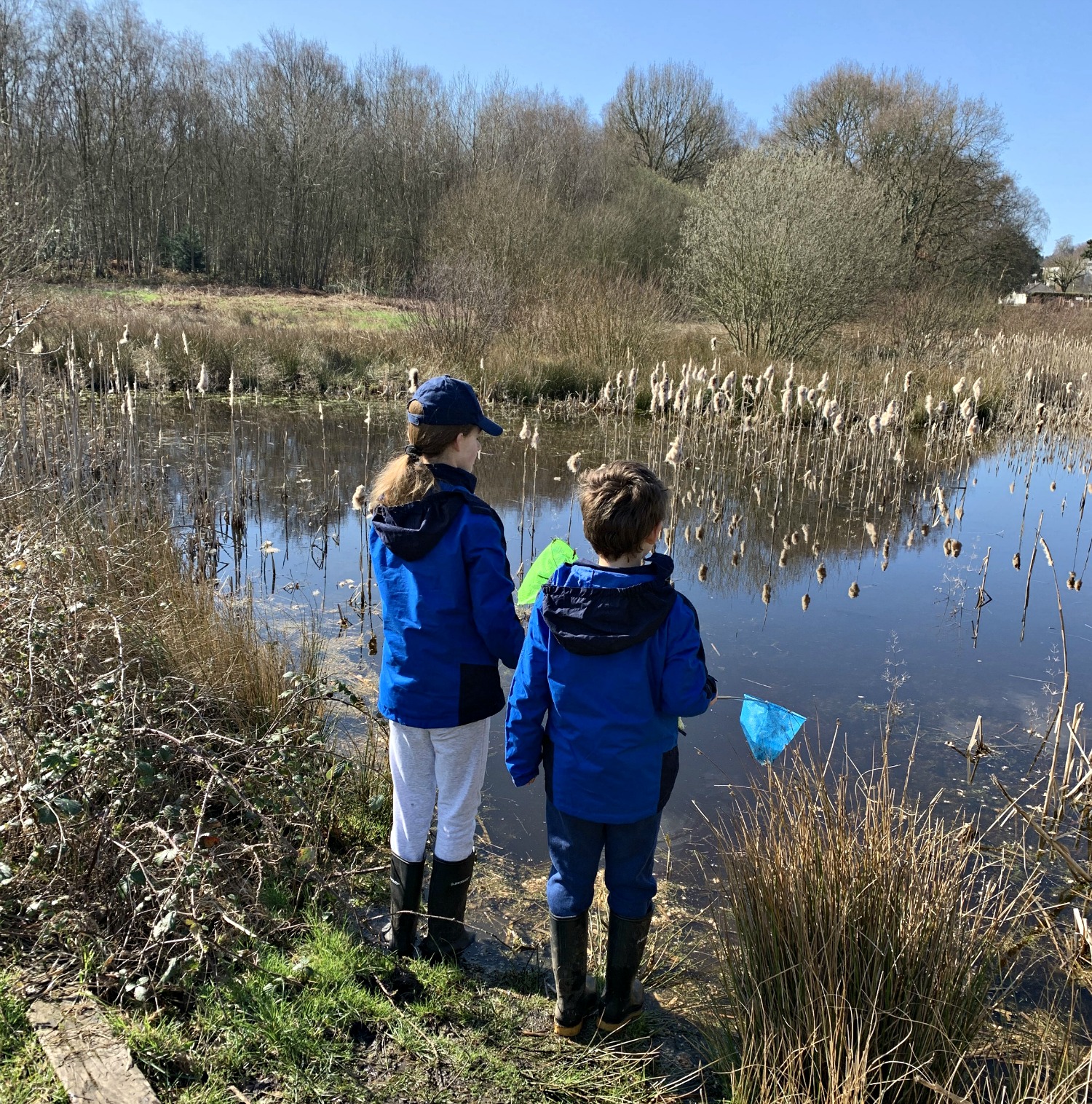
Remember this is a journey and an adventure. Don’t burn yourself out in the first week. Make sure you get out the house, find somewhere to go for a walk and just see some trees.  I consider a pair of Wellies one of the most important home education tools (for adults and kids).  Both you and your kids need that break, you need to get out and see some green even when it is a bit wet and windy.
starting home education

Posted in Homeschooling | Tagged , , , | Leave a comment

Creative Stories

Both of my kids enjoy writing their own creative stories. And I am often amazed by what they come up with and with how much they actually write.

Sometimes they take stories they have written and change an event half way through that then results in a totally different outcome, sometimes they extend the ending of stories, sometimes they take a character out of a story and create a totally new story but often it is something completely original. I have often wondered what it is that has made both of them so fond of creative writing (I never wrote like they do when I was younger).

I tried to think if it could be a result of anything that we have done and I came up with a few thoughts.

  • We have books everywhere and we read a lot, a mix of all kinds of books so the kids are constantly exposed to all sorts of stories.
  • The kid’s time is not over-scheduled so they actually have time to write their stories and I will admit that I have often delayed a planned academic activity if I can see one of them is absorbed by a story that they are writing.
  • When they do share their stories we do not go crazy correcting mistakes – I will point out a couple of spelling or grammar errors but I don’t point out everything. We try and focus on the positives and make a big deal of the writing process.
  • If they do not finish their story I don’t force them to.  My daughter often writes really long stories (mini-books really).  She will sometimes write about 20/ 30 pages and then have a break.  We leave it and she always comes back to the story (sometimes a month later) but once she has figured out what she wants to happen she does come back in her own time and wraps it up. (She has also decided a few times to completely scrap a story so she can change a character or an event and then she does restart it and finish it with the changed character of event in it).

There is one other thing that I think has helped – a game /activity that we have done with the kids for years (I actually cannot remember how it started but it started at least 5 years ago and has developed time).  We have a game where we start a verbal story, and everyone joins in.  Sometimes it is totally random (like dinosaurs in castles) and sometimes one of the kids sets a scene for example, the rainforest or Africa. 

Someone starts by creating a character or an event and then someone else joins in and adds a different character or event to the mix.  And the stories builds and builds. Sometimes over days or sometimes just over a single meal-time.  But it is a creative process where they practice building a story.  They create characters, events, scenes but they do it verbally. I think this helps.  It is much easier to practice creating a story verbally, it builds their confidence up and then when it does come to writing they tend to have lots of ideas that they can use.

I cannot be certain why both the kids enjoy creative their own stories as much as they do but I do love the fact that I get to listen to their stories.  It is by far one of the highlights of this home education journey that we are on.

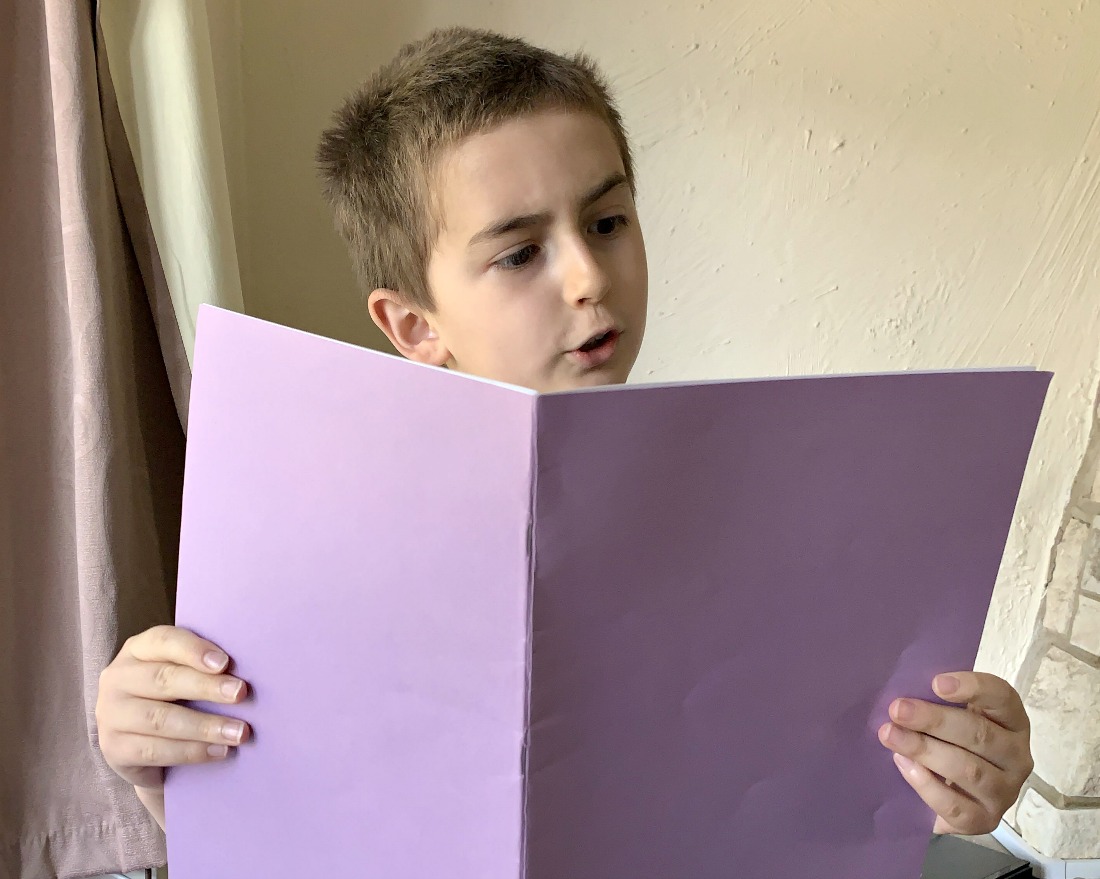
Reading one of his stories to me


Posted in Homeschooling | Tagged , , , , , | Leave a comment

A piece of paper, a pen and the kitchen table

I love using workbooks and worksheets, it just helps me feel organised and feel like I am covering everything. And that is why I write so many posts about the workbooks and worksheets that we use and like (I don’t tend to write about the ones that we don’t like). But the truth is a workbook is a workbook, it is a resource that I use to help the kids. But if you don’t get the extra workbook or print out the extra same pages it does not mean your kids are not going to understand.

The most important part of our home education is probably the part that I don’t write about that much. It is me (or their dad) sitting talking, explaining, discussing a topic with the kids. It is that one-to-one or as is often the case in our house one-to-two moments. And they are often not picture perfect. It is often me with messy hair in my PJ’s or a tracksuit on the couch or sitting at the kitchen table with some paper and a pen (and let me be clear is often a messy kitchen because I have put off doing the dishes or half-baked something and then stopped to deal with a question). Our home education mostly happens is a very well-lived house with a bit of chaos around.

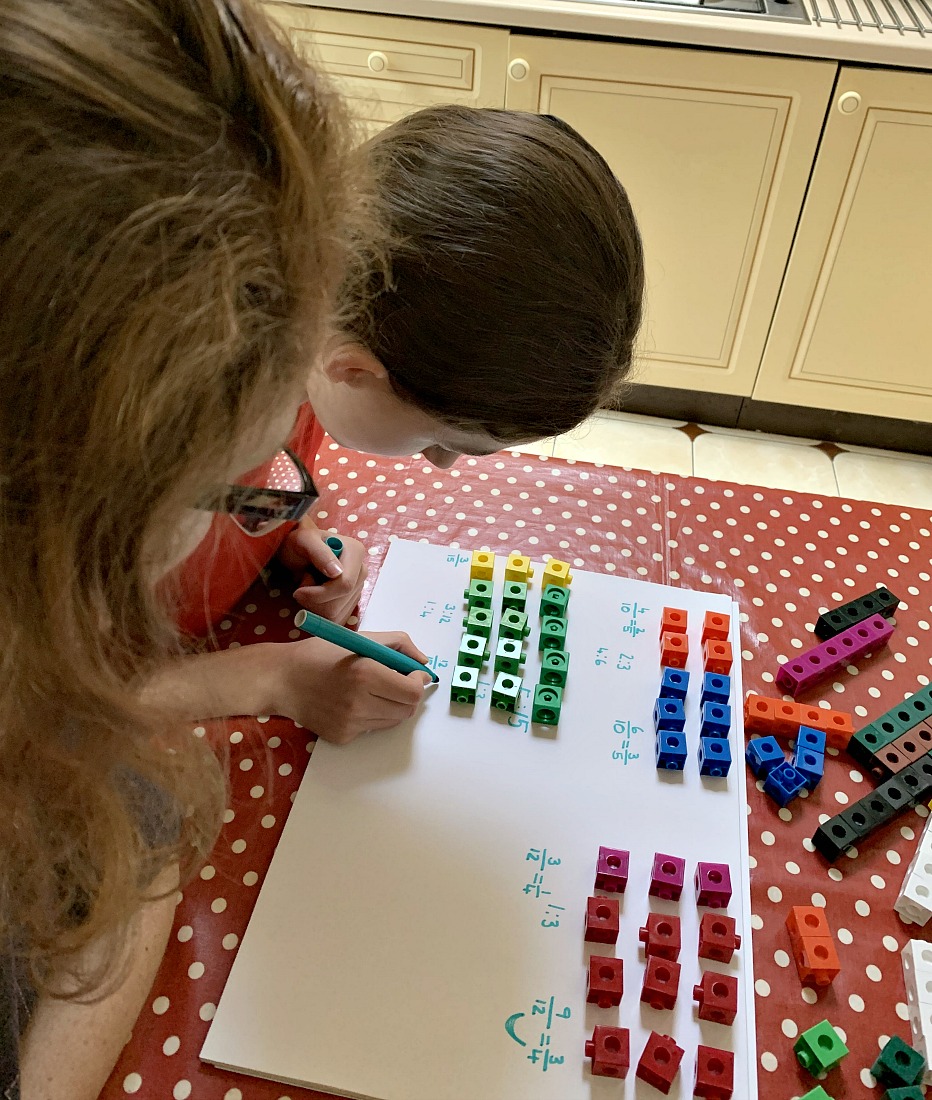
I have found the best way to do Maths is me with a kid is at the kitchen table with some paper, pens possibly a maths manipulative or some toys to help with the explanation and I go for it. I write, scribble, draw as I explain and then the kids work through hand-written examples with me next to them to make sure they understand. It is normally after we have done this that we get onto the workbooks or worksheets. But the point is my explanations are often just me, paper and a pen. It does not need to be some fancy looking page for the kids to understand. Often it is the fact that they are involved in the explanation process, sitting there with me, commenting as I draw or redraw something that actually helps them more than a perfect looking page.

The picture below was me explaining ratios to my daughter – nothing fancy but it worked.

ratios at the kitchen table

When we were looking at forces in Science I actually used some toy cars to demonstrate balanced and unbalanced forces. Again at our kitchen table, no fancy, perfect looking page in front. Just me, some paper, pens and then I grabbed the toy cars that were nearby and it worked.

So yes I love my workbooks and worksheets that we use. I do. I love them. But please don’t ever think that the workbook or worksheet is the be-all. Often a piece of paper, a pen and some basic drawings is just what you need.

Posted in Homeschooling | Tagged , , , , | 2 Comments

Keeping busy with the Micro:bit

Okay so confession time.  I am not the most clued up about coding or how to teach it to the kids.  It is one area that I know we need to work on.  But we recently discovered something called the BBC Micro:bit and we are loving it (and when I say “we” I mean both the kids and myself – yes I admit I have been playing around with it).

BBC micro bit starter kit

The micro:bit is a mini-computer which the kids can program to do different activities (very simple quick explanation).  We received the starter kit which consists of 1 micro:bit, a battery pack, a USB cord and 2 batteries. You can connect the micro:bit directly to your battery pack or who can connect it to your computer (we used our computer).  And once connected you can get going.

inside the BBC Micro bit starter kit

We started by logging onto the Micro:bit website, we selected the Make Code Editor (you can also chose Python as an option) and just jumped right in. The tutorials are great for getting the kids started and both of mine quickly started to adjust the suggested activities into projects of their own (like 5 minutes after starting).

using the block code to create flashing images

The first project is the flashing heart which is creating 1 image that flashed one and off. My kids did it once and then were off creating long sequences of different pictures. They even realised they could create a sequence where a simple picture grew in size and then reduced back down to the starting image.  It was great watching them go from not knowing much to having all sorts of ideas within minutes.

This slideshow requires JavaScript.

The entire set up is brilliant.  The fact that you just “plug” the micro:bit into a computer and look on a website and you are set.  It is easy to get going, easy to find more and more ideas on how to use the micro:bit and easy to spend ages being creative while learning about coding.

On the first day both of mine spent ages working through different project ideas and they have gone back every day since then and worked on more projects.  It is already proving to be a great success in our strange summer that we are having.

And I must admit the kids and I are already eyeing out some of the add-ons that you can buy (the only problem is deciding which one to actually get). We have our eye on the Inventor’s Kit, The Electronics Kit and of course there are a bunch of different cars which my son keeps “reminding” me about.

Here is the link for the starter kit that we are using – microbit starter kit

Oh and I spotted that Twinkl have 6 different lessons on using the Micro:bit on their site.

Admin Bit – we were given our micro:bit.  All opinions expressed are mine.

Posted in Homeschooling | Tagged , , , , , | 2 Comments

Starting Year 8 – Science Ideas

For my daughter’s Year 7 science we actually had 2 books – one was a Collins and one was an Oxford one. And I started the year not knowing which one we would use, so we dipped in and out of both for a while until we found our feet. And in the end it was the Oxford Activate 1 book which we preferred (and when her dad did Physics with her during the lockdown he also preferred the Activate book).

So based off last years’ experience we are sticking with the Activate series and using the Activate 2 student book as our main resource. However this year we are also using the workbook which goes with it. (There are two different workbooks – we are using the Higher one but there is also a Foundation one.  I have not seen the foundation workbook so I can only comment on the Higher workbook.) With her Year 7 science I often downloaded extra worksheets from Twinkl for practice pages but when her dad started doing physics with her he did not have the time to search for extra worksheets (he was doing physics with her in the evenings after he had finished his work and we realized that using a set workbook which lines up with the student book just makes more sense and is better time management on my side – plus the workbook only costs £4.99 which is probably less than I would pay in printing costs for the extra pages that I printed out).

This slideshow requires JavaScript.

We have not started using the Workbook yet but some quick comments about it – it lines perfectly with the student book and it has all the answers in the back.  It also has a pinchpoint question after each topic (this focuses on a difficult concept) and chapter revision pages as well.  I will write a proper review once we have used it for a bit and can give feedback but initial thoughts are it looks good, I think it is good value for money and it will be that extra bit of practice that we were wanting in her year 7.

Okay so main Science topics are coming from the Activate 2 range and then we are getting the Oaka Topic packs as an extra. We love these topic packs, just perfect for my daughter’s learning style, so we are definitely sticking them with this year. So far I only have 2 – Plants and Photosynthesis and the Food and Digestion pack but I am going to get some Chemistry and Physics ones as well. (I often just get the Oaka packs as we do the topics. If you want to read more about Oaka Science Topic packs I have some photos and comments on the Light pack here – Light Topic Pack).

This slideshow requires JavaScript.

This year I am also introducing the Oaka Pairs matching game.  At the moment we have the Biology set but I also want to get the Physics and Chemistry set.  It is a simple matching of cards activity but we think it is a good revision / reinforcing activity.  And we have also extended it into a quick explanation activity – she randomly selects a picture card and then she has to explain what the card is showing.

This slideshow requires JavaScript.

So what does Activate 2 cover (in other words what are the topics I am planning on doing this year).

Biology

  • Health and Lifestyle (so food, nutrients, digestive system)
  • Ecosystem Processes (photosynthesis, leaves, plant minerals and respiration, food chains and food webs)
  • Adaptation and Inheritance (adapting to change, inheritance, natural selection, extinction).

Chemistry

  • Periodic Table (metals and non-metals, groups and periods)
  • Separation Techniques (solutions, solubility, filtration, evaporation and chromatography)
  • Metals and Acids (metals and water, metals and oxygen, extracting metals, ceramics, polymers, composites)
  • The Earth (sedimentary, igneous and metamorphic rocks, the rock cycle, the carbon cycle)

Physics

  • Electricity and magnetism
  • Energy (energy transfer, energy resources)
  • Motion and Pressure (speed, motion graphs, pressure in gases, pressure in liquids and pressure in solids).

This slideshow requires JavaScript.

Just by looking at those categories there are a few that I know we have already covered in a lot of detail so I think those sections will be more revision which means we can spend longer on other areas and possibly include extra topics – for example expanding on the cell based knowledge that we did this year and human biology (two areas my daughter is very interested in).

Although the plan is to mainly follow the Activate books and use the Oaka Topic Packs I have no doubt we will still dip into Twinkl from time to time.  They do have a wide range of Secondary resources on the sites these days.  One of the Science items that lots of you may find helpful is Twinkl’s KS3 Science Curriculum Overview – which is their plan on how you can split the KS3 science curriculum over year 7, 8 and 9.

Starting Year 8 Science resource ideas

As always I will write detailed reviews about the resources once we have had time to use them.

For those of you interested here are Amazon Links for the Activate Books

Activate 2 Student Book

Activate 2 Intervention Workbook (Higher) (Chandlergrevatt)

Admin Bit – the resources here are all chosen by us, some are free press copies and some are paid for.

I do include Affiliate links. If you follow an affiliate link and go on to purchase that product, I will be paid a very small commission, however your cost will remain the same. I only include affiliate links for products that we use and love

Posted in Homeschooling | Tagged , , , , , , | 1 Comment