Bringing The Lady of the Mercians and King Athelstan to life

We have read a few Anglo-Saxon historical fiction books lately, every one has highlighted different aspects of that time and they seem to keep adding more and more to our knowledge and understanding of that time period. Our latest have focused on two key figures – Aethelflaed, King Alfred’s daughter who was known as a fierce fighter and was called Lady of the Mercians and then King Athelstan (King Aflred’s grandson) who was the first King to rule over both Wessex and Mercia and who actually established the borders of England way back in 937 AD.   They are two separate books but we think they go well together  – Athelstan is Aethelflaed’s nephew and the author has linked the two books with reference to a few key characters in both, however you could also choose to read them on their own.

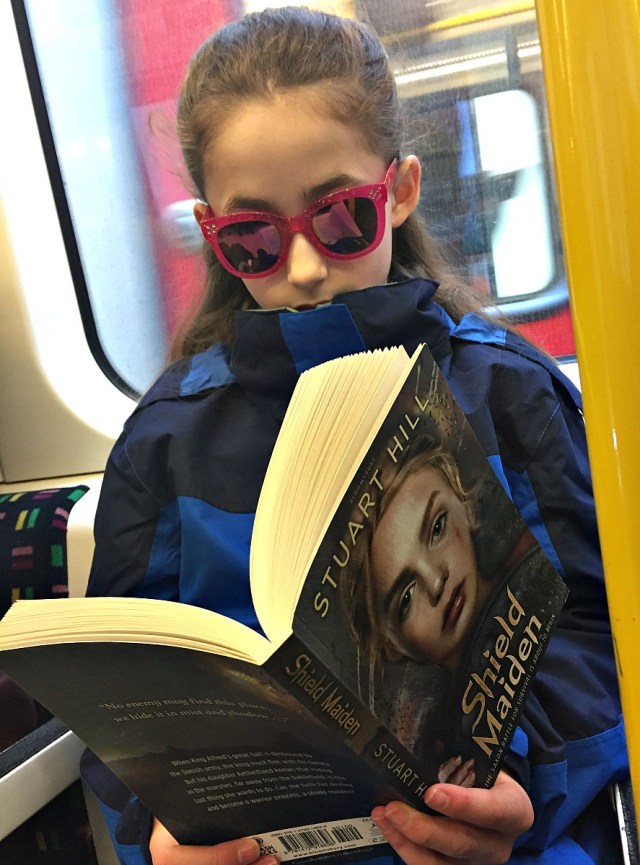
We started with Shield Maiden (Flashbacks).  My daughter was gripped by this story from the very beginning.

reading her Anglo-Saxon story. Shield Maiden on the train

The story begins with the Royal family of Wessex (King Alfred’s family) who are attacked by the Danes and they flee into the outskirts – the marshlands – where they regroup and then launch their attacks, eventually taking back control.  So there is more fighting in this one compared to the other stories we have read. But the fighting scenes did not upset my daughter, in fact she hardly spoke about the fights, although she has admitted that she has learnt quite a bit about what it would have been like in an Anglo-Saxon battle of that time.

She loved the fact that this was a story about a strong female character – someone who learnt to fight as well as her brother and went into battle to protect her country but at the same time you see this other side of her, the gentler side.  I think reading books with characters like this is powerful for young girls – they can see women who are strong but can still be kind and caring.

This slideshow requires JavaScript.

She also found the whole Pagan vs Christianity idea very interesting.  The Anglo-Saxons were historically Pagans but then they converted to Christianity. What really resonated with her was the concept that just because a ruling power declares that the people need to follow a certain religion does not mean that everyone will oblige and that even those who “follow” may not truly believe it.  And she even compared this to the Tudor times when the rulers kept flipping between Catholicism and Protestantism.  In the book the Royal Children have a nurse Ara – who is clearly a Pagan wise-women. And what struck my daughter was the fact the King and Queen knew and even though they expected their children to follow christianity they very clearly respected Ara and her beliefs, they trusted her to protect their children – this was something we discussed at great lengths – how you can believe different things but still be respectful of what others belief.

However my daughter did find it unkind when King Alfred had a church built on the Marshlands after his victory.   She pointed out that he was happy to take refuge from the Marshpeople (who were pagans), accept their help and protection but when he no longer needed it he disrespected them by imposing a church on their ground – again something that sparked a lot of discussion.

I did find it interesting that this theme resonated so much with my daughter but thinking about what life would have been like back then I am sure it would have been something very topical as people do not just change their belief systems over night.

After Shield Maiden (Flashbacks) we went onto The First King of England: The Story of Athelstan (Flashbacks).  And like I mentioned I do think they work well together as the main character of Shield Maiden  – Aethelflaed is also in this book, as is Ara (the pagan nurse although in this story she is more a ghostly figure of protection) and key places discussed in Shield Maiden are also discussed in The First King of England.
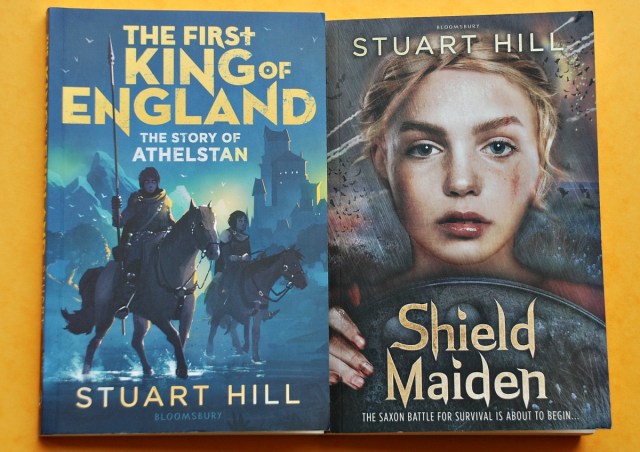
Anglo-Saxon Hsitorical Fiction for children. Shield Maiden and The First King of England

This book follows a young servant boy Edwin who mistakenly picks a fight with another young boy his age only to realise it is the prince of Wessex.  However it turns out the Prince is a not your typical royal and invites Edwin to be is a personal servant.  So Edwin has to start following the Prince around which means we get a very close up account of all the events as they unfold – the training, the battles that are fought, and the peace that is sought from the invading parties.

This story really does describe a lot of what living in those times must have been like – the clothes, the food, how they trained for battle, how they fought, the fact most people were focused on just surviving, that even in times of peace people were constantly waiting for the next battle.  For us one of the key themes that came through was that feeling of guilt, of sorrow after a battle, knowing you had to kill or be killed but still feeling bad for those who died and the uncertainty that someone could invade at any time.  My daughter kept commenting about that uncertainty and that a peace treaty did not really mean that much.  She also loved the section where the Prince of Wessex releases a Viking Prince.  She liked seeing that even in those time of uncertainty and violence people could still put aside their differences to be kind.

We really enjoyed both of these stories and I can honestly say that after reading them my daughter has a better understanding of what life was like in the Anglo-Saxon times.

Anglo-Saxon Historical Fiction books for older kids. British History brought to life. filled with Historical referencesI requested review copies of both of these stories because both my kids are currently very interested in the Early British time period.  All comments are that of myself and my two little readers in the house

Posted in History | Tagged , , , , , , | Leave a comment

Kings and Queens Book by Usborne

With my daughter’s current interest in the past British Kings and Queens I have been looking for a comprehensive book for her. We have a couple of books that deals with individuals or groups of Kings and Queens but nothing that covers all of them.

I happened to spot the Kings and Queens (History of Britain) at our local library and immediately brought it home for her.  It has been such a hit.  This book is perfect for her current interest and I really have been so impressed with it that I am going to be adding our own copy to the family bookshelf just because I think it is a little gem of British History for the kids.  So here is what is included it this book.
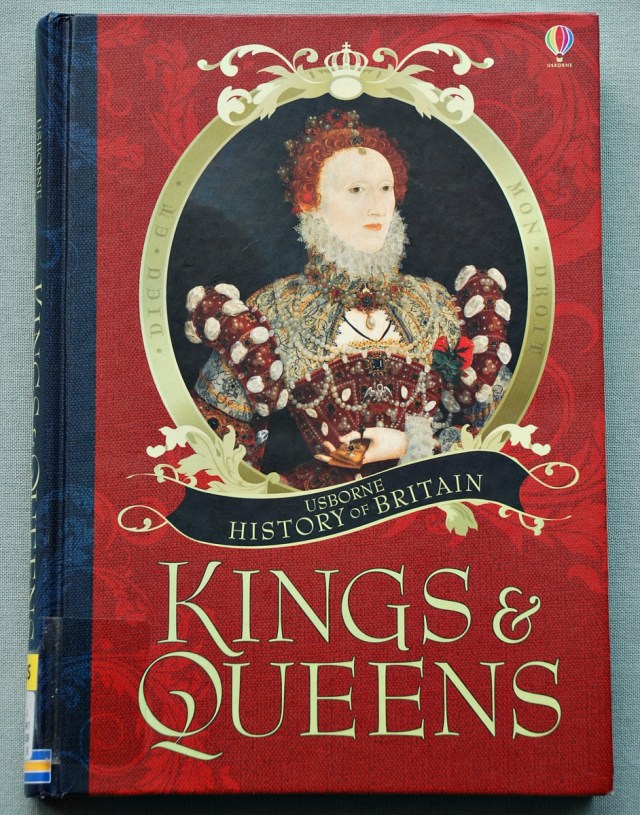
Usborne History of Britain, Kings and Queens. A brilliant comprehensive guide to all the Kings and Queens of Britain. Perfect for kids to use while learning about British History

It starts with the Rise of the Kings and it the perfect starting point because it explains the background to how Alfred the Great came to be King of Wessex.  I really liked that it includes this as at the starting point and does not just launch into Alfred the Great.  The kids need to get that understanding that Britain was  a land of tribes with warrior chiefs and a land of multiple invasions.

This slideshow requires JavaScript.

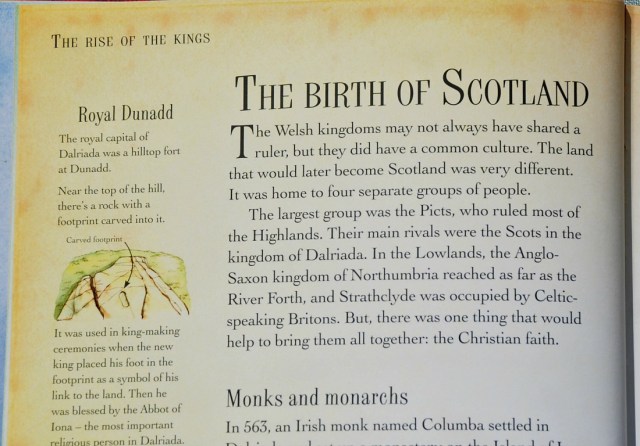
It also talks about Wales and Scotland which I thought was good because I want my kids to understand that they were originally separate Kings.

Usborne History of Britain Kings and Queen The Rise of Kings Early Scotland

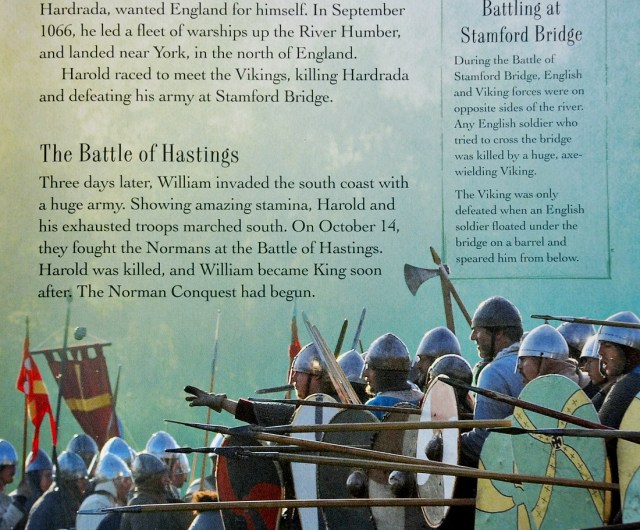
They do talk about the significant battles – like Battle of Hastings but not in detail (and that is the same for other battles – the signficant ones are mentioned but it is never in a lot of detail).

Usborne Kings and Queens. History of Britiain. Includes a few battles like the Battle of Hastings

It goes onto the Normans and again they bring in a section called fighting for Scotland which I thought was good. Then the Plantagenet, Balliol and Bruce which really cover the Medieval Kings.

Onto the Stewarts, Lancaster and York – my daughter has been reading a lot about the Tudors recently and she really liked this section as it gave her a lot more context and background to the build up to what happened later.

And then the Tudors and Stewarts.  As I mentioned this is an area we have been reading about but even still I noticed my daughter took her time going through these pages.  She still found them informative and actually a few times she paged back to remind herself of something.  For me this is what makes this book so special, it gives context to so much of the History that we take for granted.  And it explains a lot about the times, by reading about the ruler you get an excellent insight into how the country was changing and evolving over time.

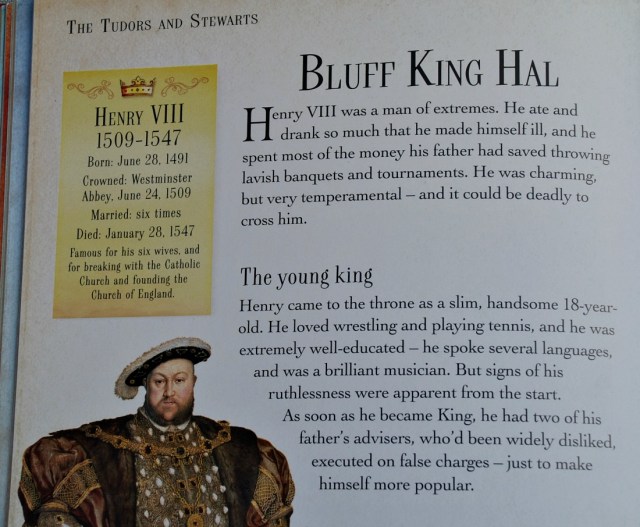
Henry VIII is covered in more detail compared to most other Kings but then I think we do consider him a significant ruler (8 pages in total).

Usborne History of Britain series. Kings and Queens Book includes Henry VIII and his Tudor dynasty

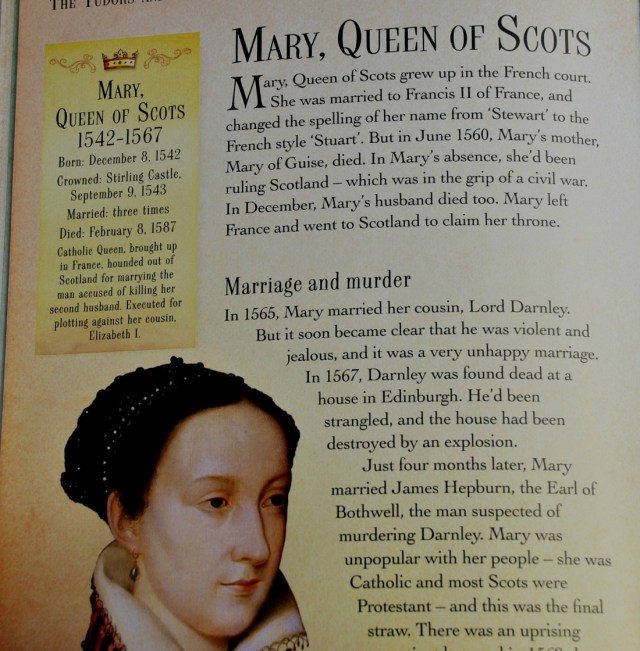
My daughter’s one complaint about this book was that Mary I, Elizabeth I and Mary Queen of Scots were not covered in more detail – but that really is because she finds these 3 so fascinating and is reading everything she can find about them.

Usborne Kings and Queens. Mary Queens of Scots

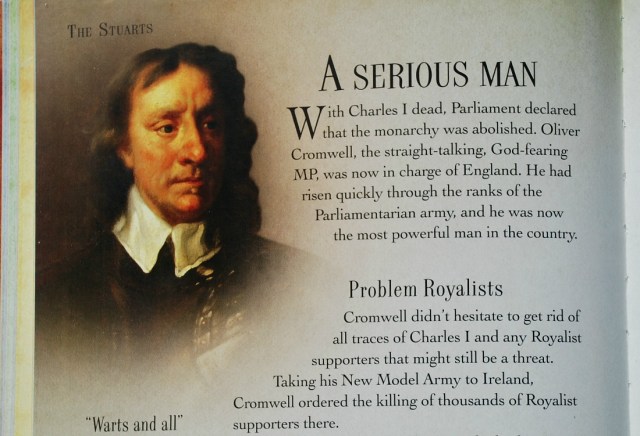
Next the Stuarts. (which is about where my daughter has reached). Again they have included context for the kings which I find very important.  A bit about the religious issues of the time, issues with parliament, the civil war and a section on Oliver Cromwell and the Dutch invasion.

Usborne History of Britain. Kings and Queens Oliver Cromwell

Then the Hanoverians. We have skipped ahead and already read the 6 pages on Queen Victoria just because she was an impressive Queen and my daughter commented on the Family Tree that was included here.  There are family trees through the book which are very useful but this one got particular attention because it showed the link between Queen Victoria to Queen Elizabeth II.

Usborne History of Britain. Kings and Queens. Queen Victoria

And finally the Windsors.

After the Windsors they have included another very useful section called Factfiles which breaks down some royal information like the different jewels, palaces, awards and ceremonies.

So although this is a book about the concession of the Kings and Queens it also includes the events of the time which makes sense to me.   You need to be able to put the various Kings and Queens into context and this book does just that.  And by doing so it really does become more that just a list of Kings and Queens that ruled Britain it does become a wonderful summary of the British History starting with Alfred the Great and going through to Queen Elizabeth II.

I do include Affiliate links. If you follow an affiliate link and go on to purchase that product, I will be paid a very small commission, however your cost will remain the same. I only include affiliate links for products that we use and love.

Posted in History | Tagged , , , , , , | 1 Comment

Reminding myself not to overschedule

I often worry about getting our home ed balance correct – the balance between weekly activities, one-off workshops, outings with friends and our home days.  I think I have a tendency to worry about those home days.  It is something we have always needed to include in our week as it helps the kids decompress and handle their sensory side of life.  But as the kids are getting older we need those home days less and less.  And that is brilliant, I love that but there is another side to those home days.  The home days are the days when they get to explore their current interests without time restraints.

Here’s the thing when they get to explore their interests without worrying about time, worrying that they will not be able to complete whatever project they are starting, they really end up doing amazing work.  And it would be work that you could easily classify as educational / school activity (if you wanted to classify it like that).  But without intending to do anything, driven by their own interest they really are creating their own learning projects.  And what they do ends up being varied.

My son will often draw the animals that he is interested in (currently sharks, snakes, lizards).  He will draw realistic versions and then create his own hybrids.  He will spend ages writing out fact pages about the animals (again the real ones and his own hybrids) and  create lists ordering them into who is the most deadly, which creatures live in which countries or habitat.

This slideshow requires JavaScript.

Now if I think about that – all of what he is doing is self-lead but he is writing a LOT, practicing spelling, some complex words, he is practicing summarising skills – reading a lot of information and then just focusing on some important or unique characteristics, he is also drawing, creating maps, looking at countries and habitats.  That is actually quite a lot of “learning” that is happening.  None of which I have asked him to do, all of which is being 100% driven by his interest in a topic.  The only input I have is as a “resource finder assistant” – so he might tell me he would like book or pages on drawing different sharks, a book on the different breeds or maybe he needs some templates to use for his fact find pages  – that really is my input in all of this. Oh wait I do sometimes act as a spelling helper.

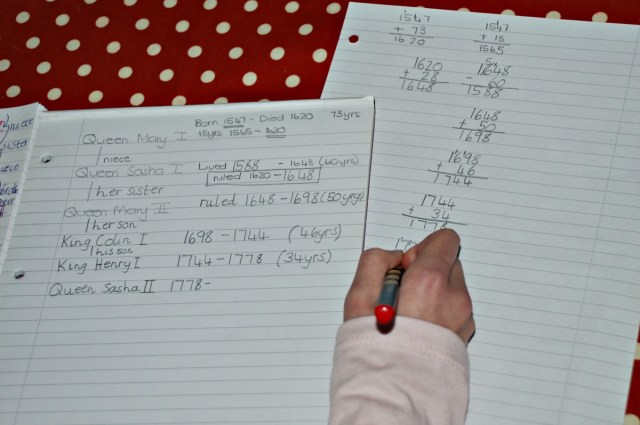
My daughter is the same but instead of being very animal focused she is all about History and family trees right now.  She is writing her own stories about historical characters, creating timelines, family trees, working out dates for when the people ruled and when they died, she even thought about how she would design a royal palace.  And again she is the one driving this and I am just the resource helper and sometimes Maths advisor.  But her projects cover – creative writing, spelling, research, History, Geography, Maths, Religion, no Science but we have discussed a lot about the history of medicine and how certain cures have been proven to be false.

Creating her own Ruler's timeline with dates they ruled

But my point of all of this is the days/ weeks when we are very busy with lots of outings and places to get to they don’t often sit down and do this, or they start, get interrupted because we need to go somewhere and then get frustrated because they were in the middle of something.  On the days when they know we are having a home day those are the days when they really dive into their projects and spend hours learning about their current interests.

So even though we don’t need our home days as much as we used to from the sensory side of life I am still trying to make a point of not over scheduling our week so they get those down days where they can lose themselves in their own learning.  Because those are the days when the real magic of home ed is the most evident and the kids learn more than I could ever teach them.  Those are the days when I sit and marvel at how they are brilliant at driving their own learning and I am just so thankful that we are on this home education journey

Posted in Homeschooling | Tagged , , , , | 1 Comment

Freedom for Bron. An Anglo-Saxon story

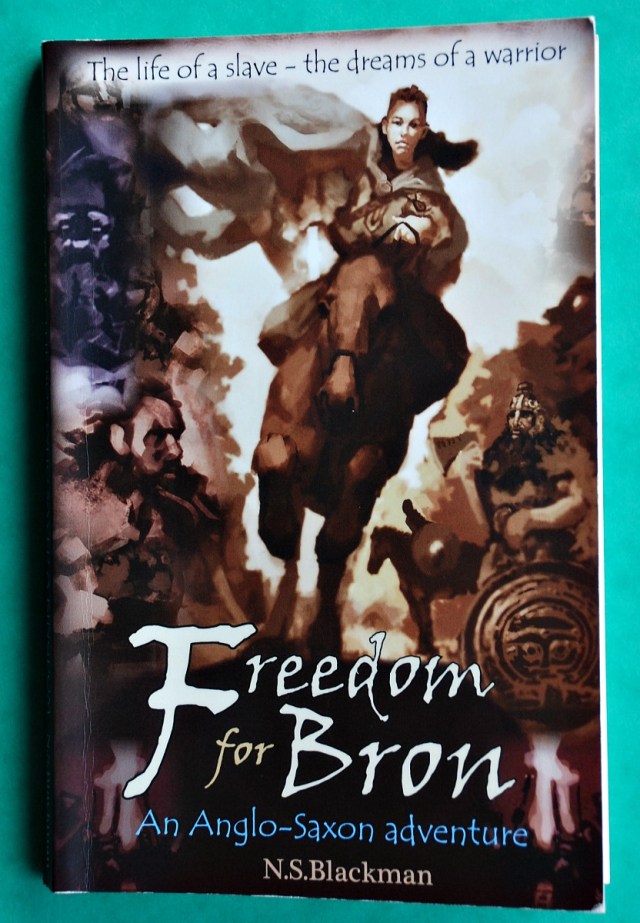
With our Anglo-Saxon theme I feel like we have stuck to the migration of the Angles, Saxons and Jutes, the fighting and the different Kings  but for whatever the reason the kids have not been that interested in the lifestyle part of the Anglo-Saxons as much.  Until we discovered our latest Historical Fiction book – Freedom for Bron: The Boy Who Saved a Kingdom (History Adventures).

Freedom for Bron by N.S. Blackman. An Anglo-Saxon adventure. Filled with Historical references to life in the Anglo-Saxon times

The Story is about a Slave Boy, Bron who manages to buy his freedom and then joins a famous Saxon leader as he tries to secure peace between the local Saxon tribe and the Jutes.

An Anglo-Saxon story for kids to read. Freedom for Bron

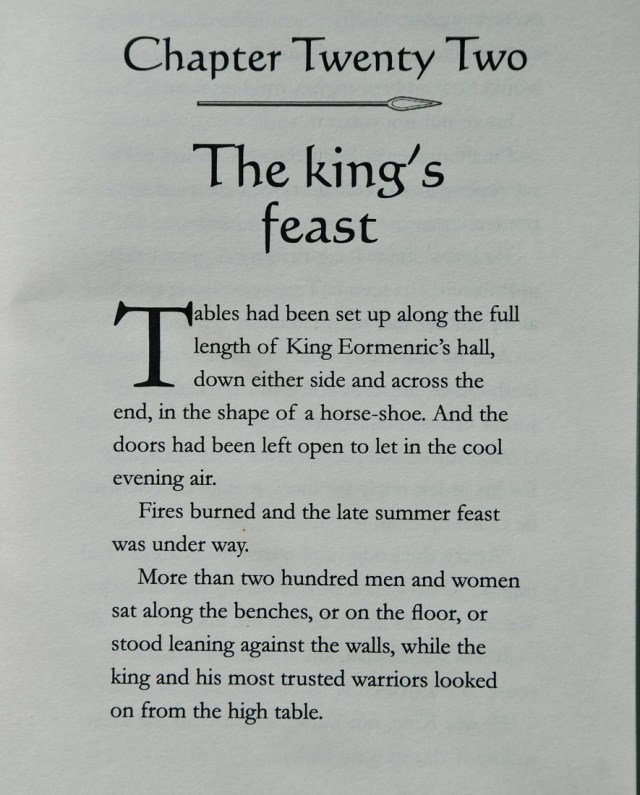
I really liked this story for the simple reason that while we read it the kids were constantly learning about what life would have been like in the Anglo-Saxons time. They read about the typical life on a Anglo-saxon farm, how important the harvest was and how vulnerable the farmers were to raiders.  They learnt how the everyone was always suspicious of strangers.  They learnt about slaves, how they would have been treated and how they could buy their freedom (in this story the slave boy, Bron is treated badly by his master and the local kids but there are other local farmers and a famous warlord who are kind to him so I liked that balance, showing the kids that even a famous and powerful warlord could still be kind to a slave – very good life lesson there).  They learnt about what a basic house would have been like, how they ate and drank ale and not lots of water.  They learnt about the powerful rulers who decided everyone’s fate and that the framers were expected the follow them into a battle without question. The fact the Roman infrastructure was not maintained and I could go on and on.  I really felt by reading this story about Bron the kids learnt an incredible amount about the general life during the Anglo-Saxon times.

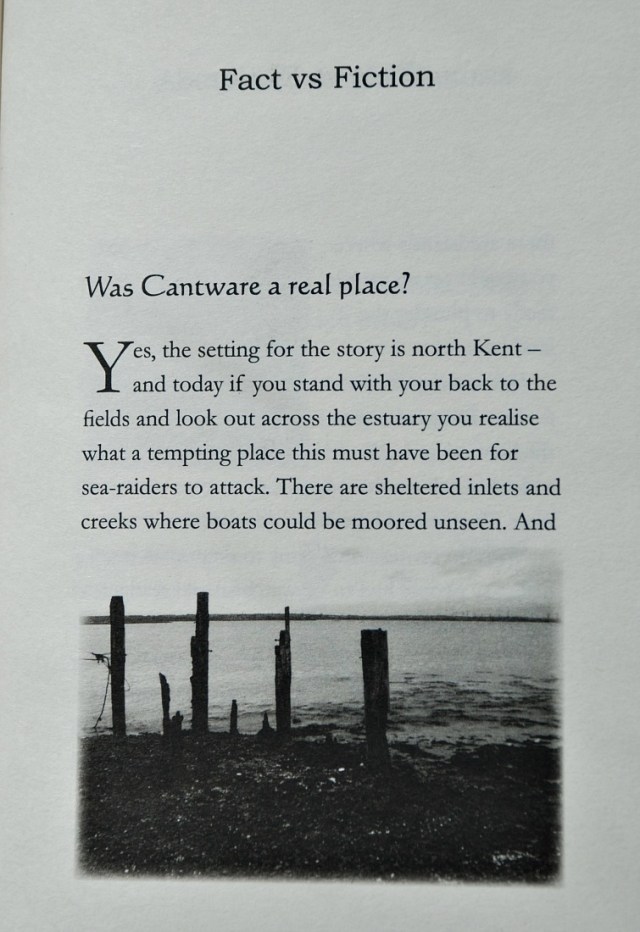
I also really liked the fact that after the story the author included a number of pages (+20 pages) called Fact vs Fiction.  In these pages they break down the story and explain what is fact and what has been included to create a story.  This was brilliant because it reinforced a lot of what we had already been talking about – not only does it speak about the characters and places mentioned but it talks about things like Anglo-Saxon medicine, differences between Jutes and Saxons, did women fight, the religion of the time.  These pages are really informative and I would urge anyone who reads the story to also read these Fact verse Fiction pages with the kids.

Freedom for Bron Fact verses Fiction pages at the end explain what is factualy correct

And that is not all, they have also put together some Teacher’s Notes to go with this book which are free to download from the publishers site  here – Freedom for Bron Teachers Notes.

This slideshow requires JavaScript.

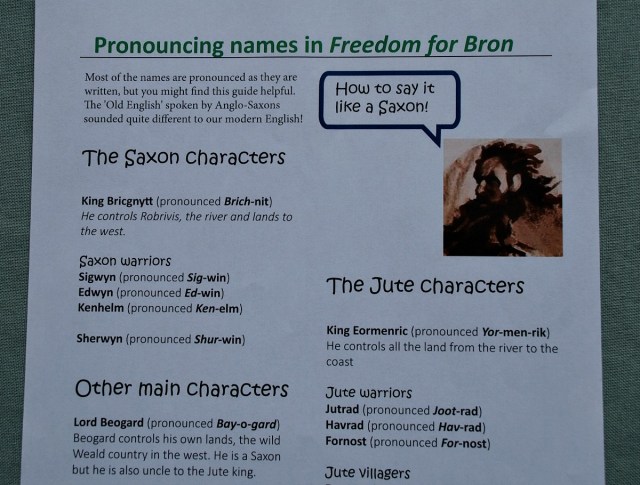
I found this set very useful.  It includes a background, some activity pages which you can do with the kids and a great breakdown of the different themes included in the book.  I found reading the key Theme pages very handy.  In all honestly I would have picked out these key themes by just reading the story with the kids but the notes gave some extra background on the themes and extra detail that I did not know.  Oh and at the end of the Teacher’s notes there is a page on how to pronounce the names – I suggest you print that out and leave it with the book – my daughter found it really useful when she was trying to pronounce some of the names.

Freedom for Bron. Teachers Notes how to pronounce the nanmes like a Saxon

As a home educator I loved the fact that not only was there a Fact vs Fiction section at the back of the book but they also created a useful set of notes to go with the book.  We found this book a really useful resource to read as part of our Anglo-Saxon theme.

This slideshow requires JavaScript.

All the Admin bits – I was given our copy of Freedom for Bron.

I do include Affiliate links. If you follow an affiliate link and go on to purchase that product, I will be paid a very small commission, however your cost will remain the same. I only include affiliate links for products that we use and love.


Posted in Book Ideas | Tagged , , , , , , | 1 Comment

Reading on the Underground

Yesterday we went into London for a special exhibit which for us means about an hour commute – one train and then the underground (tube).  The whole way there my daughter read her book – well with a few breaks to keep me informed of the goings on.

reading her Anglo-Saxon story. Shield Maiden on the train

And I kept noticing the stares and I do means stares that she got.  A number of people where really surprised to see her reading.  And then a few comments – One older lady commented to her friend that she never sees young girls reading on the train anymore, someone asked me about the book she was reading and someone even asked me how I get my daughter to read.  I answered back just saying she loves to read (which she does) but it struck me that it was about me getting my daughter to read not thinking that my daughter might actually want to read. Which is strange to think about because before we go into London I normally have to negotiate the number of books my daughter wants to take with us down to 2 (purely because I end up carrying the books around the museums).

After we climbed off the tube my daughter linked her arm through mine and said ” Mum you should have told that lady that I read on the train because that is what we have always done.”  I asked her to explain and she said ” Ever since we were little whenever we went on a train or the underground anywhere you always had books with us and you always read to us on the journeys, so it is just something that we do, going on a train trip means time to read”.  I found that interesting.  It may be the first time that my daughter has ever verbally acknowledge that one of her patterns of behaviour is a result of something that we started doing with them when they were little.


Posted in Homeschooling | Tagged , , , , , , | Leave a comment