A Midsummer Night’s Dream

Shakespeare was one of those topics that I was a bit nervous about. I worried that I would miss something or interpret something incorrectly but when we covered Romeo and Juliet it actually went really well. So well in fact that my daughter goes back and reads extracts of Romeo and Juliet just for fun.
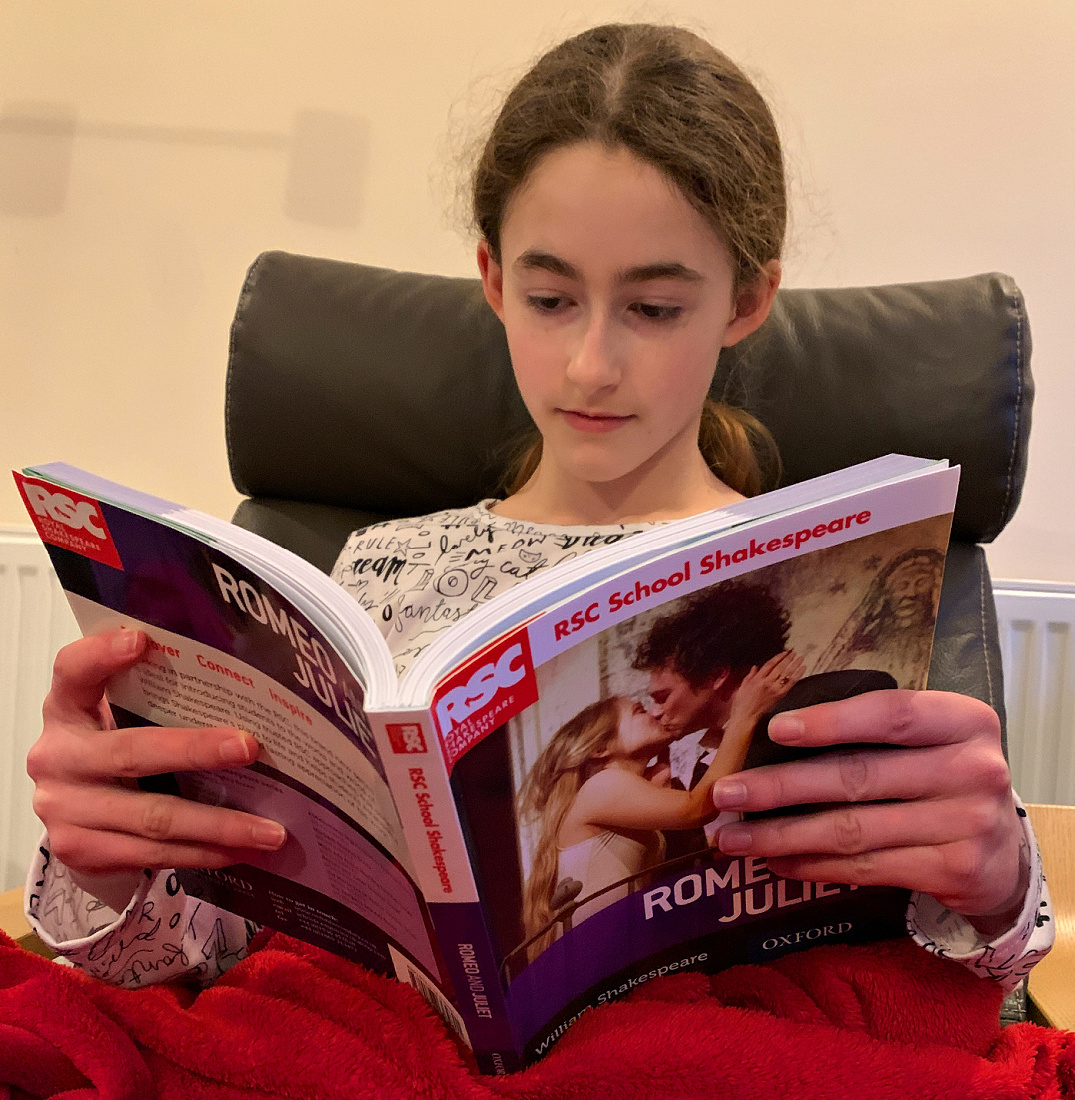
Based on the success of Romeo and Juliet I planned on covering another one of his plays in her Year 8 – I thought of A Midsummer Night’s Dream but life happened, we delayed starting the play and then she started reading it by herself. Yip one day she just picked up our copy of A Midsummer Night’s Dream and started reading it without me. Wow! I loved that. I love that she is not intimidated by Shakespeare and that she is quite happy to tackle one of his plays independently. So I just left her to read it, in her own time and come and ask me questions if and when she wanted too. (We may circle back at some stage and go through it together but for now I am leaving her to explore the play independently).

She is using the RSC School Shakespeare book which is amazing and I must confess if we did not have this incredible guide I do not think she would feel confident tackling it on her own. This is now the second RSC School Shakespeare book that we have and they really are worth every penny.
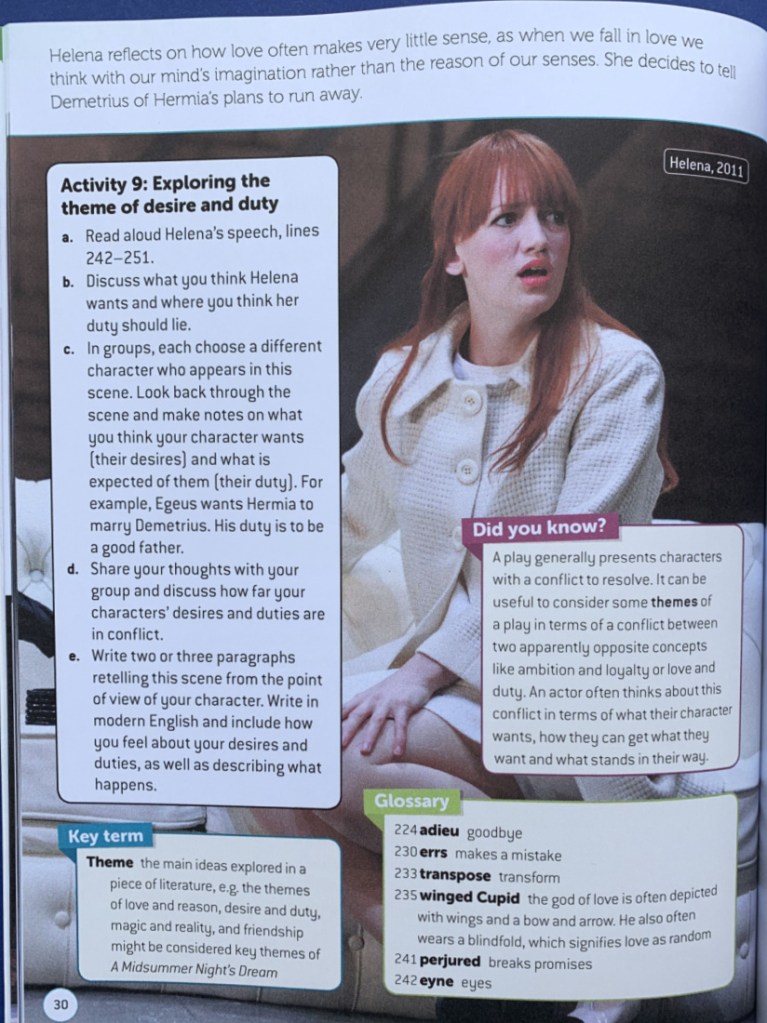
At the beginning of the book there are 4 pages called “The play at a glance” – which is a four page summary of the play. My daughter suggests reading these pages first because she says it helps to understand the order of events before you get into the detail of the actual words.
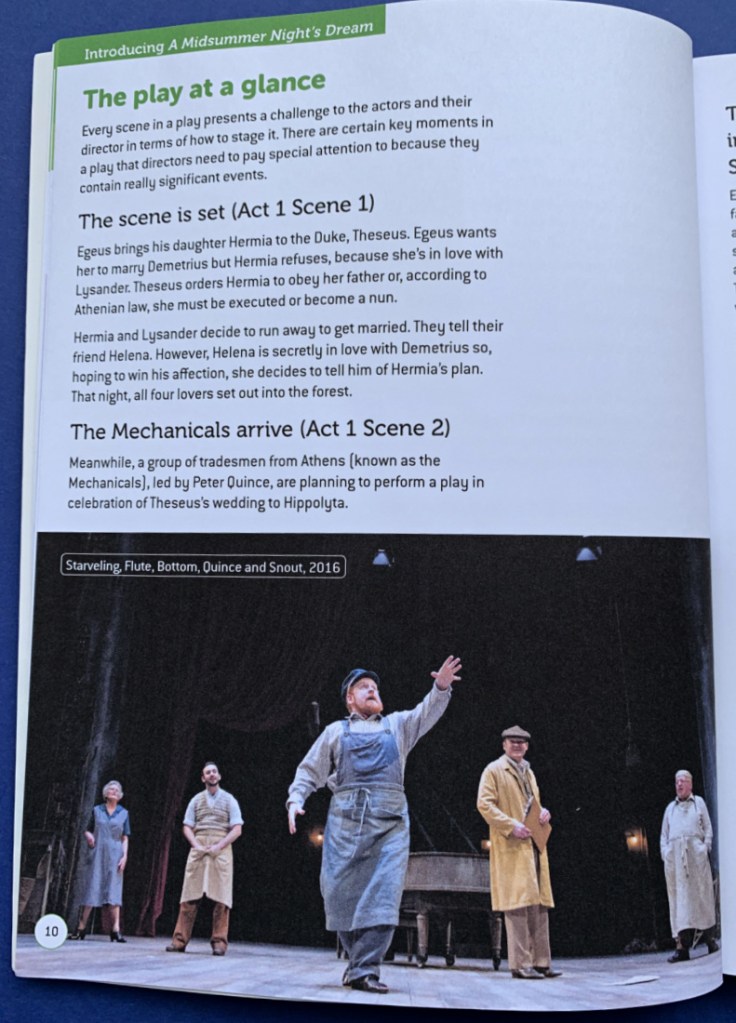
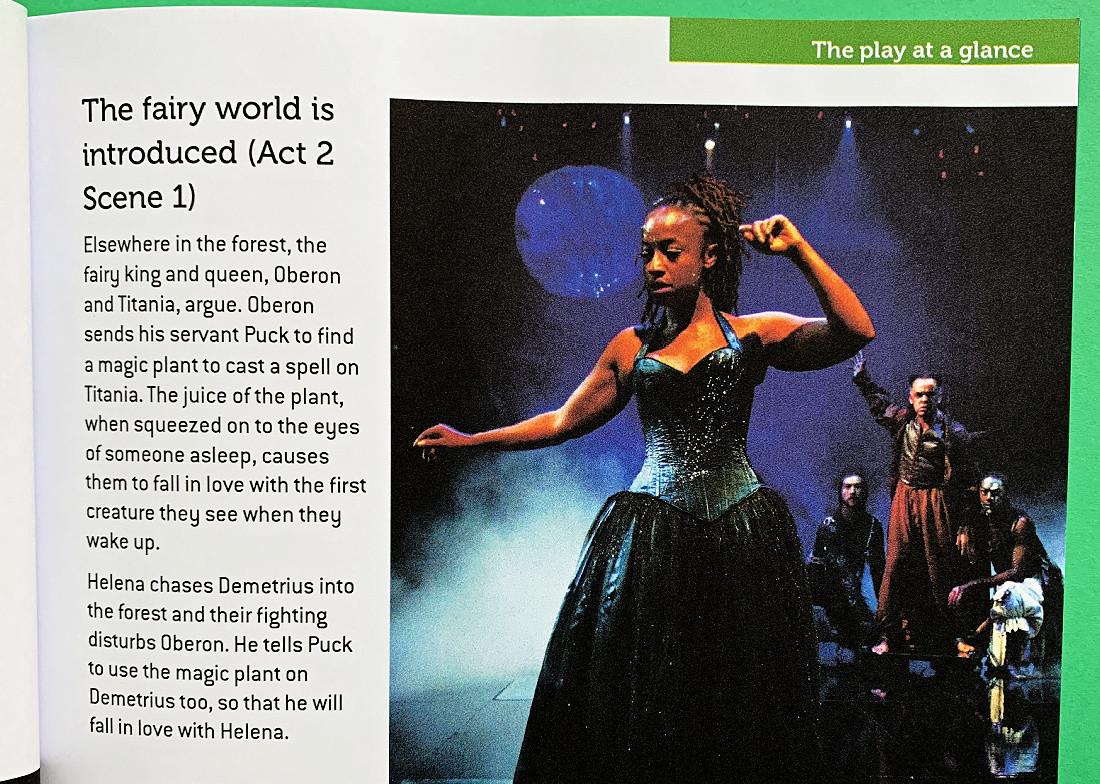
The play itself is set out over double pages. On the Right is the actual text and then on the Left is what my daughter calls the “explanation page”. There is always a picture of the scene being acted out which for us is key. Just looking at the photo helps to explain what is happening in the text and it brings it to life. These photos are vital for visual learners like my daughter. At the top of the picture there is a one or two line summary (we love this), there are glossary and key term blocks which explain unusual words and then there is always a suggested activity. Now the activities are written with a school setting in mind so often they involve things like act out, discuss in a group etc etc but my daughter says she just thinks about the activity in her head and if she thinks she can do it successfully she feels like she understands that page.
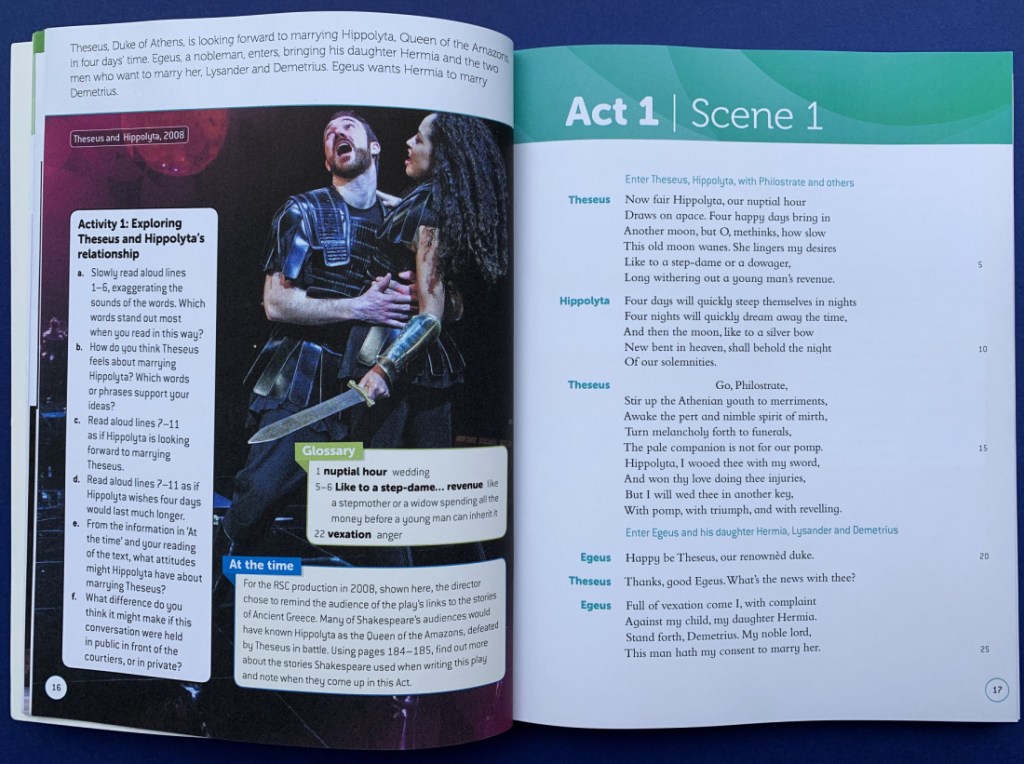
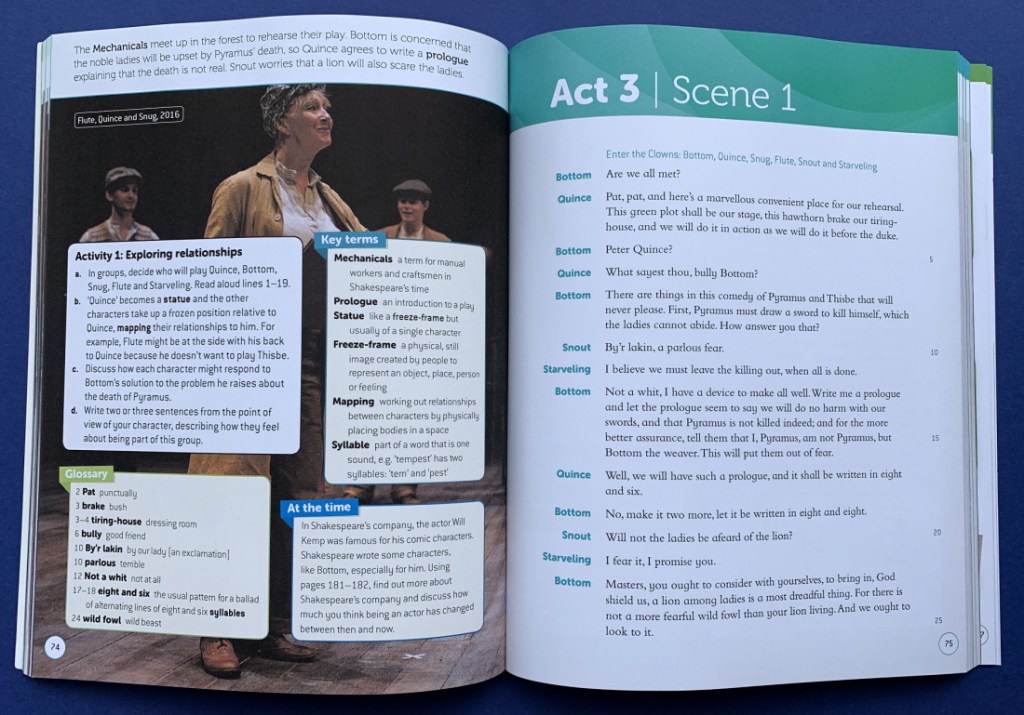
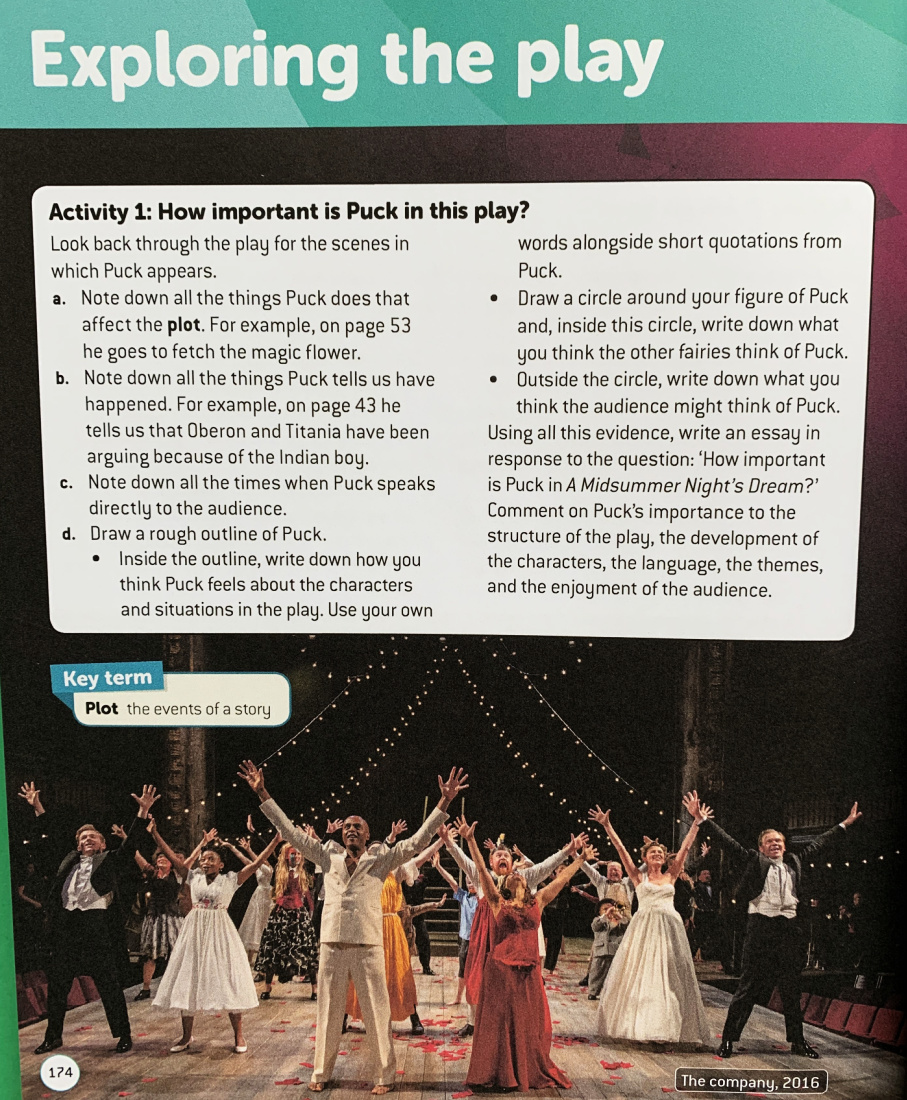
This double page format is a huge hit with us. It really makes the language easier to understand and it is the reason why my daughter feels like she can read one of his works independently. And then just to help sum up all the events and characters they also include an “Exploring the Act” double page at the end of each Act and then finally an “Exploring the Play” double page as well. Which are some extra activity ideas.
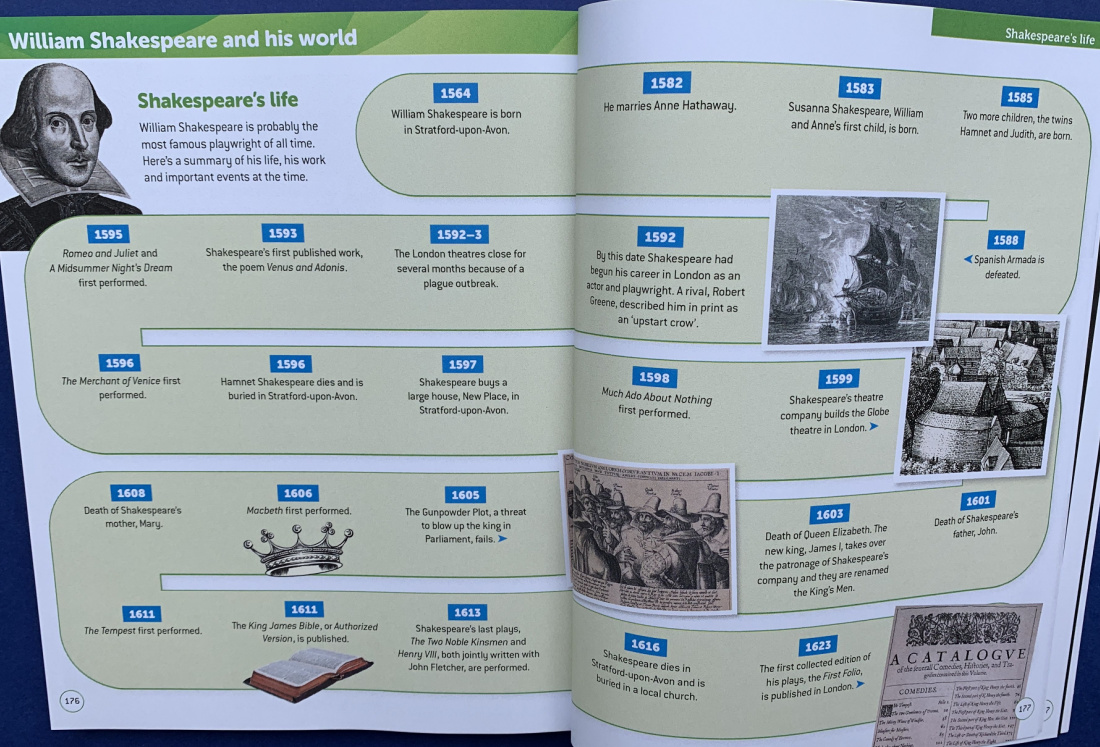
At the end of the play there is a brilliant timeline of Shakespeare’s life and a section called William Shakespeare and his life – which talks about his writing style and also what Elizabethan life was like – so it explains about things like marriage and courtship during Shakespeare’s time. And we strongly urge you NOT to avoid these pages. We have found the more you understand about Elizabethan life the more his plays come together.
We are not using the RSC School Shakespeare book the way that I had planned but I honestly don’t mind. I am enjoying watching my daughter discover a play on her own. But regardless of how you want to read this play – letting the kids to try it independently or if you want to work through it together with them, this book is a true gem.

We are definitely going to get more of Shakespeare’s work in this format in the future.
Posted in Homeschooling | Tagged , , , , | 2 Comments

Population Topic Pack

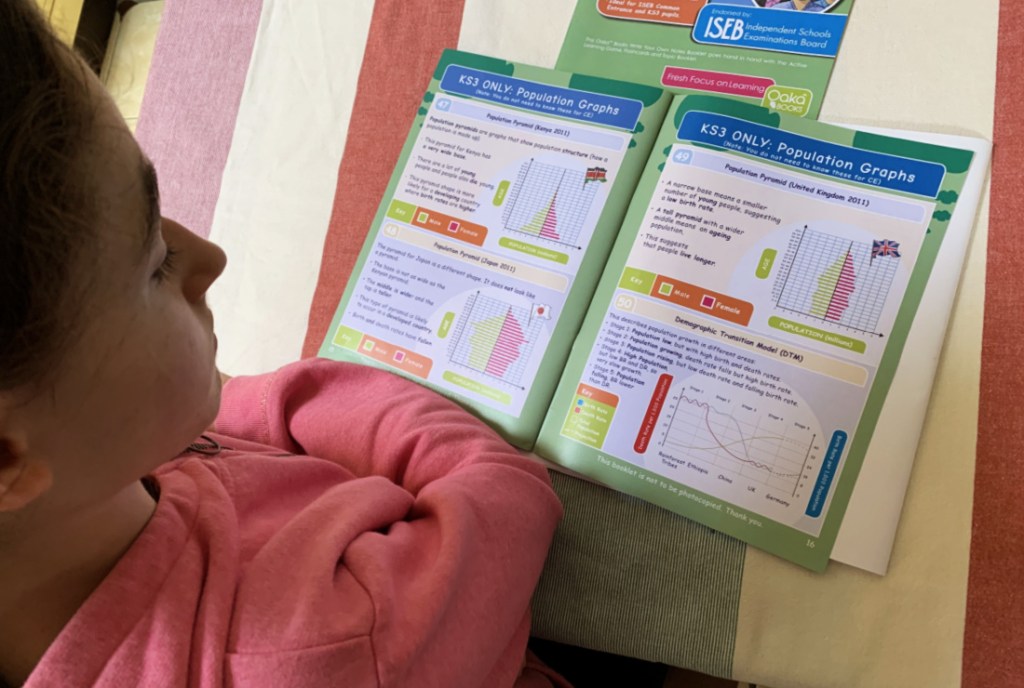
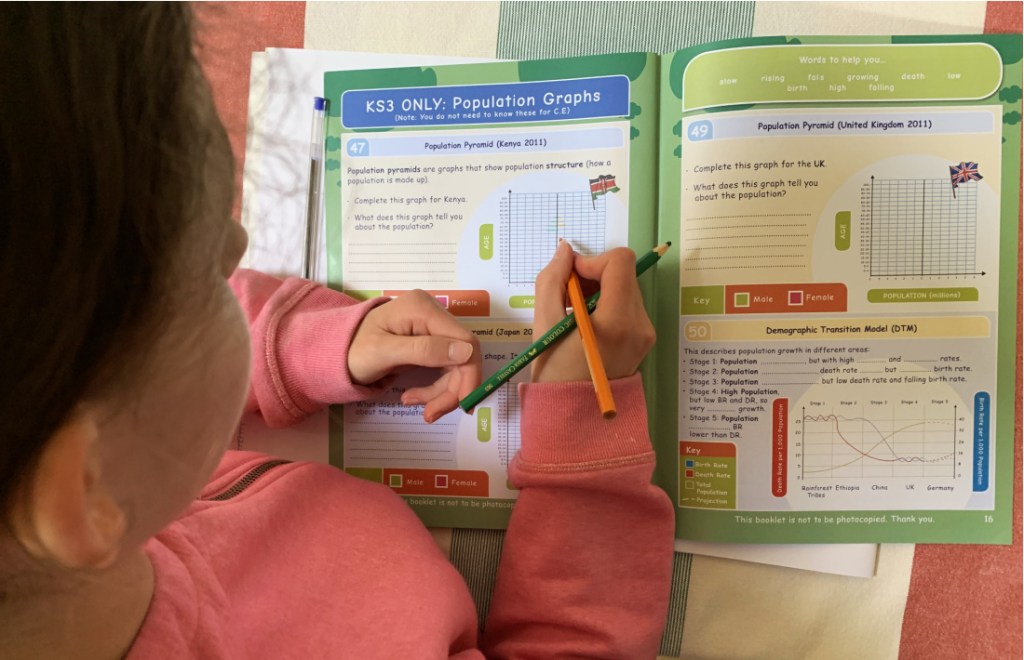
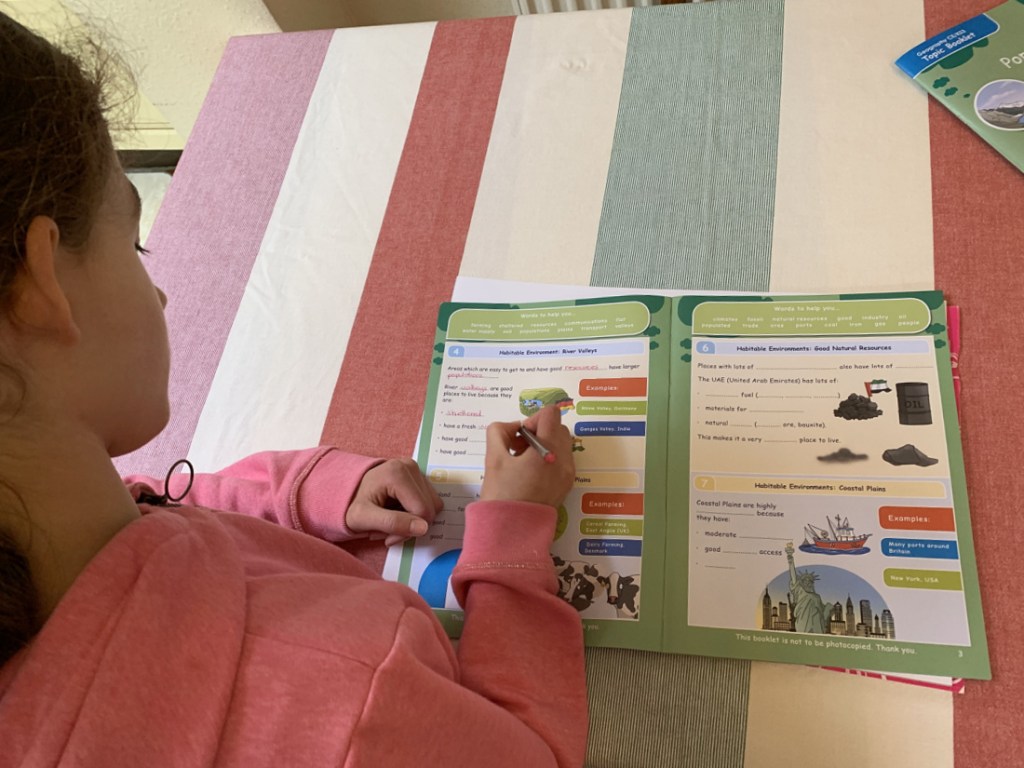
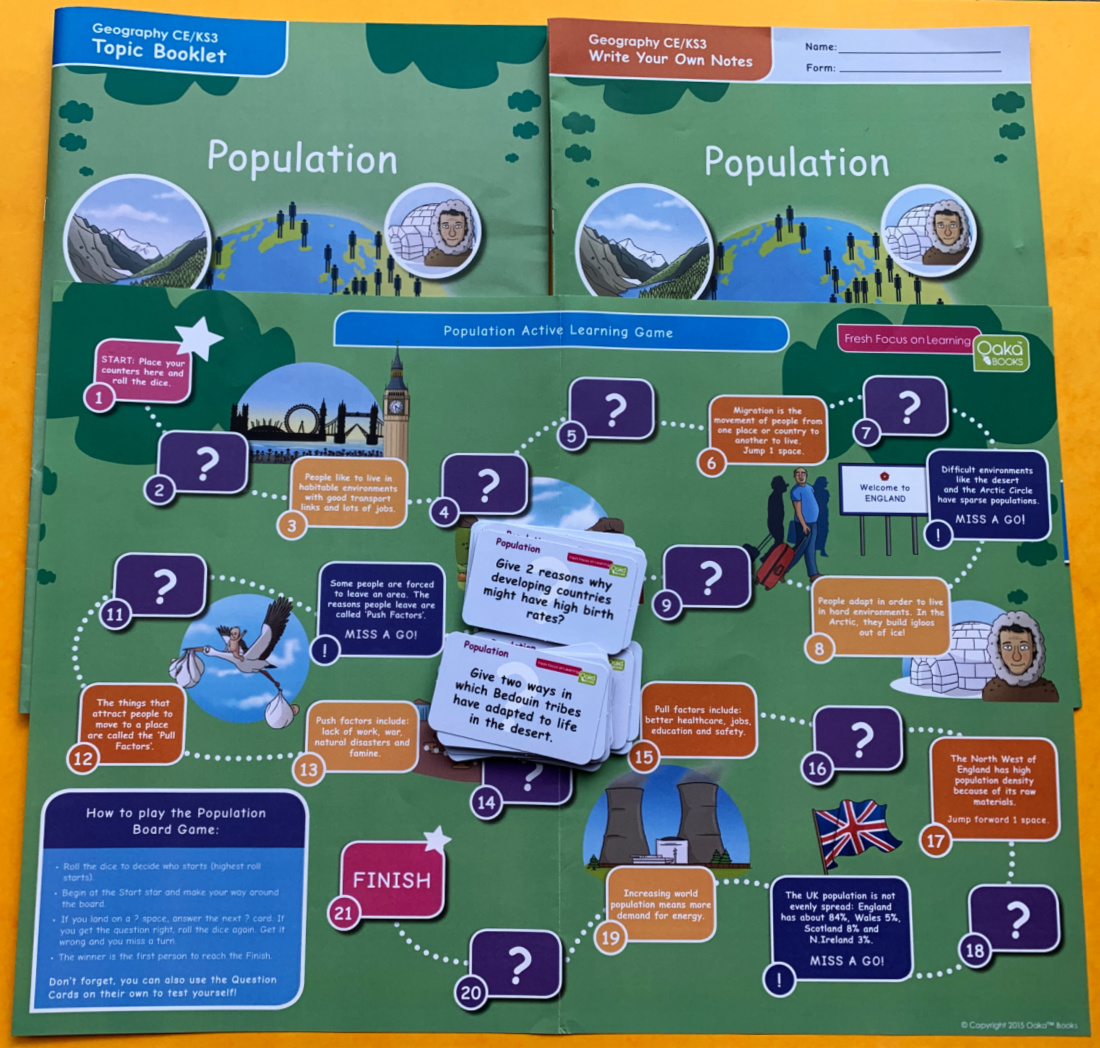
When it comes to any subject I always think the kids pick up how you (the parent) feels about teaching / explaining it. If you are just not inspired or if you do not enjoy it they naturally pick it up and that is NOT a good thing. So when it came to covering Population with my daughter I knew that she would pick up on the fact that I don’t really enjoy the Human side of Geography (I much prefer doing volcanoes, rocks and rivers) so I knew I needed to get a good resource to help us. I had already seen some population explanations in other resources and they just seemed a bit dull and dry so I asked Oaka of we could have a look at their Population Pack.

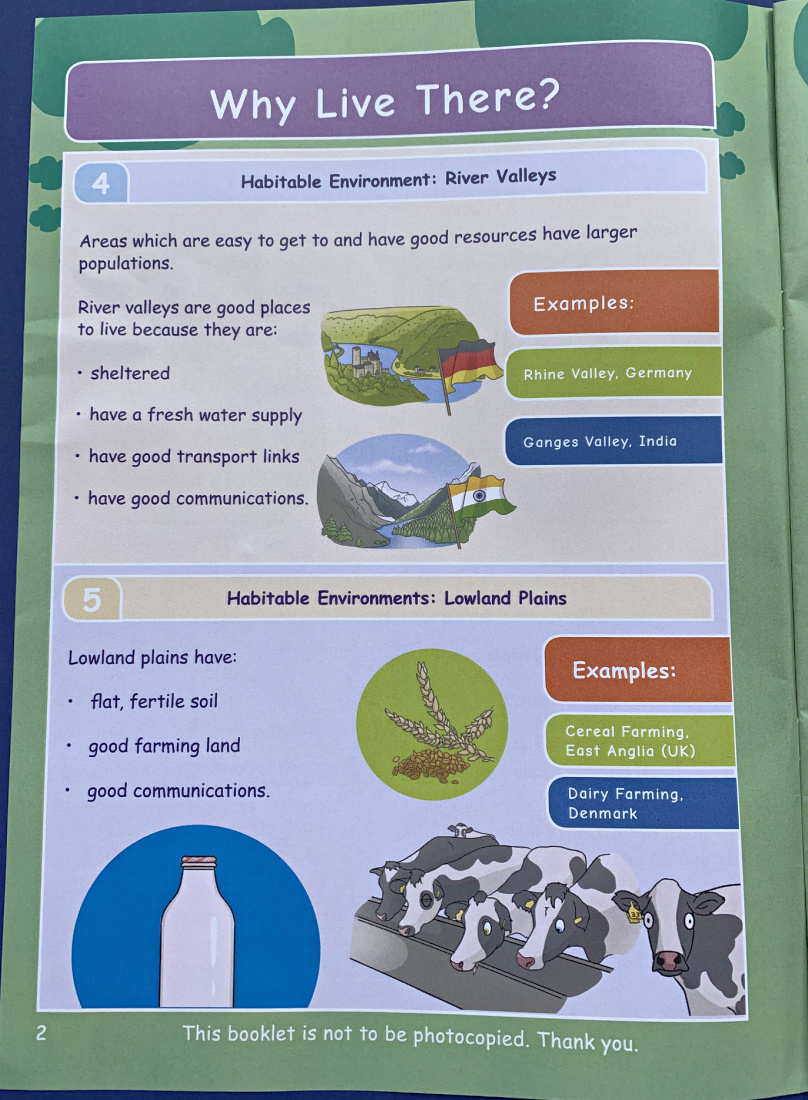
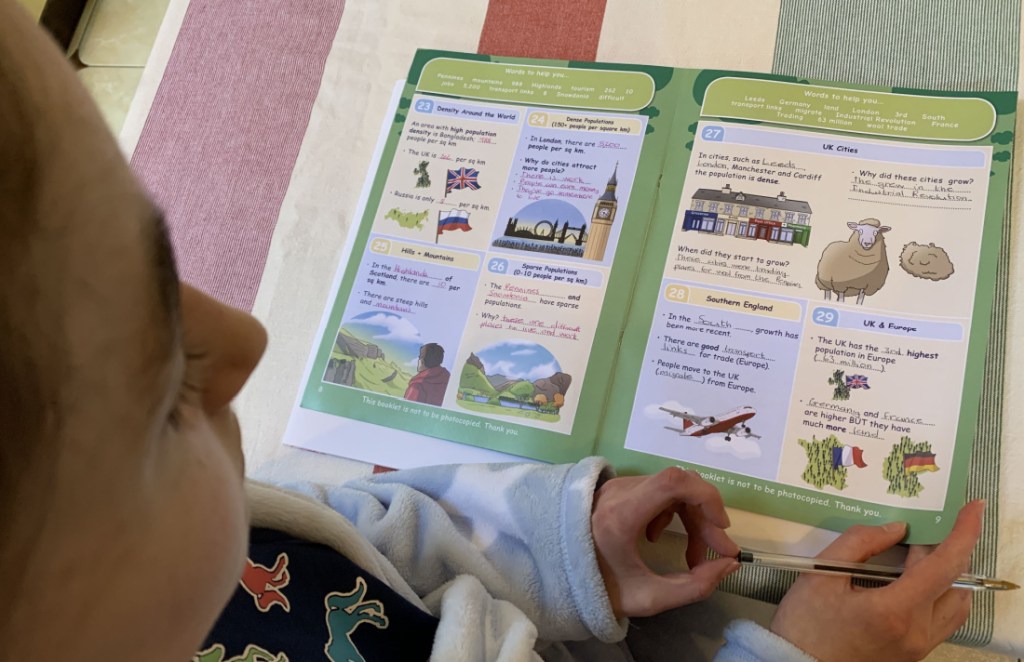
And it was just what I wanted. Colourful, engaging images with short concise explanations, just what I needed to get us through a topic that I was just not that excited about.

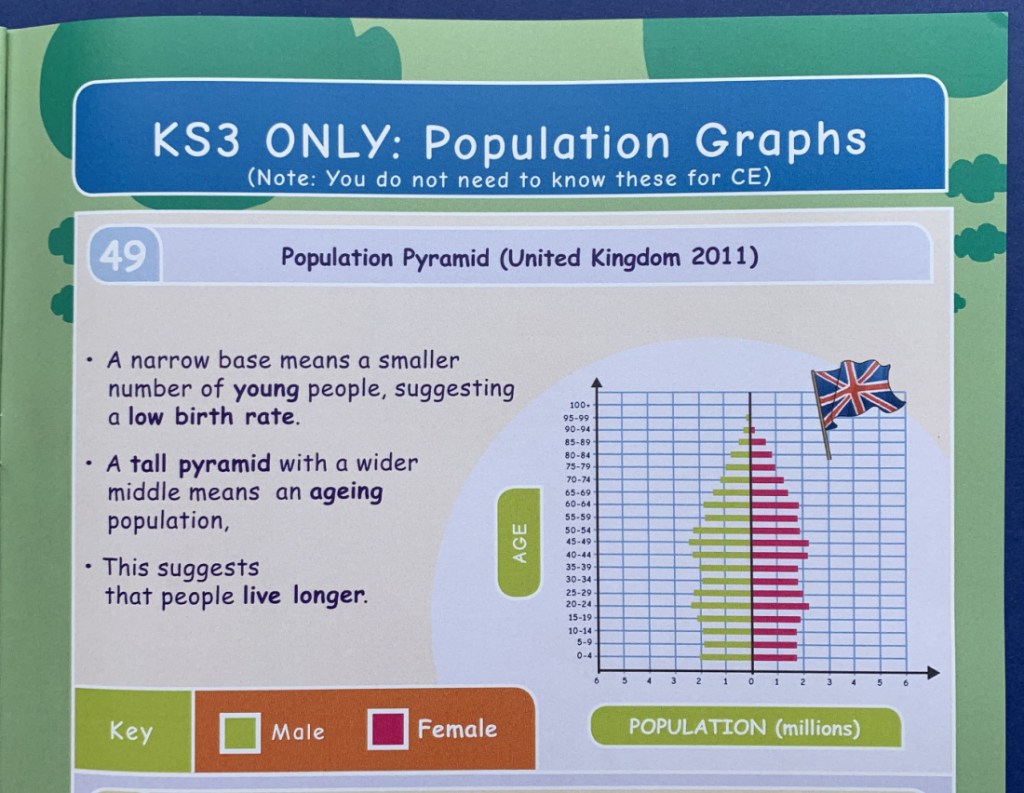
And I liked the way they included the graphs – well explained and too the point. Graphs are not my daughter’s favourite so we really appreciated that they were included and that the explanations were easy to follow and understand.

Okay so what is covered?

  • what is population eg population distribution
  • habitable environments
  • difficult places to live
  • population explosion
  • death rate and birth rate
  • population density
  • population in the UK
  • population growth patterns
  • China’s one child policy
  • world population growth
  • world population map
  • population graphs

And as always the topic booklet explains the concepts and then the kids get to fill in the missing words, missing sentences in the Write Your Own Notes.

And then everything they have learnt about gets reinforced one more time with the active learning game.

I have said multiple times that we are fans of these topic packs but I must admit that I am the biggest fan when it comes to using them for topics that I am not that comfortable with and topics that in all honesty I would quite happily avoid if I could (we are purposely NOT avoiding Human Geography and we are covering it properly because my daughter is still considering if she would like to do Geography as one of her GCSE subjects).

Oh and they a Settlement pack which we are moving onto next. (P.S. – I have found when covering Topics that you don’t really enjoy it helps to have good resources at hand together with a bit of chocolate.)

Admin Bit – As I mentioned above I asked Oaka Books if we could review their Population pack and they kindly sent us one.

Posted in Homeschooling | Tagged , , , , , | 2 Comments

Boost Your Vocabulary workbook 2 for KS3

I recently wrote a post about the Boost your Vocabulary workbook 1 that we are using and enjoying and as luck would have it we were also given a copy of the new Boost Your Vocabulary workbook 2 from Oxford University Press.

There are ultimately going to be three workbooks in this series and although I have not yet seen workbook 3 (it has not been released yet) I have been given a peek preview of the words that they are going to be including and I can confirm that the set of words in each workbook does get progressively harder. My daughter (year 8) is currently working through and completing the 1st workbook before she starts the 2nd one, 100% her decision because she says working through the activities and seeing exactly how to use the words will improve her writing. But that aside I would say based on the level of words the suggested years would be Workbook 1 for Year 7, workbook 2 for Year 8 and then Workbook 3 for Year 9 (but that does depend on individual abilities). Our plan is to finish workbook 1 and then go straight onto workbook 2 and we will level workbook 3 for her to complete as part of her Year 9 English activities (she will also be using the 3rd workbook in the Get It Right Spelling, Punctuation and Grammar series – we really are becoming big fans of the Get It Right series). Oh and on the plus side I have noticed that once she completes the double page for each word she also knows how to spell it, so bonus the kids are getting extra spelling practice in as well.

So what is it about the Get It Right series that we like? We love the page layouts, and yes some people may think that is a bit silly, why is page layout so important? Well, with sensory learners if the page is overwhelming, fill, to the point of bursting with lots of text and busy colours they honestly just switch off and don’t take anything in (I have bought books like this before and I ended up giving them away to the a charity shop because the pages where too overwhelming). So pages that have the information in nice small chunks, with attractive, slightly muted colours tend to work. And the cool colour palette that they use in this series really works.

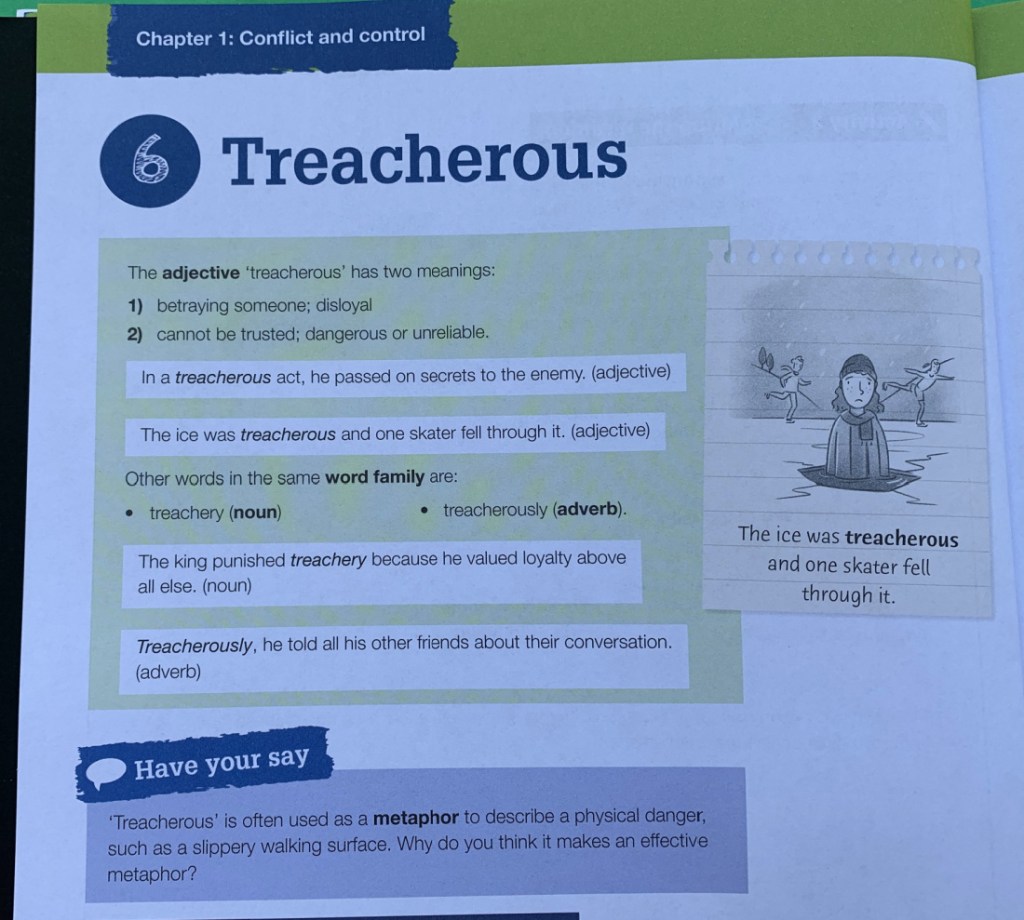
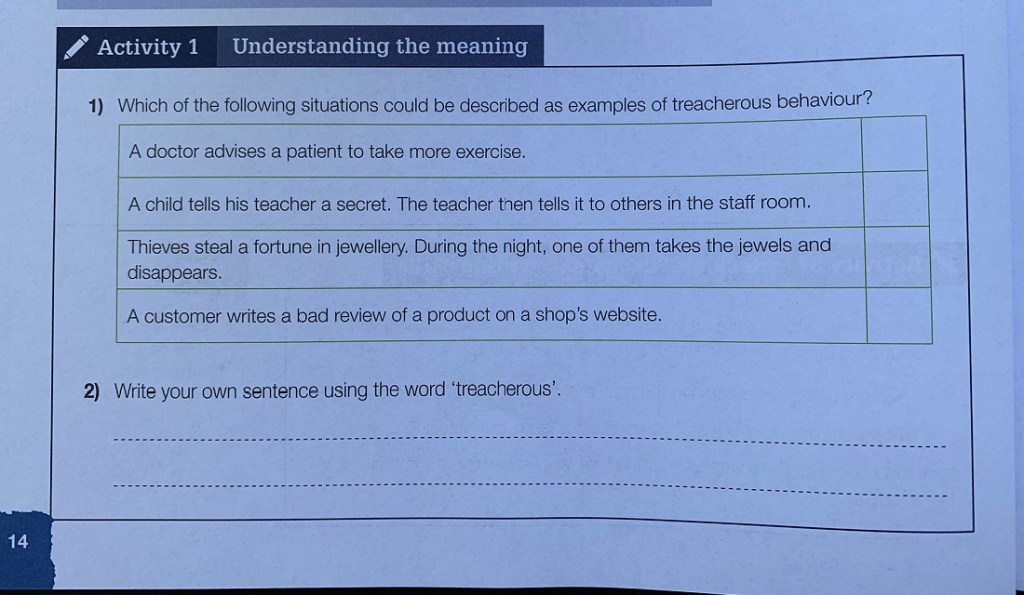
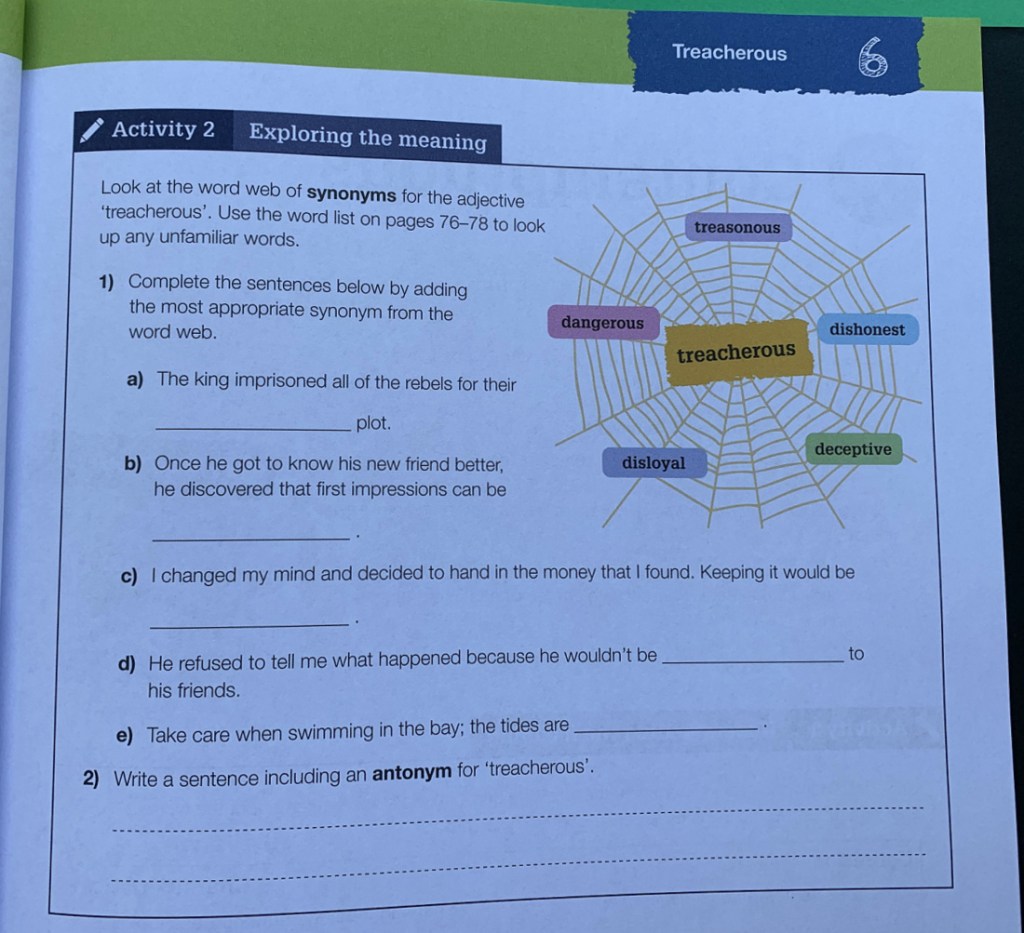
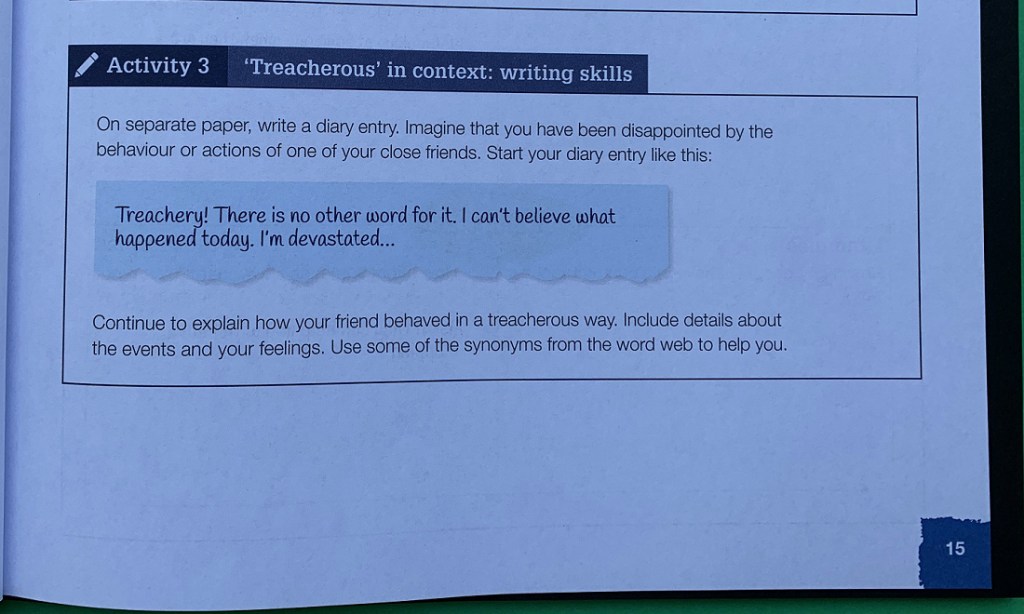
Each word is covered over a double page. And each double page includes an explanation of the word, an activity on understanding the meaning, an activity on exploring the meaning and finally an activity on using the word in context.

The words are split into 4 categories and there are 9 words under each category which means 36 words in a workbook (okay now 36 words may not sound like a lot but it is 36 well-chosen, description words that will enhance anyone’s writing and 36 words that the kids will probably see used in English Literature and other subjects – what I am trying to say is the 36 words that they have chosen are really well-chosen words.)

  1. Conflict and control – resistance, liberty, scorn, defiant, reckless, treacherous, contemptuous, antagonise and malevolent.
  2. Mood and tone – desolate, controversial, tedious, placid, pensive, brooding, listless, apathetic and familial.
  3. Individual and society -privilege, alliance, humility, aversion, prudent, contrition, empathy, ostentatious and manipulative.
  4. Analysis and explanation – demonstrate, authoritative, impression, oppose, subtle, assert, symbolise, hypothesis, and subjective.

I really like everything about these workbooks. I think having a wide vocabulary is vital for all academic subjects and probably something that a lot of us just take for granted. But these workbooks are here to ensure that our kids get exposed to these words and get a proper understanding of the words. I think the entire idea behind this series and the way that the workbooks have been set-up is brilliant. We are going to work through all of the workbooks in this series.

You can get the workbook 2 directly from the OUP site in packs of 15 – Workbook 2 pack of 15 or you can get individual workbooks from amazon – Get It Right: Boost Your Vocabulary Workbook 2

Also all the answers are free to download directly from the OUP site – answers

Admin – As mentioned above we were kindly given a free copy of workbook 2. All opinions expressed are that of my tester (my daughter) and myself. I do include Affiliate links. If you follow an affiliate link and go on to purchase that product, I will be paid a very small commission, however your cost will remain the same.  I only include affiliate links for products that we use and love.

Posted in Homeschooling | Tagged , , , | 1 Comment

Sunflower poetry unit from Twinkl

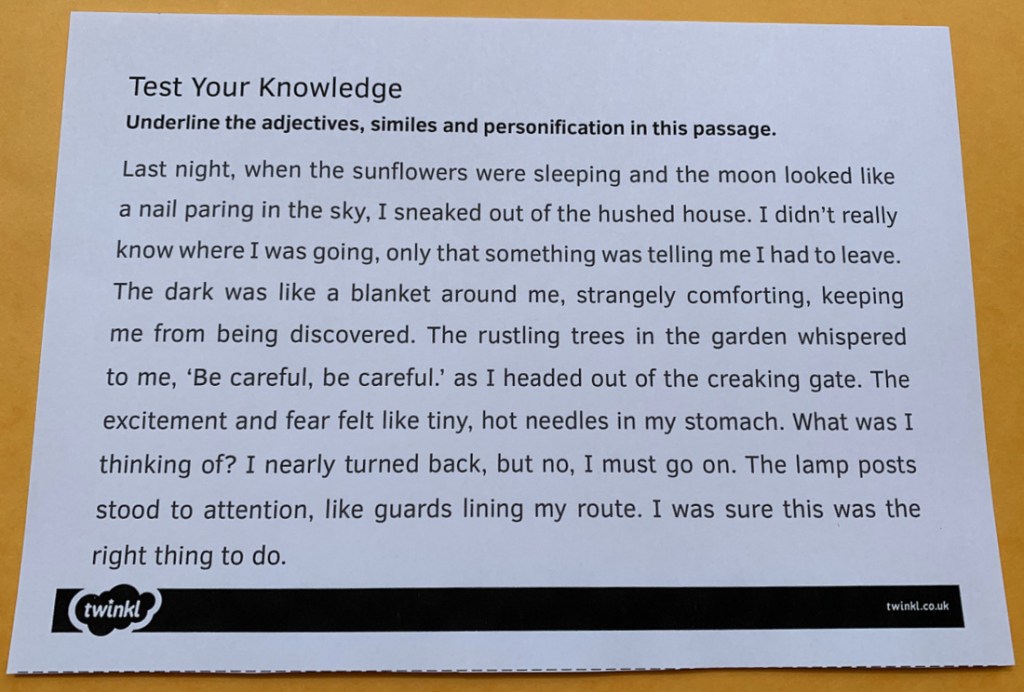
Over the past few months we have been focusing a bit more on poetry (it is one of those areas that I feel we have neglected a bit). We have been working through a workbook, trying to read and discuss more poems and we also tried this Sunflower Poetry unit that I found on the Twinkl website (it is part of their Secondary set of work and I would say it is well suited for kids in lower KS3).

The Sunflower poetry unit is set out as 6 different lessons and I must admit we followed the unit exactly as it is set out. I did all the lessons with my oldest and did them in the same order as suggested. I don’t always do that with the units on Twinkl but with this unit, I liked every lesson and the order of the lessons, it just seemed like a really nice, complete unit and with only 6 lessons it was not too long.

The lessons are as follows

  • similes and adjectives
  • reading out loud
  • instructions
  • personification
  • writing poetry
  • proofreading and editing

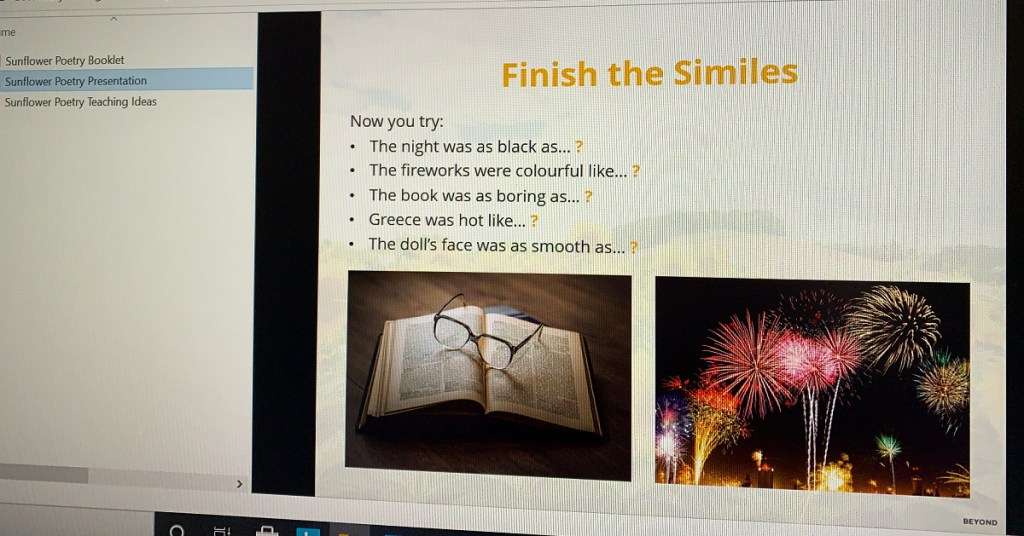
Each lesson has a PowerPoint presentation which is essentially the lesson – it is what explains a bit about the concept (i.e. what is a simile and how can you extend it). And each lesson also has at least 1 activity sheet (we liked all of the suggested activities in this unit but we did also search for a few extras activities on Twinkl for similes and personification – this is actually one of the reasons why I like using the site, you can always find other activities to add in if you want too). They also included a really nice booklet containing 4 examples of sunflower poetry.

I thought the lessons highlighted some important aspects of writing poetry and then without dragging on too long in lesson 5 the kids start trying to write their own poem. My youngest actually just joined us for part of the 4th and 5th lesson and then had a go at creating his own poem (this is his first draft).

After completing the unit my daughter actually commented that writing poetry is not as intimidating as she had thought and I must admit the final poem that she came up with really did impress me (she chose not to share her poem).

I was really happy with this Sunflower Poetry unit. It just ticked all the right boxes for us. It covered the right poetry concepts, it got the kids writing poems and it was really easy for me to facilitate. My only complaint is I wish there was another unit like this.

Posted in Homeschooling | Tagged , , , , | 1 Comment

Variation and Classification Topic Pack

My daughter really enjoys Biology (she is already saying she wants to do it as a GCSE subject or in our case probably IGCSE), she even gets Biology linked books out of the library to read just for fun. But when we covered variation it just did not sit right with her. I could see that she did not feel as comfortable with the topic as she does with other Biology topics and I knew we needed to revisit it or find something to reinforce the concepts. So recently when I was on the Oaka Book site looking at some Chemistry resources I happened to spot their Variation and Classification topic pack and I immediately asked them for a copy. And total confession we are suppose to just be just focusing on Chemistry at the moment and leaving the other Sciences but I just had this gut feeling that we needed to go back and revisit the Variation topic. So as soon as our pack arrived we opened it and started going through it. And boy am I glad we did because she went from having that uneasy feeling about variation, like she was missing something to actually smiling.

So why do I think going back to a topic that we had covered and not just moving on with our current Chemistry was so important? Surely I should be trying to focus on Chemistry and not allow myself to get side tracked? How am I ever going to finish our Chemistry if I interrupt it?

Well, my thoughts are this – I would rather do something slowly, thoroughly and make sure that the kids understand it and can happily chat about the topic than race through and cover everything possible. It is giving them that confidence that they know in themselves that they understand something and that confidence then means they are not nervous to try and answer questions about it. And really we did the pack over 3 days and now we are going back to our Chemistry. So 3 days and we have managed to get rid of that niggly feeling that she did not really understand a topic. That is 3 days well spent (just to clarify when I say 3 days I mean we also did other learning activities in those 3 days, we just did this pack as our Science activity over the 3 days).

So what is covered in the Variation and Classification pack

  • What is variation
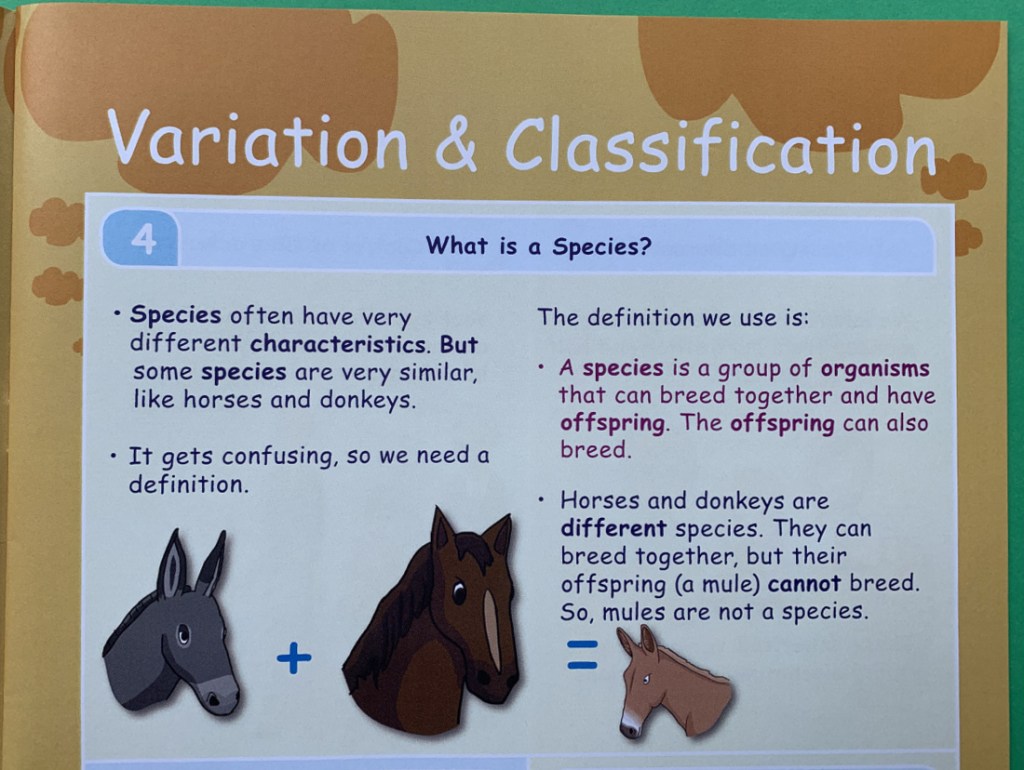
  • what is a specie
  • Inherited variation and environmental variation
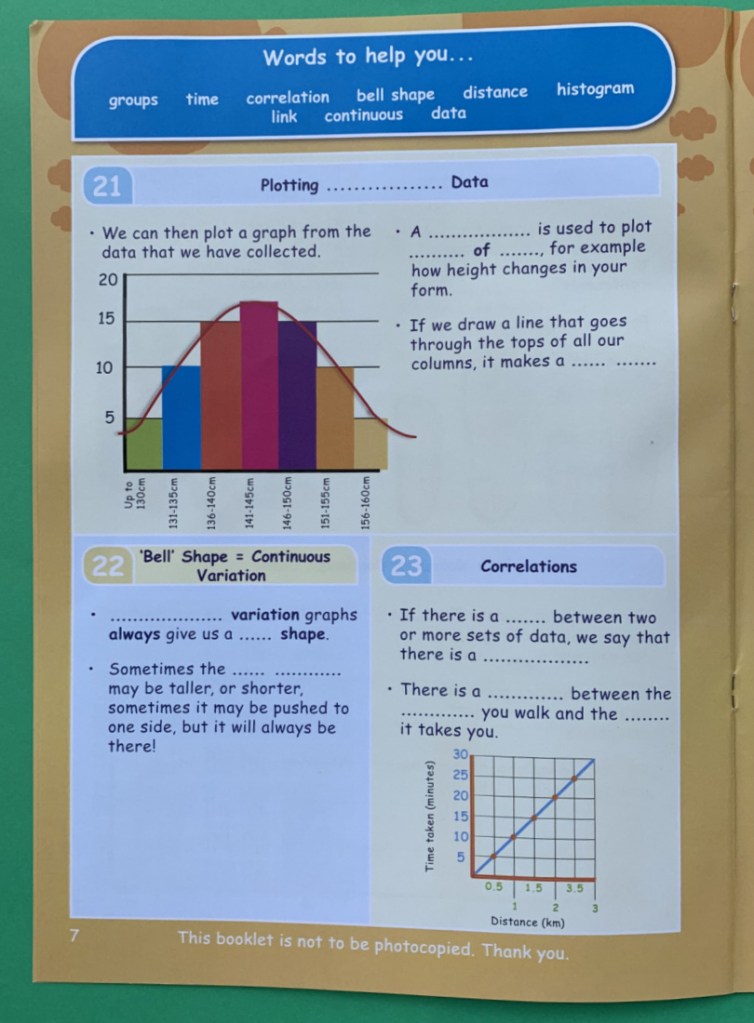
  • Discontinuous variation and continuous variation
  • Using bar graphs vs using Histograms and the Bell shape
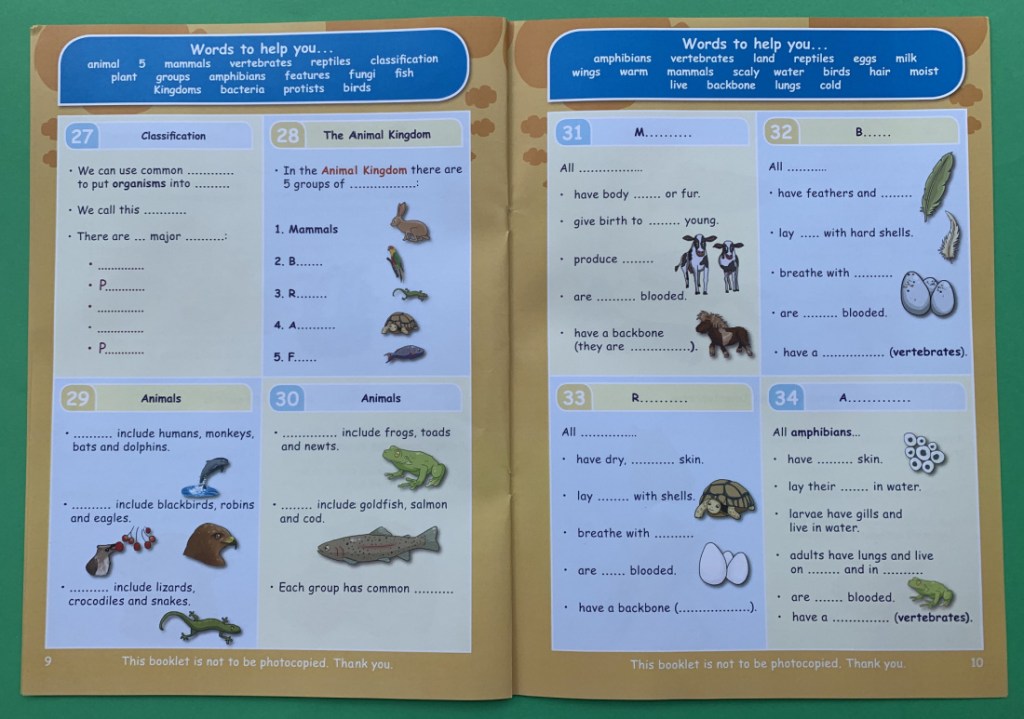
  • 5 major Kingdoms
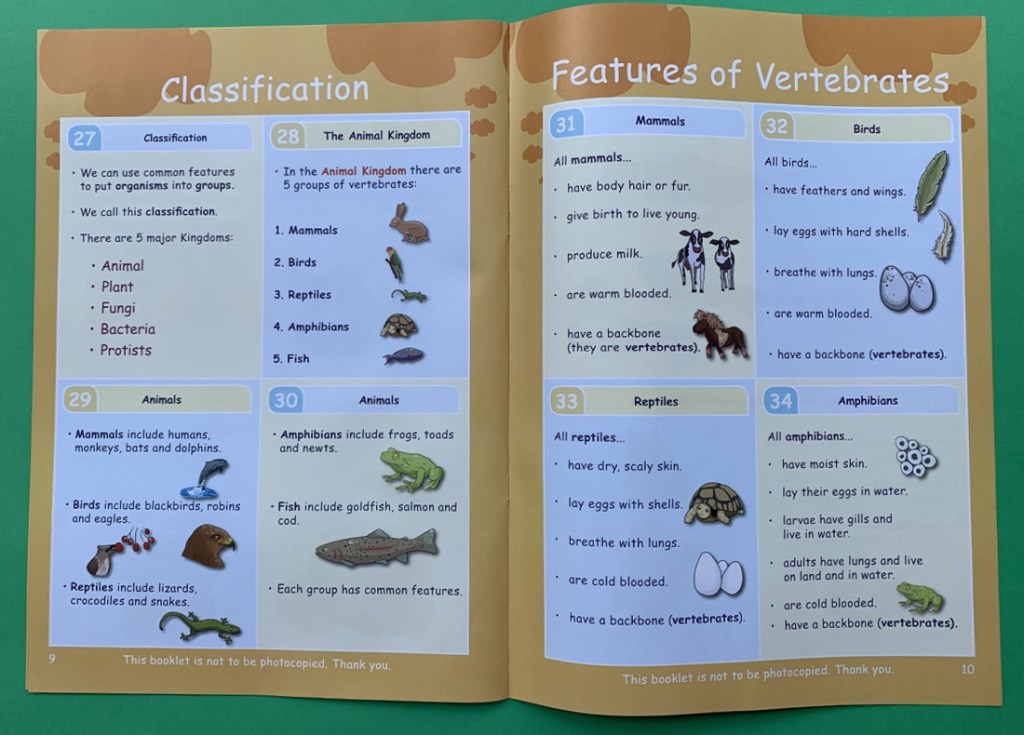
  • 5 Animal Kingdoms
  • How to classify animals as belonging to each animal kingdom
  • Vertebrates and Invertebrates
  • Different invertebrates
  • Taxonomic classification and keys.

The notes are in a summarized block format. Easy to read and really well worded. My daughter really liked the sections about the Discontinuous and Continuous variations and the graphs. I think this was what was causing the problem. And in these notes the concise, explanation was just what she needed.

The write your own notes are exactly the same as the topic booklet but with words missing which the kids need to fill in (if you have not used one of these packs before they use the exact same images in the topic booklet and right your own notes which helps to reinforce everything).

With this set we actually did the Classification section first (purely because I know my daughter knows all of this backwards and could answer it in her sleep) and then we moved onto working through the Variation pages really slowly. We would read about 2 pages together, discuss it, and then she would complete the Write your own notes.

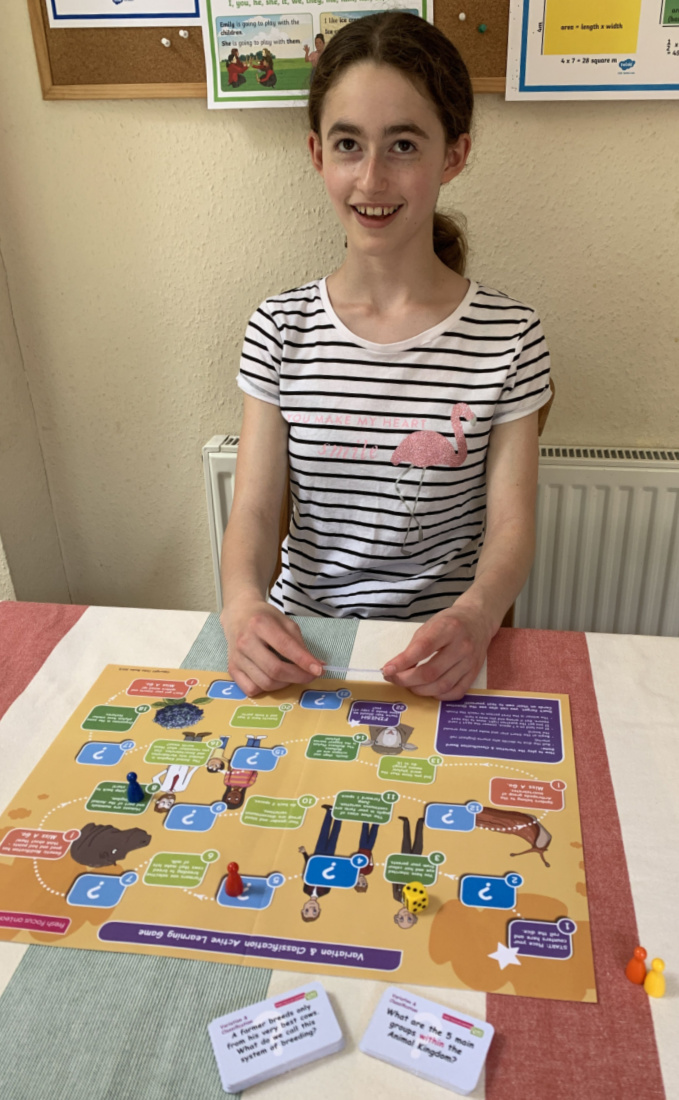
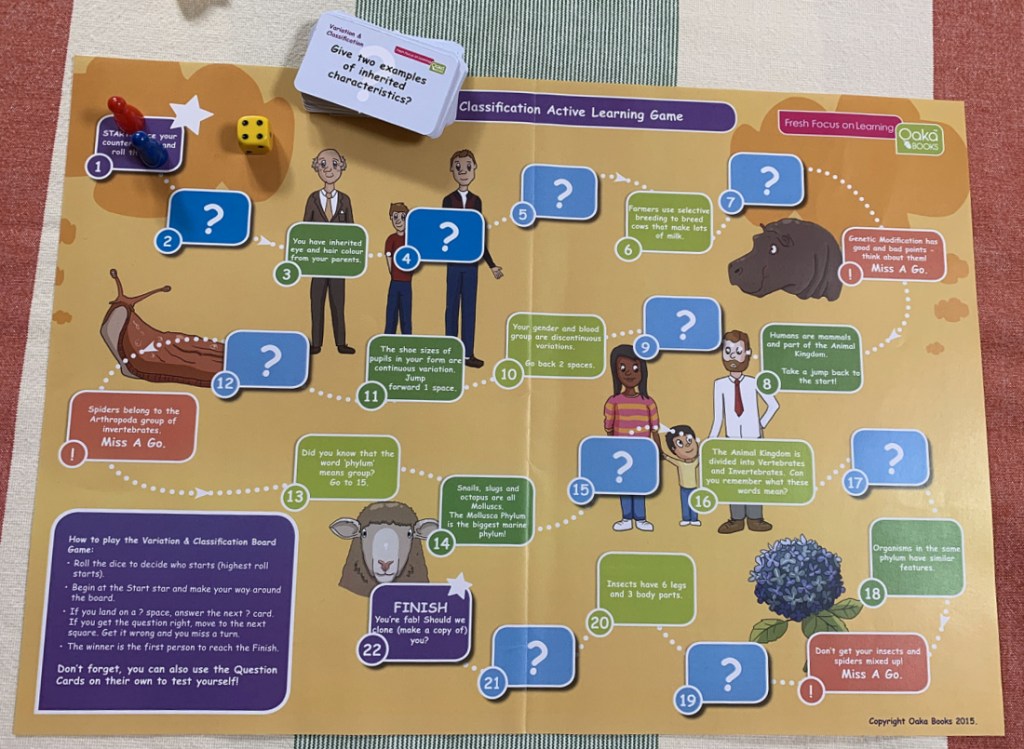
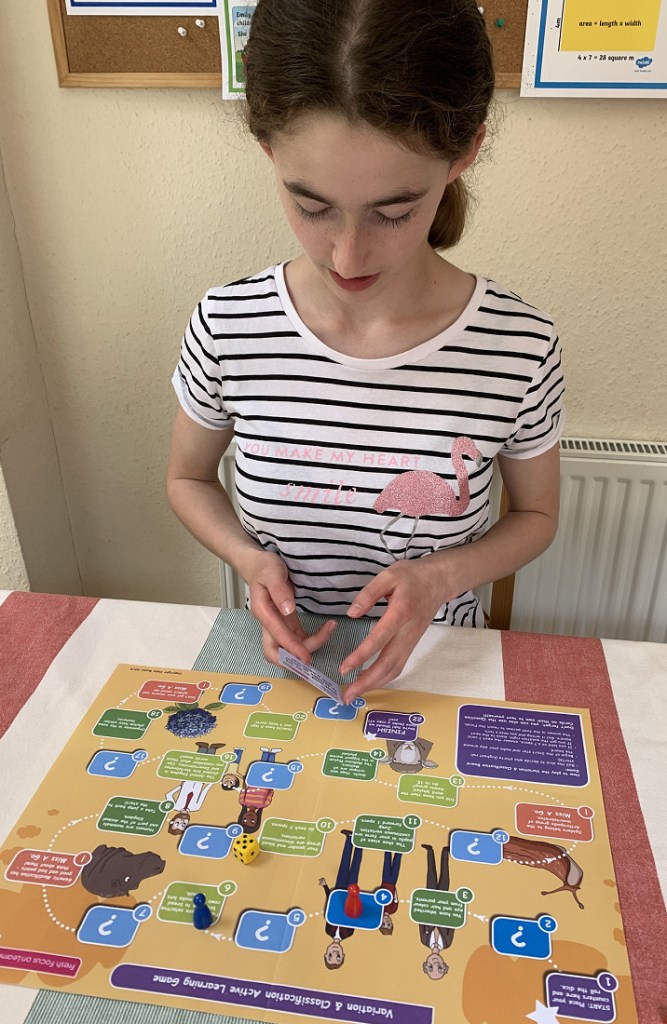
Once we had finished we played the game (which is always a huge hit in our house).

I have been a big fan of these topic packs for a long time. We don’t use them in isolation we use them together with other sources but what I am finding over and over again is often these packs contain the explanation that is just so well-worded that we get that “light-bulb” moment.

Posted in Homeschooling | Tagged , , , , , | 2 Comments