Year 8 Maths Books

I started using this series (KS3 Mastering Mathematics) with my daughter in at the start of her Year 9 and I have been so impressed with it that I asked the Hodder Education if I could get a copy of their Year 8 book so I could share what is included in Year 8. The reason that we like this series is because it helps the person who is the facilitator (i.e. me – it has made my life a lot easier) and it helps the student by explaining everything really clearly and it provides lots of practice. It really is ticking all the boxes for us and the only extra Maths that I have printed out for my daughter since starting this series are some Maths puzzles / Maths Murder Mystery pages which she enjoys working through.

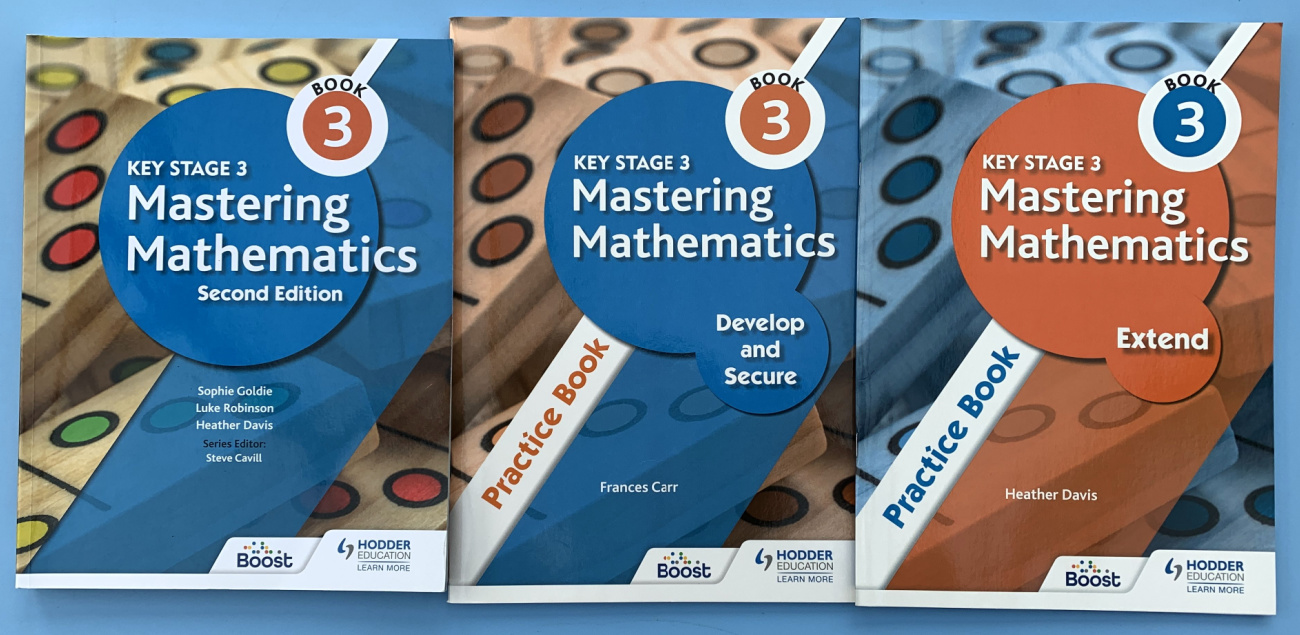
To start with let me explain the difference between the different books. The textbook is your main book – it contains explanations for every topic covered and with every explanation they ALWAYS include worked examples (which we really appreciate).

The textbook always includes examples for the kids to work through. They are grouped into different bands (there are three bands with band 1 being the easier questions and Band 3 being the Extend questions).

Also at the end of each topic there are Review exercises and they have included Progress Review activities every few chapters. The progress reviews are included at roughly every half term (if you are working through the book in order of the chapter and linked up to school terms). We tend to use these Progress Reviews as mini-tests (we are trying to get into the habit of writing tests as a way of preparing for exams). And ALL answers are on the Hodder Education website and are FREE to download.

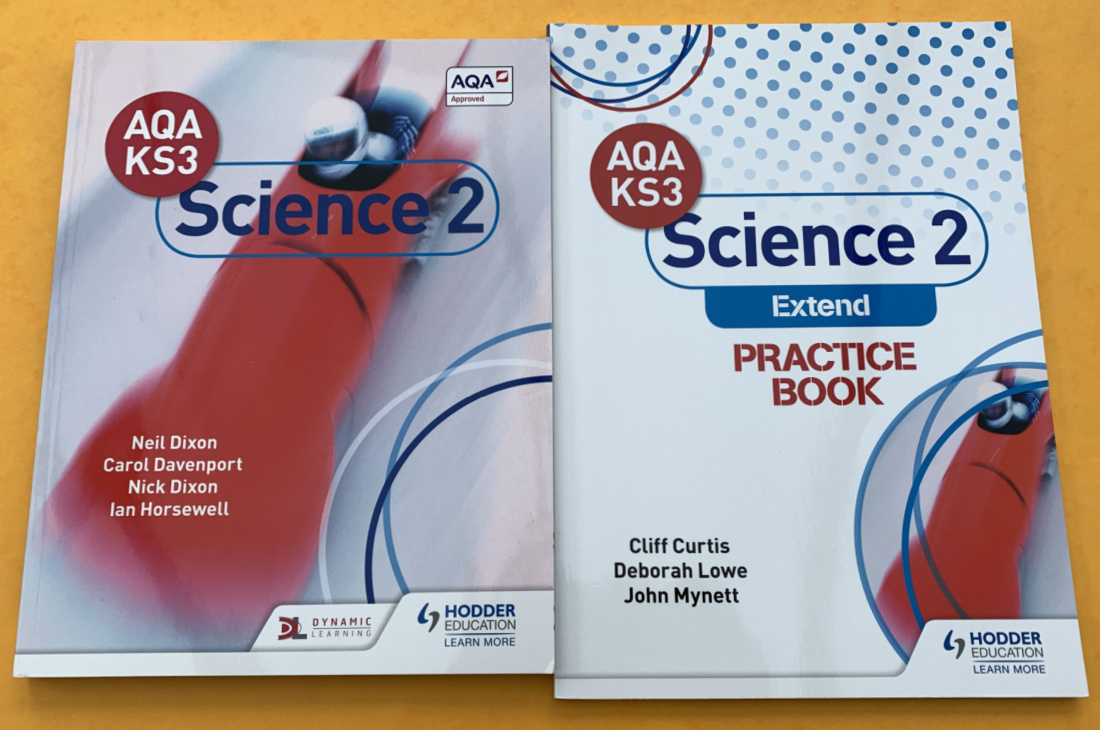
The Practice Books. There are two practice books linked to every textbook. Develop and Secure is the slightly easier practice book (if your kids are working more at Band 1 and Band 2 level this is the one for them) and then the Extend Practice Book (if the kids are working more at a Band 3 level). All the questions in the Practice books are different from the questions in the student book so it really is EXTRA practice and all answers are FREE to download from the Hodder Education website.

Okay so what Topics are covered in the Year 8 books.

  • Sequences
  • Graphs (straight line and real life graphs)
  • Angles
  • Constructions
  • Calculations (a review of the four operations including multiplying decimals and dividing with decimals)
  • Negative Numbers
  • Fractions (including multiplying and dividing fractions)
  • Expressions and Formulas (expanding brackets, factorising expression, rearranging formulas – we actually did these questions as revision as part of my daughter’s Year 9)
  • Working with 2D shapes
  • Properties of 3D shapes
  • Percentages
  • Multiplicative Reasoning (I might try and squeeze this in as revision as well I really like this)
  • Working with data
  • Circles
  • Pythagoras’ Theorem (like the way this set-out).

There is a lot included but based on how we are progressing with her Year 9 books you can manage a textbook and practice book and fit it all in.

Why do we like this series so much? Honestly it is making Maths A LOT easier. The explanations and worked examples really do all the explaining for you and then the questions get gradually harder so the kids build up. I am no longer spending ages looking for resources or good explanations because everything I need is in these books. And I actually feel that since we started using these books my daughter’s Maths confidence has increased

My youngest is currently Year 6 and I can already say we are going to be using this series with him for his KS3 Maths, it really does just make doing home education Maths that much easier and less stressful.

You can buy the Mastering Mathematics Book 2 directly from Hodder – Text book, Practice book Develop and Secure and Practice Book Extend.

Or you can buy them from Amazon Key Stage 3 Mastering Mathematics Book 2, Key Stage 3 Mastering Mathematics Develop and Secure Practice Book 2, Key Stage 3 Mastering Mathematics Extend Practice Book 2

I have not spotted them in any of my local bookstores (Waterstones or WH Smith).

Admin Bit – As I mentioned above after using the Year 9 books with my daughter and really liking them I contacted Hodder Education and asked for a Year 8 text book so I could write this post. This is NOT a paid for post this is written purely because I like this series.

I do include Affiliate links. If you follow an affiliate link and go on to purchase that product, I will be paid a very small commission, however your cost will remain the same. I only include affiliate links for products that we use and love.

Posted in Homeschooling | Tagged , , , , , | Leave a comment

Skeleton and Muscles

Over the next few months we are going to be focusing on Biology as our Science (with just a little bit of Physics). I have found it easier to focus on a block of topics all related to one Science – so either Physics, Biology or Chemistry at a time. And it’s Biology’s turn. To get us going we have kick started our Biology series with the Oaka Books Topic Pack Movement: Skeleton and Muscles. Now I have covered this section with my daughter before so for her this is revision but for my youngest (he is actually Year 6) this is new learning. Which is one of the reasons why I choose to get us started with an Oaka Topic Pack – it works well as a revision activity and it works well as a way of introducing main concepts and ideas about a topic.

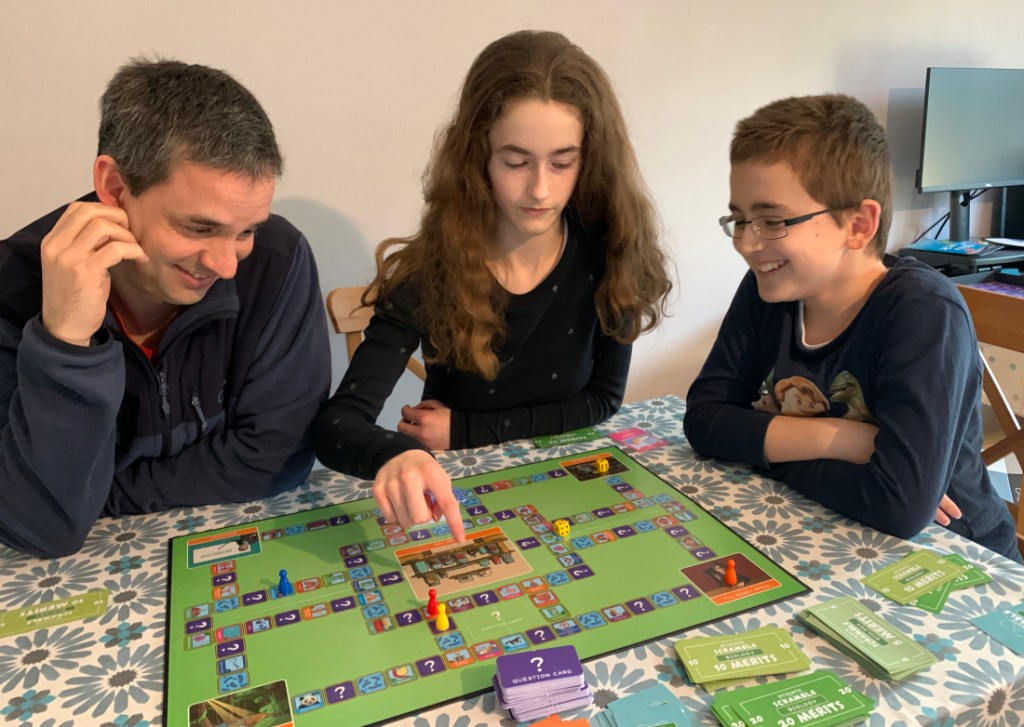
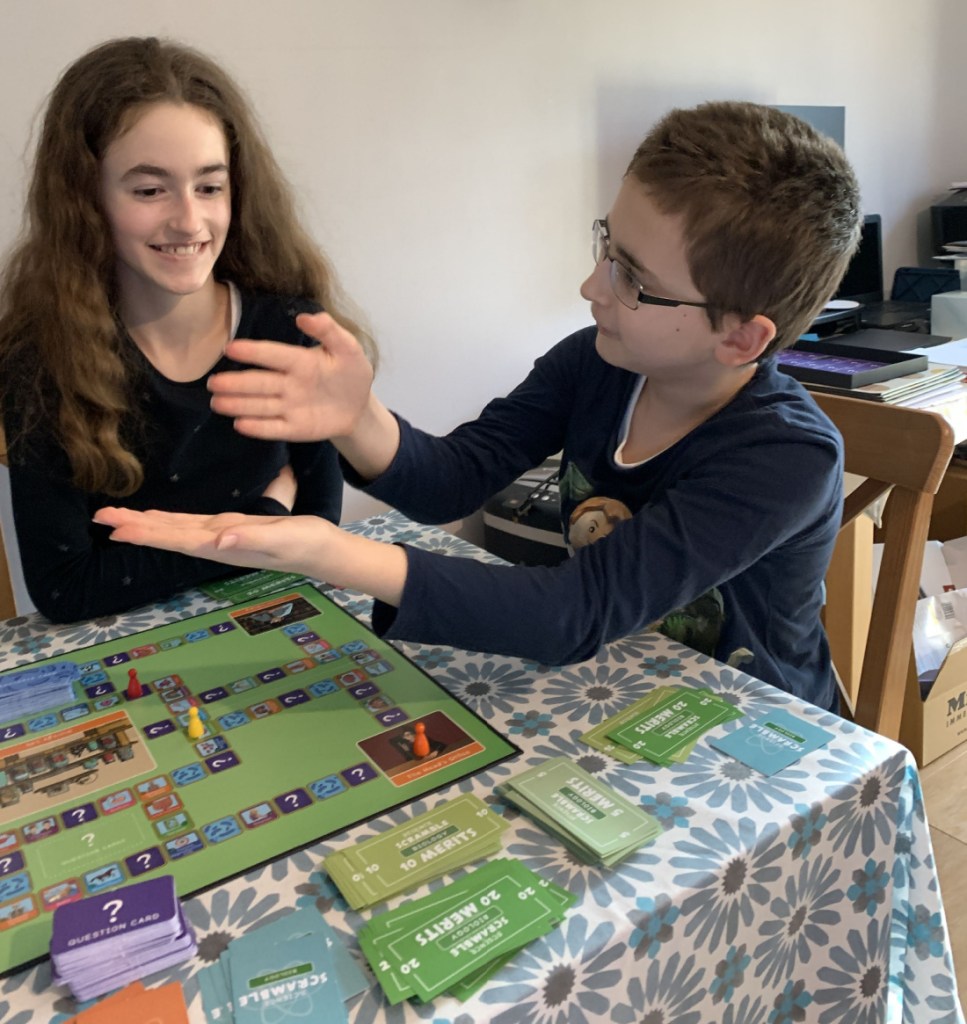
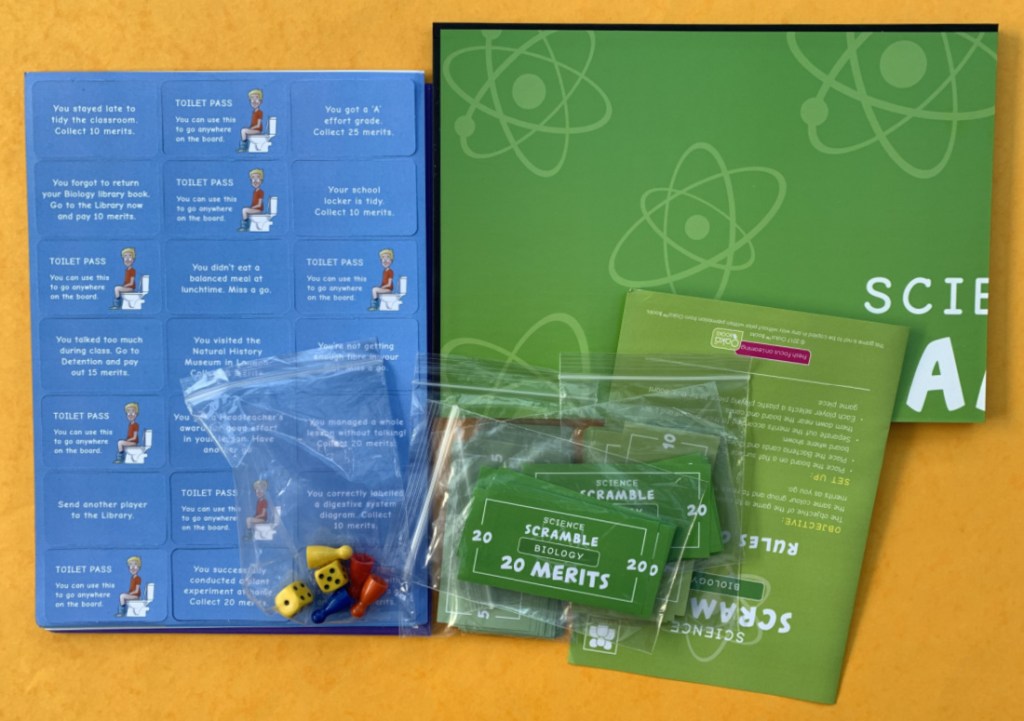
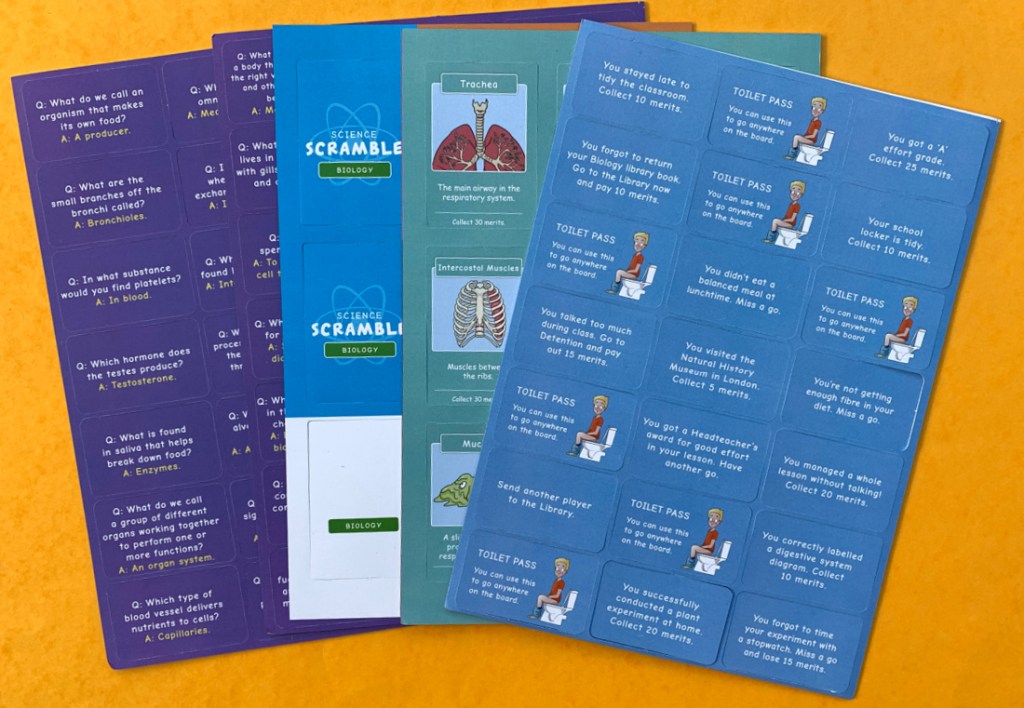
It follows the Oaka Books tried and tested method of Topic Booklet (which are your summarized notes in nice clear, concise sentences, with good clear diagrams), The Write Your own Notes (where the kids get to complete sentences on what they have just read in the Topic Booklet) and the Active Learning Game (a fun board game which asks questions on the topic- great for revising at the end of the topic and perfect for coming back to at a later date).

We really like the way they write their notes in the Topic Booklet. Short points, no long flowery detail, in blocks, with colourful images. And they keep the images consistent – they use the same images in the Topic Booklet and the Write Your Own Notes and they use the same images across different resources. I have found this small detail very useful with my daughter because she remembers the images and they naturally remind her of what we had learnt in a different topic booklet. (We found this incredibly useful when we were working through the Biology pair game).

With this pack we split it over three days (I find it works best not to try and do it all in one go). We split the Topic Booklet into three sections, the kids would read one section a day and after they had read the section in the Topic Booklet they would go and complete the corresponding section in the Write Your Own Notes. Then on the afternoon of the third day we played the game. (We did also include some extra reading on the Topic mainly because I felt like my son needed a bit of background on a few of the points mentioned in the Booklet.)

We are big fans of the Oaka Style of learning, it suits visual learners and I find they are brilliant at summarizing the facts. But I am not sure if we have ever used one of their packs as a way of getting us back into our learning again after having a break. It works. It was a great way of easing us back into our structured learning, a way of getting our brains ticking over again but without having to face boring worksheets or long paragraphs that seem to go on and on forever.

Once again the Oaka Topic Pack ticked all the boxes.

Posted in Homeschooling | Tagged , , , , , | Leave a comment

Fiction Writing Unit from Twinkl

As part of my daughter’s KS3 English we have selected a few different English units from the Twinkl website which we are / have been working through. Before Christmas we worked through the Fiction Writing Unit which we both thought was useful and interesting so I thought I would share a bit about it.

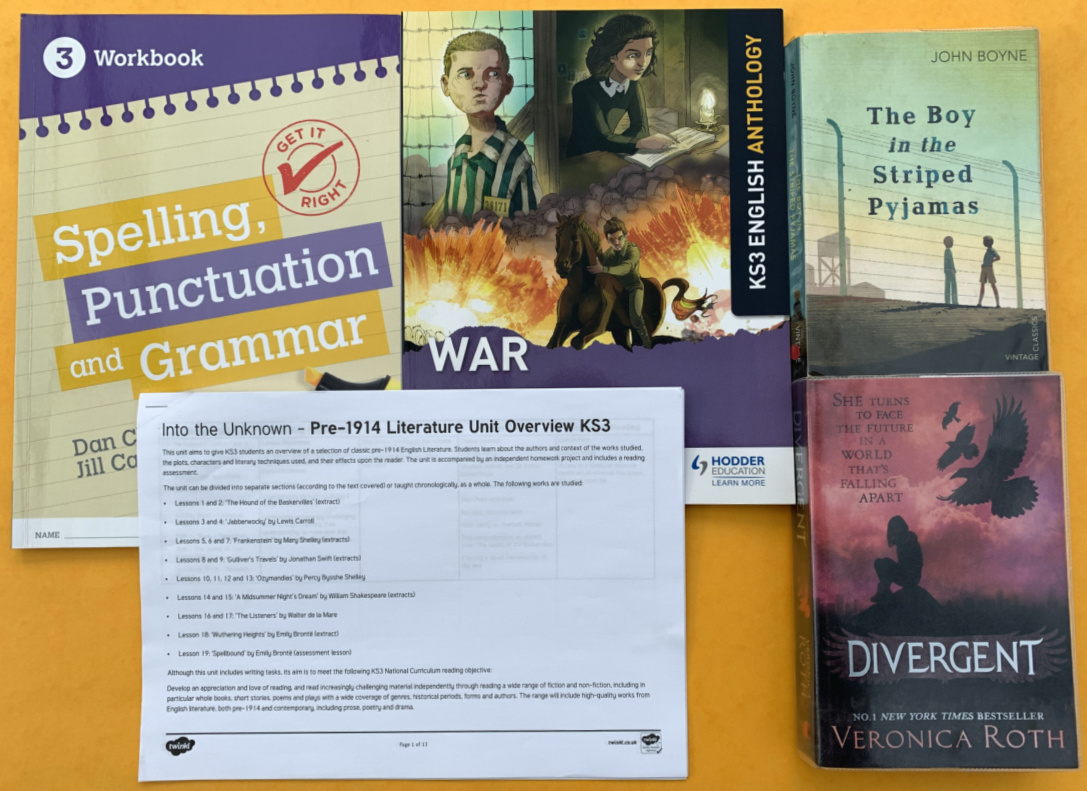
Very Briefly Twinkl have split there KS3 English into three major categories – Reading, Writing and Speaking and Listening. Now I must confess when I first started using their KS3 English section I found these categories a bit confusing as I would often end up looking in the wrong area for certain resources. But after a bit of time I figured out where everything was. Most of what we have used is under the Reading section in the subsection English Literature (this really is a gold mine and well worth going through). But we have also downloaded a few of the writing units – we really enjoyed the Sunflower poetry unit and we are planning on working through the Woddunit Writing unit after half term (we are starting the English Literary Heritage Unit of Work in in a few days).

Okay so the Fictional Writing Unit. We chose this because we hoped it would extend some of our current writing knowledge and give us ideas on how to improve our creative stories (which I do feel like it did). The whole unit is split into 10 lessons – you can choose to do every lesson or you could just select the lessons you feel are relevant. We chose to try every lesson and we did them one at a time over roughly 4 weeks which actually work out quite well in terms of time management (I think trying to do more than 1 lesson at a time would have been a bit much).

The lessons are split into the following

  • Openings
  • Characters
  • Character Types
  • Settings
  • Story Structure
  • Language Structure
  • Inspiration
  • Adding Detail
  • Conclusions
  • Assessment

For each lesson they include a lesson plan (think of it as a guide), some activities and where relevant model answers.

One of the things I really liked about this unit is they often gave examples using well-know classic literature – I loved this. In all of the lessons I thought the activities included were well structured and well-thought out. It was not a case of completing a page and then you wonder – how does this link in? (I get very frustrated when that happens).

I liked the ideas they included in the openings, writing about characters, describing your settings, the structure, the fact that they suggest taking your inspiration from real-life, the detail, the wrapping up. I actually think I liked something from each and every lesson and felt like there was something extra that my daughter gained from every lesson.

I do think working through this unit has helped to improve her writing and has actually reinvigorated my approach to creative writing (I keep saying things like – “think of all your senses, or how many character types have you included, are you staying in the setting”).

Posted in Homeschooling | Tagged , , , , , | 1 Comment

Our home education.

There have been a number of new people viewing the site so I thought I should reintroduce myself and the troops.

  • ofamily learning together
  • playing Monopoly. ofamily learning together
  • starting home education
  • THe Night Zookeeper website
  • Pride and Prejudice by Jane Austen. An excellent read for kids

I am mom to two incredible kids who we home educate. My kids have never been to school. We (my hubbie and I) decided to home educate our oldest because we thought she would not thrive in a busy classroom environment due to her having sensory processing disorder (and our youngest joined the home ed routine when he was older because he also has SPD). When we first decided to home educate her we said we would take it year by year. Now we are in our tenth year and both kids are adamant that they want to continue home educating and we still think it is the right environment for them so we are continuing.

It is not always easy, I make mistakes and at times I get exhausted but I am very fortunate in that my husband is completely on board and he gets involved as much as he can (he works full time to pay all the bills). My kids are also amazing, they understand that mom makes mistakes and that there are lots of things that I don’t know and we have to sometimes learn it together (I actually think they like that). And no I am NOT a teacher, I don’t think I could ever manage teaching a class, two kids are enough for me. I am actually an Accountant and the original plan was I would go back to work once the kids were in school but well, things change……..

We do sort of follow the curriculum in a broad sense, but we do also follow the kids interests. My daughter loves History and English Literature so we do spend a lot of time on those subjects (more than she ever would at school) and my son is a bit of a project person, he finds something he likes and then he dives in and reads everything he can about it, learns how to draw pictures on it and even writes about it. Both kids will be sitting their GCSE (well probably the IGCSE) exams when they are ready and we are starting to narrow down possible subjects for my oldest and I am busy doing a lot of “prep” work towards that (I will probably be writing more about that over the next 2 years).

Okay so the blog. I am a home educator who blogs and not a blogger who home educates. What I mean by that is the home education of my two kids is ALWAYS going to the priority and if that means I don’t write a post because we are busy or something happens than so be it. It also means I only write about books and resources that we are using or have used. Yes I sometimes get free books but 99% of the time it is me spending time researching, finding what I want to use and then contacting the publishing company to ask for a review copy. I do not write about random books that we are not using for the simple reason that I just don’t have the time and energy to read something or spend the time learning about something unless it is part of our home ed (home educating is very time consuming and full on for me and extra time is something that I really do not have).

Even though it is our tenth year, I am still learning and we are still changing. As the kids get older we have to adapt to what works for them, so something that worked well 3 years ago may no longer work well today. It is a journey, a journey that is ever evolving but one that I am still 100% certain is the correct journey for our two kids. I honestly never planned on this journey but I did plan on doing the best we could for our kids, to help them thrive and for us that looks like this.

Posted in Homeschooling | Tagged , , | Leave a comment

Guided Reading Books from Bloomsbury

I have not written posts on guided reading books for quite a while because my youngest is really past that stage. He is a happy reader who powers through books at quite an impressive speed (as long as they are interesting). But when I heard that Bloomsbury publishing have put together a guided reading scheme and when I had a look to see what sort of books that had included I was actually intrigued. I do remember struggling to find interesting reading books for my kids when they were younger, books that were well-written, engaging and not too scary so I thought “for the me who struggled” I would investigate the series in a bit more detail and see if this reading scheme would have been something I could have used.

They have broken down the reading books into year stages which are represented as coloured bands

I decided to focus on the last three bands (the older years – more the early chapter type books). We tested out 3 books. First impression – these are interesting, engaging stories with well-developed characters (I really liked that the characters are well written). My son actually picked up the Band Red book (Rubi Ali’s Mission Break up) and read the whole thing. He thought it was interesting and amusing in places (a little bit of fun goes a long way in terms of his reading enjoyment).

I read the Dark Blue Band (The Night the Moon went out) and the whole way through reading it I kept thinking this would have been the prefect book for my daughter. She loved these gentle stories that involved animals. She probably would have read this a few times and I am guessing she would even written her own version of this story. It really would have been a BIG HIT with her.

Oh and the Grey Book (Sindhu and Jeet’s Detective Agency) – we loved this idea.

I know these are written as guided readers but I must admit I was impressed with the descriptive language used. At the moment this a big point for us – I am constantly trying to find examples of good descriptive language as examples for my kids to read so they can incorporate elements into their own creative writing. These books definitely ticked that box.

All of that said the thing that takes this reading series up a level is the fact that they have created Teacher’s Notes for most of these readers (which are all FREE to download from their website). As a home educator, finding good quality, engaging resources linked to enjoyable books is, well – Home educator GOLD.

I downloaded and read through the Teacher’s Notes for The Night The Moon Went Out. The whole set was 14 pages and it consisted of ideas and questions which you could talk to your kids about. Think of it as a springboard. I liked the fact that the questions / activities for each chapter focused on something specific like – Noting Text Structure or Empathising and Summarising. Fourteen pages might not sound like a lot but for primary aged kids I thought it was actually the right length and the right type of questions.

I think this is an interesting set of readers with good quality Teacher’s notes. If you are home educating younger kids I would recommend having a look at this series.

You can purchases these books directly from Bloomsbury – Sindhu and Jeet’s Detective Agency, The Night the Moon Went Out and Ruby Ali’s Mission Break Up.

Or from amazon Sindhu and Jeet’s Detective Agency: A Bloomsbury Reader (Bloomsbury Readers),

The Night the Moon Went Out: A Bloomsbury Reader (Bloomsbury Readers),

Ruby Ali’s Mission Break Up: A Bloomsbury Reader (Bloomsbury Readers)

Admin – I did receive Press copies of these three books. I was NOT paid for this post.

I do include Affiliate links. If you follow an affiliate link and go on to purchase that product, I will be paid a very small commission, however your cost will remain the same. I only include affiliate links for products that we use and love.
Posted in Homeschooling | Tagged , , , , , | Leave a comment