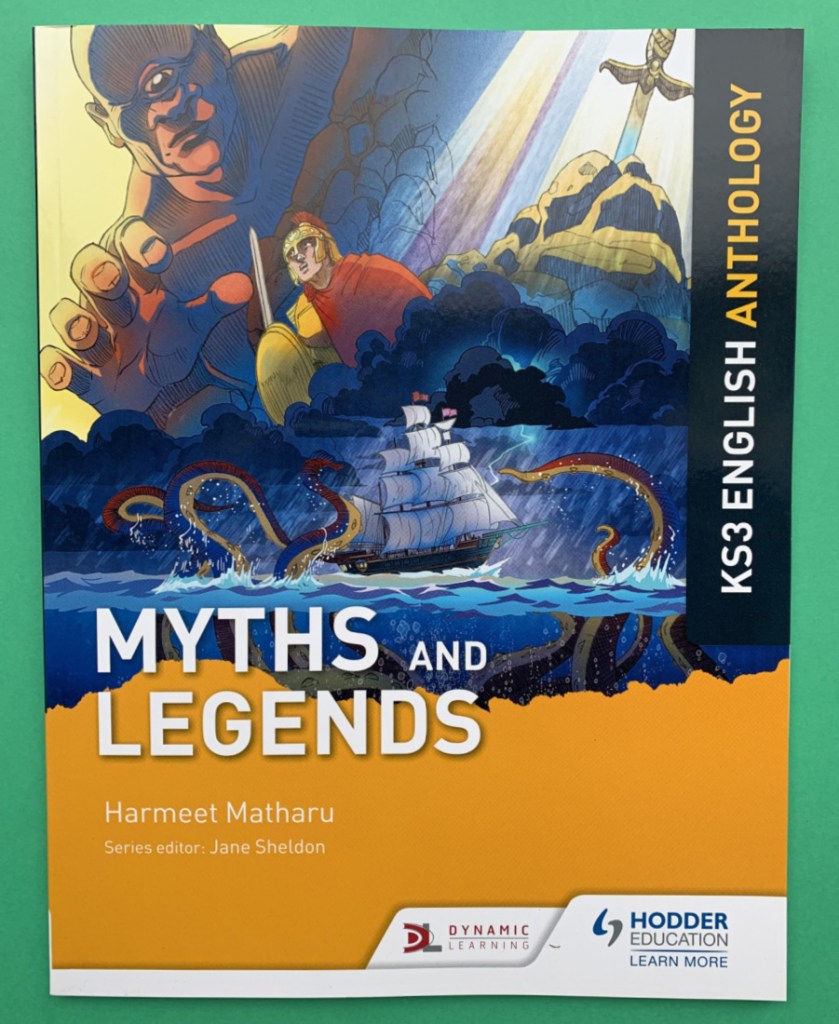
Myths and Legends from the KS3 English Anthology series

On one of my many internet searches for secondary resources I happened to stumble upon an English series published by Hodder Education called English Anthologies. Now I had never seen these books before or heard about them but I was searching for something on Myths and Legends and the sample that I could see looked interesting and potentially exactly what I wanted. So I contacted the publisher and asked if they had a copy which we could review. They kindly sent us a copy and I must admit as soon and I paged through I was immediately impressed and actually silently scolded myself that I had not discovered this series earlier.

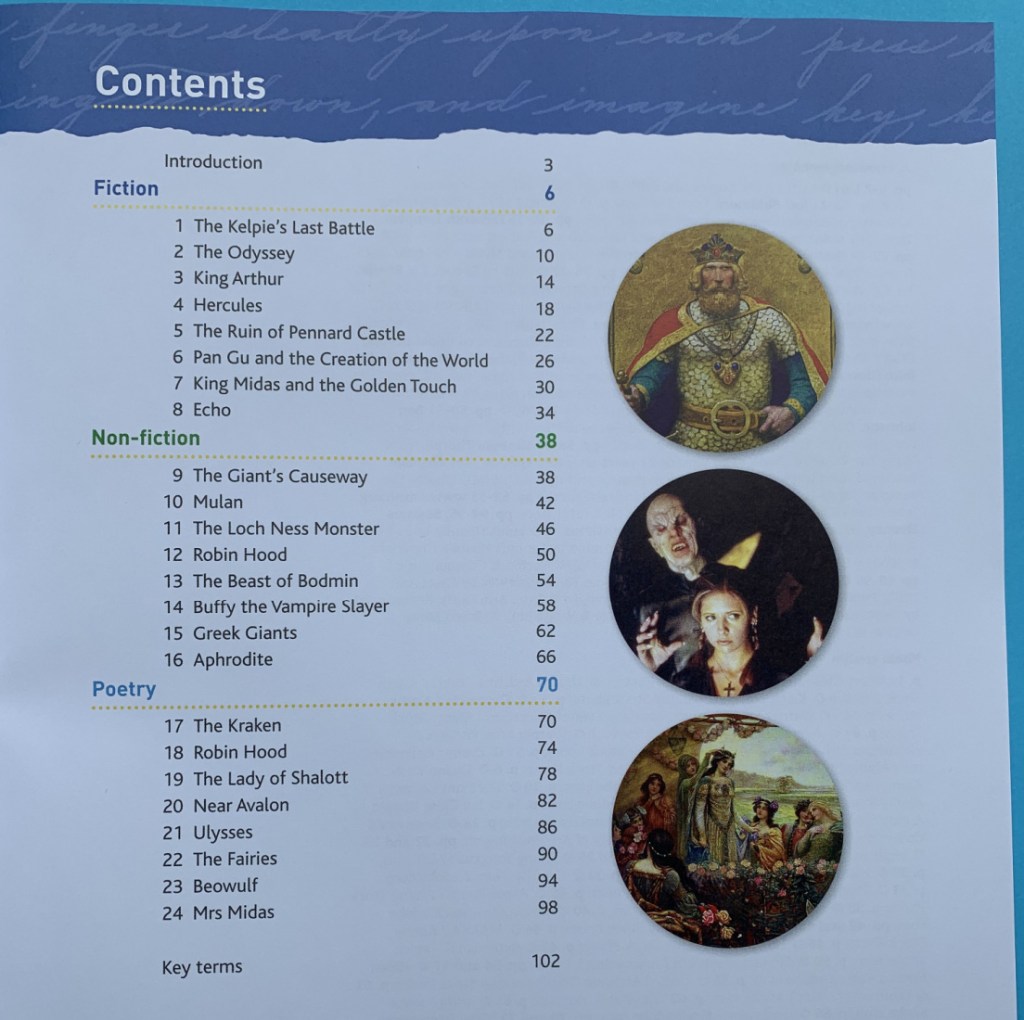
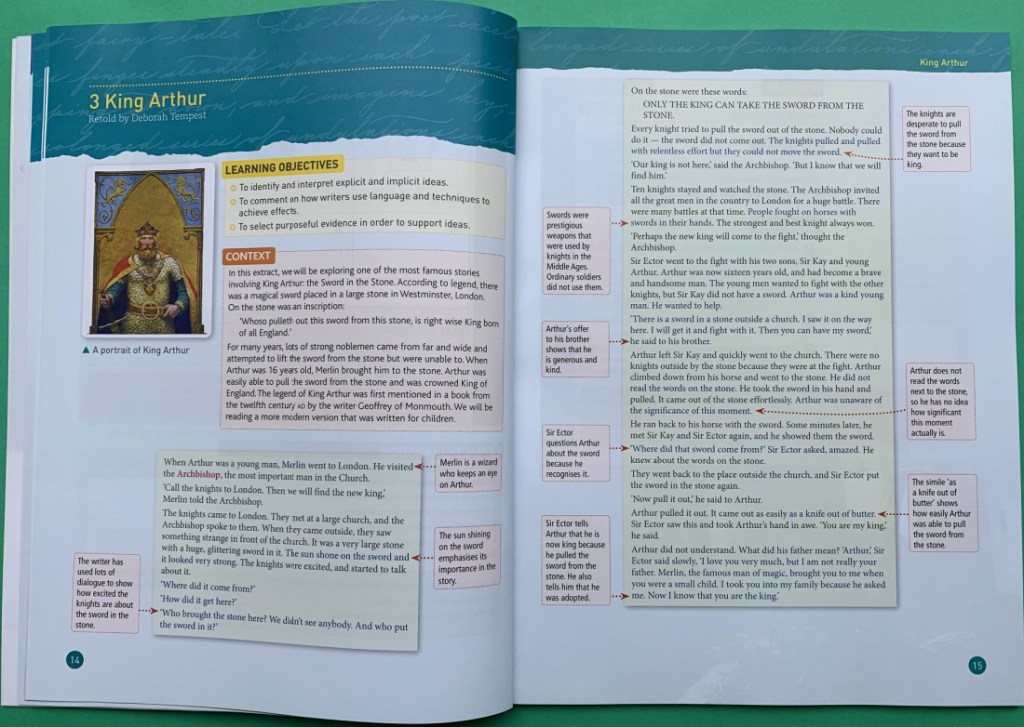
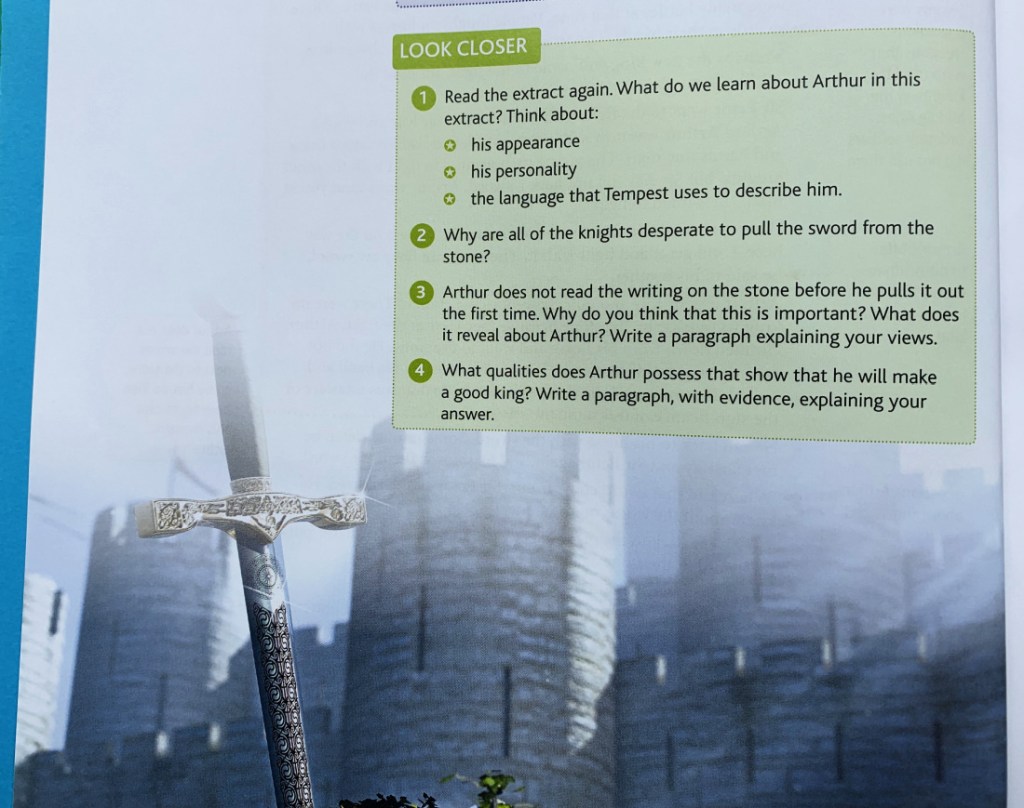
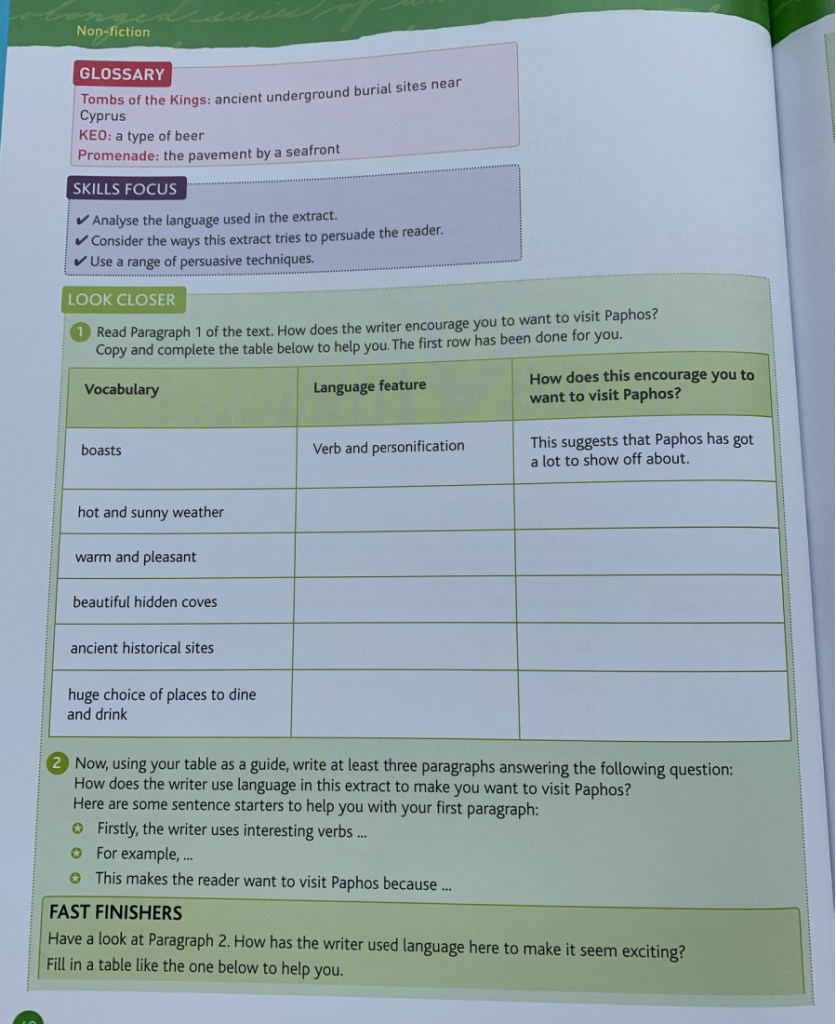
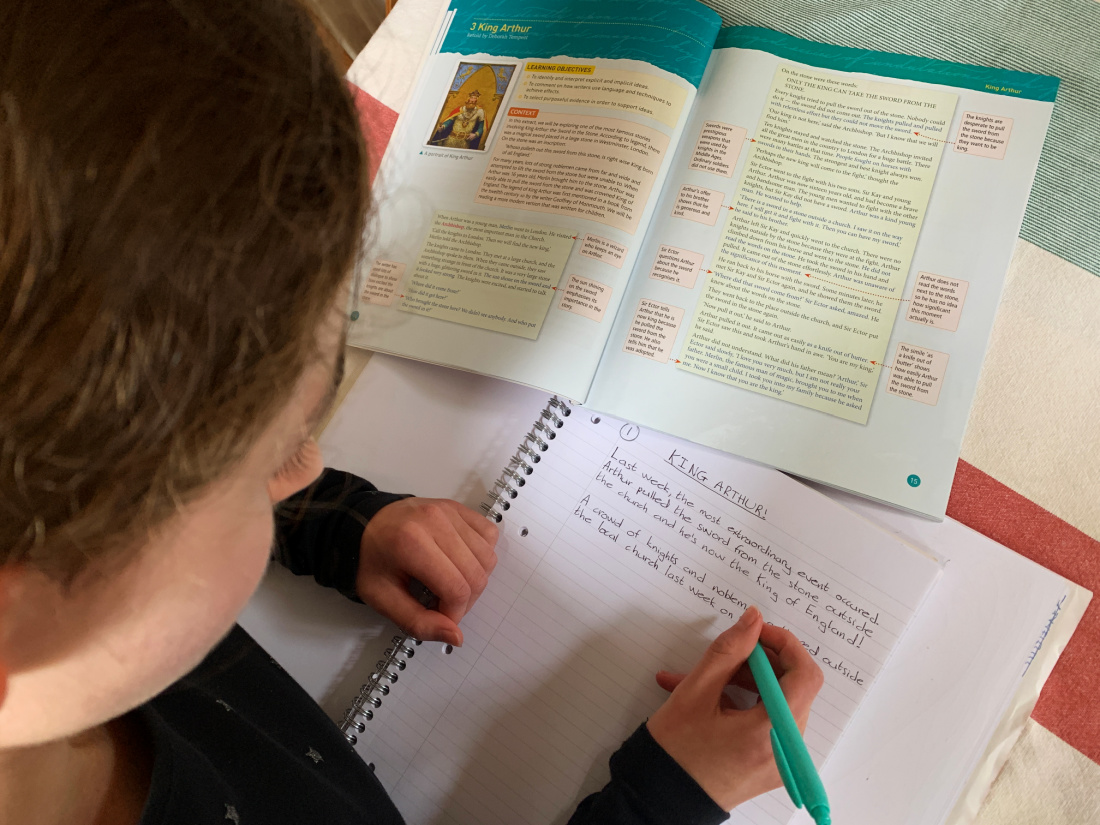
The book is split into three sections – Fiction, Non fiction and Poems (I love this because we have been struggling a bit to find engaging KS3 activities on Non-fiction and Poetry, so the fact that they have included activities for all 3 categories is a big win for me). The activities are written as stand-alone activities so you can work through each activity in the order or you can dip in and out and choose relevant texts. For each activity there is an extract which you read (the extract has notes along the side highlighting important parts) and then there are some questions on the extract.

Straight away I have to say that all the extracts have been exceptionally well chosen, they are engaging extracts and both of my kids have found them interesting. The questions are a combination of write in the book answers and longer answers which you would need to write on a separate page.

The questions are also split into 3 groups –

  • 1. Look closer – which are questions that guide the kids to think a bit more carefully about what they have just read.
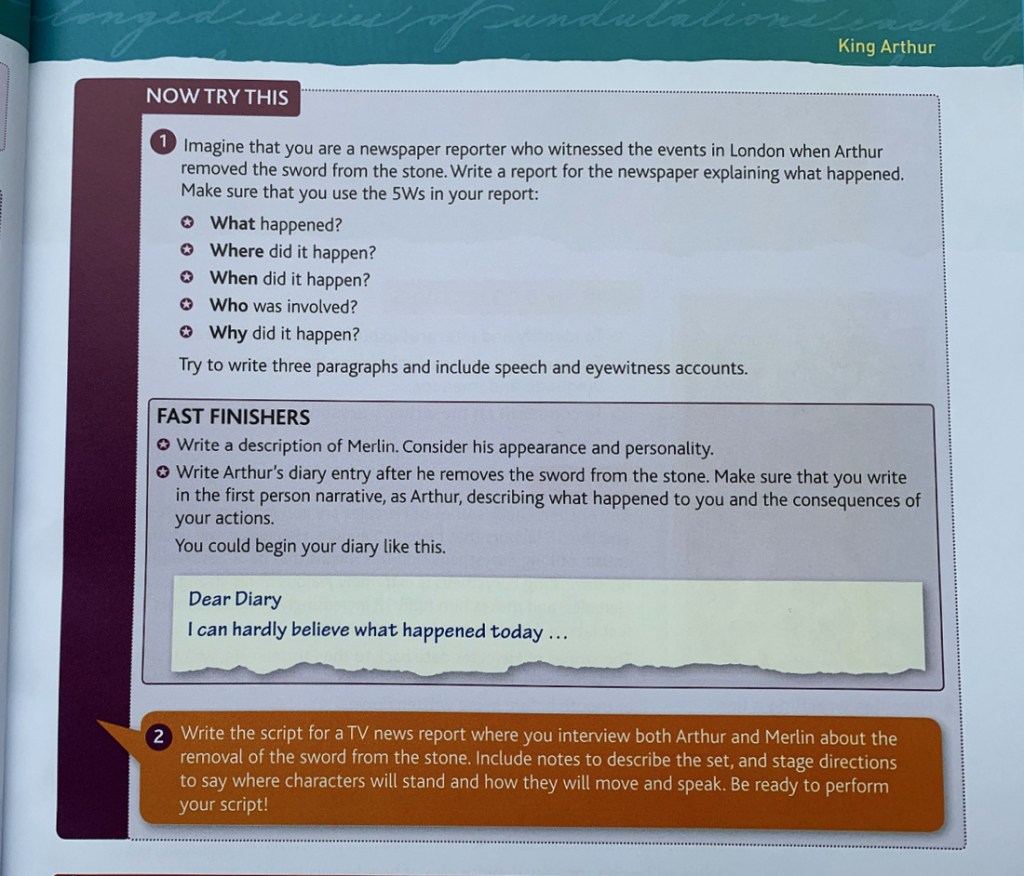
  • 2. Now try this – these questions take the topic a step further (and actually are a lot of fun), and they also include something extra for fast finishers.
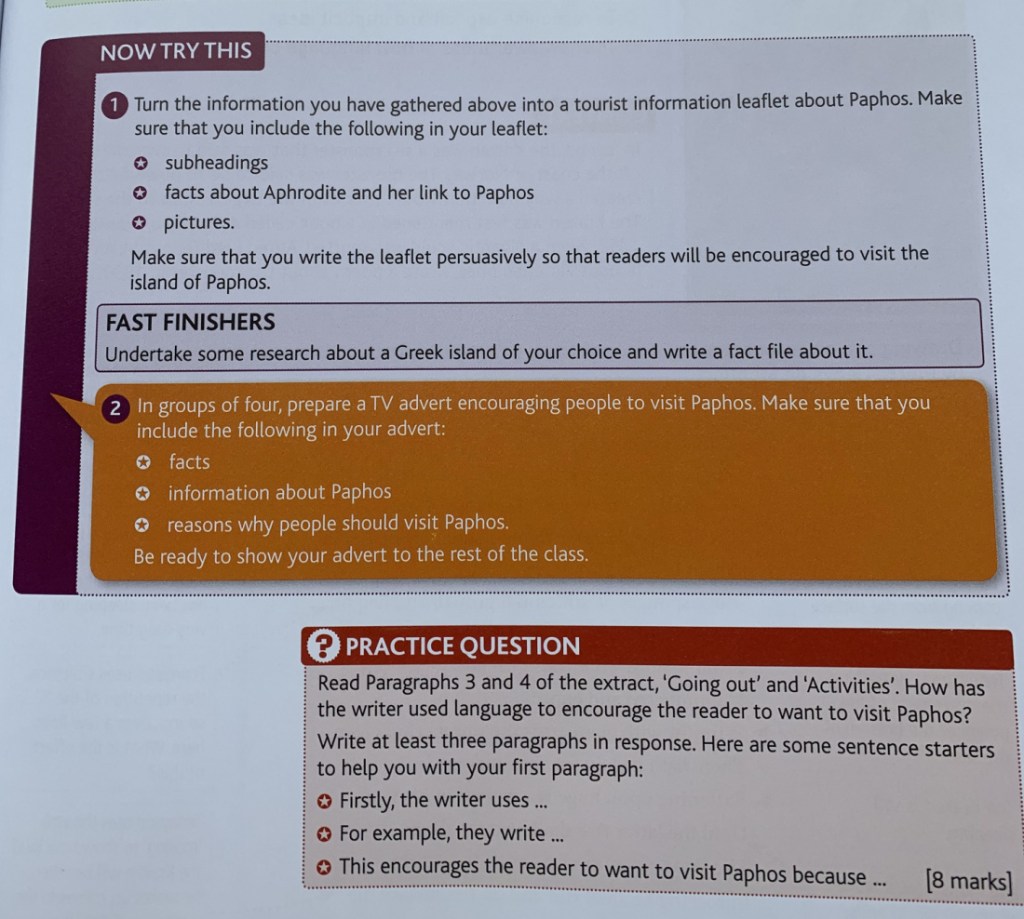
  • 3. Practice questions – these are often more written questions.

And they vary. And they include lots of fun activities like create your own mythical creature, write a play script, create a TV advert, newspaper report, really lots of different types of questions which keeps it interesting.

Answers. All sample answers for this range are FREE to download from their site, I am including the link here so everyone can find them – sample answers.

Okay so the important part what did my daughter think (she is Year 8 age) – Her words after working through the very first activity – “It’s an interesting activity, I liked all the annotated blocks alongside the text, they helped to guide my thinking. I really enjoyed the activities, it was fun creating my own Mythical creature and drafting a story around it. I am actually looking forward to trying more activities from this book and I think we should consider including other books from this series in our Year 9 English activities.” (And my younger son who is just finishing Year 5 joined in for some of it and said it was actually more engaging than a lot of the other English workbooks he had seen). So both kids approve.

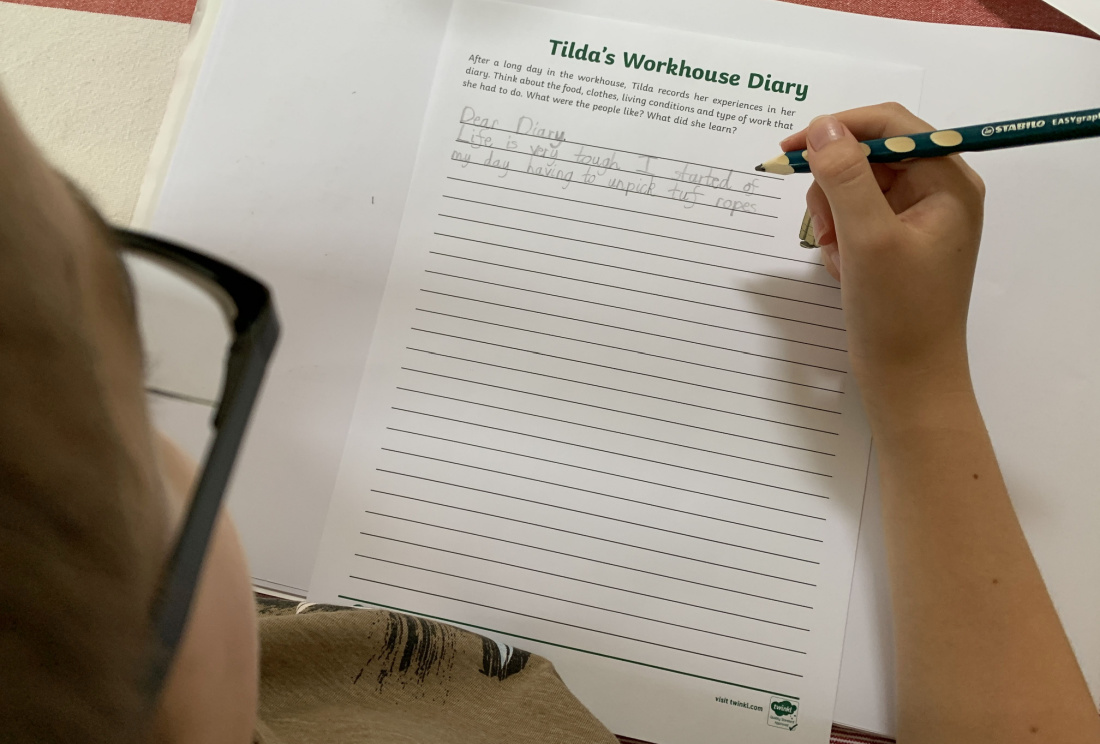
(photo below is of my daughter working through the 3rd activity – did not get a photo of her as she worked through the 1st one.)

I have been really impressed with this book and agree with both my kids that the texts chosen and the activities are engaging. I agree with my daughter and think we should definitely include some more of these in her Year 9 English activities. But that is a problem because honestly in an ideal world I would like to magically work though the remaining 6 books with her next year – which is totally unreasonable – so decision time which ones should we try and fit in? That is a tough one. I am thinking of possibly using the Shakespeare one with her (we are thinking of doing Macbeth in her Year 9) and the War Anthology one (mainly because we are looking at WWI and WWII in her Year 9 history and we will be reading lots of war related fiction). And even though it is geared towards KS3 years my son did dip in and do a few of the activities with us and he really enjoyed them so we may possibly include the Detective one in his Year 6 work. Ohh decisions, I will think about it more when I do their subjects plans over the Summer but I am 100% sure we will be using these again.

You can order this book and the other ones in the series directly from Hodder here – Myths and Legends. or you can order it from amazon Key Stage 3 English Anthology: Myths and Legends (Ks3 English Anthology)

Admin Bits – We were given a review copy of the Myths and Legends Book after I requested it. All opinions expressed are that of my tester (daughter) and myself.

I do include Affiliate links. If you follow an affiliate link and go on to purchase that product, I will be paid a very small commission, however your cost will remain the same. I only include affiliate links for products that we use and love.

Posted in Homeschooling | Tagged , , , | 7 Comments

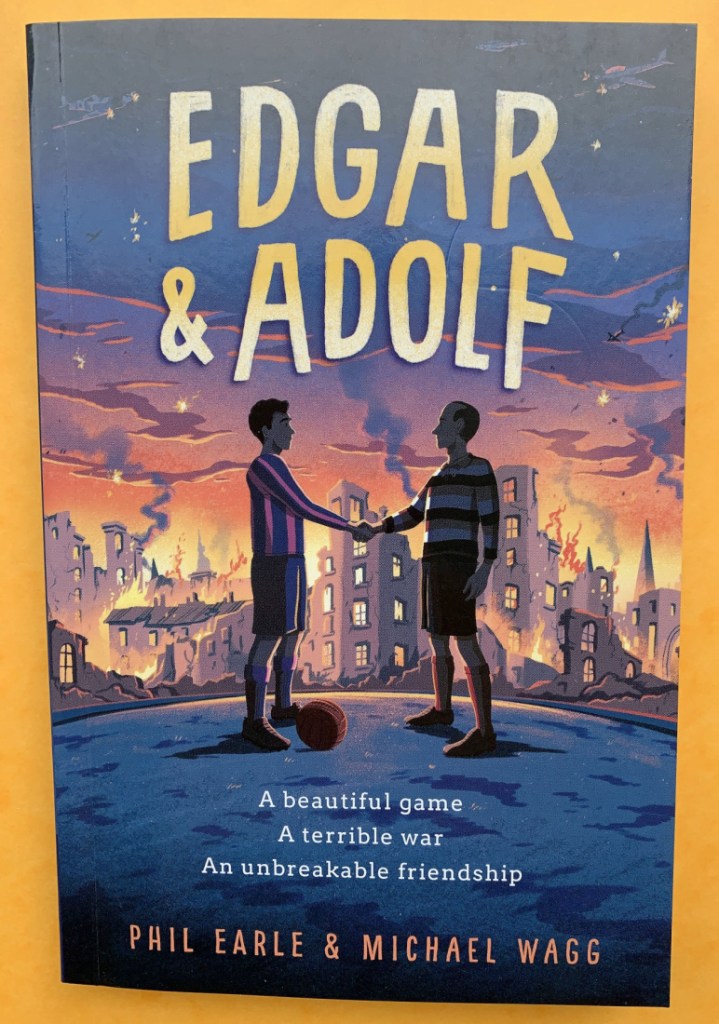
Edgar and Adolf.

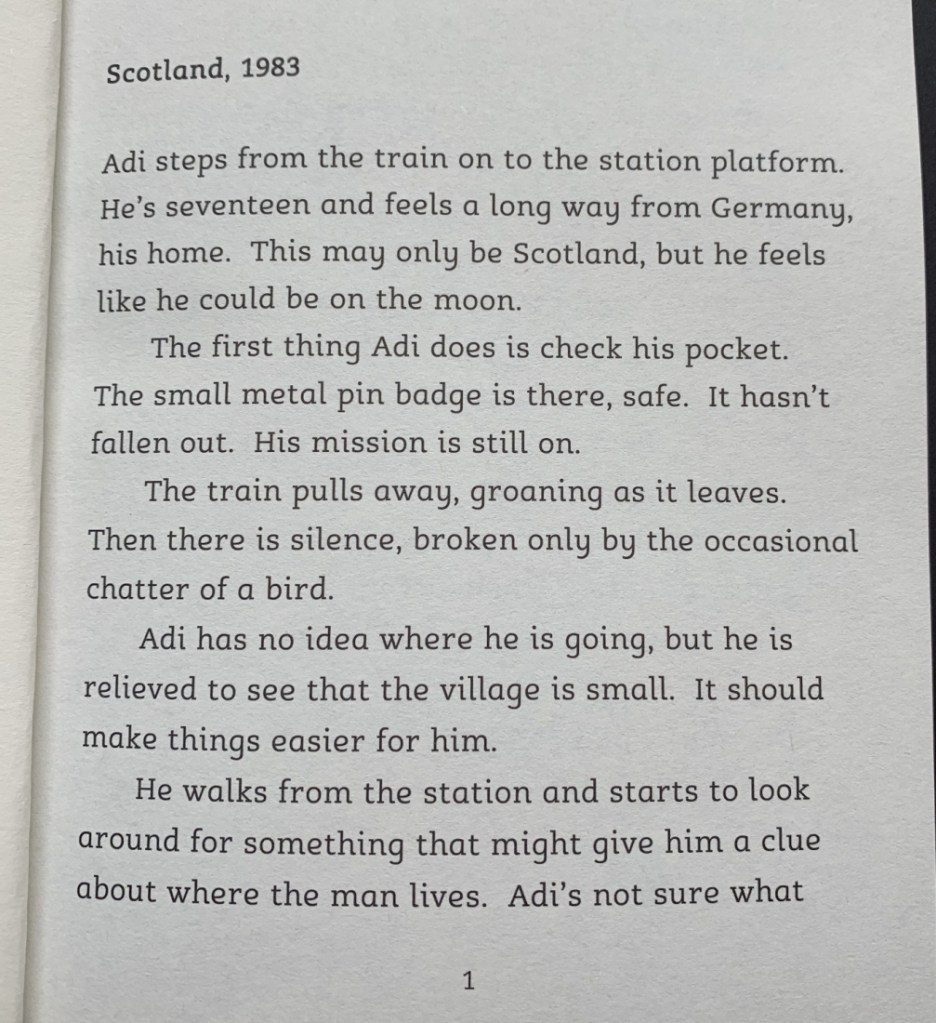
We have used quite a few of the Oxford University Press Rollercoaster books this past year. We enjoy the stories and I really appreciate the Free to download resource packs that you get to use with each book. So when I heard about the new set of Super-Readable Rollercoasters I was intrigued. The idea behind these 5 books is that they have been created to try and encourage more reluctant readers to engage with a book. So they are a bit shorter in length and they are published using the Barrington-Stoke dyslexia-friendly font in an attempt to build reading confidence and enjoyment.

One of the five books in this super-readable series is Edgar and Adolf written by Phil Earle and Michael Wagg. The story is about a young seventeen year old boy (Adi) who travels to England to meet an old friend (Edgar) of his deceased grandfather (Adolf).

And then the story unravels as the old friend and the young boy talk about the unlikely bond that formed between the Englishman and German man during the build up to the Second World War. The pair became friends after playing a football game against each other but they remained friends because of the deep respect they had for one another.

It is a story which deals with friendship, loyalty and touches on the fact that the Second World war was awful on both sides (and yes there is also a bit of football thrown in). The friendship between these two was the part of the story that really gripped us but I also enjoyed the way the authors brought in the War. How they spoke about the bombings on both side, how the spoke about people on both sides wanting the war to be over and how both sides struggled to put lives back together afterwards. There was also an interesting bit where young Adi talks about the embarrassment of being a German after the war and not feeling like you could go to England (something which I am sure was the case for many). I liked this. I liked the fact that it gets the kids to think about the effect of the war on both sides.

Edgar and Adolf is 121 pages. It is an easy, enjoyable read. And after the story they include some nice extra bits of information about the authors and the background to the the story. They also include a quick quiz and a word list of words which some readers may have struggled with.

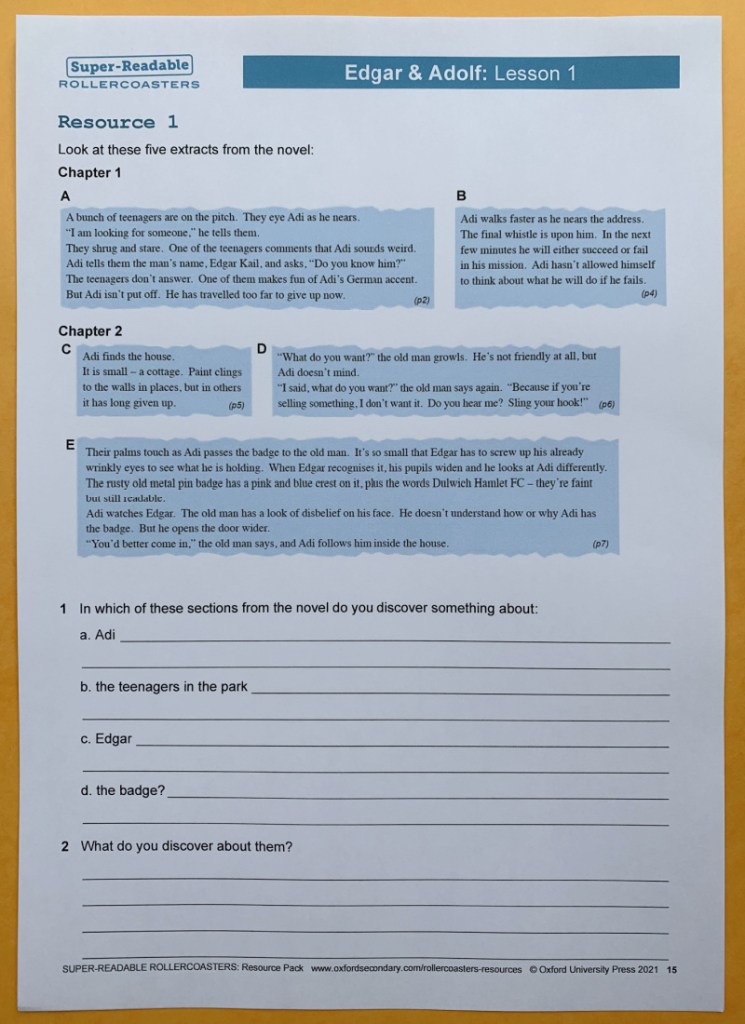
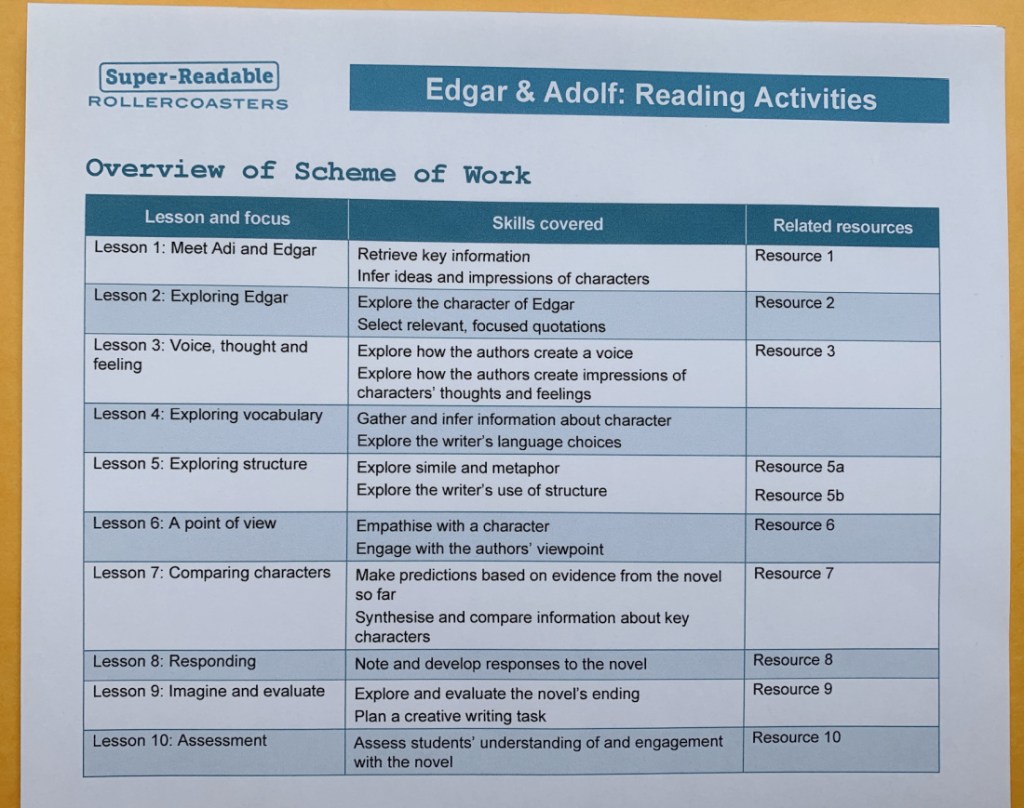
The Resource pack is similar the other Rollercoaster packs that we have used in the past but it has had a bit of a “spruce up”. And they now include some sample answers (which I think is really useful). Inside the pack you get a suggested way in which you can breakdown the story into 10 lessons and they include a suggested lesson plan and worksheets for each lesson. We have not used this resource set ourselves but I have paged through the set and it does look really useful.

I really like the idea of the Super-readable Rollercoaster books. And even if your kids are not reluctant readers they are still good quality shorter stories which all young people can enjoy.

You can buy all of the super-rollercoaster books directly from the Oxford University Press site – Edgar and Adolf or you can also buy them direct from Amazon Edgar & Adolf (Super-readable Rollercoasters) (I have not been out to bookstores lately so cannot comment on that).

Admin Bit – I was sent a copy of Edgar and Adolf but whether we decide to write a post on it is up to us and our enjoyment of the book.

I do include Affiliate links. If you follow an affiliate link and go on to purchase that product, I will be paid a very small commission, however your cost will remain the same. I only include affiliate links for products that we use and love.

Posted in Homeschooling | Tagged , , , , | 2 Comments

The Story of the World Vol 1 Ancient Times

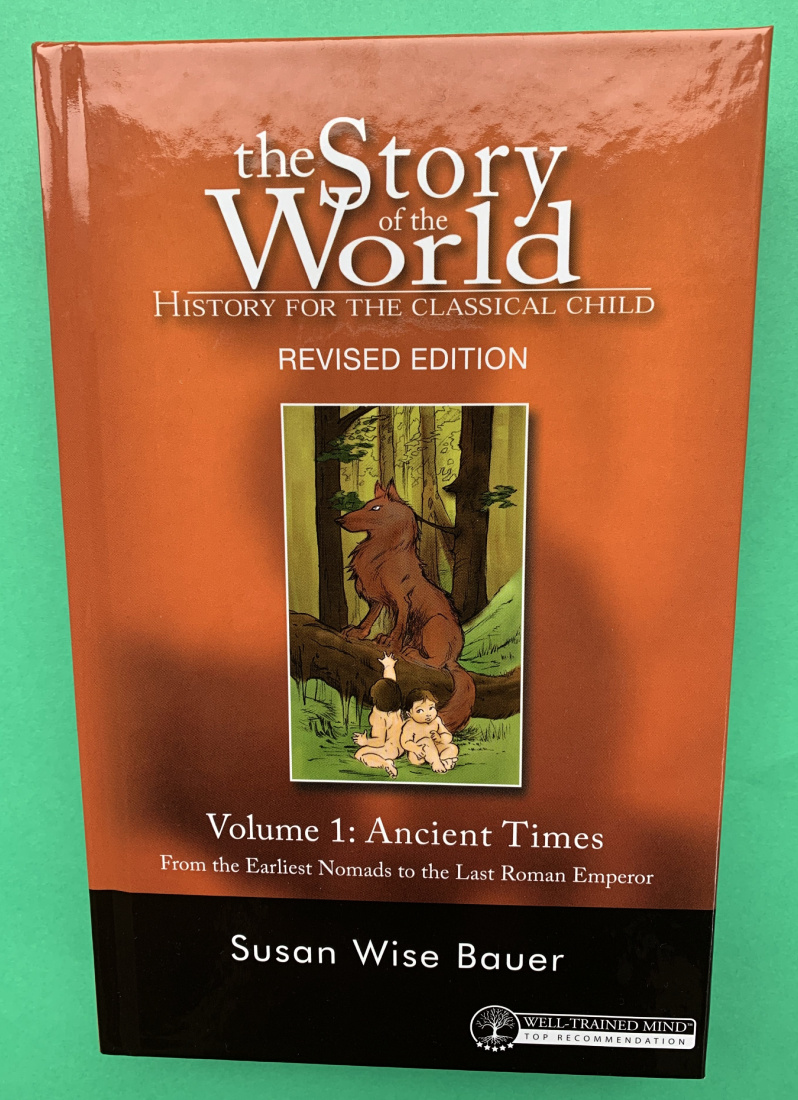
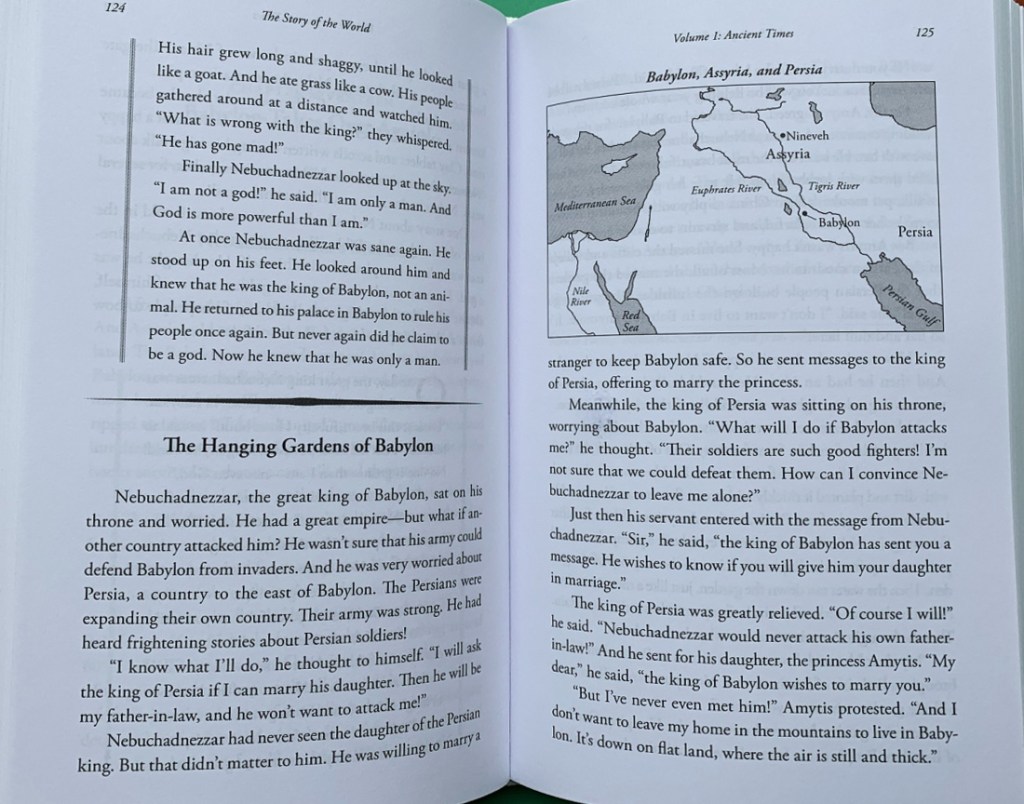
I have heard a number of people talk about the Story of the Wold book and everyone has said it was a fantastic History resource but we just never went that route when the kids were younger. Until recently, over the past 2 months or so my daughter and I have been discussing doing Ancient History as one of her GSCE subjects and even though we are still waiting another year before we make final decisions about subjects she really wants to do Ancient History and I actually think it would be a good subject for her. So we have decided that next year (academic year starting in Sep) we are going to create our own Ancient History curriculum for her Year 9 and do a sort of introduction to Ancient History. Our thought are we are going to create our own timeline working our significant events and we are also going to spend some time going through some general Ancient Greek and Ancient Roman History (including looking at the Greek and Roman Mythology). Now that all sounds good but truth be told I do not know that much about Ancient History and how it all fits together – I am more of a History from the Anglo-Saxons times onwards person. And then a friend suggested I borrow her Story of World Vol 1 to read.

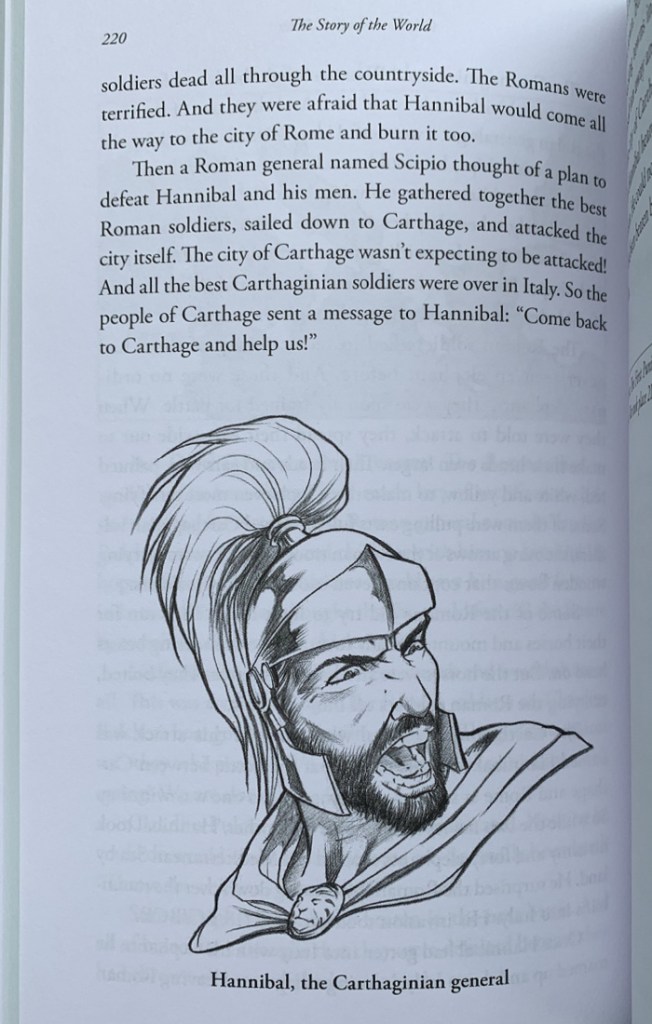
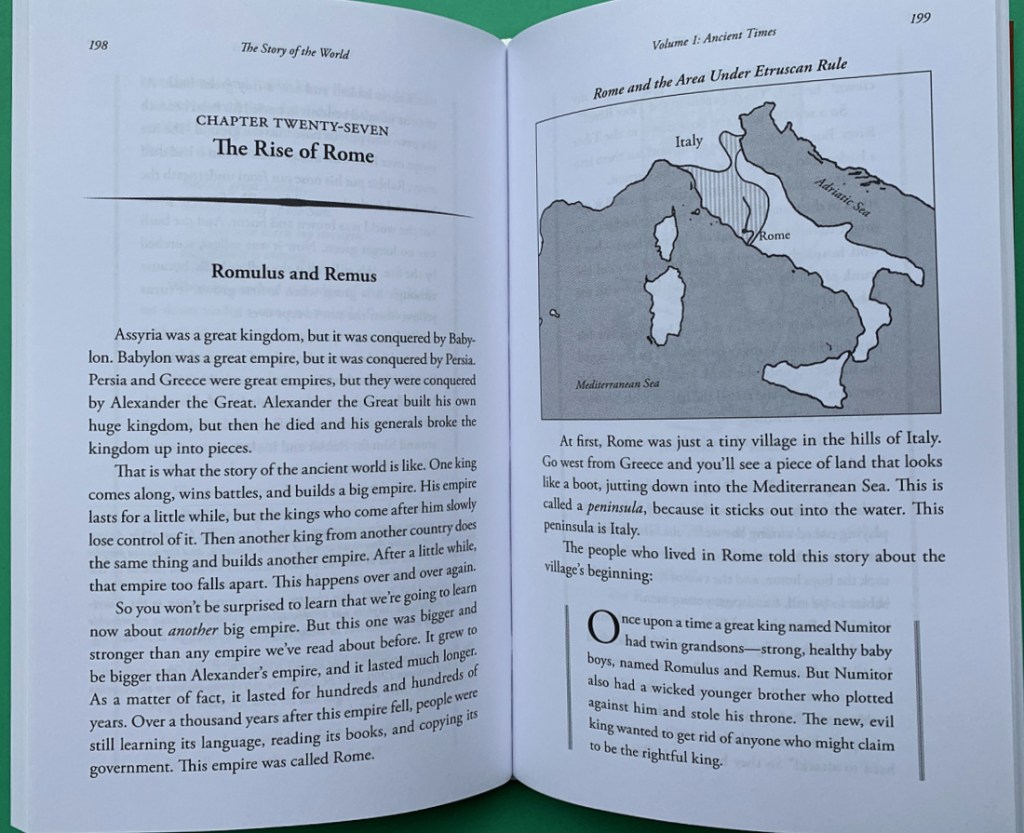
I have been so impressed. This book is brilliant. The authors writing style is incredibly easy to read and understand, it is written like a long story and it flows so easily that I really enjoyed reading it. Yes it is a simplified version of that time, I would say it suits primary aged History but it does actually cover a lot. And it puts all the events into order and explains quite a bit. The author also includes some examples of Ancient Myths and legends from that time, which I really enjoyed reading. And at the back there is a great timeline.

One of the things that I like about this book is that it includes Ancient Histories from the whole world, so not only European. And it includes how biblical history slots in (something which I really wanted to figure out was how we could weave some of the Old Testament into the Ancient History timeline and this book does it effortlessly).

I was so impressed with the book that I bought us our own copy and we are going to use it as our starting point. Our idea is that my daughter is going to read it and then create her own summaries of the events discussed in the book. It will be her high level introduction to that period. And once we have created a nice summary of the order of events we will go back and focus on individual cultures and events in more detail.

I bought our copy directly from amazon The Story of the World: History for the Classical Child: Ancient Times: From the Earliest Nomads to the Last Roman Emperor Volume 1: 0.

Admin: I do include Affiliate links. If you follow an affiliate link and go on to purchase that product, I will be paid a very small commission, however your cost will remain the same. I only include affiliate links for products that we use and love.

Posted in Homeschooling | Tagged , , , , | Leave a comment

White Dolphin

We were not planning on doing White Dolphin as one of our literature books but we spotted it in the local library and my kids are still talking about how much they enjoyed Sky Hawk so I thought – why not? We borrowed the book and I downloaded the FREE teacher pack from OUP site and plans changed we suddenly had a new literature unit. Really it was spur of the moment, we borrowed the book on the Saturday and that Monday we started reading it and working through the lesson plans. That’s how easy it is to use these Rollercoaster packs – no extra prep work is needed, you just need your book and a printer and you are set.

Okay so firstly what are our impressions about the actual story?

We loved the story (both my kids are now massive fans of Gill Lewis). The story centers around a young girl, Kara whose mother went missing about a year ago and since then everything seems to have crumbled. Her dad is struggling with work and money and they are living at her Aunt’s house. Kara is also struggling to fit in at school (she is being picked on by the town bully and she is dyslexic). But then Kara spots a while dolphin, something which she takes as a sign from her mother and the precious white dolphin gets injured. Kara is determined to save the white dolphin and to save her local bay from the damage caused by dredging. While all this is going on she also starts to slowly build a good friendship with the new boy in town, Felix, who happens to be disabled. I don’t want to give too much away but there is a climax involving Kara rescuing the town bully and there is a happy ending (although I must stress part of the ending is Kara admitting that her mom is dead and she is never returning).

All of these events are woven together to create a story about overcoming hardship and heartache, about the power of friends and the importance of preserving nature. The nature theme is a strong one and I don’t think any kid who reads this story would disagree with the point made that if we don’t preserve it and only use it in a sustainable way there will be nothing left. But for us the nature theme although important is second to that of the human story of a young girl struggling after the loss of her mother, a young girls who feels alone and isolated and how she moves full circle into a place of acceptance and happiness.

My kids really enjoyed this story. And I think there were some powerful themes in it that made it a story that is not only enjoyable to read but worthwhile to read.

As I mentioned above Oxford University Press have created one of their FREE to download Rollercoaster Teacher Packs to go with this story. The entire pack is 41 pages long (but you don’t need to print out all 41 pages we just print the pages that we need).

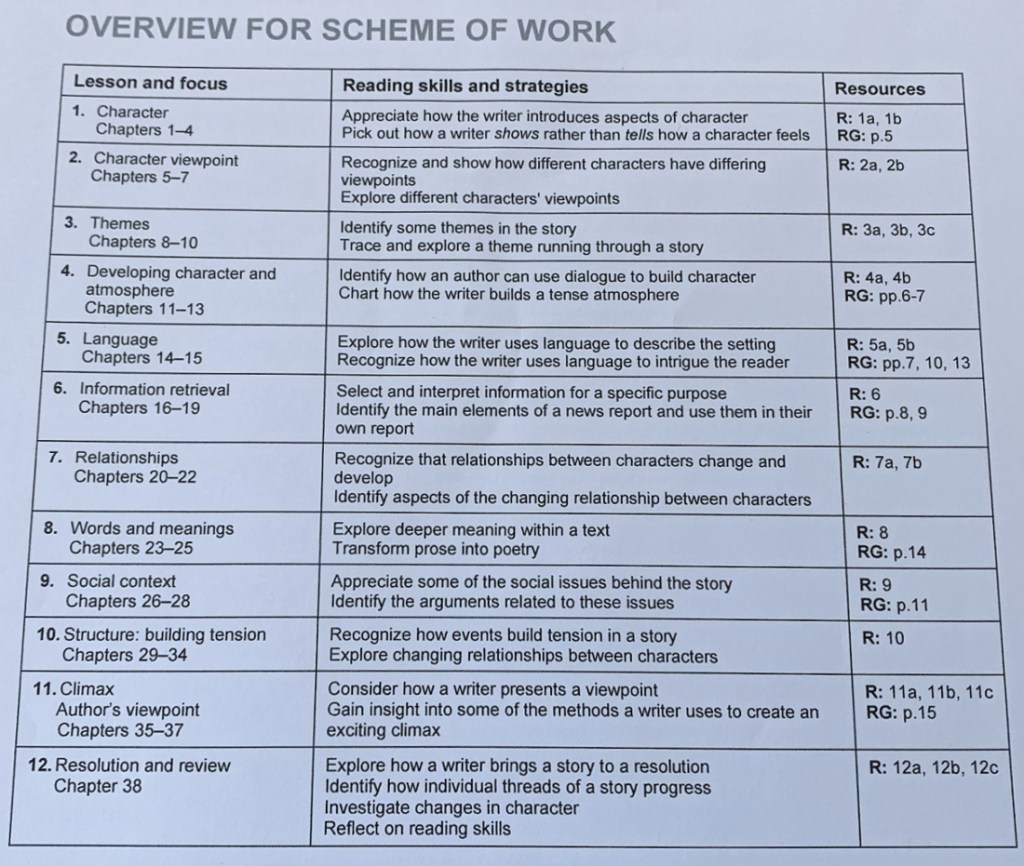
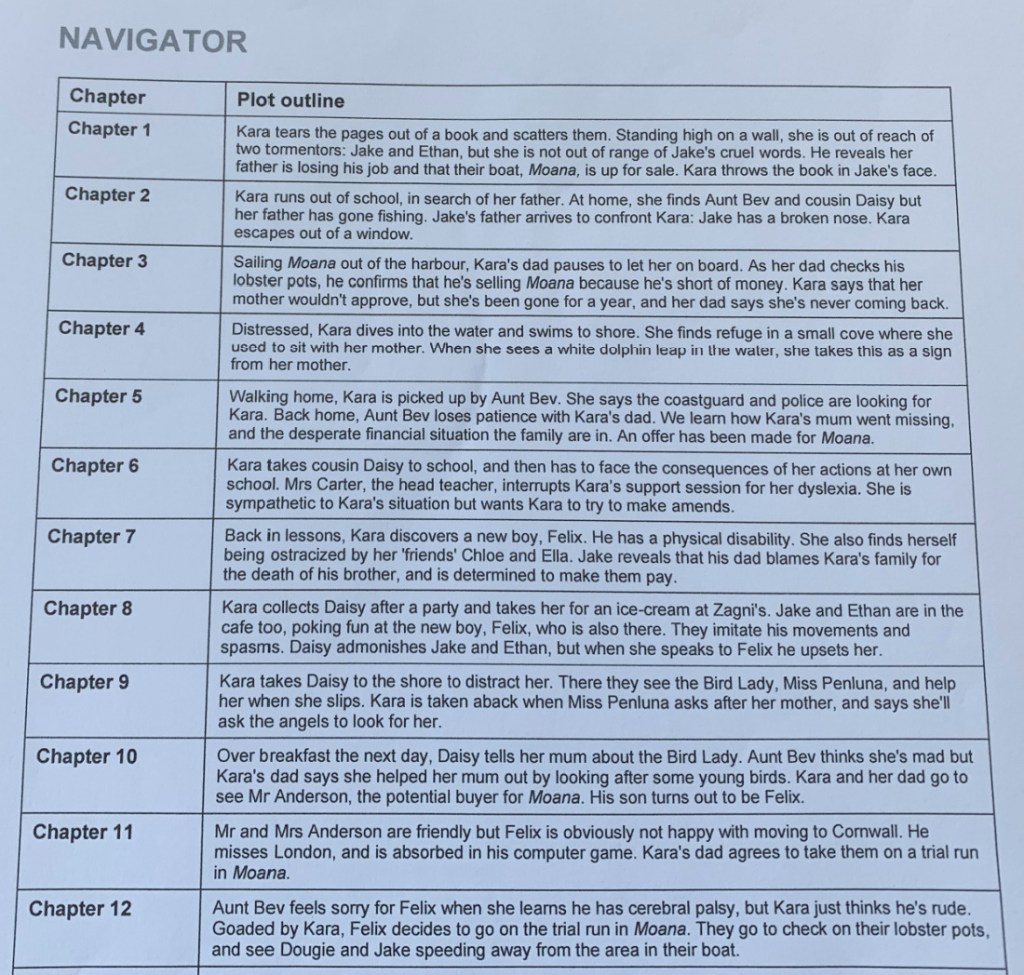
The pack starts off with an Overview of the the scheme of work – they have basically broken the book down into 12 lessons and they explain what they are trying to focus on in each lesson. We did not do all of the lessons included in the pack (we probably did 80%) but I did stick to the way they broke the book down in terms of which chapters we read in each session. I found this breakdown manageable and just logical in terms of highlighting things like tension, writing style etc. Then there is a Chapter breakdown which summaries the events of each chapter. I found it useful to read this before hand just so that I have an idea of where the story was going and if there were possible tangents I might want to go on (we are big on tangents).

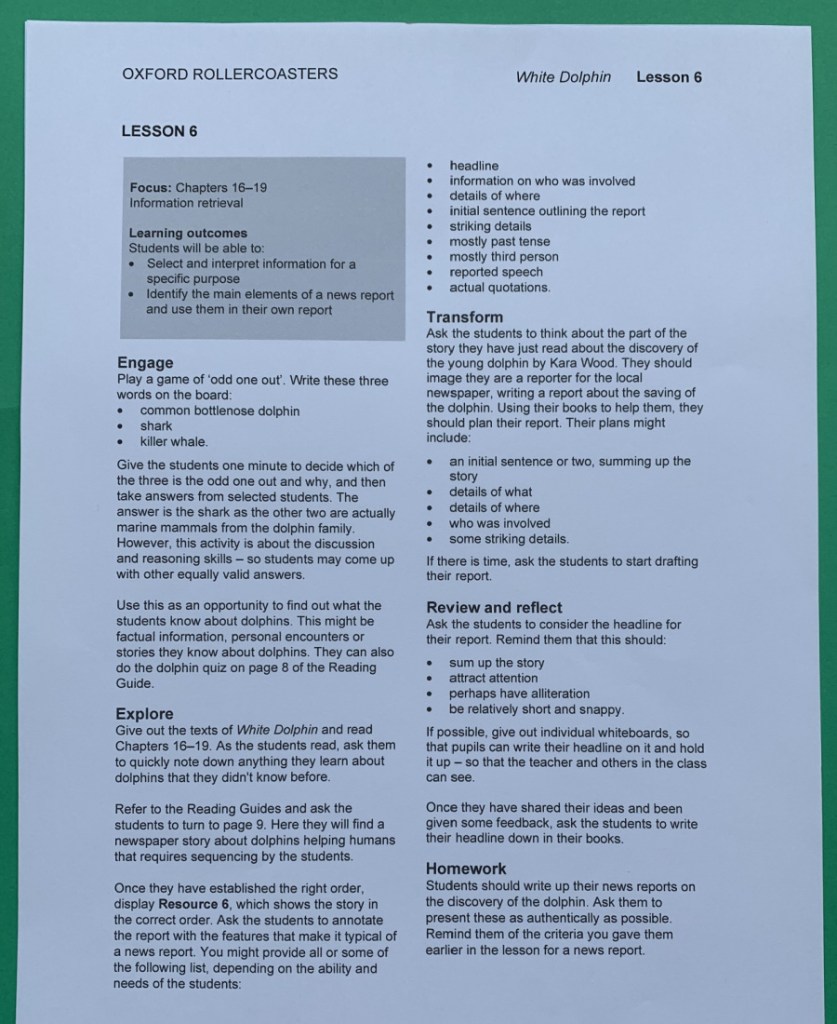
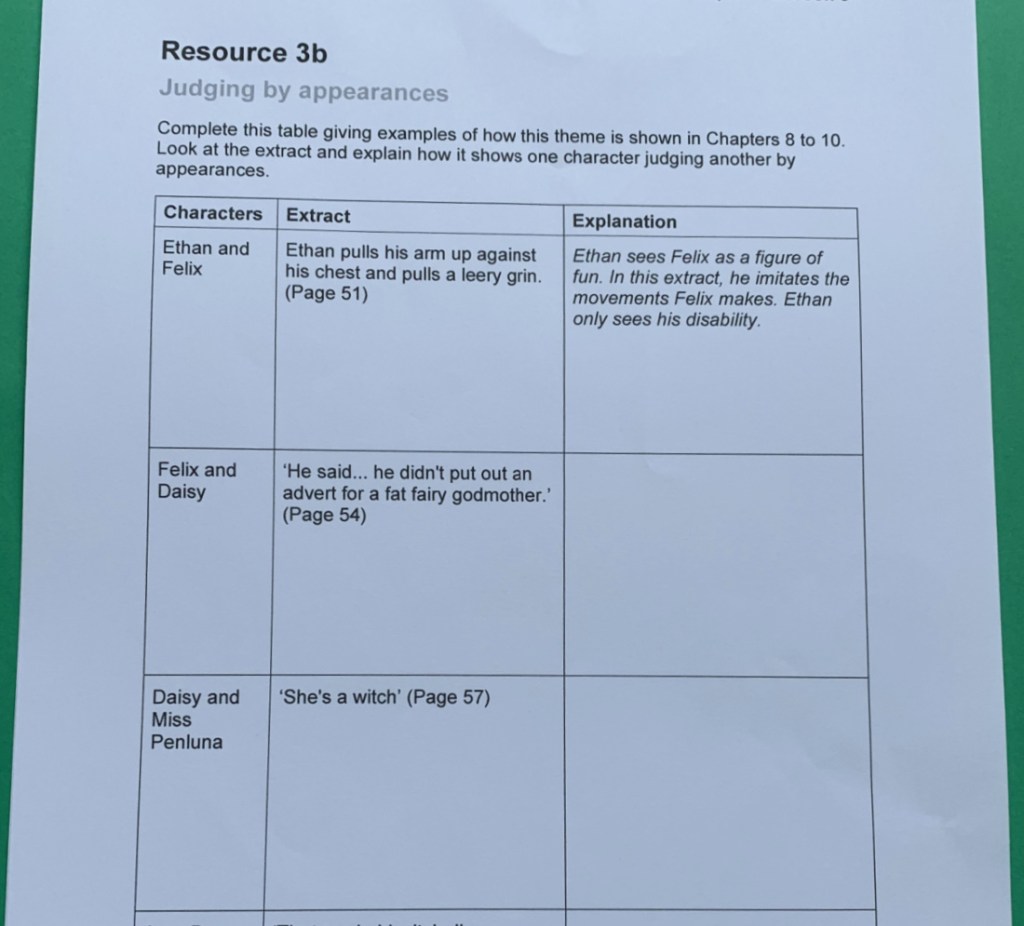
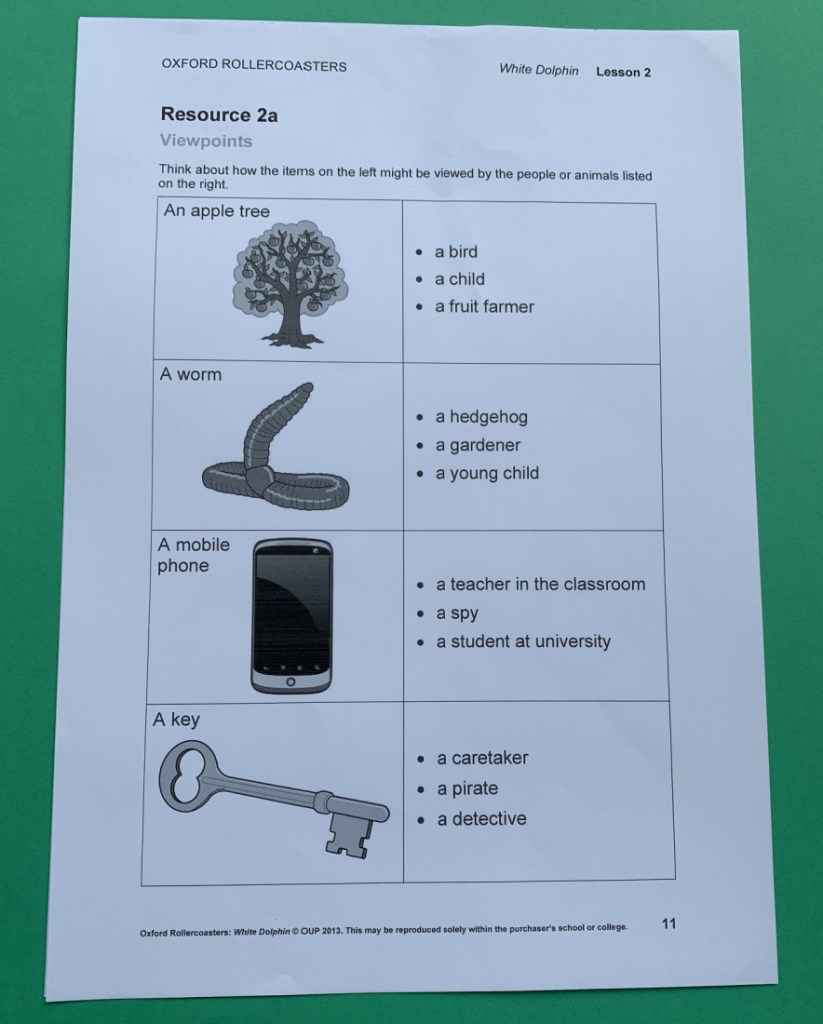
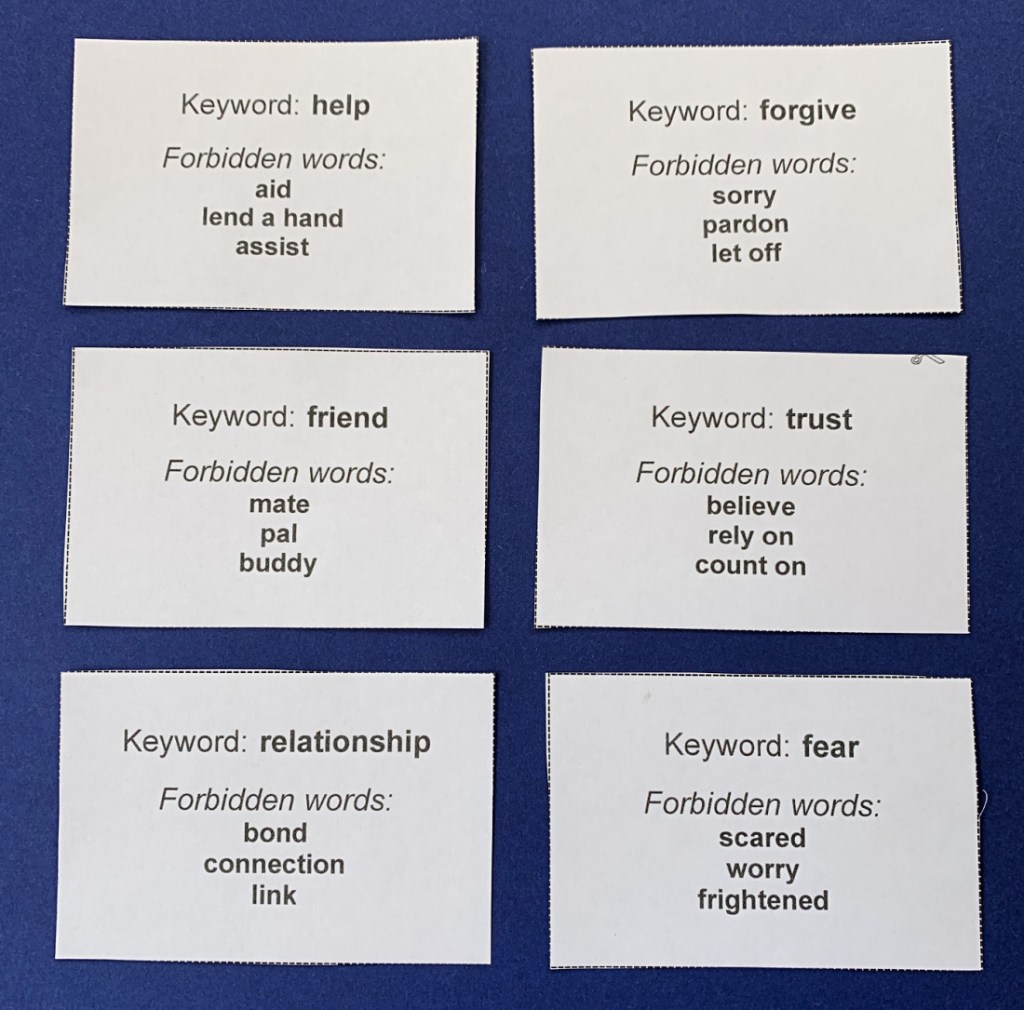
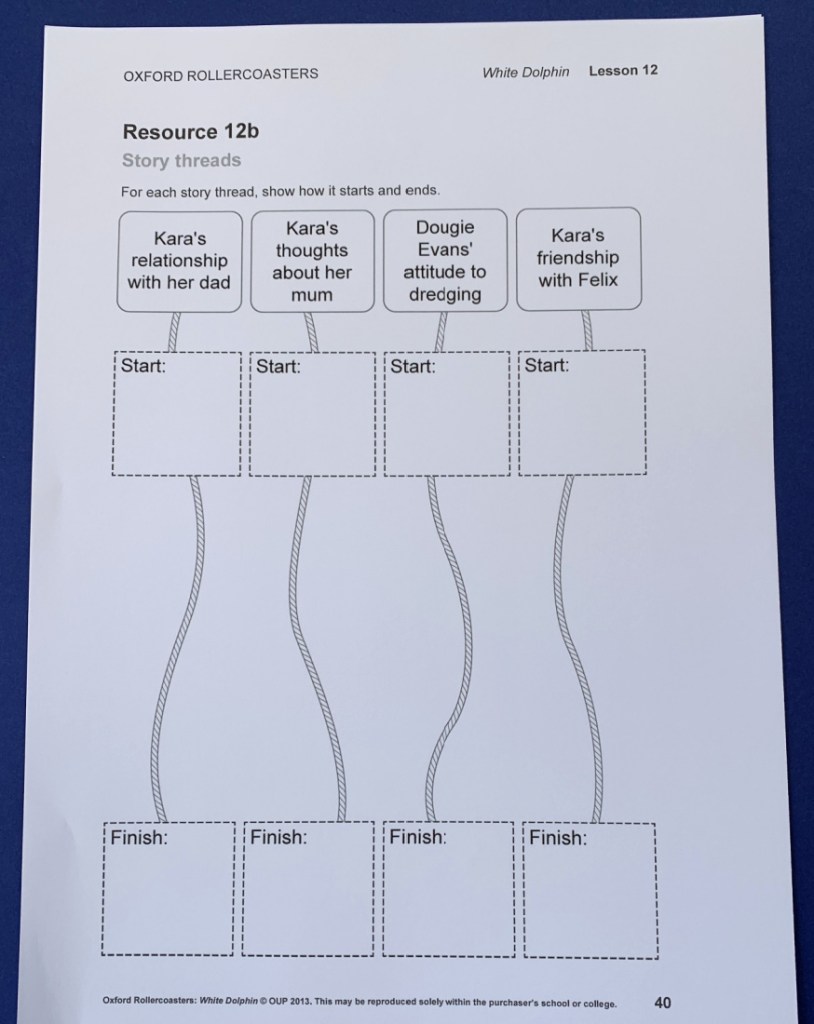
For each lesson they have included a lesson plan – think of this as suggestions, I take the bits that I want out of this and leave the bits that I don’t want. But it is really nice to have these suggestions to point you in some sort of direction. And for each lesson there are one or two worksheets. The worksheets / activities really do vary from things like writing dairy entries, writing newspaper articles, playing word games, thinking of character development, word meanings, really quite a bit.

Working through White Dolphin was not part of our planned work for this year, it really was a spur of the moment decision but it has been a very enjoyable piece of work. And I really appreciate that the FREE to download teacher pack meant I could just follow the kids suggestion and dive into a book that they wanted to read together.

You can buy a copy of the White Dolphin book directly from the OUP site here – White Dolphin or you can buy a copy from Amazon here – White Dolphin

The teachers pack is downloaded here – Rollercoaster Teacher’s Packs.

Admin Bits – I do include Affiliate links. If you follow an affiliate link and go on to purchase that product, I will be paid a very small commission, however your cost will remain the same. I only include affiliate links for products that we use and love.

Posted in Homeschooling | Tagged , , , , , | 4 Comments

A Midsummer Night’s Dream

Shakespeare was one of those topics that I was a bit nervous about. I worried that I would miss something or interpret something incorrectly but when we covered Romeo and Juliet it actually went really well. So well in fact that my daughter goes back and reads extracts of Romeo and Juliet just for fun.

Based on the success of Romeo and Juliet I planned on covering another one of his plays in her Year 8 – I thought of A Midsummer Night’s Dream but life happened, we delayed starting the play and then she started reading it by herself. Yip one day she just picked up our copy of A Midsummer Night’s Dream and started reading it without me. Wow! I loved that. I love that she is not intimidated by Shakespeare and that she is quite happy to tackle one of his plays independently. So I just left her to read it, in her own time and come and ask me questions if and when she wanted too. (We may circle back at some stage and go through it together but for now I am leaving her to explore the play independently).

She is using the RSC School Shakespeare book which is amazing and I must confess if we did not have this incredible guide I do not think she would feel confident tackling it on her own. This is now the second RSC School Shakespeare book that we have and they really are worth every penny.

At the beginning of the book there are 4 pages called “The play at a glance” – which is a four page summary of the play. My daughter suggests reading these pages first because she says it helps to understand the order of events before you get into the detail of the actual words.

The play itself is set out over double pages. On the Right is the actual text and then on the Left is what my daughter calls the “explanation page”. There is always a picture of the scene being acted out which for us is key. Just looking at the photo helps to explain what is happening in the text and it brings it to life. These photos are vital for visual learners like my daughter. At the top of the picture there is a one or two line summary (we love this), there are glossary and key term blocks which explain unusual words and then there is always a suggested activity. Now the activities are written with a school setting in mind so often they involve things like act out, discuss in a group etc etc but my daughter says she just thinks about the activity in her head and if she thinks she can do it successfully she feels like she understands that page.

This double page format is a huge hit with us. It really makes the language easier to understand and it is the reason why my daughter feels like she can read one of his works independently. And then just to help sum up all the events and characters they also include an “Exploring the Act” double page at the end of each Act and then finally an “Exploring the Play” double page as well. Which are some extra activity ideas.

At the end of the play there is a brilliant timeline of Shakespeare’s life and a section called William Shakespeare and his life – which talks about his writing style and also what Elizabethan life was like – so it explains about things like marriage and courtship during Shakespeare’s time. And we strongly urge you NOT to avoid these pages. We have found the more you understand about Elizabethan life the more his plays come together.

We are not using the RSC School Shakespeare book the way that I had planned but I honestly don’t mind. I am enjoying watching my daughter discover a play on her own. But regardless of how you want to read this play – letting the kids to try it independently or if you want to work through it together with them, this book is a true gem.

We are definitely going to get more of Shakespeare’s work in this format in the future.

Posted in Homeschooling | Tagged , , , , | 2 Comments