One of the topics that my daughter has chosen for the Edexcel IGCSE History Paper 2 is China: Conflict, Crisis and Change 1900-89. And I have to admit I am actually quite excited that my daughter has chosen this topic because it is something that I never studied when I did History so we are going to explore it together. For this topic I chose to use the Pearson Edexcel International GCSE Book. We have already used these books for our other IGCSE History topics and I like the format, I like the content and I really like that they include so many practice questions, so it was a no-brainer that I would get this book for our new topic.

The book is split into 5 chapters
- The Fall of the Qing, Warlordism and Chaos, 1900-34
- The Triumph of Mao and the CCP, 1934-49
- Change under Mao, 1949-63
- The Cultural Revolution and its impact 1965-76
- China, 1976-89
I think it is fascinating topic but I must admit that because we have never really covered Chinese History in our History up to this point we have been doing some extra background reading on the times building up to the Qing, just for our own reference and just to help us feel a bit more familiar with the background, culture and thinking. Really this was our own interest and not something that is required to do for this topic (we do tend to really submerge ourselves in our History topics – we watch extra documentaries and even read Historical fiction linked to our topics).
Okay but getting back to this book. Based on our past experience of using this series for our other History topics I am confident that they include all the information that is required for the topic (I do always print out the spec and double check and so far I have never found gaps). I also like the way they present the information – at this level there is no getting around the fact that the kids need to learn quite a few facts and details and that could feel a bit overwhelming if they were faced with long detailed paragraphs. But this book presents the information in blocks of information (small blocks are always easier to digest) and they use diagrams whenever possible to illustrate points.
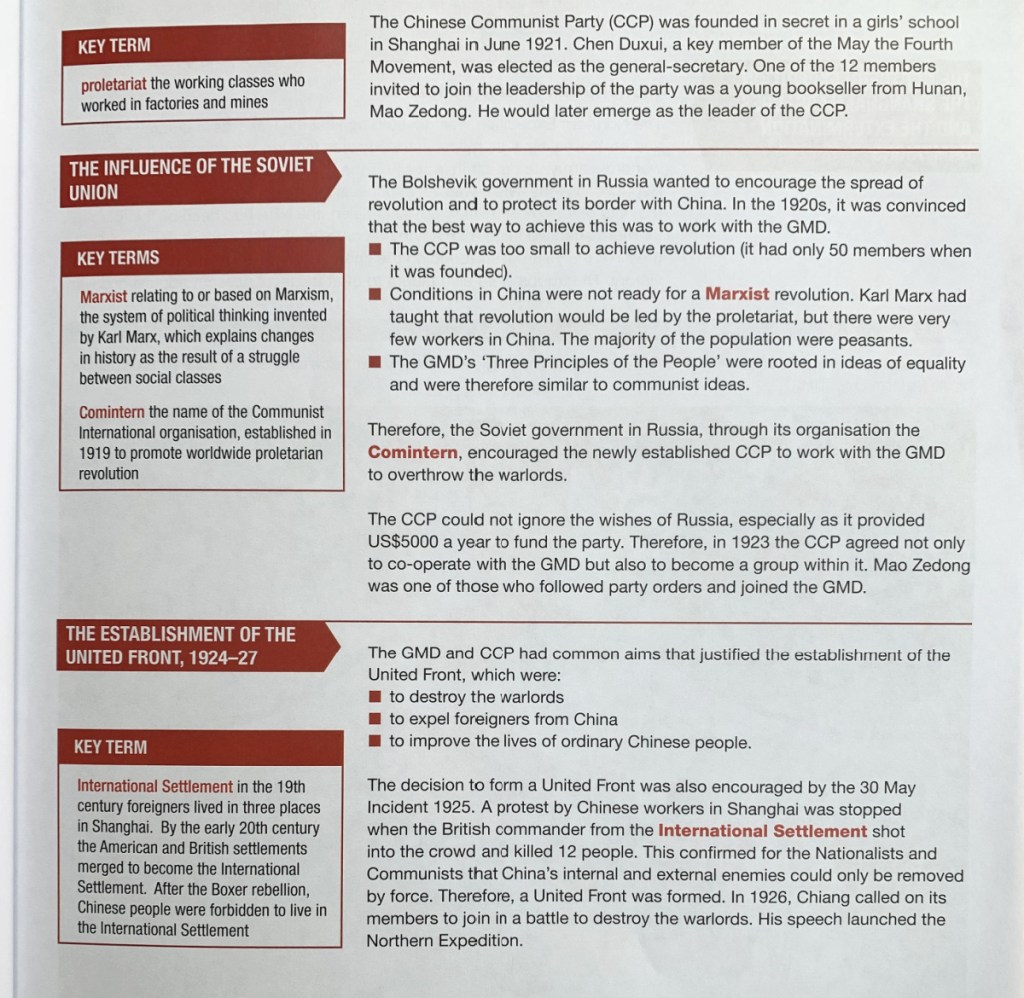
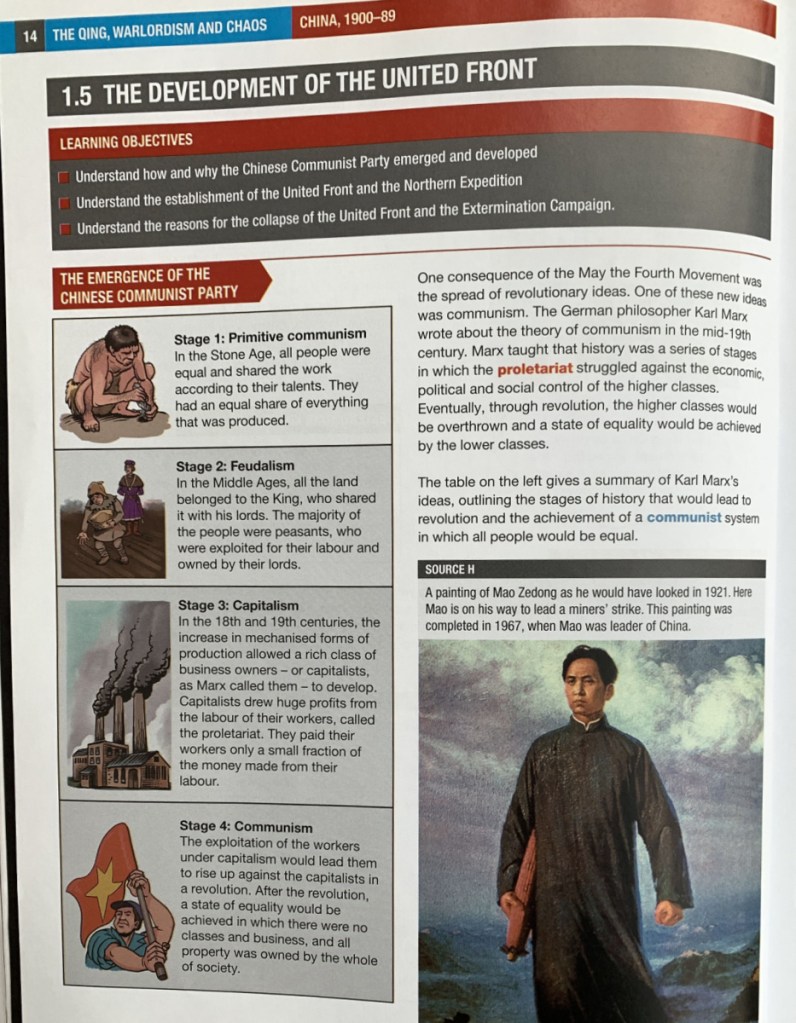
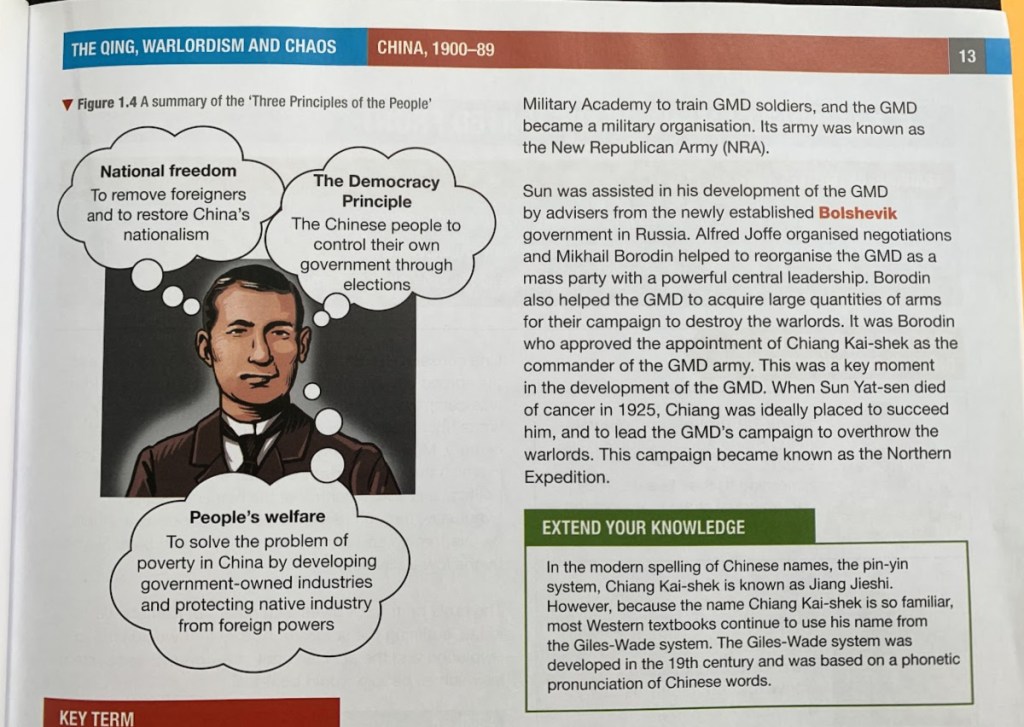
So in terms of content I find this series ticks all the boxes.
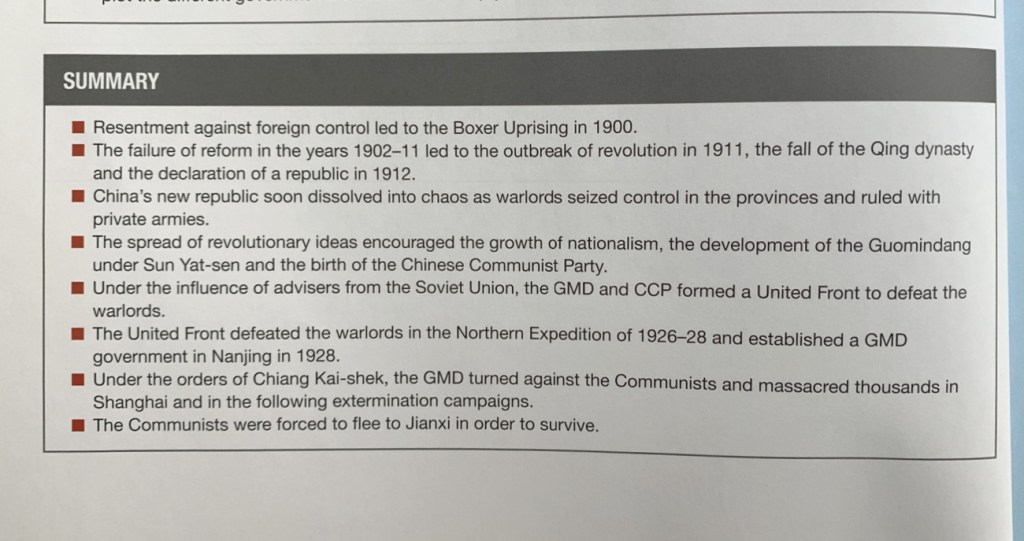
At the end of each chapter they also include a really useful summary page – this page includes a summary of key points and also some useful questions which help the kids to test if they have understood the key points. We always work through these questions just because it is a great way to wrap up the chapter.
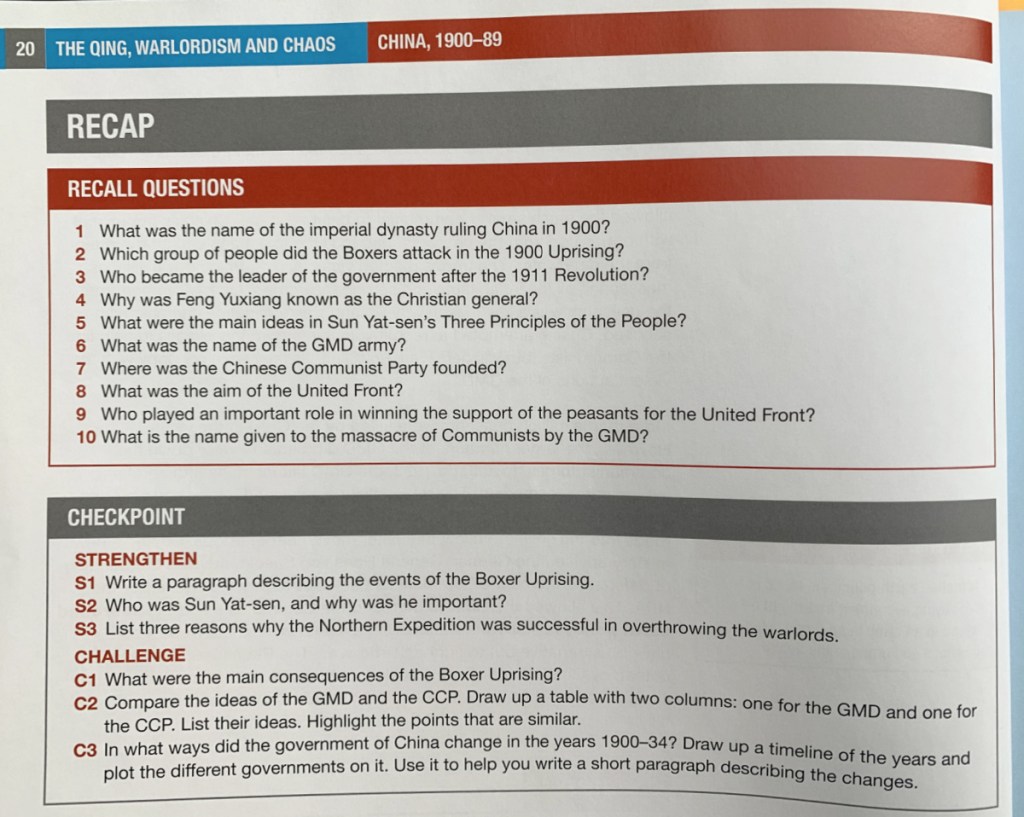
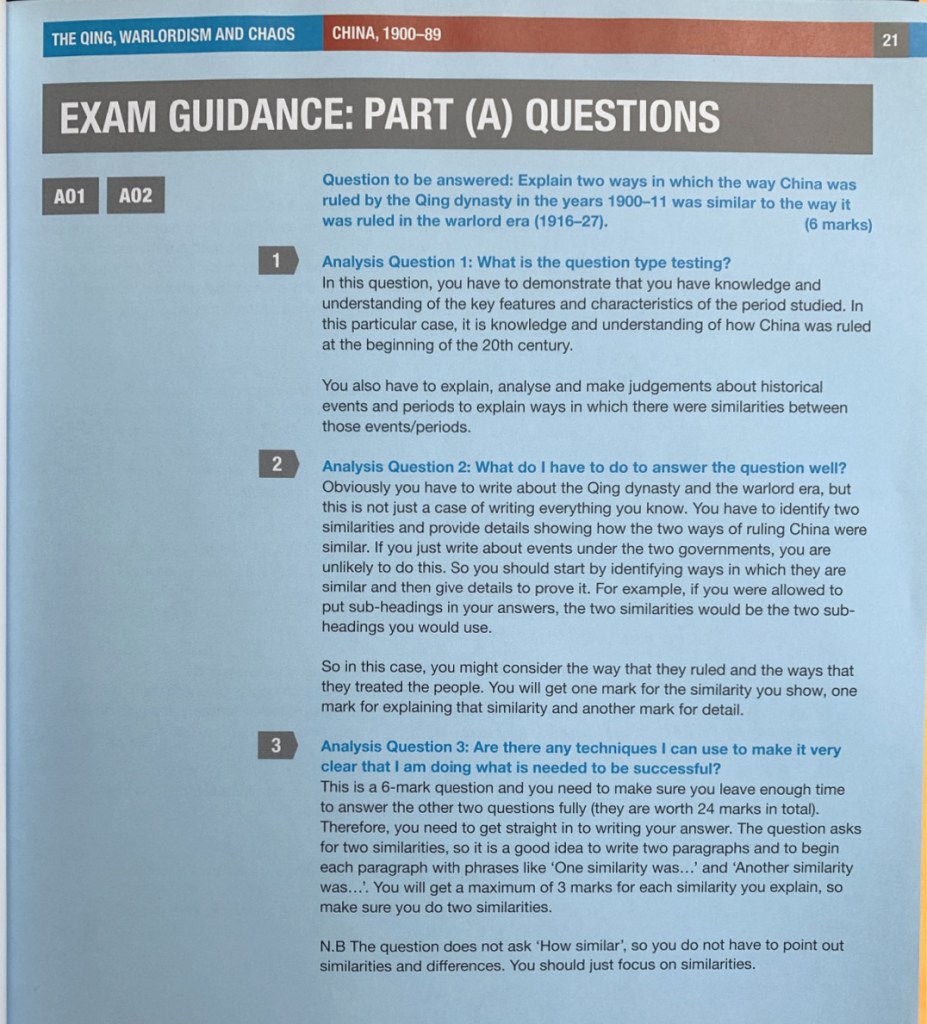
Then two other things that this series does really well. After the summary page they always have an Exam Guidance page (well pages). This is where they take an example of a past Exam question and then explain how the kids should answer it. They follow their explanation with some sample answers and here they also talk about the weaknesses and strengths of these sample answers. These 2 pages at the end of each chapter are total gold for all student doing the IGCSE History course.

And lastly the other thing that I think they do well with this series is throughout the chapters they include practice exam questions based on what the kids have just learnt. This is, in my opinion vital practice for all kids.

As I have mentioned before we have used this series of books for our other History topics and I find them excellent. Everything about them ticks all my boxes – the content, the way the content is explained and formatted, the fact that they include practice questions and the exam guidance sections. Really everything that you need for this topic.
I bought our copy from Amazon – China: Conflict, Crisis and Change 1900 – 89
If you want question and answer cards for the China: Conflict, Crisis and Change 1800-89 topic a 138 question set can be found here – China question cards
Admin – I bought this copy myself from Amazon. I do include Affiliate links. If you follow an affiliate link and go on to purchase that product, I will be paid a very small commission, however your cost will remain the same. I only include affiliate links for products that we use and recommend.


 ofamily learning together